
黄连

Search documents
林下生“金”
Jin Rong Shi Bao· 2026-01-13 03:35
Group 1 - The "Friendship Ten Thousand Mu Huanglian Under-Economic Demonstration Base" in Ankang City, Shaanxi Province, aims to integrate medicine cultivation, health care, and processing, with an initial investment of over 100 million yuan to plant 12,000 acres of Huanglian [1] - From 2021 to 2025, the price of Huanglian increased from 62 yuan per kilogram to 85 yuan, indicating a significant market opportunity for the cultivation and processing of this medicinal plant [1] - The project has created numerous job opportunities for local villagers, promoting stable income and employment [1] Group 2 - The "Lanrao Konjac" has received geographical indication product status, enhancing its marketability and recognition [2] - The company "Runfuyuan Konjac Development Co., Ltd." has established a production line for konjac tofu and a clean food ingredient production line, achieving an annual output of 2,000 tons [3] - The company has expanded its konjac planting area to 1,000 acres and has developed a marketing network centered around Fuzhou, Chongqing, and Quanzhou, ensuring stable sales [3] Group 3 - The ecological model of "fruit picking above and livestock raising below" in Han Yin County has effectively combined ecological protection with industrial development [4] - The local bank has provided 32 million yuan in credit to farmers and livestock breeders, facilitating the growth of the under-forest economy [4] - The under-forest economy has generated significant income for farmers, with a total output value of over 1.2 million yuan and employment opportunities for more than 20 households [4]
开阳县高寨乡:“林药共生”孕育绿色财富
Xin Lang Cai Jing· 2026-01-07 20:19
Core Viewpoint - The development of traditional Chinese medicine (TCM) industry in Gaozhai Township is creating economic opportunities for local residents while promoting sustainable agricultural practices through the cultivation of high-quality medicinal herbs like Epimedium [1][2]. Group 1: Industry Development - Gaozhai Township is focusing on the cultivation of Epimedium, which has a promising market outlook, with 100 acres being transplanted as part of a larger strategy for sustainable production [1]. - The TCM cultivation in Gaozhai has reached a scale of over 700 acres, including various medicinal herbs such as Huanglian and Zhujie Shen, contributing to a positive industry cycle of "cultivation - planting - promotion" [1]. Group 2: Economic Impact - The "company + cooperative + base + farmer" model is being implemented to closely link the TCM industry with local income generation, providing job opportunities through land transfer and employment at the medicinal herb base [2]. - The TCM base has already created employment for over 30 local residents, turning previously idle forest land into a "green bank" and translating ecological benefits into tangible financial gains for the community [2]. Group 3: Future Plans - The township plans to leverage its ecological advantages to expand the scale and variety of TCM cultivation, while enhancing investment attraction and collaboration with academic and research institutions to improve planting standards [2]. - Efforts will be made to extend the industrial chain and improve the production and sales system to involve more community members in the industry [2].
湖北确定首批69种道地中药材
Xin Lang Cai Jing· 2026-01-03 07:56
Core Viewpoint - The Hubei Provincial Department of Agriculture and Rural Affairs, along with other health and regulatory agencies, has released the first batch of the "Hubei Province Authentic Medicinal Materials Directory," which includes 69 traditional Chinese medicinal materials such as Ai Ye (mugwort leaves), Ban Xia (pinellia), Huang Lian (coptis), Fu Ling (poria), Ju Hua (chrysanthemum), and Cang Zhu (atractylodes) [1] Group 1 - The directory specifies the common names, origins, and production areas of the listed medicinal materials [1] - For example, Ai Ye is identified as Qi Ai, derived from the dried leaves of the plant Artemisia argyi, primarily produced in Qichun and surrounding areas [1] - Huang Lian is referred to as Ji Zhua Huang Lian, sourced from the dried rhizomes of Coptis chinensis, found in counties such as Lichuan, Zhuxi, and Enshi [1] Group 2 - The directory also includes Fu Ling, which is recognized by the same name and is derived from the dried sclerotia of the fungus Poria cocos, mainly produced in counties like Luotian, Yingshan, and Macheng [1] - Hubei province boasts over 4,000 types of medicinal materials, establishing five major advantageous production areas: Dabie Mountains, Wuling Mountains, Qinba Mountains, Mufu Mountains, and Jianghan Plain [1]
林下种植正当时
Zhong Guo Zi Ran Zi Yuan Bao· 2025-12-26 08:18
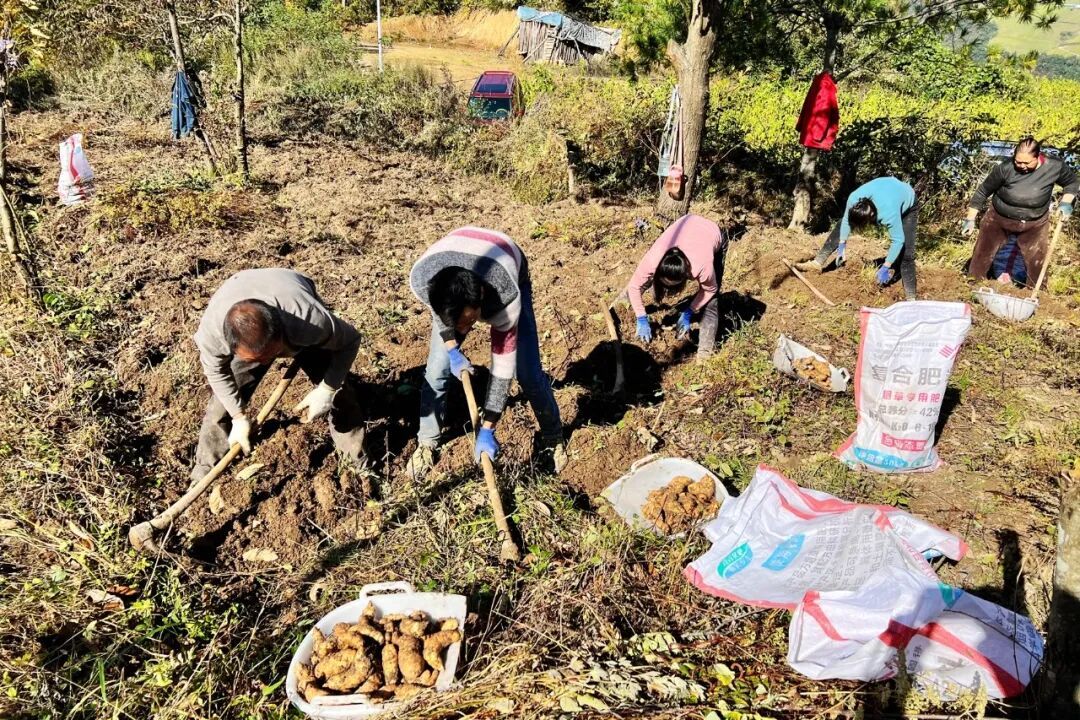
Group 1 - The core viewpoint of the articles highlights the development of the under-forest economy in Hubei Province, particularly in Zhuji County, where local farmers are actively cultivating medicinal herbs such as Tianma and Zhuling, leveraging rich forest resources and government support [2][3][4]. - Zhuji County has over 4.3 million acres of forest, with the under-forest economy covering 950,000 acres and generating a comprehensive forestry output value exceeding 8.3 billion yuan, benefiting 74,000 farming households [2]. - The implementation of a "village collective + cooperative + farmer" model in Xiangba Village has stabilized the purchase price of medicinal herbs, with the first batch of Tianma yielding 60,000 kg and generating nearly 700,000 yuan in revenue [3]. Group 2 - Fengxi Town has developed a multi-faceted agricultural model combining "forest medicine + forest honey + forest fungi + woody + herbaceous" to enhance resource utilization, achieving a total output value of over 600 million yuan from the under-forest economy [4]. - The town has established a "technical service team" to provide on-site guidance to farmers, addressing issues of lack of knowledge and confidence in expanding cultivation [4]. - Zhao Xiaowu, a major Tianma grower, has expanded his cultivation to 800 acres and employs a cooperative model that pays over 400,000 yuan in wages to local villagers, contributing to stable income growth [5][6].

出口进口“双增”背后的三个“新”动能:前11个月外贸展现强劲韧性与活力
Yang Shi Wang· 2025-12-09 02:07
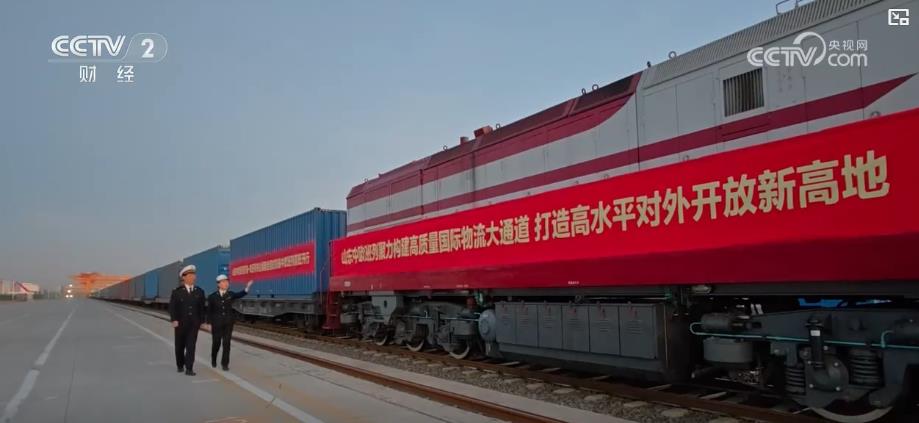
Core Insights - The foreign trade performance in the first 11 months is impressive, with both exports and imports showing growth in November, which is notable given the current international economic environment [1] Group 1: Logistics Innovations - The introduction of a "full schedule" for the China-Europe Railway Express has improved efficiency and reduced costs, with the first train operating from Jinan to Budapest on November 20, benefiting from prioritized scheduling and customs checks [4][6] - The overall operational efficiency of the "full schedule" trains has improved by over 30% compared to regular trains [6] Group 2: Customs Innovations - Innovations in customs processes have significantly reduced inspection times, with remote video inspections allowing for a 80% reduction in waiting times for exports, as demonstrated by a recent inspection of traditional Chinese medicine [9][11] - A new "negative list" for goods eligible for remote video inspections has been issued, allowing nearly one-third of import and export goods to utilize this method [11] Group 3: Export Growth in New Products - The export of lithium batteries from Fujian has seen an average growth rate of 83.1% over the past five years, making it the leading province in terms of export scale above 10 billion [12] - In the first ten months of this year, the export value of lithium batteries from Fujian has already exceeded 100 billion [12]
成绩超预期!透过三个关键词解读前11个月外贸为何走得又“稳”又“好”
Yang Shi Wang· 2025-12-08 13:06
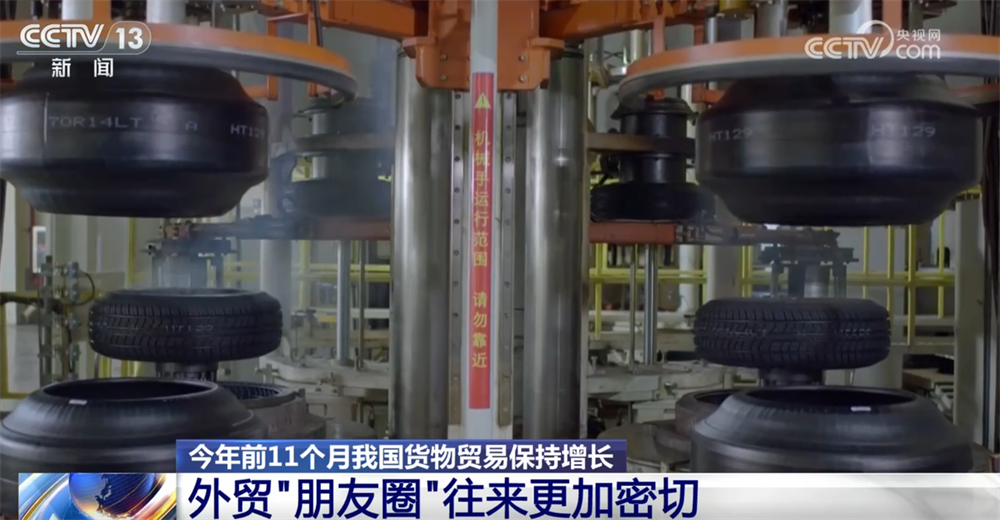
Core Viewpoint - China's goods trade has maintained growth in the first 11 months of the year, with exports reaching 24.46 trillion yuan, an increase of 6.2%, and imports at 16.75 trillion yuan, up 0.2% [1] Group 1: Trade Growth and Key Markets - In November, China's foreign trade growth rebounded, with total imports and exports amounting to 3.9 trillion yuan, a year-on-year increase of 4.1% [1] - In the first 11 months, trade with ASEAN reached 6.82 trillion yuan, growing by 8.5%; trade with the EU was 5.37 trillion yuan, up 5.4%; trade with Latin America was 3.57 trillion yuan, increasing by 5.6%; and trade with Africa was 2.25 trillion yuan, rising by 18.7% [6] Group 2: International Market Expansion - China's international market layout has been diversified, particularly under the Belt and Road Initiative, leading to significant growth in trade with Africa, where the integration of industrial and supply chains is deepening [2][4] - Companies are expanding through a dual approach of "finished product exports + raw material imports," creating a closed-loop industry model between African resources and Chinese manufacturing [4] Group 3: Free Trade Zones and Economic Impact - Free trade zones and ports are central to China's foreign trade development, accounting for about 20% of the country's trade volume despite occupying less than 0.4% of its land area [8] - In the first 11 months, imports and exports from free trade zones and Hainan Free Trade Port reached 8.07 trillion yuan, a year-on-year increase of 5.2%, contributing to a 0.3 percentage point rise in their share of total foreign trade to 19.6% [10] Group 4: Innovations in Trade and Logistics - The logistics channels have seen continuous innovation, with the launch of scheduled operations for the Jinan to Budapest China-Europe Railway Express, improving overall transit times by over 30% [12][14] - Customs innovations include remote video inspections for certain goods, allowing for quicker customs checks, exemplified by a rapid inspection process for traditional Chinese medicine exports [14][16] - The export of "new three types" products, such as lithium batteries, has been on the rise, with Fujian province seeing an average growth rate of 83.1% in lithium battery exports over the past five years [16][18]
湖北多措并举推动鄂澳两地融合发展 2024年全省赴澳门旅客同比上升11%
Chang Jiang Shang Bao· 2025-09-07 23:10
Group 1 - The core event "Hubei·Wuhan Macao Week" will take place from September 5 to 8, 2024, showcasing Macao's latest tourism resources and cooperation opportunities [1][2] - Hubei's outbound tourists to Macao are projected to increase by 11% year-on-year in 2024, with 567,000 visitors expected [3][4] - The event aims to deepen cooperation between Hubei and Macao across various sectors, enhancing economic prosperity and regional development [1][2] Group 2 - Since 2020, "Macao Week" has been held in 10 cities, attracting nearly 6 million participants and generating 7.86 billion exposures [2] - The event in Wuhan marks the first time "Macao Week" is held in a central city, emphasizing the importance of Hubei as a key market for Macao's tourism [2][3] - Hubei has established direct flights and high-speed rail connections to Macao, facilitating increased travel and exchanges [3][4] Group 3 - The collaboration between Hubei and Macao is supported by various cultural and economic initiatives, including the "Mazu Cultural Tourism Festival" and cross-border financing promotion [3][5] - Hubei's rich traditional Chinese medicine resources and Macao's advantages in the health industry present opportunities for joint development in the health sector [5][6] - Hubei aims to leverage Macao's international exhibition and service industry to enhance its own cultural tourism profile [6]
开学第一课 广东名中医为小学生讲述“抗战中的中医药”
Zhong Guo Xin Wen Wang· 2025-09-04 00:50
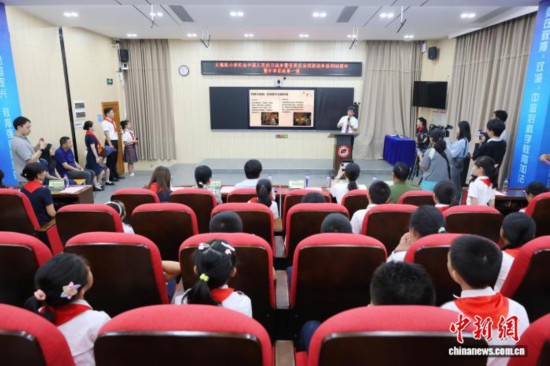
Core Viewpoint - The lesson delivered by Zhang Zhongde emphasizes the significant role of traditional Chinese medicine (TCM) during the Anti-Japanese War, highlighting its effectiveness in treating soldiers and the importance of passing down TCM wisdom to future generations [1][3]. Group 1: Role of Traditional Chinese Medicine - TCM played a crucial role during the Anti-Japanese War when Western medicine was scarce, utilizing local herbs such as mugwort, honeysuckle, and angelica to treat soldiers [1][3]. - Medical workers demonstrated resourcefulness by gathering herbs from the mountains and employing traditional methods to treat injuries and illnesses [2][3]. - The use of TCM for treating malaria and dysentery was validated through clinical trials, showcasing its effectiveness in wartime conditions [2][3]. Group 2: Cultural and Educational Significance - The lesson aims to instill a sense of patriotism and appreciation for traditional culture among students, linking physical health to the ability to contribute to the nation [4]. - The initiative reflects a broader educational goal of inspiring students to pursue careers in medicine, fostering a new generation of healthcare professionals [4].
从“田间”到“舌尖” 重庆力争黄连全产业链产值破30亿元
Zhong Guo Xin Wen Wang· 2025-08-25 15:25
Core Insights - Chongqing aims to establish a digital trading platform centered around "Chinese Huanglian" and achieve an industrial chain output value exceeding 3 billion yuan [1][2] Group 1: Industry Development - Chongqing is a major production area for traditional Chinese medicine, with Huanglian cultivation covering nearly 100,000 acres, accounting for approximately 60% of national demand [1] - The city promotes standardized ecological planting of Huanglian, implementing integrated pest management and organic fertilizer use [1] - A comprehensive product system has been developed, utilizing all parts of Huanglian for various products, including traditional Chinese medicine, food, and daily chemical products [1] Group 2: Brand and Market Strategy - The "Shizhu Huanglian" regional public brand has been established, recognized as one of the top 100 public brands in traditional Chinese medicine [2] - A collaborative model involving leading enterprises, cooperatives, and farmers has been adopted, with 10 leading enterprises and 25 cooperatives developed [2] - The "China Huanglian Trading Market" in Shizhu has seen annual transaction volumes exceeding 1 billion yuan, establishing a new market development pattern [2] Group 3: Future Initiatives - A high-quality development conference for the Huanglian industry will be held on August 28-29, aiming to enhance the industry's national influence [2]
湖北将打造千亿级中药材全产业链
Chang Jiang Shang Bao· 2025-08-11 23:29
Core Viewpoint - The Hubei Provincial Rural Work Leading Group has issued the "Three-Year Action Plan for Revitalizing Hubei Authentic Medicinal Materials (2025-2027)", aiming to enhance the quality and market presence of local medicinal herbs, promote the development of leading enterprises, and expand both domestic and international markets [1][2]. Group 1: Action Plan Objectives - The plan focuses on key varieties such as Qiai and Fubai chrysanthemum, selecting leading counties for each variety to promote coordinated development across the medicinal materials industry [1]. - By 2027, the plan aims to stabilize the planting area of traditional Chinese medicinal materials at approximately 5.6 million acres, with ecological planting of authentic medicinal materials reaching 2.8 million acres [1]. - The plan targets an industry output value exceeding 100 billion yuan for the entire medicinal materials supply chain [1]. Group 2: Technological and Quality Enhancements - Hubei will release a directory of authentic medicinal materials and promote suitable planting practices, focusing on the "Top Ten Hubei Medicines" and establishing around 30 main production counties [2]. - The plan includes the implementation of a 515 action for agricultural industry chain technology services, promoting new ecological planting techniques and enhancing quality assurance in medicinal materials [2]. - Emphasis is placed on technological innovation to support the transformation of medicinal materials into medicines, including research on the mechanisms of authentic medicinal materials and the development of traditional Chinese medicine preparations [2]. Group 3: Supply Chain and Market Development - The plan aims to enhance the trading market for authentic medicinal materials and create a comprehensive online service platform for the industry [2]. - It includes the construction of storage facilities for medicinal materials at production bases and the establishment of a logistics hub for medicinal materials in Hubei [2].