中国创新药BD

Search documents
中国创新药大单频现
21世纪经济报道· 2026-03-05 01:10
Core Viewpoint - The collaboration between China National Pharmaceutical Group and Sanofi for the exclusive licensing of Rovaxitinib represents a significant milestone for Chinese biopharmaceutical innovation, with a total potential payment of up to $1.53 billion, including an upfront payment of $135 million, which will greatly enhance the company's cash flow and support future R&D investments [1][5][6]. Group 1: Licensing Agreement Details - The agreement allows Sanofi to develop, manufacture, and commercialize Rovaxitinib globally, marking a shift in the valuation of Chinese biopharmaceutical companies from generic leaders to innovative platform companies [1][6]. - The total payment structure includes milestone payments based on development, regulatory, and sales achievements, along with a tiered royalty based on annual net sales [1][5]. Group 2: Market Context and Trends - The licensing deal is part of a broader trend in the Chinese biopharmaceutical sector, where the total value of outbound licensing agreements reached $135.655 billion in 2025, with 157 transactions, indicating a historical high in the market [6][7]. - Major pharmaceutical companies are increasingly seeking to acquire late-stage assets from China to mitigate the risks associated with internal R&D, especially in light of impending patent cliffs between 2025 and 2030 [6][7]. Group 3: Clinical and Commercial Potential - Rovaxitinib has shown promising results in treating primary myelofibrosis and chronic graft-versus-host disease (cGVHD), with ongoing clinical trials indicating superior efficacy compared to existing therapies [5][6]. - The drug's approval in China and its subsequent global licensing is seen as a validation of the quality of Chinese innovative drugs, transitioning from a follower to a leader in the global pharmaceutical landscape [5][6]. Group 4: Future Market Dynamics - The trend in biopharmaceutical deals is shifting from single product licensing to comprehensive platform and multi-product agreements, reflecting a more strategic approach to collaboration [10][11]. - The focus is expected to move from merely increasing the number of deals to enhancing the quality and clinical value of the assets involved, with companies that can consistently deliver high-quality projects gaining a competitive edge [11][12].



荣昌生物拿下56亿美元大单 双抗技术缘何频获跨国巨头追捧?
2 1 Shi Ji Jing Ji Bao Dao· 2026-01-13 23:12
Core Insights - The collaboration between AbbVie and Rongchang Biopharma marks a significant shift in the global oncology treatment landscape, highlighting the trend of "Chinese innovation + global market" in drug development [1][2] Group 1: Collaboration Details - AbbVie and Rongchang Biopharma signed an exclusive licensing agreement for the development, production, and commercialization of RC148, a bispecific antibody targeting PD-1 and VEGF [1] - Rongchang Biopharma will receive an upfront payment of $650 million and is eligible for up to $4.95 billion in milestone payments, along with a tiered royalty on net sales outside Greater China [1][2] Group 2: Market Implications - The deal allows Rongchang Biopharma to accelerate clinical trials for RC148 in China and globally, while also supporting the development of other pipelines [2] - AbbVie aims to enhance its product portfolio in immuno-oncology, particularly in the emerging PD-1/VEGF bispecific antibody space, which could improve its competitiveness in solid tumor treatments [2] Group 3: Industry Trends - The PD-1/VEGF bispecific antibody represents a new class of cancer therapies that may overcome tumor resistance mechanisms by simultaneously blocking PD-1 and VEGF [3][5] - Chinese companies are leading in this field, with significant advancements and approvals, such as the launch of Ak112/Ivonescimab by Kangfang Biopharma, which is the first bispecific antibody combining tumor immunity and anti-angiogenesis mechanisms [3] Group 4: Broader Market Dynamics - The global interest in PD-1/VEGF bispecific antibodies is rising, with several Chinese firms successfully engaging in business development (BD) transactions, reflecting the increasing recognition of Chinese innovative drug assets by multinational pharmaceutical companies [6][7] - In 2025, the total value of Chinese innovative drug licensing transactions exceeded $130 billion, accounting for 49% of the global total, indicating a significant shift in the global pharmaceutical landscape [7][8] Group 5: Future Outlook - The increasing number of approved innovative drugs in China, along with the growing bargaining power of Chinese companies in licensing agreements, suggests a transition from a "follow" to a "lead" position in global pharmaceutical innovation [8][10] - The ability of Chinese companies to negotiate favorable terms in BD transactions is becoming crucial, emphasizing the importance of pipeline strength, data quality, and structured deal design [9][10]


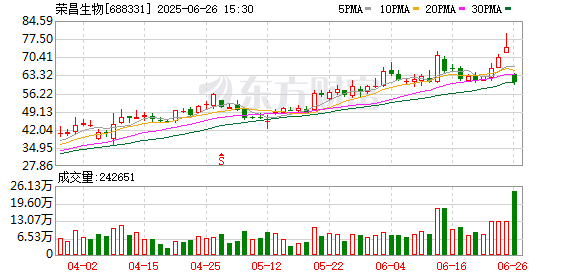
荣昌、石药接连斩获大单背后:中国药企半年吸金近500亿美元,跨国巨头为何疯狂“扫货”|创新药观察
Hua Xia Shi Bao· 2025-06-26 07:58
Core Insights - Global pharmaceutical giants are increasingly turning Chinese laboratories into new drug "arsenals" as evidenced by significant licensing deals and collaborations with Chinese biotech firms [2][3][4] Group 1: Licensing Deals and Collaborations - Rongchang Biopharma licensed its self-developed product Taitasip to Vor Biopharma for $45 million upfront and potential total payments of up to $4.23 billion [2] - CSPC Pharmaceutical Group announced a strategic R&D collaboration with AstraZeneca, receiving $110 million upfront with potential total revenue reaching $5.33 billion [2] - In May alone, at least six Chinese pharmaceutical companies announced major business development (BD) deals, indicating a surge in interest from global players [3] Group 2: Market Growth and Trends - The total value of BD transactions in China's pharmaceutical sector reached $63.5 billion in 2024, a 22.59% increase from 2023, with 24 major deals accounting for $43 billion [3][4] - China's share of global BD transactions with upfront payments over $50 million surged from 5% in 2021 to 42% in the first five months of 2025 [4] - The trend indicates that Chinese innovative drug assets are becoming increasingly attractive to multinational corporations due to their high cost-effectiveness [8] Group 3: Competitive Advantages - Chinese drug development costs are significantly lower, with recruitment costs for clinical trials being one-third of those in Western countries, leading to faster drug development timelines [9] - The increasing number of original innovative drugs entering clinical trials in China, which reached 704 in 2024, positions China as a global leader in new drug development [10] Group 4: Future Outlook - The growth of BD transactions in China is expected to continue, driven by the need for innovative drugs amid the looming "patent cliff" faced by many global pharmaceutical companies [9][10] - Structural changes in the BD landscape are evident, with ADCs and bispecific/multispecific antibodies emerging as leading technologies in international markets [7][11]