PD-1/VEGF双抗

Search documents
荣昌生物拿下56亿美元大单 双抗技术缘何频获跨国巨头追捧?
2 1 Shi Ji Jing Ji Bao Dao· 2026-01-13 23:12
Core Insights - The collaboration between AbbVie and Rongchang Biopharma marks a significant shift in the global oncology treatment landscape, highlighting the trend of "Chinese innovation + global market" in drug development [1][2] Group 1: Collaboration Details - AbbVie and Rongchang Biopharma signed an exclusive licensing agreement for the development, production, and commercialization of RC148, a bispecific antibody targeting PD-1 and VEGF [1] - Rongchang Biopharma will receive an upfront payment of $650 million and is eligible for up to $4.95 billion in milestone payments, along with a tiered royalty on net sales outside Greater China [1][2] Group 2: Market Implications - The deal allows Rongchang Biopharma to accelerate clinical trials for RC148 in China and globally, while also supporting the development of other pipelines [2] - AbbVie aims to enhance its product portfolio in immuno-oncology, particularly in the emerging PD-1/VEGF bispecific antibody space, which could improve its competitiveness in solid tumor treatments [2] Group 3: Industry Trends - The PD-1/VEGF bispecific antibody represents a new class of cancer therapies that may overcome tumor resistance mechanisms by simultaneously blocking PD-1 and VEGF [3][5] - Chinese companies are leading in this field, with significant advancements and approvals, such as the launch of Ak112/Ivonescimab by Kangfang Biopharma, which is the first bispecific antibody combining tumor immunity and anti-angiogenesis mechanisms [3] Group 4: Broader Market Dynamics - The global interest in PD-1/VEGF bispecific antibodies is rising, with several Chinese firms successfully engaging in business development (BD) transactions, reflecting the increasing recognition of Chinese innovative drug assets by multinational pharmaceutical companies [6][7] - In 2025, the total value of Chinese innovative drug licensing transactions exceeded $130 billion, accounting for 49% of the global total, indicating a significant shift in the global pharmaceutical landscape [7][8] Group 5: Future Outlook - The increasing number of approved innovative drugs in China, along with the growing bargaining power of Chinese companies in licensing agreements, suggests a transition from a "follow" to a "lead" position in global pharmaceutical innovation [8][10] - The ability of Chinese companies to negotiate favorable terms in BD transactions is becoming crucial, emphasizing the importance of pipeline strength, data quality, and structured deal design [9][10]


荣昌生物拿下56亿美元大单,双抗技术缘何频获跨国巨头追捧?
2 1 Shi Ji Jing Ji Bao Dao· 2026-01-13 04:08
Core Viewpoint - The collaboration between AbbVie and Rongchang Biologics marks a significant shift in the global oncology treatment landscape, highlighting the trend of Chinese innovative drug companies partnering with multinational giants for drug development and commercialization [1][2]. Group 1: Collaboration Details - AbbVie and Rongchang Biologics signed an exclusive licensing agreement for the development, production, and commercialization of RC148, a bispecific antibody targeting PD-1 and VEGF [1]. - Rongchang Biologics will receive an upfront payment of $650 million and is eligible for up to $4.95 billion in milestone payments, along with a tiered royalty on net sales outside Greater China [1][2]. Group 2: Market Implications - This deal exemplifies the "China innovation + global market" model, allowing Rongchang Biologics to secure cash flow and accelerate clinical trials for RC148 while focusing on the Chinese market [2]. - AbbVie aims to enhance its product portfolio in immuno-oncology, particularly in the emerging PD-1/VEGF bispecific antibody space, which could synergize with existing antibody-drug conjugates (ADCs) and immuno-oncology (IO) drugs [2]. Group 3: Competitive Landscape - The PD-1/VEGF bispecific antibody represents a new class of cancer therapies that may overcome tumor resistance mechanisms by simultaneously blocking PD-1 and VEGF [3][5]. - Chinese companies are leading in this field, with notable products like Ak112/Ivonescimab and SSGJ707 entering clinical trials, indicating a competitive landscape for PD-1/VEGF bispecific antibodies [3][4]. Group 4: Industry Trends - The surge in business development (BD) transactions in the PD-1/VEGF bispecific antibody sector reflects increasing interest from multinational pharmaceutical companies in Chinese innovative drug assets [6]. - In 2025, the total value of Chinese innovative drug licensing transactions exceeded $130 billion, surpassing the U.S. for the first time, indicating a significant shift in the global pharmaceutical landscape [7][8]. Group 5: Future Outlook - The increasing recognition of Chinese innovative drugs is attributed to their rapid development and the ability to meet unmet clinical needs, enhancing their bargaining power in international collaborations [8][9]. - The industry is witnessing a transition from following to leading in drug innovation, with a clear direction for the future of Chinese pharmaceutical development [10].
创新药出海热潮下 这家药企为何收回对外授权
Di Yi Cai Jing· 2026-01-07 09:48
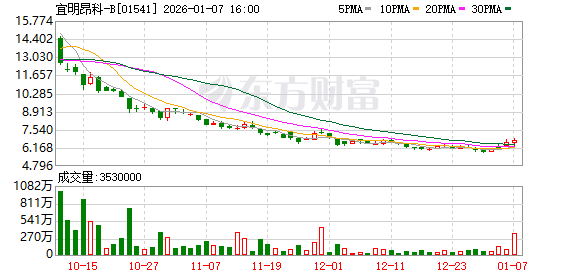
Core Viewpoint - The company Yiming Oncology (01541.HK) has decided to terminate its licensing agreement with Axion for the development and commercialization rights of two products, IMM2510 and IMM27M, outside Greater China, reclaiming all rights previously granted [2][3]. Group 1: Termination of Licensing Agreement - Yiming Oncology announced the termination of its licensing agreement with Axion on January 6, 2026, which included the global development and commercialization rights for IMM2510 and IMM27M outside Greater China [2]. - The initial collaboration began in August 2024, with the agreement valued at over $2 billion [2]. Group 2: Financial Implications - The termination of the agreement does not affect the $35 million upfront and milestone payments already received from Axion [3]. - The company expressed confidence in the therapeutic potential of IMM2510 and IMM27M and aims to accelerate their clinical development [5]. Group 3: Reasons for Reclaiming Rights - The CEO of Yiming Oncology stated that the collaboration with Axion had been positive, but clinical progress was slow due to funding pressures, prompting shareholders to suggest reclaiming the overseas rights [3]. - The complexity of negotiating with both Axion and potential partners hindered business development efforts, which the company hopes to simplify by reclaiming the rights [5]. Group 4: Market Context - The PD-1/VEGF dual antibody market has seen significant activity, with other companies securing large licensing deals, such as $1.25 billion for a similar product from a Chinese company [4]. - The market environment in early 2025 was characterized by high transaction prices for PD-1/VEGF deals, which may have influenced the decision to reclaim the rights [5].

三生国健(688336.SH):辉瑞在某网站上登记PD-1/VEGF双抗PF-08634404(SSGJ-707)的两项全球III期临床试验其最终付款尚存在不确定性
智通财经网· 2025-11-03 10:29
Core Insights - Sanofi has granted Pfizer exclusive rights for the development, production, and commercialization of the dual-specific antibody product targeting PD-1 and VEGF, known as project 707 [1] Licensing Agreement - The licensing agreement will officially take effect on July 24, 2025 [1] - All payments made by Pfizer to the licensors will be distributed between the company and Shenyang Sanofi [1] Clinical Trials - Pfizer has registered two global Phase III clinical trials for the PD-1/VEGF dual antibody PF-08634404 (SSGJ-707) on ClinicalTrials.gov as of October 30, 2025 [1] Payment Uncertainty - The milestone payments outlined in the licensing agreement are contingent upon meeting specific conditions, leading to uncertainty regarding final payments [1]

映恩生物-B大幅回撤,ADC有“泡沫”?英派药业递表港交所,今年上半年净亏损1.29亿元 | 掘金创新药
Mei Ri Jing Ji Xin Wen· 2025-09-30 00:24
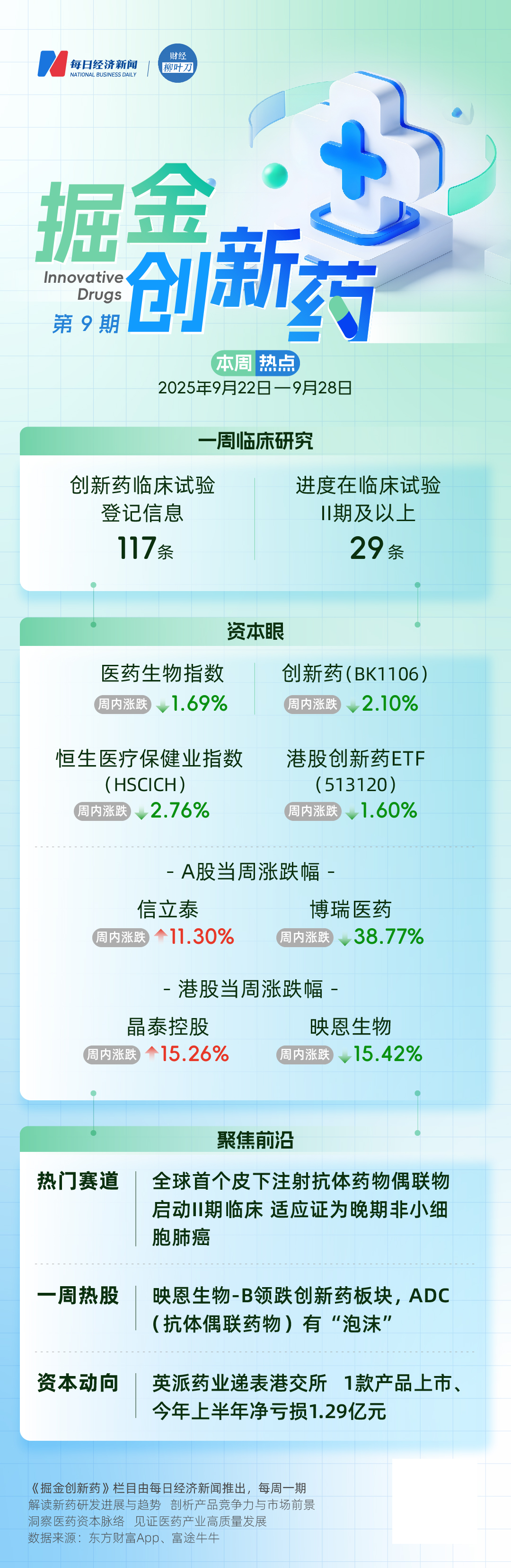
Group 1: Market Overview - The Hang Seng Healthcare Index (HSCICH) decreased by 2.76% during the week, while the Hong Kong Innovation Drug ETF (513120) fell by 1.60% [4] - The pharmaceutical and biotechnology index dropped by 1.69%, underperforming the Shanghai Composite Index by 1.04 percentage points [4] Group 2: Company Developments - Nanjing Inpai Pharmaceutical Co., Ltd. submitted a listing application to the Hong Kong Stock Exchange, reporting a net loss of 129 million yuan in the first half of the year [5][6] - Inpai's core product, Senapali, was approved for marketing in China as a first-line maintenance therapy for ovarian cancer, applicable to all populations [6] - Inpai's revenue projections for 2023, 2024, and the first half of 2025 are 235 million yuan, 34 million yuan, and 25 million yuan respectively, with net losses of 20 million yuan, 255 million yuan, and 129 million yuan [6][7] Group 3: Clinical Trials and Innovations - The first subcutaneous antibody-drug conjugate (ADC) for advanced non-small cell lung cancer has entered Phase II clinical trials [8][16] - JSKN033, a subcutaneous ADC, aims to simplify administration time and reduce risks associated with intravenous delivery [18] - The National Medical Products Administration disclosed 117 new clinical trial registrations, with 29 in Phase II or higher, focusing on oncology and autoimmune diseases [8] Group 4: Stock Performance and Market Sentiment - Yimeng Bio-B experienced a significant decline, attributed to overall adjustments in the innovation drug sector and the upcoming lock-up expiration for cornerstone investors [12][13] - Yimeng Bio-B's stock price has seen a 30% drop from its peak, despite being up approximately 279% since its IPO [13] - Analysts from GF Securities and Morgan Stanley have set target prices for Yimeng Bio-B at 574.28 HKD and 766 HKD per share, respectively, citing its leading ADC platform and partnerships with global firms [13][15]
谁是下一个三生制药?
Hu Xiu· 2025-06-09 04:25
Core Insights - The PD-1/VEGF dual antibody is currently a hot topic in innovative drug development, with significant collaborations and financial transactions highlighting its potential [1][2][3] Group 1: Industry Dynamics - Chinese biotech companies are emerging as key players in the global PD-(L)1/VEGF dual antibody development race, demonstrating advanced research progress and achieving international recognition through high-value business development (BD) deals [2][3] - Major collaborations include 12.5 billion USD upfront payment and 60.5 billion USD total deal value between 3SBio and Pfizer for SSGJ-707, and BioNTech's 15 billion USD upfront payment for BNT327 licensed to BMS, totaling over 90 billion USD [1][2] Group 2: Clinical Developments - The PD-(L)1/VEGF target gained traction after Kangfang Biotech's AK112 outperformed the benchmark drug, Pembrolizumab (K drug), in head-to-head trials, leading to increased interest from multinational corporations (MNCs) [3][4] - AK112 demonstrated a higher objective response rate (ORR) of 50% compared to K drug's 38.5% and a disease control rate (DCR) of 89.9% versus 70.5% in late-stage non-small cell lung cancer (NSCLC) trials [4][6] Group 3: Competitive Landscape - The success of AK112 has intensified competition among MNCs, with companies eager to capitalize on the potential of PD-(L)1/VEGF dual antibodies, as evidenced by Pfizer's strategic investments [9][10] - As of May 2025, there are 14 PD-(L)1/VEGF dual antibodies in clinical stages globally, with half originating from Chinese biotech firms, indicating a robust pipeline and potential for further BD opportunities [15][24] Group 4: Future Prospects - Companies like Junshi Biosciences, I-Mab, and Hualan Biological Engineering are actively pursuing PD-(L)1/VEGF dual antibodies, with significant investments and clinical trials underway [15][20][22] - The shift from merely imitating existing drugs to innovating new targets and technologies marks a significant evolution in the Chinese pharmaceutical industry, enhancing its international competitiveness [24][25]