
中小银行减量提质

Search documents
中小银行化险进行时:“减量提质”
HTSC· 2026-02-11 02:50
Investment Rating - The report maintains an "Overweight" rating for the banking sector [2] Core Insights - The report highlights a significant reduction in the number of high-risk banking institutions in China, with an improving trend in asset quality and overall risk control. However, it notes a bifurcation in the performance of small and medium-sized regional banks, with some exhibiting slower expansion and notable profit volatility [3][10] - The central economic work conference has officially introduced the concept of "reducing quantity and improving quality" for small and medium-sized financial institutions, indicating a shift towards a market structure characterized by reduced numbers, enhanced quality, and increased concentration [10][14] Policy Context: From "Risk Disposal" to "Reducing Quantity and Improving Quality" - The central economic work conference has progressively tightened its risk statements regarding small and medium-sized financial institutions, culminating in the formal introduction of "reducing quantity and improving quality" by the end of 2025. This shift follows a series of events exposing deficiencies in governance and business models within these institutions [10][14][15] Risk Overview: How Are Small and Medium-Sized Regional Banks Performing? - As of Q3 2025, regional banks account for approximately 30% of the industry’s asset scale, with a notable reduction in high-risk institutions and an overall improvement in asset quality. However, the non-performing loan (NPL) ratios and provision coverage ratios of regional banks remain below industry averages, indicating a need for enhanced capital strength and risk absorption capabilities [11][27] Pathways for Reform: Feasible Solutions for "Reducing Quantity and Improving Quality" - The report outlines three core reform pathways for small and medium-sized banks: 1. Provincial association reforms, which have evolved since 2020, focusing on tailored strategies for each province, leading to models like "joint banks" in Zhejiang and Jiangsu [12] 2. Mergers and acquisitions, transitioning from horizontal expansions to vertical integrations aimed at risk resolution, with recent involvement from state-owned banks marking a new trend [12] 3. Capital supplementation through local government special bonds, with a total issuance of 523.3 billion yuan, primarily directed towards regions like Liaoning and Henan [12] International Practice Review: Insights from Global Banking Supply-Side Reforms - The report draws three key lessons from international experiences in banking supply-side reforms: 1. The appropriate clearing of small banks during weak economic recovery periods is a common industry practice, emphasizing the need for market-driven risk resolution rather than administrative cover-ups [13] 2. The critical point of industry concentration should be monitored, as the failure of medium-sized banks can trigger systemic financial crises [13] 3. Supply-side reforms in banking present development opportunities, as the exit of tail-end institutions reduces irrational competition, allowing quality banks to strategically acquire valuable assets at discounted prices [13]
中央一号文件未再提农信社改革,中小银行减量提质仍受关注
第一财经· 2026-02-04 15:32
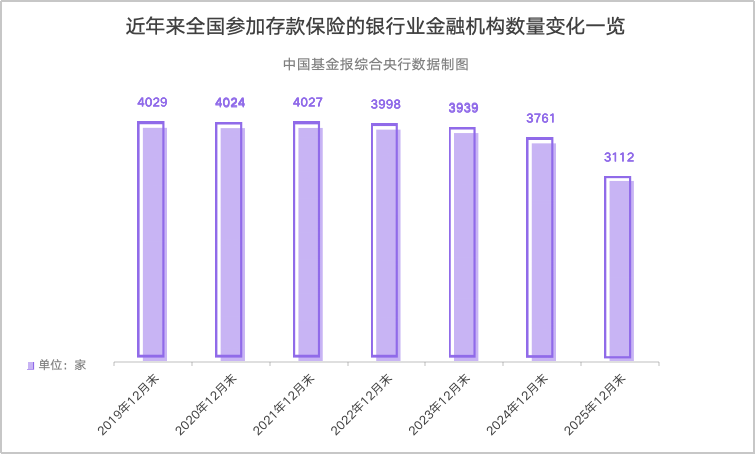
Core Viewpoint - The recent "Opinions" issued by the Central Committee and the State Council outline significant tasks and priorities for the agricultural and rural modernization sector in 2023, marking a shift in focus regarding rural financial institution reforms compared to previous years [2][4]. Financial Sector Reforms - Unlike previous years, the "Opinions" do not specifically mention the reform of provincial credit unions or the restructuring of village and town banks, indicating a potential shift in the approach to rural financial reforms [2][4]. - Experts suggest that the reduction in the number of village and town banks will continue, but the success of reforms hinges on stimulating the internal motivation of small and medium-sized banks [2][5][6]. - Approximately half of the provinces have completed or clarified new reform plans for provincial credit unions, with an acceleration expected post-2025 [2][4][8]. Trends in Rural Financial Institutions - The trend of reducing the number of small banks, particularly village and town banks, is expected to persist, with a focus on enhancing quality rather than merely reducing quantity [7][11]. - As of the end of 2025, the number of banks participating in deposit insurance has decreased to 3,112, down from 3,761 at the end of 2024, marking a significant reduction [9][10]. - In 2025, 462 banks were approved for mergers, dissolutions, or cancellations, with village banks accounting for 291 of these, indicating a sharp increase compared to previous years [10][11]. Future Directions - The emphasis on "reducing quantity" through mergers and restructuring aims to eliminate high-risk and low-efficiency institutions rather than simply shutting them down [11]. - Future reforms will focus on enhancing the quality of financial services while ensuring that financial resources are not overly concentrated, which could weaken service to vulnerable regions and sectors [11].


一年649家银行退出,中小银行“减量提质”加速
Zhong Guo Ji Jin Bao· 2026-02-01 06:08
Core Viewpoint - The number of banking institutions participating in deposit insurance in China decreased by 649 in 2025, marking a significant trend towards "reducing quantity and improving quality" among small and medium-sized banks [1][2][3]. Group 1: Industry Trends - As of the end of 2025, there are 3,112 banking institutions participating in deposit insurance, a reduction from the previous year [3]. - The decline in the number of banks has been consistent since 2022, with reductions of 59, 178, and 649 banks in 2023, 2024, and 2025 respectively, primarily affecting rural commercial banks, village banks, and rural credit cooperatives [5]. - Over 400 banks exited the market in 2025 through dissolution or mergers, predominantly among small and medium-sized banks [5]. Group 2: Regulatory and Market Dynamics - Regulatory policies have driven the "reducing quantity and improving quality" initiative, focusing on reforming and mitigating risks in small and medium-sized financial institutions [5][9]. - Increased market competition has pressured small banks, as larger state-owned and joint-stock banks enhance their services, making it difficult for smaller institutions to compete [5]. - Issues such as small asset sizes, weak risk resistance, and inadequate corporate governance are prevalent among rural commercial banks and village banks [5][6]. Group 3: Reform and Risk Mitigation - The reform process for small banks has shown significant progress, characterized by a shift from isolated risk management to systematic resolution [8][9]. - Strategies include horizontal integration through the establishment of provincial-level legal entities and vertical absorption by stronger banks, which inject capital and governance capabilities [8][9]. - The focus is on a dual approach of risk resolution and capacity enhancement, with a combination of capital replenishment, mergers, and market exits [9]. Group 4: Future Directions - The core policy remains centered on "reducing quantity and improving quality," with an emphasis on creating differentiated competitive advantages for small banks [12]. - Future development for small banks should focus on enhancing quality, leveraging local advantages, and deepening digital transformation to optimize risk control and reduce operational costs [12][13]. - Recommendations include strengthening provincial-level coordination, establishing shared technology platforms, and focusing on localized and specialized services to avoid direct competition with larger banks [13].
2025年超300家村镇银行退出市场
Jin Rong Shi Bao· 2026-01-16 02:08
Core Viewpoint - The restructuring of village banks is accelerating in 2026, with state-owned banks actively converting village banks into branch institutions, as evidenced by the approval of the acquisition of Zhejiang Anji Jiaoyin Village Bank by Bank of Communications [1][2]. Group 1: Restructuring Activities - Bank of Communications has been approved to acquire Zhejiang Anji Jiaoyin Village Bank and convert it into three branches, marking the first case of a state-owned bank's "village-to-branch" initiative in 2026 [2]. - Since 2025, over 300 village banks have exited the market, with "village-to-branch" and "village-to-subsidiary" becoming the mainstream exit strategies [1][2]. - In 2025, Bank of Communications completed similar conversions for multiple village banks in Qingdao and Sichuan, demonstrating a consistent strategy in this area [2][3]. Group 2: Industry Trends - The "village-to-branch" strategy involves the full acquisition of village banks by their parent banks, integrating them into the main banking system to enhance operational efficiency and resource allocation [4]. - The trend of state-owned banks engaging in "village-to-branch" conversions is driven by the desire to strengthen their rural financial services while minimizing risks associated with weaker village banks [4]. - Other banks, including Agricultural Bank of China and Industrial and Commercial Bank of China, have also participated in the restructuring of village banks, indicating a broader industry movement [2][3]. Group 3: Regulatory Environment - The acceleration of village bank exits is influenced by regulatory policies aimed at reforming small financial institutions, emphasizing a focus on supporting agriculture and small enterprises [7][8]. - In 2025, 310 village banks exited the market, accounting for over 70% of the total exits since 2010, highlighting the significant impact of regulatory guidance [7]. - The central government's economic work conference in late 2025 underscored the importance of "reducing quantity and improving quality" in small financial institutions, which will continue to shape the reform landscape in 2026 [8].

“村改支” 在即,张家港行拟吸收合并东海村镇银行,国资10%股权同步挂牌转让
Xin Lang Cai Jing· 2026-01-15 11:41
Core Viewpoint - Zhangjiagang Bank plans to hold a shareholders' meeting on January 21, 2026, to discuss the absorption and merger of Donghai Rural Commercial Bank, which will be converted into a branch of Zhangjiagang Bank, reflecting a typical "village to branch" approach [1] Group 1: Merger and Acquisition Details - The merger will lead to the cancellation of Donghai Rural Commercial Bank's legal entity, and its shares will be extinguished, making the transfer of the 10% stake by Lianyungang Financial Holding Group a timely asset disposal [2][3] - Zhangjiagang Bank currently holds 53.83% of Donghai Rural Commercial Bank, while Lianyungang Financial Holding Group holds 10%, with other shareholders including individuals and companies [1] Group 2: Financial Performance - Donghai Rural Commercial Bank reported revenues of 46.65 million in 2024 and 4.24 million in the first 11 months of 2025, with net losses of 15.93 million in 2024 and 7.34 million in the first 11 months of 2025 [2] Group 3: Strategic Implications - The absorption and merger are seen as fundamental measures by Zhangjiagang Bank to mitigate risks and enhance efficiency, allowing for unified management and improved risk control [2] - The merger is expected to strengthen the bank's position in the rural financial market, leveraging the parent bank's technology, funding, and risk control systems to enhance service capabilities and compliance [3][4]
国有大行再度出手“村改支”,开年有60多家村镇银行消失
Di Yi Cai Jing· 2026-01-12 12:56
Group 1 - The core viewpoint of the articles is the ongoing restructuring of rural banks into branch banks by state-owned banks, with the recent acquisition by Bank of Communications marking the tenth instance of this initiative since last year [1][2][3] - Bank of Communications has received approval to acquire Anji Jiaoyin Rural Bank and establish multiple branches, indicating a strategic shift towards consolidating rural banking operations [2][3] - The trend of restructuring is part of a broader effort to enhance the quality of small financial institutions, with over 450 small banks expected to exit the market by 2025, predominantly rural banks [1][4] Group 2 - In 2025, 454 small banks were approved for mergers, dissolutions, or business cancellations, with rural banks accounting for over 60% of this figure [5] - The regions with the highest number of rural bank exits include Inner Mongolia, Shandong, and Hubei, highlighting significant regional disparities in the banking landscape [5] - Experts emphasize that while reducing the number of small financial institutions is necessary, improving their quality is the ultimate goal, necessitating effective measures to prevent the emergence of high-risk institutions [5]


华创金融红利资产月报(2025年12月):中小银行减量提质加速推进,险资余额保持高增-20260105
Huachuang Securities· 2026-01-04 23:30
Investment Rating - The report maintains a "Recommended" rating for the banking sector, emphasizing continued high growth potential [1]. Core Insights - The banking sector is undergoing a "reduction and quality improvement" process, particularly among small and medium-sized banks, with over 400 banks having been approved for mergers, dissolutions, or cancellations in 2025 alone, surpassing the total from the previous three years [2][7]. - The insurance capital market is expected to see a significant influx of funds, with estimates suggesting an increase of around 1 trillion yuan in 2026, driven by a favorable investment environment and ongoing reforms in public funds [7]. - The investment logic for bank stocks is shifting from a focus on dividends to a dual focus on dividends and growth, with expectations of a recovery in bank valuations in 2026 [7]. Monthly Market Performance - In December 2025, the banking sector experienced a decline of 1.98%, underperforming the CSI 300 index by 4.3 percentage points, ranking 27th among 31 sectors [11][12]. - The valuation of state-owned banks decreased from a price-to-book (PB) ratio of 0.78 to approximately 0.75, while city commercial banks also saw a decline in their PB ratios [13][15]. - Notable stock performances in December included Shanghai Pudong Development Bank (+8.36%) and Xiamen Bank (+4.63%), while Qingdao Bank (-7.44%) and Minsheng Bank (-6.36%) faced significant declines [15][16]. Banking Fundamentals Tracking - The report highlights the ongoing trend of small and medium-sized banks undergoing consolidation and restructuring, with significant regulatory support aimed at enhancing financial stability [2][6]. - The insurance capital allocation is shifting, with a notable increase in the proportion of funds directed towards stocks and mutual funds, indicating a growing confidence in the equity market [2][7]. Investment Recommendations - The report suggests focusing on three main investment themes for 2026: 1. State-owned banks and leading commercial banks as the foundation of credit and dividends. 2. Quality joint-stock banks and city commercial banks that are expected to benefit from improved interest margins and credit cost reductions. 3. City commercial banks that are likely to benefit from regional policies and have significant performance upside [7].



银行业周报(20251215-20251221):中小银行减量提质加速推进-20251221
Huachuang Securities· 2025-12-21 10:41
Investment Rating - The report maintains a "Recommendation" rating for the banking sector, particularly focusing on the acceleration of "reduction and quality improvement" among small and medium-sized banks [1][4]. Core Insights - The report highlights that since July 2023, the Chinese government has accelerated reforms to mitigate risks in high-risk small financial institutions, with over 400 banks approved for mergers, dissolutions, or cancellations in 2025 alone, surpassing the total of the previous three years combined [4]. - The focus of reforms is on high-risk institutions, particularly rural cooperative banks and village banks, which account for 92% of high-risk entities [4]. - The report suggests that the banking sector is expected to see a systemic recovery in valuations in 2026, transitioning from a defensive to a dual-driven growth model, emphasizing both dividends and growth [4]. Summary by Sections Industry Basic Data - The banking sector consists of 42 listed companies with a total market capitalization of approximately 1.15 trillion yuan and a circulating market value of about 790 billion yuan [1]. Market Performance - The absolute performance of the banking sector over the past month is 5.0%, with a relative performance of 2.8% compared to the benchmark [2]. Key Company Earnings Forecasts and Valuations - Notable banks such as Ningbo Bank, Jiangsu Bank, and China Merchants Bank are rated as "Recommended" with projected earnings per share (EPS) and price-to-earnings (PE) ratios indicating strong future performance [5]. - For instance, Ningbo Bank is projected to have an EPS of 4.33 yuan in 2026 with a PE ratio of 6.64, while Jiangsu Bank is expected to have an EPS of 1.83 yuan with a PE of 5.75 [5]. Investment Recommendations - The report suggests three main investment themes for 2026: 1. State-owned banks and China Merchants Bank as the foundation of national credit and dividends. 2. Quality joint-stock banks and city commercial banks with potential for earnings elasticity due to improved interest margins and credit costs. 3. City commercial banks benefiting from regional policies and significant performance release potential [4].
“村改支”浪潮来袭!村镇银行加速“离场”,银行业开启减量提质新阶段
Jin Rong Shi Bao· 2025-11-20 13:07
Core Viewpoint - The recent approvals by the National Financial Supervision Administration for several banks to acquire their affiliated rural banks and convert them into direct branches signify a shift from quantity expansion to quality enhancement in the rural banking sector [1][2]. Group 1: Recent Developments - Multiple cases of "village to branch" transformations have been approved, indicating a significant acceleration in the reform and restructuring of small and medium-sized banks [2]. - In November, Shanghai Pudong Development Bank successfully acquired two rural banks, converting them into branches, showcasing a trend among various banking institutions to engage in mergers and acquisitions of rural banks [2]. - The restructuring methods "village to branch" and "village to division" are becoming mainstream, allowing banks to absorb rural banks and enhance their operational capabilities [2][3]. Group 2: Strategic Implications - The absorption of rural banks into larger banking institutions enhances service capabilities and risk resilience for rural banking services [3]. - For the parent banks, the restructuring expands their business scope and allows for the potential establishment of new branches in areas where they previously had no presence [3]. Group 3: Policy and Market Dynamics - The acceleration of rural bank integration aligns with regulatory directives aimed at reducing the number of financial institutions while improving service quality [4]. - As of mid-2025, the number of rural banks is projected to decrease to 1,440, reflecting a significant reduction in the sector, which is part of a broader strategy to enhance service quality through consolidation [4]. - The integration of rural banks is not merely about reducing the number of branches but represents a strategic shift towards more focused and quality-driven financial services [4].
鑫闻界|年内4家中小银行评级下调,补充资本金、兼并重组、市场退出提速
Qi Lu Wan Bao· 2025-07-31 09:45
Core Viewpoint - The recent downgrades of credit ratings for several small and medium-sized banks reflect their increasing credit risk and declining profitability, indicating a trend towards "reducing quantity and improving quality" in the development of these banks [2][8]. Group 1: Rating Downgrades - Four small banks, including Yuci Rural Commercial Bank, Changde Rural Commercial Bank, Pingyao Rural Commercial Bank, and Huaxi Rural Commercial Bank, have experienced credit rating downgrades in 2023 due to high asset credit risks and poor profitability [2][6]. - Yuci Rural Commercial Bank has been downgraded three times since 2021, with its credit rating falling from A+ to BB- due to persistent credit risk exposure and deteriorating financial indicators [4][3]. - As of the end of 2024, Yuci Rural Commercial Bank's non-performing loan balance increased significantly by 1.097 billion to 3.756 billion, with a non-performing loan ratio rising by 11.51 percentage points to 34.43% [4][5]. Group 2: Financial Performance - For Yuci Rural Commercial Bank, total assets were 22.643 billion in 2024, with a net profit of -206 million, and a non-performing loan rate of 34.43% [5]. - Changde Rural Commercial Bank's non-performing loan rate rose to 4.81% by the end of 2024, with a significant drop in its provision coverage ratio to 95.19%, below regulatory requirements [6]. - Pingyao Rural Commercial Bank's non-performing loan rate reached 4.55% by the end of 2024, with a capital adequacy ratio of 4.51%, both below regulatory standards [7]. Group 3: Industry Trends - The trend of "reducing quantity and improving quality" among small and medium-sized banks is driven by their weak capital strength, inadequate risk control systems, and lack of differentiated competitive strategies [8]. - In 2023, 184 small and medium-sized banks exited the market through mergers or dissolutions, a sevenfold increase compared to the same period last year [9]. - Recent regulatory reforms emphasize the need for small financial institutions to address risks through capital replenishment, mergers, and market exits, aiming for a more sustainable banking environment [8][9].
