
中德产业合作

Search documents
默茨访华杭州行:强脑科技韩璧丞亮相中德企业交流活动
Xin Lang Cai Jing· 2026-02-27 14:24
Group 1 - German Chancellor Merz visited Hangzhou, where a delegation of nearly 30 German economic representatives engaged with 10 Chinese companies from sectors such as artificial intelligence, brain-computer interfaces, humanoid robots, and new energy vehicles [1][3][11] - The German representatives included major companies like BMW, Mercedes-Benz, Siemens, Adidas, and DHL, while Chinese representatives showcased firms like Zhejiang's Chint Group, Geely, Alibaba, and emerging tech companies like BrainCo and Yushu Technology [3][13] Group 2 - The collaboration between China and Germany is evolving from traditional manufacturing to deeper integration in soft ecosystems, with Zhejiang aiming to establish itself as a global advanced manufacturing hub [4][14] - In the automotive sector, there is a multi-dimensional cooperation where German car manufacturers leverage their brand and mechanical advantages, while Chinese companies excel in core components for new energy vehicles and smart cockpit technologies [5][15] - The partnership extends beyond automotive to traditional sectors like chemicals, with calls for reinventing cooperation methods to adapt to a rapidly changing world [6][15] Group 3 - Companies like BrainCo and Yushu Technology represent a new wave of collaboration, focusing on future industries such as non-invasive brain-computer interface technology, with significant revenue coming from the German market [6][16] - DHL's CEO highlighted China's rapid advancements in logistics robotics and technology innovation, indicating strong partnerships with local developers [6][16] - The current development strategies of China and Germany align closely, emphasizing pragmatic cooperation for mutual benefit, particularly in green energy transitions [9][18]





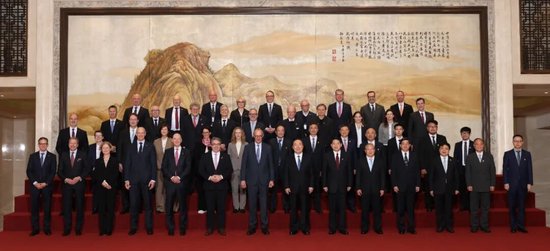
默茨访华大合影公布,哪些中德企业出镜?
Sou Hu Cai Jing· 2026-02-27 04:07
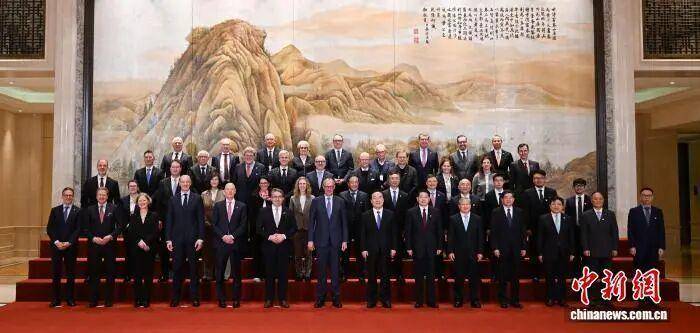
Group 1 - DHL Group's CEO expressed strong willingness to deepen practical cooperation with China, highlighting the active e-commerce sector in Hangzhou [1] - The visit of German Chancellor Merz to Hangzhou included nearly 30 representatives from German businesses, showcasing a significant moment in Sino-German economic cooperation [3] - The group photo taken at West Lake symbolizes the shift from macro consensus to micro implementation in Sino-German industrial cooperation [3] Group 2 - The collaboration between German automotive giants like BMW and Mercedes-Benz with Chinese companies such as Geely and Leap Motor demonstrates a multi-dimensional partnership in the automotive sector [4] - German car manufacturers are recognizing the operational efficiency and cost advantages of China's new energy industry, indicating a promising future for collaboration [5] - The partnership extends beyond automotive to traditional sectors like chemicals, with calls for reinventing cooperation methods to adapt to a rapidly changing world [5] Group 3 - Innovative companies from Hangzhou, such as Yushutech and Qiangbrain Technology, are establishing connections with German industrial giants, indicating a new direction in Sino-German cooperation towards future industries [6] - The visit of Chancellor Merz is seen as an opportunity to broaden cooperation in the global smart robotics industry, with significant involvement from German academic institutions and companies [6] - The alignment of China's 14th Five-Year Plan with Germany's new development strategy emphasizes the mutual expectation for pragmatic cooperation to achieve win-win outcomes [7] Group 4 - Companies like Lingban Technology are leveraging Germany's industrial strengths while focusing on digital innovation and artificial intelligence, fostering a relationship of mutual empowerment rather than competition [8] - Zhejiang enterprises, such as Chint Group, are committed to deepening localized development and promoting green cooperation between China and Germany [8] - The visit concluded with Merz expressing the importance of the trip in enhancing economic cooperation, reflecting a meaningful engagement between the two nations [9]
德企“抢名额”随行访华,说明了什么
Xin Hua Wang· 2026-02-25 06:56
Group 1 - German Chancellor Merz's visit to China on February 25-26 marks his first official trip since taking office, reflecting strong interest from the German business community, with over 30 top executives from key sectors such as automotive, chemicals, and pharmaceuticals participating [1] - The economic cooperation between China and Germany serves as a cornerstone of their relationship, with trade volumes exceeding $200 billion in recent years and bilateral investment stock surpassing $65 billion, accounting for nearly a quarter of the total trade between China and the EU [2] - Over 130 German companies participated in the China International Import Expo, the highest number from any EU country, demonstrating their commitment to the Chinese market [2] Group 2 - The deep integration of industrial cooperation between China and Germany provides sustained growth momentum for German companies, with a shift from simple trade to mutual learning in technology, standards, and innovation systems [2] - China's policy of expanding openness offers multinational companies, including those from Germany, a stable and predictable business environment, which is increasingly important amid rising protectionism [3] - A survey indicates that 93% of German companies in China are willing to continue investing in the market, driven by China's innovation potential, domestic demand, and stable policies [3]
中德总裁研修班开班
Su Zhou Ri Bao· 2026-01-08 02:04
Core Insights - The third session of the Sino-German CEO Advanced Training Program was inaugurated, alongside the establishment of the Taicang Invisible Champions Enterprise Association, aimed at fostering collaboration between German and Chinese enterprises [1][2] - The program has evolved from a simple learning exchange platform to a crucial link for industrial integration and innovation between Chinese and German companies [1] - The establishment of the Invisible Champions Enterprise Association signifies a deeper and broader level of industrial cooperation between Taicang and Germany, marking a step towards a more systematic and platform-based approach to enterprise cultivation and industrial ecosystem development [1] Group 1 - The dual empowerment of the training program and the association will facilitate interactive learning among Sino-German entrepreneurs, promoting the exchange of advanced management knowledge and industry trends [2] - The collaboration will focus on technological co-development, joint market exploration, and deep integration of supply chains, enhancing the resilience and competitiveness of the industrial chain [2] - The initiative aims to complement the strengths of "German quality" and "Taicang manufacturing," as well as the advantages of invisible champions and specialized innovative enterprises, injecting strong momentum into the cultivation of new productive forces in Taicang [2]
3000万辆背后,一汽-大众树立合资合作新典范
Zhong Guo Qi Che Bao Wang· 2025-10-28 01:55
Core Insights - FAW-Volkswagen is set to celebrate the production of its 30 millionth vehicle on October 30, marking it as the first passenger car manufacturer in China to achieve this milestone [1][3] - The company has evolved from a single brand with one model to a comprehensive lineup of 33 models across three brands: Volkswagen, Audi, and Jetta, including both fuel and new energy vehicles [1][3] Industry and Company Development - FAW-Volkswagen has played a pivotal role in the deep integration of the Chinese and German automotive industries, introducing advanced manufacturing systems and localizing project management [3][6] - The company has contributed significantly to the modernization of China's automotive industry by adopting global standards and management practices, enhancing operational efficiency [6][8] Economic Contributions - With annual sales exceeding 1.6 million vehicles, FAW-Volkswagen has generated over 5.5 trillion yuan in cumulative revenue and contributed more than 730 billion yuan in taxes over 34 years, supporting over 500,000 jobs in the supply chain [6][8] - The strategic layout of its manufacturing bases in five cities has not only upgraded local manufacturing but also stimulated the regional economy [6][8] Green Initiatives - All six of FAW-Volkswagen's factories have been established as "waste-free factories," with two achieving near "zero carbon" standards, showcasing the company's commitment to sustainable development [8] Product and Market Evolution - The Volkswagen brand has been instrumental in transitioning Chinese consumers from a scarcity to a more widespread automotive market, with models like the Jetta and Bora leading the way [9][11] - Audi has pioneered the luxury car market in China, introducing innovations such as extended wheelbases and advanced electronic architectures, while Jetta is transitioning to a standalone brand with plans for new energy vehicles [11][13] Future Outlook - FAW-Volkswagen is poised to continue its journey in the automotive industry, focusing on innovation and practical efforts to contribute to the high-quality development of China's automotive sector [13]
