中文学习

Search documents
裴淳华一家的中文咋这么好(学中文)
Ren Min Ri Bao Hai Wai Ban· 2026-02-26 23:11
Core Insights - The article highlights the growing interest in learning Chinese globally, particularly among children, and the cultural significance of the language as a bridge to understanding Chinese culture [2][6][8]. Group 1: Chinese Language Education Initiatives - Ghana plans to introduce Chinese language courses in primary and secondary schools nationwide by 2026, reflecting a broader trend of integrating Chinese into national education systems [2]. - The "Chinese Bridge" competition series has attracted over 1.8 million young participants globally, showcasing the appeal of Chinese language learning and its cultural connections [7]. Group 2: Cultural Exchange and Personal Development - The article emphasizes the personal stories of individuals like Rosamund Pike and her children, who have embraced Chinese language and culture, illustrating the language's role in fostering deeper cultural understanding [3][4]. - Learning Chinese is increasingly seen as a valuable asset for personal and professional development, with many young people incorporating it into their career plans, particularly in regions where Chinese language skills are in demand [8][10]. Group 3: Global Reach and Impact - Chinese language programs are now present in over 190 countries, with 90 countries including Chinese in their national education systems, indicating the language's expanding global footprint [6]. - The success stories of individuals like Ruth and Caroline, who have benefited from learning Chinese, highlight the tangible career opportunities that arise from language proficiency [9][10].

全球合作考点近1500个 为何老外热衷考中文?
Xin Lang Cai Jing· 2026-02-01 14:10
Core Insights - The HSK (Hanyu Shuiping Kaoshi) exam has officially launched its 3.0 version globally, expanding from 6 levels to 9 levels, with the new levels aimed at advanced learners, particularly graduate and doctoral students [1][2] - The difficulty of the new levels (7-9) is designed for high-level Chinese learners, while the lower levels maintain a similar difficulty to the previous version [1] - The number of global HSK test centers has reached 1,477, covering 168 countries, with nearly 850,000 participants annually, indicating a rapid growth in the scale of the exam [2] Group 1 - The HSK exam is recognized as an authoritative international Chinese proficiency test, with over 200 million people learning and using Chinese worldwide [2] - The practical value of Chinese language skills is driving more foreigners to learn Chinese and take the HSK exam, with nearly 60% of new test-takers aged between 19 and 45 [2] - HSK serves as a medium to enhance understanding of contemporary Chinese society, technology, and ecological development, providing a comprehensive view of China for foreign learners [2]
汉语培训班为尼泊尔培养近300名中文旅游人才
Xin Lang Cai Jing· 2025-12-20 13:56
Core Viewpoint - The Chinese Embassy in Nepal has successfully conducted the seventh session of a Chinese language training program for tourism professionals, resulting in the graduation of 47 students and a total of 287 trained individuals since the program's inception [1][2]. Group 1: Training Program Details - The training program is organized by the Chinese Embassy in Nepal, with support from the Nepalese tourism department and the Nepal-China Cultural Education Association [1]. - The program aims to enhance the Chinese language skills of tourism professionals in Nepal, which is crucial for attracting Chinese tourists [2]. Group 2: Student Experience - A standout student, 19-year-old Pashina, shared her journey of learning Chinese, which began six to seven years ago after an encounter with a Chinese actor [1]. - Pashina expressed that learning Chinese has been a joyful experience, supported by her family, despite initial challenges with pronunciation [1]. Group 3: Importance of Chinese Language - The Chinese Embassy's representative emphasized the growing interest among young Nepalese in promoting Nepal's culture and tourism resources through Chinese social media platforms [1]. - The Nepalese tourism director highlighted the significant role of the Chinese language in promoting tourism and related industries in Nepal, indicating the program's positive impact on the sector [2].
全球瞭望丨俄媒:中文在俄罗斯人职业发展中的“含金量”持续上升
Xin Hua She· 2025-12-15 05:36
Core Viewpoint - The increasing interest among Russians in learning Chinese is driven by the deepening economic, cultural, and technological cooperation between Russia and China, with Chinese seen as a key skill for enhancing career competitiveness [1]. Group 1: Economic and Professional Demand - The demand for Chinese language skills in Russia is primarily concentrated in sectors such as economics, finance, retail, e-commerce, information technology, logistics, media, design, and marketing [1]. - The motivation for Russian adults to learn Chinese stems from the need to meet professional demands in business and international cooperation, as well as a personal interest in Chinese culture and acquiring new skills [1]. Group 2: Cultural Understanding - Mastering Chinese is recognized as essential not only for language proficiency but also for a deep understanding of the cultural factors that shape Chinese thinking and behavior, which is crucial for effective career development [1]. - Experts emphasize that in the context of a rapidly evolving international landscape, proficiency in Chinese is becoming a key factor for integration into the global labor market and scientific community, as well as for cross-cultural communication [1].
德国孔子课堂走出“中文家庭”
Ren Min Ri Bao Hai Wai Ban· 2025-12-11 22:49
Core Viewpoint - The article highlights the importance of a multilingual environment in fostering a love for the Chinese language among children in a cross-national family, emphasizing the role of family support and educational institutions like Confucius classrooms in enhancing language learning experiences [4][9]. Group 1: Family Influence on Language Learning - The children, Huang Xiaolei and Huang Yongjie, have been learning Chinese since the age of four, influenced by their mother's passion for the language and culture [5][7]. - The mother, Huang Xuewei, creates a rich Chinese language environment at home by incorporating Chinese media and cultural practices, which helps the children see the practical use of the language in daily life [8][9]. - The family's efforts culminated in the children's success at the "Chinese Bridge" competition, showcasing their dedication and the supportive learning atmosphere [9][10]. Group 2: Educational Support and Community Engagement - The Confucius classroom in Hamburg, where the children study, employs a rigorous curriculum based on Chinese national textbooks, which presents challenges but also opportunities for deeper learning [13][14]. - Teacher Wang Qing emphasizes the importance of parental involvement in children's language education, organizing parent meetings to discuss strategies for supporting their children's learning [10][14]. - The classroom encourages participation in competitions and cultural activities, fostering a sense of community among students and enhancing their language skills through practical application [10][12]. Group 3: Cultural Integration and Personal Growth - The children’s experiences in China, including cultural activities and interactions with local peers, enrich their understanding of the language and culture, reinforcing their commitment to learning [11][12]. - The article illustrates how the children have developed a genuine interest in Chinese culture, as evidenced by their participation in traditional activities and their aspirations to continue improving their language skills [11][12]. - The narrative reflects a broader trend of increasing interest in Chinese language education in Germany, with more schools offering Chinese classes and cultural events becoming accessible to the local community [8][9].

“中文是通向未来的钥匙”
人民网-国际频道 原创稿· 2025-11-14 02:22
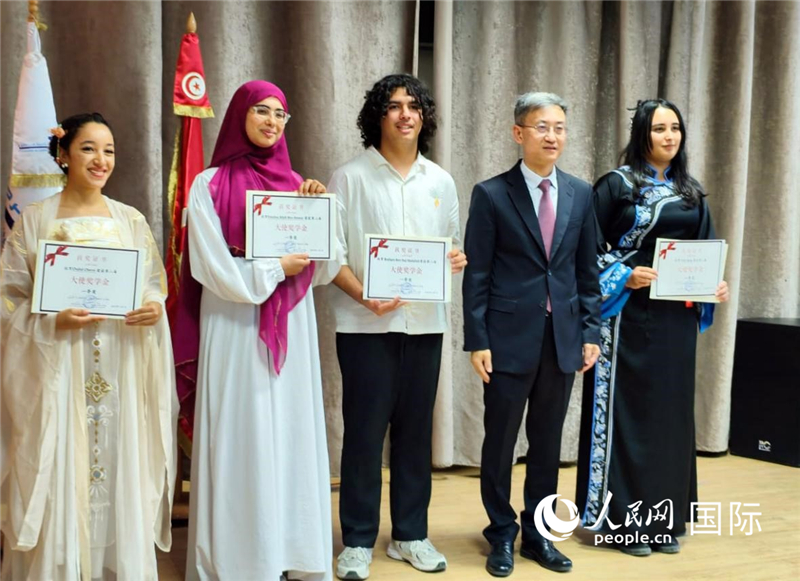
Core Points - The Chinese Embassy in Tunisia awarded the second "Ambassador Scholarship" to 39 high school students and recognized 4 teachers for their contributions [1][2] - The event emphasized the importance of cultural exchange and encouraged Tunisian students to learn Chinese to better understand Chinese culture and modernization [2] Group 1 - The scholarship ceremony took place at the Confucius Institute of Carthage University, attended by nearly 100 teachers and students from 18 high schools in 5 provinces [1] - Ambassador Wan Li highlighted the spirit of the 20th National Congress of the Communist Party of China, promoting international cultural cooperation [2] - Award recipients expressed their desire to strengthen Sino-Tunisian friendship and the importance of learning Chinese for future opportunities [3][4] Group 2 - Award winner Shahid expressed a wish to become Tunisia's ambassador to China and promote Chinese as a second official language [3] - Ibrahim, another awardee, shared positive experiences from a summer camp in China, highlighting the country's rich history and friendly people [3] - Debaji, a passionate Chinese learner, inspired classmates to join her in studying the language, while Salma expressed interest in Chinese fashion and films [3][4]
专访斐济教育部助理部长伊利萨·瓦纳瓦鲁:中斐教育合作助力人才培养
2 1 Shi Ji Jing Ji Bao Dao· 2025-10-15 23:10
Core Insights - The deepening relationship between China and Fiji is significantly advancing cooperation in the education sector, which is seen as a key area for bilateral collaboration [1][3][12] Education Cooperation - The scholarship programs provided by the Chinese government are enabling more Fijian students to study in China, particularly in fields such as language, technology, engineering, and medicine [1][3] - The Fijian government expresses gratitude for the educational opportunities provided by China, emphasizing the importance of these programs for developing local talent [3][15] - There is a strong emphasis on improving Fiji's education system, with aspirations to adopt electronic learning systems and vocational training centers with Chinese support [10][15] Infrastructure Development - Significant infrastructure projects are underway, including a $300 million road construction project on Vanuatu Island, funded and contracted by China, set to commence in December [4] - Other ongoing projects include solar energy systems and water infrastructure, which are expected to improve local living conditions and stimulate economic growth [4][12] Language and Cultural Exchange - The popularity of learning Chinese is increasing in Fiji, with universities offering Chinese language courses and basic training for students before they study in China [6][8] - The ability to speak Chinese is seen as crucial for Fijians, especially in tourism and international exchanges, as there is a growing number of Chinese tourists visiting Fiji [8][9] Future Cooperation - There are hopes for continued collaboration in vocational education, electronic learning, and teacher training to further strengthen ties between the two nations [2][10] - The Fijian government is focused on enhancing tourism infrastructure, including the development of Vanuatu Island, which is expected to attract more visitors and boost the economy [14]
“在中国待得时间越久,我就越热爱中国”——访突尼斯中文翻译柯仁睦
Ren Min Wang· 2025-09-30 09:53
Core Viewpoint - The article highlights the journey of a Tunisian individual, Kerenmu, who developed a passion for the Chinese language and culture, leading to a successful career in translation and cross-cultural communication between China and Arab countries [1][4]. Group 1: Personal Background and Education - Kerenmu, originally from Kokkina Island, Tunisia, initially chose to study German but shifted to Chinese to learn about the culture and customs of Chinese-speaking countries [2]. - He enrolled in the Chinese program at Bourguiba Institute of Modern Languages, where he excelled due to a supportive learning environment and a Chinese teacher who emphasized speaking only in Chinese [3]. - Kerenmu was selected for a six-month study opportunity in China, which significantly enhanced his language skills and provided him with his first travel experience [3]. Group 2: Career Development - After returning to Tunisia, Kerenmu participated in the Chinese Bridge competition, winning first place in the Tunisian region, which solidified his commitment to mastering the language [3]. - He unexpectedly ventured into acting and hosting due to his fluency in Chinese, showcasing his versatility and adaptability in various roles [3]. - Kerenmu transitioned to a translation role in a foreign trade company in the Gulf region after being unable to return to China due to a major health event [4]. Group 3: Insights on China and Arab Relations - Kerenmu emphasizes the high quality and competitiveness of Chinese products in the international market, reflecting China's status as one of the world's largest economies [4]. - He notes the growing interest among Arab populations in learning Chinese, driven by trust and admiration for China, as well as the potential career benefits of mastering the language [4]. - Kerenmu expresses a desire for stronger Sino-Tunisian relations, highlighting the warmth and respect Tunisians have for China [4].

“在中国待得时间越久,我就越热爱中国”
人民网-国际频道 原创稿· 2025-09-30 02:42
Core Viewpoint - The article highlights the journey of a Tunisian individual, Kerenmu, who developed a passion for the Chinese language and culture, leading to a successful career in translation and cultural exchange between China and Arab countries [1][4]. Group 1: Personal Background and Education - Kerenmu initially chose to study German but shifted to Chinese to learn about the culture and customs of Chinese-speaking countries [2]. - He enrolled in a Chinese language program at a Tunisian university and later received an opportunity to study in China, which significantly improved his language skills [3]. - During his time in China, he formed deep friendships and was inspired by the educational environment and the dedication of Chinese teachers [3]. Group 2: Career Development - Kerenmu's proficiency in Chinese led him to various opportunities, including acting in a film directed by Jackie Chan and hosting a television program [3]. - After returning to Tunisia, he faced challenges due to a major health event but eventually found work as a translator in the Gulf region [4]. Group 3: Insights on China-Arab Relations - Kerenmu emphasizes the strong competitive edge of Chinese products in the international market and the positive perception of China among Arab nations [4]. - He notes a growing interest among Arab citizens to learn Chinese, driven by trust and admiration for China, as well as the potential career benefits [4]. - Kerenmu expresses a desire for stronger Sino-Tunisian relations, reflecting the mutual respect and affection between the two nations [4].
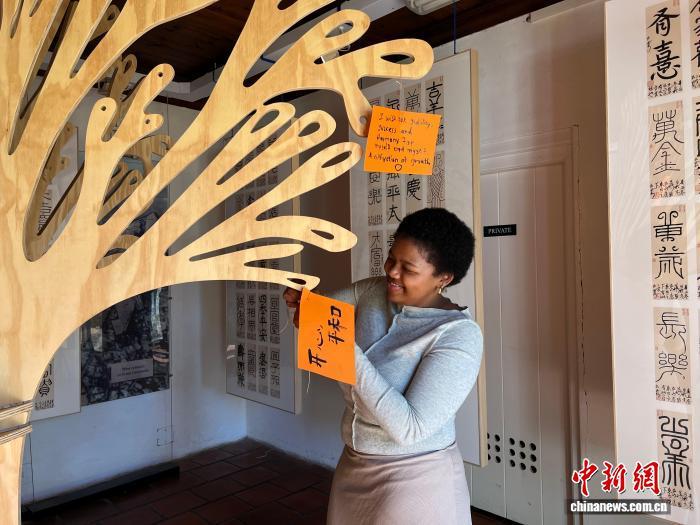
中文学习为南非民众打开“文化之窗”
Zhong Guo Xin Wen Wang· 2025-09-18 02:33
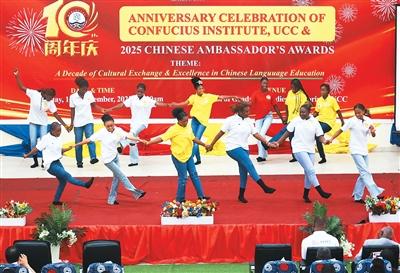
Core Viewpoint - The rise of Chinese education in South Africa is enhancing cultural exchange and understanding between the two nations, marking a significant milestone in the integration of Chinese language and culture into South African society [1][4]. Group 1: Chinese Education in South Africa - September 17 is celebrated as "South Africa Chinese Day," established in 2019, coinciding with the 10th anniversary of Chinese being included in the South African national education system in 2025 [1]. - Many South African youth view Chinese not just as a language but as a gateway to understanding China, fostering deeper Sino-South African friendship through cultural learning [1][4]. - The Confucius Institute at Stellenbosch University introduced a "Paper Cutting Digital Heritage" experience, where students learned about the history and significance of Chinese paper cutting, creating art both physically and digitally [1]. Group 2: Cultural Engagement and Popularity - A Chinese class at a local school featured students dressing in traditional Chinese attire, creating a viral short video that garnered nearly 20,000 views in one day, showcasing the popularity of the Chinese club as a cultural ambassador [3]. - The enthusiasm for Chinese language and culture is evident, with students engaging in creative activities that blend traditional practices with modern technology, such as augmented reality [1][3]. Group 3: Growth of Confucius Institutes - South Africa has established 7 Confucius Institutes and 2 independent Confucius classrooms, making it the African country with the highest number of such institutions, reflecting the growing interest in Chinese language education [4]. - The influx of students learning Chinese is revitalizing cultural exchanges and adding an Eastern dimension to South Africa's multicultural landscape [4].