中美技术竞争

Search documents
美国特别竞争研究项目:《中美技术竞争中谁领先、谁落后及未来走向》
欧米伽未来研究所2025· 2026-03-19 15:40
Core Viewpoint - The SCSP report highlights the competitive landscape between the U.S. and China in key technology sectors, indicating a complex, fluid, and uncertain multi-dimensional competition rather than a clear-cut dominance by either side [2]. Group 1: China's Strengths - China leads in four strategic technology areas: advanced batteries, advanced manufacturing, commercial drones, and 5G infrastructure, with high confidence ratings [4]. - In the battery sector, China's manufacturing capacity reached 1,705 GWh in 2023, compared to the U.S. at 93 GWh, marking an 18-fold difference. China controls 80% of global lithium-ion battery component shipments and holds about 60% of the global electric vehicle battery market [4]. - China accounts for approximately 35% of global manufacturing output, while the U.S. is at about 12%. The number of industrial robots deployed by Chinese companies in 2023 matches the total of all other countries combined [5]. - China has deployed over 4 million 5G base stations, averaging 206 per 100,000 people, compared to the U.S. with about 100,000 base stations or 77 per 100,000 people. By 2024, China is expected to have over 1 billion 5G users, covering 88% of its mobile users [5]. Group 2: U.S. Strengths - The U.S. maintains a lead in artificial intelligence, quantum computing, semiconductors, fusion energy, and internet platforms, relying on foundational research breakthroughs and private sector innovation [6]. - In AI, U.S. private investment reached $67.2 billion in 2023, compared to China's $7.76 billion, a nearly 9-fold difference. Most foundational AI models have originated from U.S. private companies [6]. - The semiconductor sector is rated as "U.S. leading, high confidence," with the CHIPS Act expected to drive over $400 billion in private investment, projecting that the U.S. will hold 28% of global advanced logic chip capacity by 2032 [7]. Group 3: Structural Weaknesses - A recurring structural pattern is observed: U.S. innovation versus Chinese commercialization. The U.S. holds 39% of global biotechnology patents but has seen a shift in the production side, with Chinese companies supplying about 17% of U.S. active pharmaceutical ingredients (APIs) [9]. - In synthetic biology, the U.S. market is valued at $16.3 billion compared to China's $1.05 billion, yet China controls 70% of global fermentation capacity, highlighting a significant production bottleneck for U.S. firms [10]. - DJI dominates the global consumer drone market with over 90% share, raising national security concerns for the U.S. as it lacks comparable domestic alternatives [10]. Group 4: Strategic Recommendations - The report suggests establishing a "Technology Competition Council" to unify strategic direction and coordinate responses across departments, addressing the misalignment between private sector focus and government priorities [11]. - The trajectory of fusion energy illustrates the competitive dynamics, with the U.S. currently leading but facing significant investment from China, which may narrow the gap in the coming years [12].


美媒炒作:五角大楼和AI巨头的共同软肋,绕不开中国电池
Guan Cha Zhe Wang· 2025-12-23 12:50
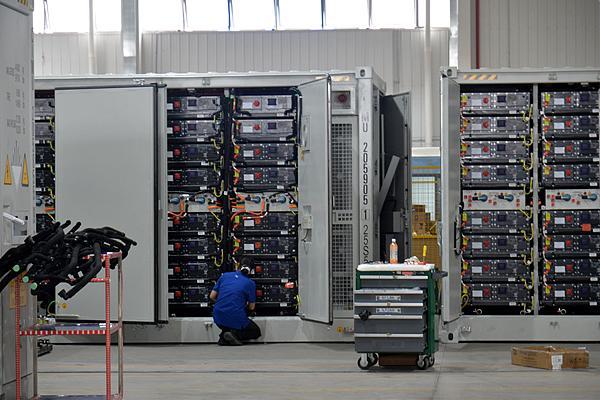
Core Viewpoint - The article highlights the significant reliance of the U.S. artificial intelligence (AI) industry and national defense on Chinese battery technology, emphasizing the challenges posed by this dependency amid ongoing U.S.-China technological competition [1][2]. Industry Overview - China holds a dominant position in the lithium battery sector, which is increasingly viewed as a national security threat by the West, extending beyond the automotive industry [2][6]. - Approximately 6,000 independent battery components in U.S. military weapon projects depend on Chinese supply chains, indicating a critical vulnerability [6]. U.S. Response and Policy Changes - The U.S. government, under the Trump administration, has shown a growing interest in developing a domestic battery industry to reduce reliance on China, with high-level meetings and funding initiatives being reported [7][8]. - The U.S. Department of Energy has approved funding of up to $500 million for battery materials and recycling projects, reflecting a shift in policy focus towards battery technology [7]. Challenges in Domestic Production - Experts estimate that it will take at least five years for U.S. manufacturers to produce sufficient lithium iron phosphate batteries to meet domestic demand, with longer timelines needed to establish a complete supply chain [8][10]. - The U.S. faces significant challenges in competing with China due to higher environmental standards and the complexity of refining key minerals [8]. Strategic Importance of Batteries - The article underscores the strategic importance of batteries in modern warfare, with military applications increasingly reliant on advanced battery technology sourced from China [14][15]. - The U.S. military is recognizing the need for a robust battery strategy, as future military capabilities will heavily depend on battery technology [14][15]. Market Dynamics and Future Outlook - The article notes that the demand for batteries is expected to grow significantly, driven by applications in AI, data centers, and military technologies, which could reshape the competitive landscape [10][11]. - The U.S. is exploring partnerships with countries like Japan to bolster its battery manufacturing capabilities, indicating a strategic pivot in international trade relations [7].
小摩看好中国芯片“卖铲人”机会!上游设备商成投资新焦点
贝塔投资智库· 2025-09-02 04:00
Core Viewpoint - The Chinese semiconductor equipment suppliers are poised for structural opportunities despite local semiconductor companies' stock prices reaching a four-year high, as demand for equipment will benefit from the ongoing industrial upgrade wave [1][6]. Group 1: Market Performance - The Shanghai Stock Exchange STAR 50 Index, focusing on local chip companies, surged 28% in August, reaching a historical high, driven by regulatory guidance to reduce reliance on Nvidia's H20 chips, catalyzing the domestic substitution process [1]. - The current price-to-earnings (P/E) ratio of the STAR 50 Index is 62 times, which is 50% higher than its five-year average, while the Philadelphia Semiconductor Index's P/E ratio stands at only 24 times [1]. Group 2: Investment Focus - Caution is advised regarding listed companies directly involved in chip production, as their valuations reflect expectations and face challenges related to demand sustainability and capacity targets [4]. - The stock price of Cambricon Technologies (688256.SH) doubled since December, with a P/E ratio exceeding 200 times, making it the most expensive stock in A-shares [4][5]. Group 3: Equipment Suppliers - The focus is on equipment suppliers, with Northern Huachuang Technology Group (002371.SZ) stock rising 30% this year, while the semiconductor equipment sector saw an 18% increase [5]. - The total investment by Chinese cloud service providers this year is approximately $50 billion, only one-sixth of the $330 billion investment by the top four U.S. hyperscalers, indicating significant room for capital expenditure growth [5]. Group 4: U.S.-China Technology Competition - There may be a "compromise" in U.S.-China technology competition, where China continues to purchase older Nvidia chips while advancing its semiconductor self-sufficiency goals, creating a dynamic balance that preserves market space for international equipment suppliers and drives technological iteration for local suppliers [6].

3大坏消息袭来!特朗普撑不住了,主动对华示好,瞬间轰动全球舆论
Sou Hu Cai Jing· 2025-07-07 04:14
Group 1: Trump's Approval Ratings - Trump's approval rating has dropped to a historical low, with 43% of Americans satisfied and 53% dissatisfied, resulting in a net approval rating of -10% [1] - This represents a 3 percentage point decline from the previous day, marking the lowest net approval since April 29 [1] - Public dissatisfaction appears to be fueled by Trump's recent actions, reigniting discontent towards the White House [1] Group 2: Federal Reserve and Economic Policy - Federal Reserve Chairman Jerome Powell stated that current interest rates are sufficient to limit economic activity and that monetary policy should not be adjusted hastily until inflation shows a clearer downward trend [3] - The Federal Reserve has maintained the federal funds rate target range at 4.25% to 4.5% for the fourth consecutive time, with potential for two rate cuts this year [3] - Trump has publicly criticized Powell, calling for an investigation into his actions and suggesting that Powell should resign [3] Group 3: U.S.-China Relations - There are indications that China may invite Trump to a military parade in Beijing, signaling a potential thaw in U.S.-China relations [5] - The visit could provide an opportunity for both nations to seek cooperation, especially after years of trade and technology conflicts [5] - Successful outcomes from Trump's visit could lead to a more stable relationship, benefiting both countries economically [5][7] Group 4: Technology Competition - The U.S. continues to impose technology restrictions on China, particularly in critical areas like semiconductor manufacturing and artificial intelligence [7] - The ongoing technology competition will remain a central aspect of U.S.-China relations, with China needing to focus on overcoming key technological challenges [7] - The future of U.S.-China trade relations will involve finding a new balance between cooperation and competition [7]