中西文化融合

Search documents
来这座浙江县城过年,红包都是欧元的
3 6 Ke· 2026-02-25 07:47
Core Viewpoint - The article highlights the unique cultural blend of traditional Chinese and Western influences in Qingtian County, Zhejiang, especially during the Spring Festival, showcasing how the local community integrates global elements into their daily lives and celebrations [1][2][5]. Group 1: Cultural Integration - Qingtian's New Year celebrations feature a mix of traditional Chinese dishes and Western foods, such as Parma ham and Spanish seafood rice, reflecting a fusion of cultures [2][5]. - The presence of over 30,000 overseas Chinese in Qingtian contributes to a diverse cultural atmosphere, with local families often having relatives abroad, leading to a unique blend of customs and practices [5][6]. - The architectural style in Qingtian has been influenced by Western culture, with European-style buildings and frequent cross-border exchanges of goods and currencies [6][7]. Group 2: Economic Contributions - Remittances from overseas Chinese have historically been a significant economic source for Qingtian, funding local infrastructure and community projects [7][9]. - The county boasts around 600 coffee shops, indicating a high density of coffee culture comparable to European cities, which has become an integral part of daily life for locals [7][9]. - The local economy is also supported by the return of successful expatriates who invest in businesses such as cafes and restaurants, blending local traditions with modern lifestyles [12][13]. Group 3: Community and Identity - The article emphasizes the strong sense of identity among Qingtian residents, who maintain connections with their roots while embracing global influences, evident in their culinary adaptations and cultural practices [9][10]. - The village of Longxian has become a symbol of this cultural exchange, with its residents often displaying multiple time zones and national flags, representing their global connections [10][12]. - The return of expatriates during the Spring Festival enhances the festive atmosphere, showcasing a blend of local and international traditions, making the celebrations richer and more diverse [12][13].

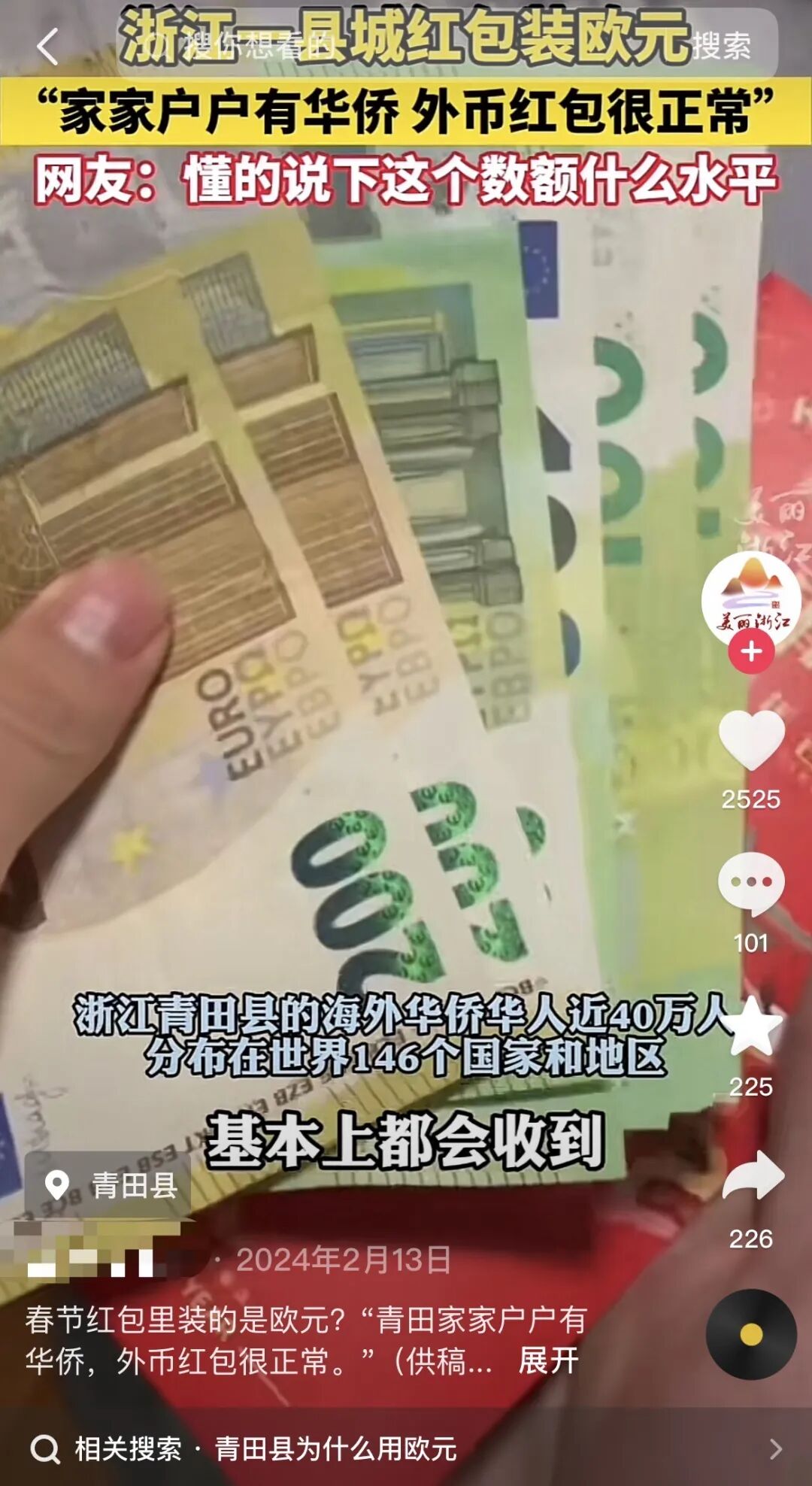
来这座浙江县城过年,太“欧气”了
3 6 Ke· 2026-02-24 02:37
Core Viewpoint - The article highlights the unique cultural blend of QingTian County in Zhejiang, where traditional Chinese customs merge with Western influences, particularly during the Spring Festival, showcasing a vibrant community enriched by its overseas Chinese population [1][2][5]. Group 1: Cultural Integration - QingTian's New Year celebrations feature a mix of traditional Chinese dishes and Western foods, such as Parma ham and Spanish seafood rice, reflecting the local community's diverse culinary influences [2][5]. - The presence of over 300,000 overseas Chinese in QingTian, compared to a local population of just over 500,000, indicates a strong connection between the community and its diaspora [5][6]. - The architectural style in QingTian has been influenced by Western culture, with European-style buildings and bridges becoming commonplace [6][7]. Group 2: Economic Contributions - Remittances from overseas Chinese have historically been a significant economic source for QingTian, funding local infrastructure and community projects [7][11]. - The local coffee culture has flourished, with over 600 coffee shops in the area, indicating a high density comparable to European cities, and coffee consumption has become a daily ritual for residents [7][11]. - QingTian aims to develop a "QingTian Western Cuisine Master" brand to cultivate local culinary talent, blending traditional Chinese tastes with Western cuisine [7][11]. Group 3: Community and Identity - The article describes how QingTian residents maintain connections with their overseas relatives, often displaying multiple time zones and national flags at home, symbolizing their global ties [9][11]. - The return of successful overseas Chinese to QingTian has led to the establishment of various businesses, including guesthouses and restaurants, which integrate local culture with modern practices [11][12]. - The festive atmosphere during the Spring Festival is enriched by the presence of both local residents and returning overseas Chinese, creating a unique blend of traditions and experiences [11].
香港新春观察(三):寻找“年味”的书写者
Xin Lang Cai Jing· 2026-02-20 11:26
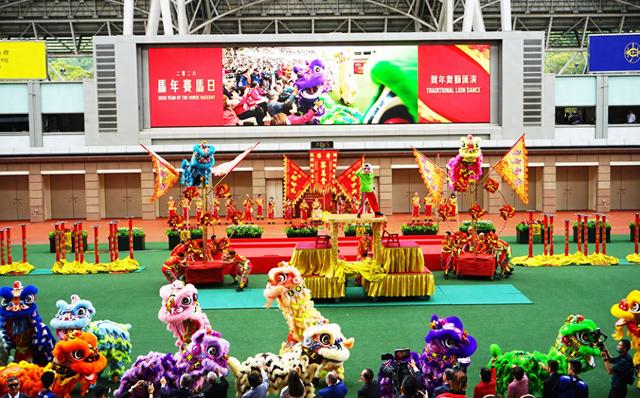
Core Viewpoint - The article highlights the vibrant blend of traditional and modern elements during the Chinese New Year celebrations in Hong Kong, emphasizing the cultural significance of these festivities and their role in fostering a sense of belonging and community [1][10]. Group 1: Cultural Significance - The lion dance and horse racing events at Sha Tin Racecourse symbolize the deep-rooted cultural heritage of Hong Kong, showcasing a lively celebration that resonates with both locals and international visitors [4][5]. - The atmosphere at the racecourse reflects a unique fusion of traditional Chinese customs and modern entertainment, illustrating Hong Kong's ability to maintain its cultural roots while embracing global influences [5][10]. Group 2: Visitor Experience - Nearly 100,000 attendees participated in the New Year horse racing event, with over 20,000 visitors from mainland China and abroad, setting a record for attendance on race day [5][10]. - Visitors expressed their enjoyment of the vibrant atmosphere, noting the excitement of the horse races and the cultural performances, which provided a rich experience of Hong Kong's festive spirit [7][8]. Group 3: Culinary Traditions - The article discusses the significance of traditional dishes during the New Year celebrations, such as the "lo hei" dish, which symbolizes prosperity and family unity, reflecting the cultural importance of shared meals [11][13]. - Chefs emphasize the balance between modern culinary techniques and traditional flavors, aiming to preserve the essence of cultural dishes while appealing to contemporary tastes [13][14].
“文化进万家”2026浙江青田新春惠民演出举办
Xin Lang Cai Jing· 2026-02-14 07:12
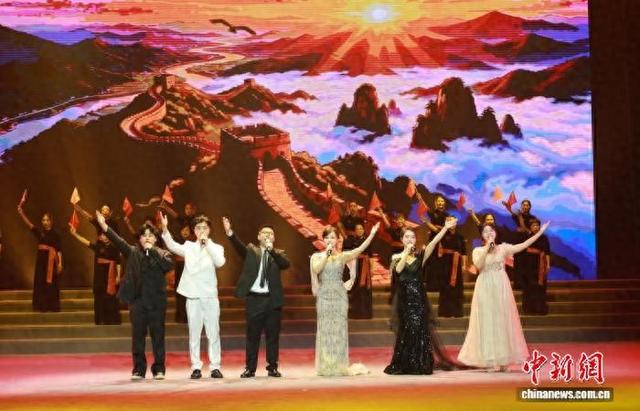
Core Viewpoint - The "Cultural Entering Thousands of Homes - 2026 Zhejiang Qingtian New Year Beneficial Performance" showcased a rich array of Chinese cultural elements, emphasizing the integration of various art forms and community participation [1][2][4]. Group 1: Event Highlights - The performance featured a variety of artistic expressions including photography, acrobatics, magic, opera, music, and dance, led by hosts who guided the audience through the essence of each performance [1]. - Notable performances included a modern arrangement of "New Horse Racing" by young erhu player Wang Xiao, and a stunning acrobatic display titled "Dragon Soaring in Prosperity" by the Zhejiang Provincial Quyi Acrobatics Troupe [1][2]. Group 2: Cultural Integration - The event highlighted the cultural fusion characteristic of Qingtian, with performances by international artists, including an Italian chef who sang "Hey Jude" and a diverse group of singers performing "Rice Fragrance" [4]. - The finale featured a stirring rendition of "I Love You China" by singer Han Yanwen, encapsulating the event's celebration of Chinese culture [4]. Group 3: Community Engagement - The local tradition of "village evening" performances, which has been ongoing for over 40 years, was integrated into the event, showcasing community involvement and cultural heritage [4].
北京必胜客第八年解锁“开运中国年”!中轴线旁非遗联动,中西年味撞出新仪式
Bei Jing Wan Bao· 2026-02-06 06:10
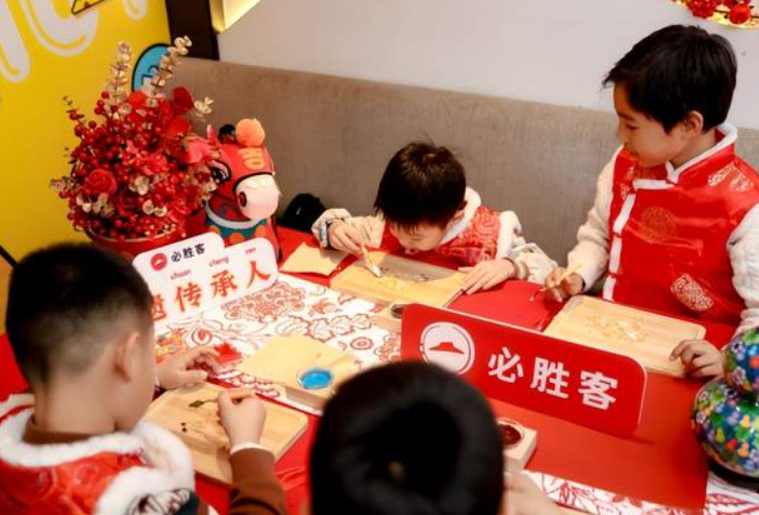
Core Viewpoint - The article highlights the launch of the "Fortune Chinese New Year" non-heritage theme event by Pizza Hut in Beijing's Nanluoguxiang, blending traditional Chinese culture with Western dining experiences to create a unique festive atmosphere for consumers [1][5]. Group 1: Event Overview - The event features immersive experiences with non-heritage cultural elements, allowing guests to engage with traditional crafts and enjoy a rich cultural atmosphere [3]. - Pizza Hut has been operating in the Chinese market for 36 years and has been celebrating the "Chinese New Year in Western Restaurants" for eight consecutive years, emphasizing the integration of cultural heritage with modern dining [5]. - The theme for this year, "One Bite to Win, Everything Will Win," incorporates blessings of good fortune into the dining experience, aiming to enhance the emotional value of family gatherings during the New Year [5][7]. Group 2: Consumer Engagement - The event caters to the evolving consumer trends, particularly among younger generations, who seek meaningful rituals and symbols to enhance their New Year celebrations [7]. - Pizza Hut is launching localized "Fortune Activities" across various cities, incorporating traditional non-heritage elements to create participatory cultural experiences [9]. - The brand aims to transform its restaurants into spaces that not only serve food but also convey confidence and blessings, enhancing the emotional connection with consumers [9]. Group 3: Cultural Significance - The event includes a salon where experts discuss the importance of innovation in traditional craft practices, highlighting the role of food in bridging cultural heritage and modern dining [11]. - A new platform, "Beijing Central Axis Legend Gathering Hall," was inaugurated to promote the integration of non-heritage experiences within the restaurant setting [13]. - The modern design of the restaurant complements traditional non-heritage artifacts, creating a unique environment for consumers to appreciate cultural heritage while dining [15]. Group 4: New Product Launch - Pizza Hut introduced four new Spring Festival pizzas, each symbolizing good fortune and designed to enhance the festive dining experience [19][21]. - The new products include flavors like "Golden Salted Egg Yolk Super Supreme Pizza" and "Italian Meat Sauce Super Supreme Pizza," which are crafted to resonate with traditional New Year blessings [19][21]. - The brand also offers customizable options for consumers to create their own "winning" combinations, enhancing the festive dining experience [21][23]. Group 5: Year-Round Engagement - Pizza Hut emphasizes that the "winning" sentiment extends beyond the Spring Festival, aiming to be a year-round companion for consumers [25]. - The brand believes that food serves not only as a sensory experience but also as an emotional anchor, encouraging consumers to embrace a positive outlook throughout the year [25].

主题公园年味浓 “环球中国年”荟萃中外文化元素
Xin Lang Cai Jing· 2026-01-24 08:15
Group 1 - The core event is the launch of the "Universal China Year" seasonal theme activity at Universal Beijing Resort, inviting visitors to explore new ways of celebrating the Spring Festival [1] - The special performance "Reunion!" features a blend of Chinese and Western cultural elements, including Sichuan opera face-changing, acrobatics, and characters from popular movie IPs like Minions [1] - The event coincides with the 5th anniversary of Universal Beijing Resort, showcasing the unique charm of cultural integration between China and the West [1] Group 2 - The event includes various traditional snacks such as beef tripe, mung bean cake, and candied hawthorn, appealing to visitors' taste memories [1] - The activities will run until March 3, providing an extended opportunity for guests to participate in the celebrations [1]
不起眼的陶罐中,藏着大唐最耀眼的的珍宝
Jing Ji Guan Cha Bao· 2025-12-31 07:06
Core Viewpoint - The article highlights the discovery of over 1,000 valuable Tang Dynasty artifacts hidden in three seemingly ordinary jars, emphasizing their historical significance and the richness of Tang culture [1]. Group 1: Artifacts Overview - The collection includes more than 1,000 precious Tang Dynasty artifacts, featuring various gold and silver items, foreign and domestic coins, gemstones, and valuable medicinal materials [1]. - Among the artifacts, there are 265 pieces of gold and silver items, including renowned treasures such as the gold bowl with mandarin ducks and the gilded silver pot with a dancing horse motif [1]. Group 2: Notable Artifacts - The gold-inlaid beast-head agate cup, measuring 6.5 cm in height and 15.6 cm in length, showcases exquisite craftsmanship and reflects the fusion of Eastern and Western cultures [2]. - The gilded silver pot with a dancing horse motif is designed to resemble a nomadic skin pot, featuring intricate details and a unique design that highlights its cultural significance [2]. - The gilded silver plate with flying spirit motifs exhibits exceptional carving skills, showcasing the high level of craftsmanship during the Tang Dynasty [3]. Group 3: Additional Artifacts - Other notable artifacts include various silver and gold containers, cups, and decorative items, such as the "Kaiyuan Tongbao" gold and silver coins, and multiple silver bowls and boxes with intricate designs [4][5].
通讯丨用芭蕾向巴西观众讲述老北京习俗
Xin Hua Wang· 2025-10-11 02:12
Core Viewpoint - The Chinese ballet performance "New Year," adapted from Tchaikovsky's "The Nutcracker," showcases traditional Beijing customs and has successfully integrated Chinese cultural elements into a classic Western ballet format, enhancing cultural exchange between China and Brazil [1][2]. Group 1: Performance Details - The ballet features various traditional Beijing customs, including dances with porcelain, fans, kites, and firecrackers, presented in a visually captivating manner [1]. - The performance has been well-received, with audience members expressing admiration for the innovative presentation of a Western classic through a Chinese lens [1][2]. Group 2: Cultural Exchange - The event is part of a broader initiative, as both the Chinese and Brazilian governments have agreed to designate 2026 as the "China-Brazil Cultural Year" to strengthen cultural ties and mutual understanding [2]. - The performance is the third tour of the Central Ballet Troupe in Brazil, following previous tours in 2010 and 2019, indicating a sustained effort to promote cultural exchange through the arts [2].
1500年前的酒杯上长出了葡萄园
Yang Shi Xin Wen· 2025-05-14 04:11
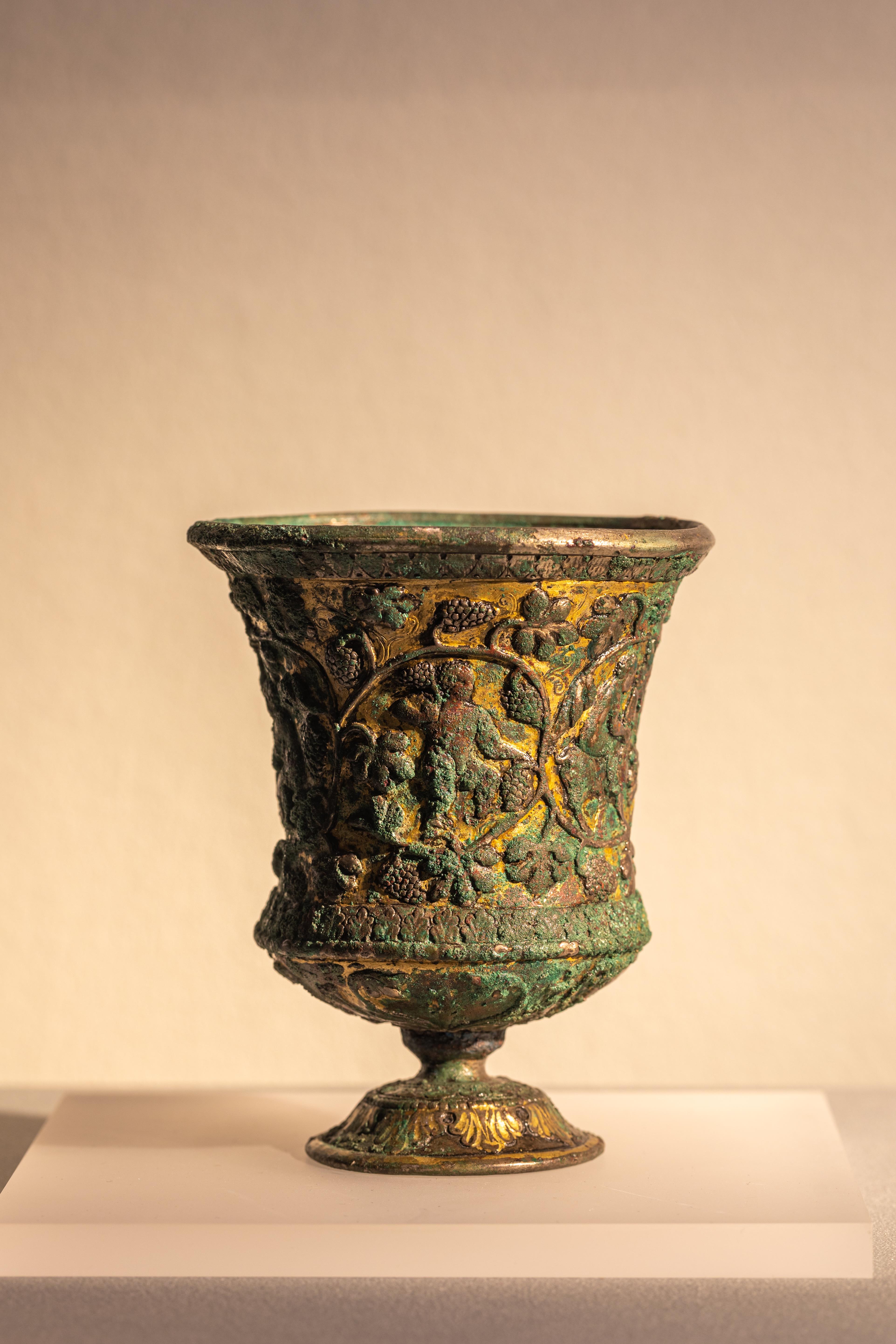
Group 1 - The article introduces a gilded silver goblet featuring grape motifs, celebrating the joy of grape harvest and enhancing the wine tasting experience [1][5] - The goblet is designed with intricate relief craftsmanship, making the grape clusters appear vivid and lifelike, attracting birds to play around it [9] - The central part of the goblet showcases five children expressing joy, immersed in the sweetness of grapes [11] Group 2 - The goblet is adorned with various exquisite patterns, including floral and linked bead designs, reflecting a blend of Eastern and Western cultures [15][17] - The design of the goblet is linked to the wine god festivals in Greek and Roman mythology, suggesting it is a foreign artifact from the Sasanian Empire (224-651 AD) [15] - The acanthus leaf pattern on the goblet is believed to be the origin of the later popular honeysuckle pattern during the Northern and Southern Dynasties in China [19] Group 3 - The goblet serves as evidence of cultural exchange between the East and West during the Northern Wei period, particularly in Pingcheng (modern-day Datong) [21] - Grapes symbolize wealth and prosperity in ancient Chinese culture, often seen in traditional artifacts [21] - The article also references other historical artifacts, such as a hollow perfume pouch and a silver jar, showcasing the artistic representation of grapes in ancient Chinese craftsmanship [23][25]
文博日历丨半人半鱼半马半鸟 这片金饰体现古人多少创意
Yang Shi Xin Wen Ke Hu Duan· 2025-04-21 01:28
Core Viewpoint - The article highlights the significance of the "human-fish tail gold ornament" as a representation of cultural fusion between Eastern and Western civilizations, particularly during the Tang Dynasty and the Tuyuhun period in Qinghai, China [2][18]. Group 1: Cultural Significance - The "human-fish tail gold ornament" is a creative artifact that embodies a blend of different cultural elements, showcasing the artistic influences from both Greek mythology and local traditions [12][18]. - This ornament is linked to the Tuyuhun khan, reflecting the unique cultural identity of the region during its historical period [16][18]. Group 2: Historical Context - The ornament was recovered from a tomb that was looted in 2017, where 646 cultural relics were stolen but later retrieved by the police [4]. - The artifact is believed to have been created during a time when the Qinghai region served as a vital route for trade and cultural exchange along the ancient Silk Road [21]. Group 3: Artistic Features - The gold ornament features a design that includes a human figure with a fish tail, wings, and a lion's front legs, which modifies the traditional mermaid imagery found in Greek mythology [12][14]. - It is suggested that the ornament was likely used as a decorative piece for a sword sheath, indicated by the presence of nail holes around its edges [15].