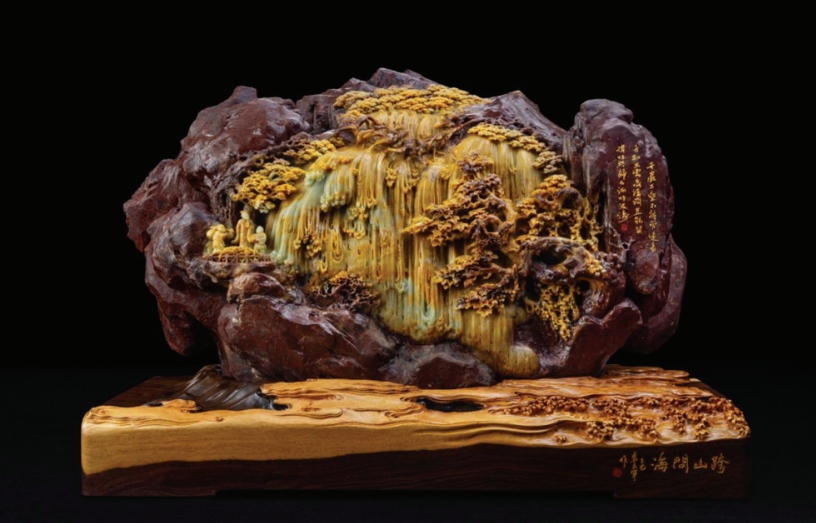
青田石雕

Search documents
来这座浙江县城过年,太“欧气”了
3 6 Ke· 2026-02-24 02:37
Core Viewpoint - The article highlights the unique cultural blend of QingTian County in Zhejiang, where traditional Chinese customs merge with Western influences, particularly during the Spring Festival, showcasing a vibrant community enriched by its overseas Chinese population [1][2][5]. Group 1: Cultural Integration - QingTian's New Year celebrations feature a mix of traditional Chinese dishes and Western foods, such as Parma ham and Spanish seafood rice, reflecting the local community's diverse culinary influences [2][5]. - The presence of over 300,000 overseas Chinese in QingTian, compared to a local population of just over 500,000, indicates a strong connection between the community and its diaspora [5][6]. - The architectural style in QingTian has been influenced by Western culture, with European-style buildings and bridges becoming commonplace [6][7]. Group 2: Economic Contributions - Remittances from overseas Chinese have historically been a significant economic source for QingTian, funding local infrastructure and community projects [7][11]. - The local coffee culture has flourished, with over 600 coffee shops in the area, indicating a high density comparable to European cities, and coffee consumption has become a daily ritual for residents [7][11]. - QingTian aims to develop a "QingTian Western Cuisine Master" brand to cultivate local culinary talent, blending traditional Chinese tastes with Western cuisine [7][11]. Group 3: Community and Identity - The article describes how QingTian residents maintain connections with their overseas relatives, often displaying multiple time zones and national flags at home, symbolizing their global ties [9][11]. - The return of successful overseas Chinese to QingTian has led to the establishment of various businesses, including guesthouses and restaurants, which integrate local culture with modern practices [11][12]. - The festive atmosphere during the Spring Festival is enriched by the presence of both local residents and returning overseas Chinese, creating a unique blend of traditions and experiences [11].


(新春走基层)浙江青田年味浓 侨乡石雕引客来
Xin Lang Cai Jing· 2026-02-19 11:41
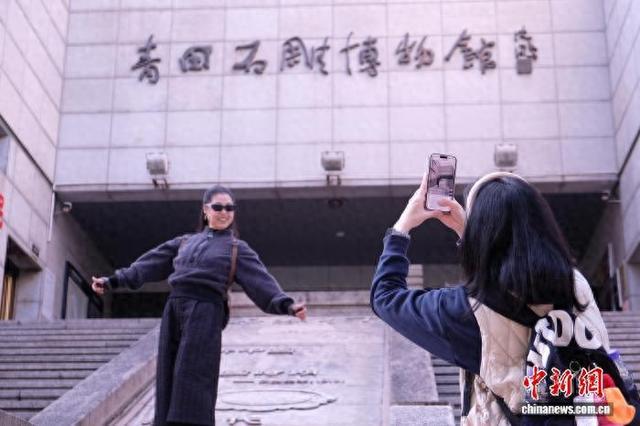
Core Viewpoint - The article highlights the significance of Qingtian stone carving as a cultural heritage and tourist attraction in Qingtian County, Lishui City, Zhejiang Province, China, especially during the Spring Festival when visitors engage with the unique overseas Chinese culture through stone sculptures [2]. Group 1 - Qingtian County is renowned as a famous hometown for overseas Chinese and is known as "the hometown of stone carving" in China [2]. - The Qingtian stone carving art was brought to the world by overseas Chinese, showcasing its international appeal [2]. - During the Spring Festival, tourists visit the Qingtian Stone Carving Museum to appreciate the stone carving works and experience the charm of overseas Chinese culture [2].
“茶与石”将会 碰撞出怎样的火花?
Mei Ri Shang Bao· 2026-01-26 03:37
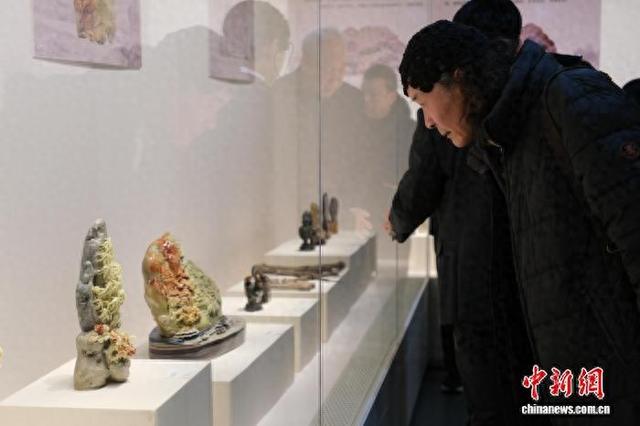
Core Viewpoint - The exhibition "Jinshi Jiamei: Tea and Stone Harmony - Qingtian Stone Carving Exhibition" showcases the integration of traditional craftsmanship and aesthetic living, highlighting the cultural significance of Qingtian stone carving and its connection to tea culture [3][4]. Group 1: Exhibition Overview - The exhibition is guided by the Hangzhou Tea Culture Research Association and hosted by the China Tea Museum, featuring three main sections: Historical Stones, Intangible Heritage Techniques, and Harmonious Aesthetics [3]. - It includes works from national and provincial masters, as well as emerging inheritors, and features valuable stone materials such as Qingtian blue sapphire and rare light-frozen stones [3]. Group 2: Cultural Significance - Qingtian is recognized as the "Hometown of Stone Carving" and "Capital of Stone Culture in China," with its stone carving included in the first batch of national intangible cultural heritage in 2006 [3]. - The stone carvings are celebrated for their craftsmanship and serve as important carriers of cultural exchange between China and the world, embodying the essence of Chinese aesthetics [3]. Group 3: Exhibition Impact - The exhibition represents a cultural collaboration between Qingtian and Hangzhou, promoting the creative transformation of traditional crafts and allowing Qingtian stone carving to shine in the context of tea culture [4]. - The exhibition will run until March 8, inviting the public to explore the rich heritage and contemporary creations [4].
百余件青田石雕珍品亮相杭州
Xin Lang Cai Jing· 2026-01-23 14:47
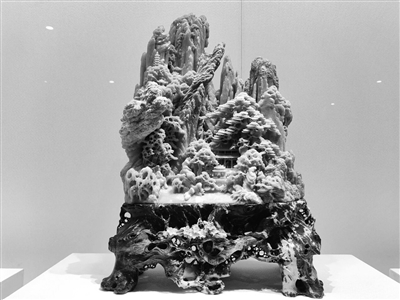
Group 1 - The exhibition "Tea Rhythm and Stone Charm: Fine Stone Carvings from Qingtian" opened at the China Tea Museum in Hangzhou, showcasing over 150 stone carvings and 100 seal stones [1] - Qingtian, known as the "Hometown of Chinese Stone Carving," has its stone carving techniques listed as a national intangible cultural heritage since 2006, earning the title "the world's best carving" [3] - The exhibition features rare raw stones such as Fengmen Qingtian and Light Frozen, along with a 100-pound Qingtian sapphire raw stone, highlighting the historical context, craftsmanship, and artistic characteristics of Qingtian stone carving [3] Group 2 - Since the mid-Ming Dynasty, Qingtian stone has been revered as the "ancestor of seal stones" due to its fine texture, making it a favorite among scholars and artists [3] - From the 17th to 18th centuries, Qingtian stone products were exported overseas, facilitating cultural exchange and contributing to the development of the Qingtian overseas Chinese community, which now numbers 380,000 across 146 countries and regions [3] - The director of the Qingtian Stone Carving Museum expressed the hope that visitors would appreciate the wisdom of carving and the Eastern philosophy reflected in the relationship between stone and tea [3]
文化中国行|鱼跃稻浪间 千年农遗的“生态密码”
Ren Min Ri Bao· 2025-10-12 06:31
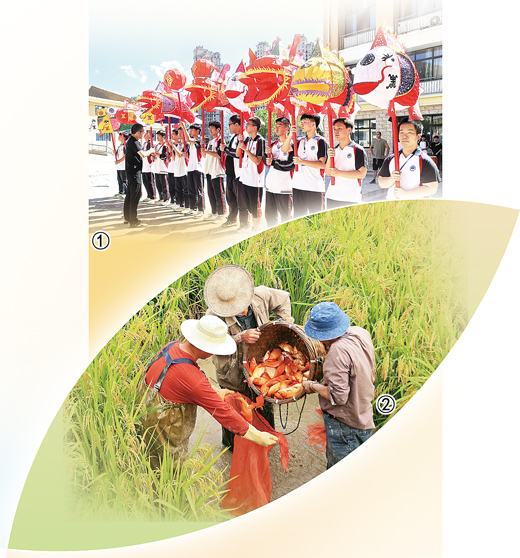
Core Viewpoint - The article highlights the ecological and cultural significance of the rice-fish co-culture system in Qingtian County, Zhejiang Province, showcasing its historical roots, modern innovations, and its role in rural revitalization and cultural heritage preservation [3][6][17]. Group 1: Historical and Cultural Significance - The rice-fish co-culture system in Qingtian has a history of over 1,300 years, dating back to the Tang Dynasty, and was recognized as a global important agricultural cultural heritage by the FAO in 2005 [6][8]. - This agricultural practice embodies the wisdom of harmonious coexistence between humans and nature, reflecting the essence of Chinese farming civilization [3][4]. Group 2: Economic Impact and Modern Innovations - In 2024, the area of the rice-fish co-culture system reached 70,100 acres, generating a total output value of 340 million yuan [7]. - The integration of modern technology has allowed for the reduction of fish breeding time from two years to one year, enhancing the economic viability of the system [7]. - The economic model includes diverse income sources, such as fish priced at 70 yuan per kilogram and organic rice yielding 4,000 yuan per acre, leading to total income exceeding 10,000 yuan per acre [7]. Group 3: Cultural Promotion and Tourism Development - The rice-fish culture has been promoted across more than 20 provinces, becoming a significant industry for rural revitalization and common prosperity [8]. - Cultural tourism has flourished, with local experiences such as farming activities attracting visitors from cities like Hangzhou and Wenzhou [11]. - The Qingtian fish lantern dance, a cultural symbol, has gained international recognition, showcasing the region's cultural heritage on global stages [13]. Group 4: Legal and Institutional Support - The "Qingtian Rice-Fish Co-Culture System Protection and Development Regulations" was enacted to support the establishment of museums and cultural exchange activities, ensuring the preservation and promotion of this agricultural heritage [17]. - The regulations encourage the development of cultural tourism products and the promotion of the rice-fish cultural brand, reinforcing the connection between culture and industry [17].
三大目标引领产业升级 工美博览新约再续
Xiao Fei Ri Bao Wang· 2025-07-28 02:33
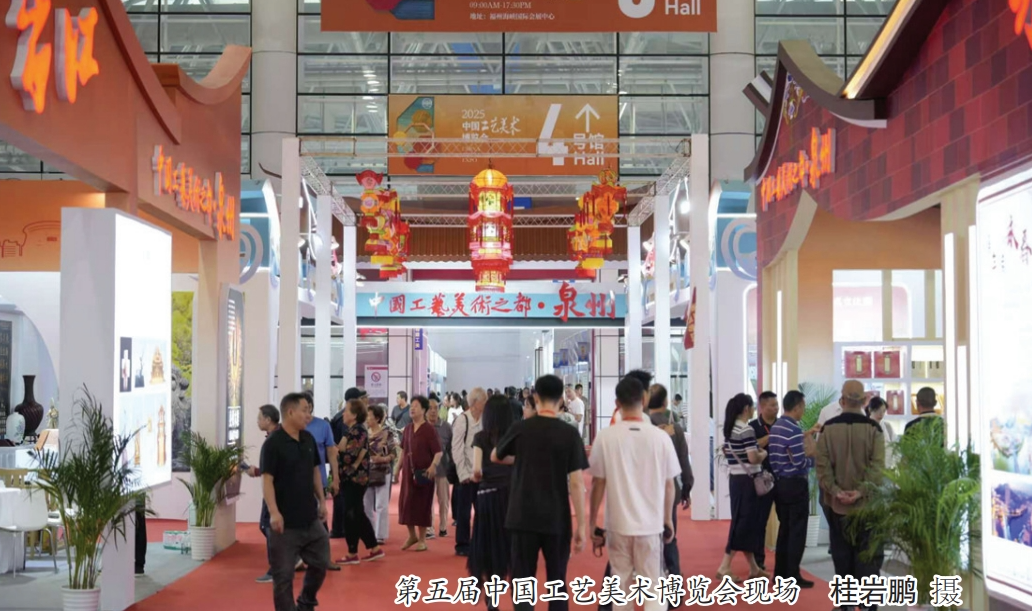
Core Viewpoint - The fifth China Arts and Crafts Expo (CACE2025) held from May 30 to June 2 in Fuzhou showcased over 120,000 exquisite works from more than 2,000 top craft enterprises and master studios, attracting 80,000 on-site visitors and 6.8 million online viewers, generating 145 million yuan in intended orders, highlighting the event's role as a platform for cultural exchange and industry growth [1][4][6]. Group 1: Mutual Learning and Cultural Exchange - The expo featured a diverse range of exhibits, including traditional crafts from various regions, fostering dialogue between northern and southern styles, exemplified by the Shanxi exhibition group showcasing "Yao-made Go boards" and the Yunnan group presenting unique ethnic crafts [4][5]. - The event served as a practical classroom for young artisans, with master craftsmen mentoring them on enhancing their work and engaging with audiences, ensuring the transmission of traditional skills [4][5]. - Educational institutions showcased innovative designs, such as 3D-printed ceramics and digital embroidery, indicating a strong connection between traditional crafts and modern technology [4][8]. Group 2: Economic Growth and National Strategy - The arts and crafts sector, generating over 3 trillion yuan in annual revenue and employing 13 million people, is positioned as a vital part of national strategy, with the expo acting as a catalyst for economic growth [6][8]. - The event successfully integrated sales channels, achieving approximately 30 million yuan in on-site transactions, with online pre-sales reaching 15.3 million yuan and live sales at 4.8 million yuan, demonstrating a significant boost in consumer engagement [6][8]. - The "Baihe Cup" design competition received over 2,800 entries, showcasing innovation in traditional crafts and reinforcing the commitment to quality and excellence in the industry [8]. Group 3: Promoting Chinese Craftsmanship Globally - The expo garnered extensive media coverage, with over 100 major outlets reporting and a total online readership exceeding 120 million, indicating a strong public interest in Chinese arts and crafts [9]. - Fuzhou, as the host city, highlighted its status as the "Capital of Chinese Arts and Crafts," with local crafts like Dehua porcelain integrating traditional techniques with modern technology to attract younger audiences [9]. - The event established a platform for showcasing the diversity and high standards of Chinese craftsmanship, facilitating its recognition both domestically and internationally [9][10]. Group 4: Future Prospects - The fifth expo concluded successfully, with plans for the sixth edition scheduled for May 29 to June 1, 2026, continuing to promote the creative transformation and innovative development of traditional crafts [10][11]. - The expo aims to bridge the gap between ancient techniques and contemporary practices, contributing to the cultural and industrial landscape of China [10].
青田石韵镌闽都 孤品艺境叙古今
Xiao Fei Ri Bao Wang· 2025-06-03 02:44
Core Viewpoint - The article highlights the significance of Qingtian stone carving, known for its unique qualities and craftsmanship, and its representation at the 5th China Arts and Crafts Expo, showcasing the evolution and modern integration of this traditional art form [1][4][5]. Group 1: Qingtian Stone Carving Characteristics - Qingtian stone is recognized as one of the "Four National Stones" due to its warm texture, soft and brittle nature, vibrant colors, and unique patterns [1]. - Qingtian stone carving is celebrated globally for its craftsmanship, referred to as "the first sculpture in the world," and has earned multiple accolades, including "Hometown of Chinese Folk Art" and "Hometown of Chinese Stone Carving" [1]. Group 2: Exhibition Highlights - The 5th China Arts and Crafts Expo, held from May 30 to June 2, featured a dedicated exhibition area for Qingtian stone carving, with 42 special exhibition booths showcasing over 200 works [4]. - The exhibition included masterpieces from renowned artisans, demonstrating the intricate and artistic qualities of Qingtian stone carvings, which received high praise from attendees [4][5]. Group 3: Strategic Development and Future Plans - The exhibition is part of a national tour themed "Art Shapes Rongcheng, Craftsmanship Together," marking the deepening of the strategy to expand the brand's influence [5]. - Qingtian aims to accelerate its national market presence through innovative models, transitioning stone carving art from traditional craftsmanship to cultural IP, thereby infusing contemporary vitality into this ancient art form [5].