
乡村优质生活空间

Search documents
创造乡村优质生活空间 是一项复杂的系统工程
Xin Lang Cai Jing· 2026-02-13 16:24
Core Viewpoint - The article emphasizes the importance of defining "quality" standards for rural living spaces and outlines effective measures to achieve these standards, focusing on satisfaction, comfort, convenience, and completeness [1] Group 1: Quality Standards - The "quality" standards for rural living are centered around high levels of satisfaction, comfort, convenience, and completeness [1] - Satisfaction refers to the farmers' contentment with their income levels and positive expectations for sustainable income growth [1] - Comfort is associated with the effective improvement of the rural environment, leading to a more aesthetically pleasing and livable countryside [1] Group 2: Infrastructure and Services - Convenience requires the gradual enhancement of rural public services and governance systems, ensuring that farmers can access quality resources close to home [1] - Completeness pertains to the gradual improvement of rural infrastructure, including water, electricity, roads, gas, and internet, facilitating the transition of farmers to modern lifestyles [1]
陈朋:创造乡村优质生活空间
Jing Ji Ri Bao· 2026-01-27 00:02
Core Viewpoint - The Ministry of Ecology and Environment has announced the first batch of beautiful countryside pilot areas, with 23 counties (cities, districts) including Anji, Zhejiang, selected, highlighting the importance of rural living spaces for farmers' quality of life and overall rural revitalization [1] Group 1: Quality Rural Living Space - Creating a quality rural living space is a complex system project that requires clear standards and effective measures to achieve them [2] - The standards for "quality" are reflected in satisfaction, comfort, convenience, and completeness, which include farmers' satisfaction with income, improved living environments, enhanced public services, and well-equipped infrastructure [2] Group 2: Income Generation and Industry Development - Increasing farmers' income is crucial for creating quality rural living spaces, primarily relying on industry development, while ensuring food security and effective supply of important agricultural products [3] - Local examples, such as the success of "Fuping Apples" and the development of the persimmon industry, illustrate the importance of strengthening local agricultural processing and creating regional brands [3] Group 3: Environmental Improvement - Continuous improvement of rural living environments is essential, with many villages having transformed from "dirty and chaotic" to "beautiful and organized" over the past five years [3] - Future efforts will focus on modern technologies for waste management and toilet renovations to further enhance living conditions [3] Group 4: Public Services Enhancement - The government has increased investment in rural public services, improving their capacity and quality, but significant gaps remain compared to urban areas, particularly in healthcare, education, and transportation [4] - There is a need to enhance medical resources at the township level and improve public transport services to facilitate access for rural residents [4] Group 5: Infrastructure Development - Infrastructure construction is vital for farmers' livelihoods and serves as a key indicator of the completeness of rural living spaces [5] - Current priorities include ensuring that infrastructure meets production and living needs, with a focus on road improvements and water supply integration [5]
好评中国·“经”彩开局|深耕乡土 造一方宜居宜业新天地
Zhong Guo Jing Ji Wang· 2026-01-07 05:41
Core Viewpoint - The article emphasizes the increasing trend of rural development in China, highlighting the need to create high-quality living spaces in rural areas that cater to modern living standards while being tailored to local conditions [1][2]. Group 1: Rural Development Trends - The "14th Five-Year Plan" suggests creating high-quality living spaces in rural areas, focusing on improving both production conditions and modern living environments [1]. - Rural infrastructure is continuously improving, with the rural sanitation toilet coverage rate reaching approximately 76% [1]. Group 2: Challenges in Rural Construction - Challenges such as insufficient planning coordination, industrial collaboration, and some villages experiencing "hollowing out" are noted, which can hinder sustainable service delivery [2]. - The example of "food delivery to rural areas" illustrates the cost pressures due to population dispersion and low order density, affecting service sustainability [2]. Group 3: Strategies for Creating Quality Living Spaces - The "14th Five-Year Plan" proposes a "classified and orderly, area-based approach" to rural revitalization, advocating for collaborative development among neighboring villages to overcome resource limitations [2]. - A case study from Shandong's Qingdao demonstrates successful integrated planning across multiple villages, resulting in significant tourism revenue, with 700,000 visitors and over 100 million yuan in income by October 2025 [2]. Group 4: Enhancing Rural Living Standards - The article stresses the importance of improving basic infrastructure such as water, electricity, and transportation in rural areas to enhance living conditions [3]. - The development of the homestay economy in Zhejiang's Mogan Mountain serves as a model, providing income for farmers while offering high-quality experiences for urban tourists, creating a beneficial cycle between rural and urban areas [2].
提高舒适度、完备度、便利度——乡村优质生活空间,啥模样?
Zhong Guo Xin Wen Wang· 2025-12-10 06:52
Core Viewpoint - The article emphasizes the importance of improving rural living conditions in China, highlighting the government's initiatives to create a "high-quality living space" in rural areas, which is expected to enhance the quality of life for farmers and promote rural development [1][2]. Group 1: Rural Infrastructure and Public Services - The average penetration rate of sanitary toilets in rural areas has reached 76%, with over 90% of administrative villages managing household waste, and rural sewage treatment exceeding 45% [2] - Rural road mileage has surpassed 4.64 million kilometers, with a 94% coverage rate for tap water and over 90% for 5G connectivity in administrative villages [2] - The "14th Five-Year Plan" has led to significant improvements in basic public services, with over 2,199 counties establishing integrated medical communities, and more than 95% of village clinics included in health insurance [2][4] Group 2: Environmental and Infrastructure Improvements - The "15th Five-Year Plan" aims to enhance rural living environments through continuous improvement efforts, focusing on waste management and sanitation [3] - The implementation of the "Rural Road Regulations" aims to upgrade rural road quality and expand road networks in remote areas, indicating a future focus on enhancing rural infrastructure [4] Group 3: Industrial Development and Economic Growth - The article highlights the necessity of industrial revitalization for rural development, stating that increasing farmers' income is crucial for improving living conditions and accessing better public services [5] - During the "14th Five-Year Plan," 210 characteristic industrial clusters and 250 modern agricultural parks were established, with projected revenues of 18 trillion yuan for large-scale agricultural processing enterprises by 2024 [5][6] - The "15th Five-Year Plan" suggests developing multiple agricultural functions to enhance food security, ecological sustainability, and cultural heritage, which will support farmers' income growth [6]
乡村优质生活空间,啥模样?
Jing Ji Wang· 2025-12-10 02:28
Core Viewpoint - The article emphasizes the importance of improving rural living conditions in China, highlighting the government's initiatives to create a "high-quality living space" in rural areas, which is expected to enhance the quality of life for farmers and promote urban-rural integration [1][2]. Group 1: Rural Infrastructure and Living Conditions - The average penetration rate of sanitary toilets in rural areas has reached 76%, with over 90% of administrative villages managing household waste, and more than 45% of rural sewage being treated [2]. - Rural road mileage has exceeded 4.64 million kilometers, with a 94% penetration rate of tap water and over 90% of administrative villages having access to 5G [2]. - The government has implemented policies to improve public services, including healthcare and elderly care, with over 14,000 mutual aid elderly care facilities and more than 16,000 rural nursing homes established [2][3]. Group 2: Environmental and Infrastructure Improvements - The "14th Five-Year Plan" has initiated actions to enhance rural living environments, focusing on waste management and sanitation improvements [3]. - Future efforts will prioritize the improvement of rural infrastructure and public services, aiming for efficient allocation and long-term management [3][4]. Group 3: Industrial Development and Economic Growth - The article stresses that industrial revitalization is crucial for rural development, with an emphasis on increasing farmers' income as a key driver for improving living conditions [4][5]. - During the "14th Five-Year Plan" period, 210 characteristic industrial clusters and 250 modern agricultural parks have been established, with projected revenues from agricultural processing reaching approximately 1.8 trillion yuan [5][6]. Group 4: Multifunctional Agriculture - The "15th Five-Year Plan" suggests developing multiple functions of agriculture, integrating production, processing, and tourism to enhance food security and ecological sustainability [6]. - Future initiatives will focus on strengthening agricultural processing, promoting rural tourism, and enhancing e-commerce capabilities to support farmers' income growth [6].
乡村优质生活空间,啥模样?(这些新提法,写入“十五五”规划建议⑦)
Ren Min Ri Bao Hai Wai Ban· 2025-12-09 22:32
Core Viewpoint - The article emphasizes the importance of improving rural living conditions and infrastructure in China, highlighting the government's initiatives to create a "high-quality living space" in rural areas, which is expected to enhance the quality of life for farmers and promote urban-rural integration [1][4]. Group 1: Rural Infrastructure and Living Conditions - The article discusses the ongoing transformation of rural areas in China, focusing on enhancing living conditions and infrastructure, including sanitation, waste management, and transportation networks [3][4]. - Key statistics indicate that the average coverage of sanitary toilets in rural areas has reached 76%, with over 90% of administrative villages managing household waste, and more than 45% of rural wastewater being treated [3][4]. - The "14th Five-Year Plan" has led to significant improvements in public services, including healthcare and elderly care facilities, with over 14,000 mutual aid elderly care facilities and more than 16,000 elderly care homes established [4][6]. Group 2: Agricultural and Economic Development - The article highlights the critical role of industrial revitalization in rural development, asserting that increasing farmers' income is essential for improving living conditions and accessing quality public services [7][8]. - Data shows that during the "14th Five-Year Plan," 210 characteristic industrial clusters, 250 modern agricultural parks, and 1,098 strong agricultural towns have been established, with projected revenues for agricultural processing enterprises reaching approximately 18 trillion yuan by 2024 [7][8]. - The "15th Five-Year Plan" aims to develop multiple functions of agriculture, integrating production, processing, and tourism to enhance food security and promote ecological sustainability [8][9].

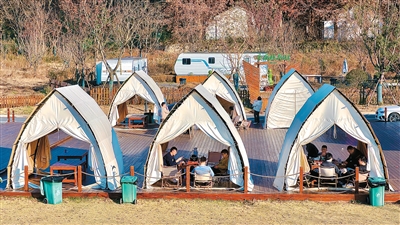
“村超”“村晚”火爆出圈 创造乡村优质生活空间
Jing Ji Ri Bao· 2025-11-04 07:59
Core Viewpoint - The concept of creating high-quality living spaces in rural areas is emphasized as part of China's 15th Five-Year Plan, aiming to enhance the overall quality of life for farmers and promote sustainable rural development [1][5]. Group 1: Rural Development and Quality of Life - Rural areas are described as a comprehensive space for production, living, and ecology, serving as a strategic support for economic and social development [1][2]. - The recent data from Douyin indicates that 1.36 billion rural short videos have documented vibrant rural life, showcasing the growth and potential of rural areas [1]. - The past five years have seen comprehensive progress in rural revitalization, focusing on industrial, cultural, ecological, talent, and organizational revitalization [1]. Group 2: Infrastructure and Public Services - There is a need to improve rural infrastructure and public services to bridge the urban-rural gap, with significant improvements noted in sanitation and water supply, as well as healthcare and education services [4]. - Future efforts should focus on strengthening the rural elderly care service system, exploring suitable supply methods for elderly services, and promoting integrated medical and nursing care models [4]. Group 3: Integration of Functions - The integration of production, living, ecological, and cultural functions in rural areas is crucial for creating high-quality living spaces, which can also support industrial development [2][3]. - The development of rural areas should consider the unique values of these spaces, enhancing infrastructure and public services to improve living conditions [2][3]. Group 4: Population Dynamics - Understanding population dynamics is essential for rural development, as factors like out-migration and talent cultivation significantly impact agricultural operations and village layout [3]. - Proactive planning for different types of villages is necessary to optimize rural infrastructure and public service distribution [3].
中经评论:创造乡村优质生活空间
Jing Ji Ri Bao· 2025-11-04 00:04
Core Viewpoint - The concept of creating high-quality living spaces in rural areas is emphasized as a new goal in China's economic and social development plan, aiming to enhance the overall quality of life for farmers and promote rural revitalization [1][2]. Group 1: Rural Development and Revitalization - Rural areas are described as a comprehensive space for production, living, and ecology, serving as a strategic support for economic and social development [1][2]. - The past five years have seen comprehensive progress in rural revitalization, focusing on industrial, cultural, ecological, talent, and organizational revitalization [1]. - The integration of production, living, ecological, and cultural functions in rural areas is crucial for creating high-quality living spaces and fostering economic cycles [2][3]. Group 2: Infrastructure and Public Services - There has been significant improvement in rural infrastructure, such as toilets and water supply, as well as public services like healthcare and education, enhancing the attractiveness of rural areas [4]. - Future efforts should focus on strengthening the rural elderly care service system, exploring suitable supply methods, and promoting integrated medical and elderly care services [4]. Group 3: Population and Planning - Understanding population dynamics is essential for rural development, as factors like out-migration and talent cultivation significantly impact agricultural operations and village layout [3]. - There is a need for forward-looking planning in rural construction, considering accessibility and efficiency in the allocation of resources and infrastructure [3].
创造乡村优质生活空间
Jing Ji Ri Bao· 2025-11-03 22:35
Core Viewpoint - The development and governance of rural areas should focus on leveraging their unique values, including agricultural production, living space, ecological protection, and cultural heritage [1][2]. Group 1: Rural Development and Quality of Life - Rural areas are not only homes for farmers but also desirable places for urban residents, necessitating the enhancement of infrastructure, public services, and living environments [2][3]. - The creation of quality living spaces in rural areas is essential for industrial development, as production, living, ecological, and cultural functions often coexist and support each other [2][3]. Group 2: Economic and Ecological Integration - A balanced approach to production, living, and ecological development is crucial, with a focus on increasing farmers' incomes to improve their quality of life [3]. - Enhancing the rural living environment is vital, addressing issues such as sanitation and waste management to ensure a pleasant living space [3]. Group 3: Infrastructure and Public Services - Significant improvements have been made in rural infrastructure, such as toilets and water supply, as well as in public services like healthcare and education, making rural areas more attractive [4]. - There is a need to strengthen the rural elderly care service system, exploring suitable supply methods and promoting integrated medical and elderly care services [4]. Group 4: Modernization and Cultural Preservation - The modernization process in China aims to ensure that rural areas maintain their cultural identity while embracing future opportunities [5].