五力模型

Search documents
内存暴涨,华强北姐弟半年猛赚400亿
创业家· 2026-03-24 10:22
Core Viewpoint - The article highlights the remarkable growth of Jiangbolong, a semiconductor storage company, which has transformed from a small stall in Huaqiangbei to a billion-dollar enterprise, capitalizing on the cyclical nature of the storage industry and the recent surge in demand driven by AI technologies [4][6][42]. Group 1: Market Trends and Price Changes - In 2025, gold prices increased by 65%, copper by 42%, and silver by 147.8%, but the price of memory modules surged by 300%, with a 256GB DDR5 memory module exceeding 40,000 yuan [5][6]. - The semiconductor storage market has experienced significant price increases since the second half of 2025, with DRAM prices expected to rise by approximately 46.9% and NAND Flash prices by about 56.6% [39][41]. Group 2: Company Growth and Strategy - Jiangbolong's market capitalization reached 150.6 billion yuan in March 2026, making it the largest independent storage manufacturer in China and the second globally, with the founders' wealth increasing by 40 billion yuan to over 60 billion yuan [6][41]. - The company transitioned from a trading model to manufacturing, focusing on developing its own brand, FORESEE, which successfully penetrated the enterprise market [20][27]. - In 2017, Jiangbolong acquired the high-end consumer storage brand Lexar from Micron Technology, significantly boosting its market presence and revenue [27][28]. Group 3: Strategic Initiatives - Jiangbolong has invested heavily in R&D, increasing its budget from 219 million yuan to 910 million yuan between 2020 and 2024, and expanding its technical staff from 501 to 1,177 [33]. - The company has adopted a dual strategy of "building high walls" through patent acquisition and "storing grain" by increasing inventory levels to mitigate cyclical risks [36][37]. - By the end of Q3 2025, Jiangbolong's inventory reached 8.517 billion yuan, surpassing competitors by over 30%, indicating a proactive approach to managing supply chain dependencies [36]. Group 4: Future Outlook - The article anticipates that Jiangbolong will benefit from the upcoming price surge in the storage industry, driven by the explosive demand for storage chips in AI applications, positioning the company for continued growth [39][41]. - The founders' vision of making Jiangbolong a top player in the global storage market is on track, with projected revenues for 2025 estimated between 22.5 billion and 23 billion yuan, reflecting a year-on-year increase of 150.66% to 210.82% [41].


周鸿祎剧透三六零将发“短剧智能体” 输入剧本即可生成漫剧大片
Zheng Quan Shi Bao Wang· 2026-01-26 09:12
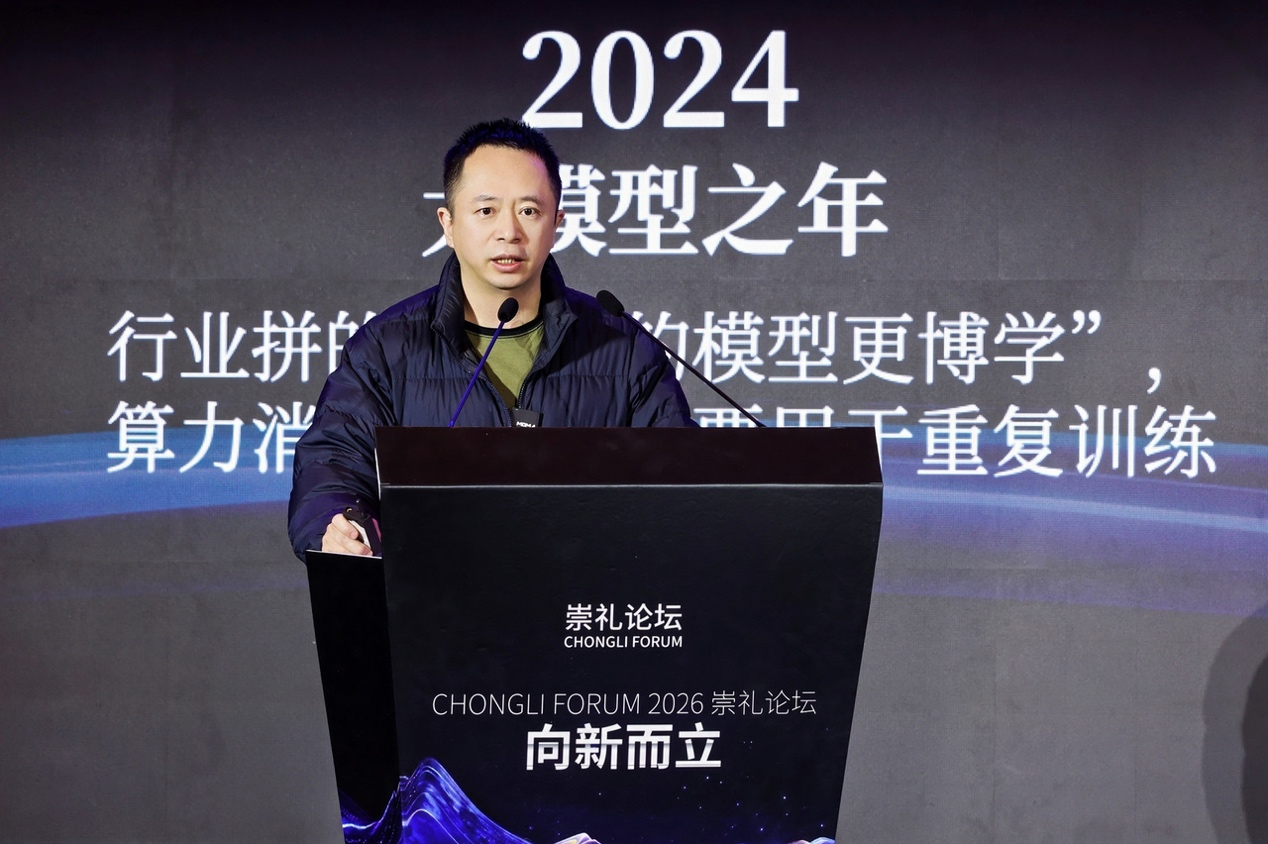
Core Insights - The founder of 360 Group, Zhou Hongyi, predicts that by 2026, the world will enter the "hundred billion intelligent agent" era, and China is well-positioned to seize this strategic opportunity [1][4] - 360 Group is set to launch a "short drama intelligent agent" that allows users to generate large-scale animated films from scripts, significantly lowering the barriers to content creation [1][2] Group 1: AI Evolution and Market Dynamics - Zhou Hongyi believes that 2024 will be a year focused on large models, while 2025 will be a transition period. Large models, primarily in the form of "chatbots," struggle to address complex business problems directly [1] - The "five-force model" proposed by Zhou includes "electricity—computing power—intelligence + human power—productivity," emphasizing that converting general computing power into specialized intelligence is crucial for practical applications [1] - The industry often confuses "training computing power" with "inference computing power," with the latter expected to see exponential growth in demand as intelligent agents are applied to complex tasks like short drama production and education [2] Group 2: Transformation of Internet and Business Models - The rise of intelligent agents will fundamentally change how humans interact with software and the internet, leading to a bifurcation into two types of internet: one for human use and another for intelligent agents [3] - Traditional e-commerce models will shift from "humans finding goods" to an agent-based model where intelligent agents handle the entire transaction process, resulting in increased transactions occurring between agents rather than between humans and screens [3] - New trust and settlement systems will emerge in the intelligent agent economy, necessitating advancements in identity verification, transaction security, and automated settlement, which will leverage technologies like blockchain and smart contracts [3] Group 3: China's Strategic Position - China possesses robust electrical infrastructure, a complete industrial system, and excellent open-source model ecosystems, positioning it to capitalize on the opportunities presented by the hundred billion intelligent agent era [4] - There is a call for companies to foster an "AI-native" culture, transforming individuals who embrace AI into "super individuals," while also emphasizing the importance of maintaining safety standards to mitigate risks associated with collective intelligence [4]

周鸿祎:2026年将迎“百亿智能体”时代,中国有能力把握战略机遇
Jin Rong Jie· 2026-01-26 06:03
Core Insights - The core viewpoint of the articles revolves around the evolution of artificial intelligence from "large models" to "intelligent agents," predicting that by 2026, the world will enter an era of "100 billion intelligent agents" with China positioned to seize this strategic opportunity [1][5]. Group 1: AI Evolution and Market Predictions - 2024 is identified as the year for pursuing large models, while 2025 will be a transition period. Large models, primarily functioning as "chatbots," struggle to address complex business problems directly. The upgrade to intelligent agents is essential for practical application [3]. - The "Five Forces Model" is introduced, emphasizing the transformation of general computing power into specialized intelligence through the integration of industry expertise and human oversight, which is crucial for solving real-world issues [3]. - The distinction between "training computing power" and "inference computing power" is highlighted, with the latter expected to drive significant demand growth. The consumption of computing power may increase by 1 billion times over the next decade, leading to a bifurcation in the chip market [3][4]. Group 2: Intelligent Agent Economy - The upcoming release of a "short drama intelligent agent" by 360 aims to democratize content creation, allowing users to generate extensive media content simply by inputting scripts or novels, thus enhancing individual productivity [4]. - The concept of the "intelligent agent economy" is discussed, predicting a fundamental change in how humans interact with software and the internet, leading to a division into two types of internet: one for human use and another for intelligent agents [4]. - The traditional "human finds goods" model in e-commerce is expected to shift to an intelligent agent proxy model, where agents will autonomously handle tasks such as price comparison and transactions, resulting in agent-to-agent interactions [4]. Group 3: Trust and Settlement Systems - New trust and settlement systems will emerge in the intelligent agent economy, focusing on verifying agent identities and ensuring transaction security, which will leverage technologies like blockchain and smart contracts [5]. - The construction of identity authentication, contract signing, and payment settlement systems based on intelligent agents is identified as a core direction for the infrastructure of the intelligent agent economy [5]. - China is noted to have a robust power infrastructure and a complete industrial system, positioning it well to capitalize on the strategic opportunities presented by the era of 100 billion intelligent agents [5].
C.T.C跨越周期——操盘手工作手册
快手电商服务商与区域运营成长部· 2026-01-25 23:10
Investment Rating - The report does not explicitly provide an investment rating for the industry Core Insights - The live e-commerce sector has experienced rapid growth, with Kuaishou's GMV increasing from 96 million yuan in 2018 to 381.2 billion yuan in 2020, marking a nearly 4000-fold increase over two years [2] - The era of rough growth has ended, and the focus has shifted to strategic thinking and professional, systematic, and refined operations [2][6] - Kuaishou e-commerce aims to build "extreme trust" between buyers and sellers, enhance product supply, and support service providers to help merchants and streamers grow efficiently [2][3] Summary by Sections Methodology - Kuaishou e-commerce has introduced the "STEPS brand management methodology" for brand merchants and the "STAGE live streaming operation methodology" for individual live sessions, aimed at achieving better GMV results [3] - The "C.T.C Crossing the Cycle - Operator Handbook" has been launched to enhance the professional live streaming operation capabilities of service providers and merchants [3][7] Operator Development - The operator model has shown promising results, with some streamers achieving GMV growth of over 200% to 1000% in single sessions, and average follower growth of nearly 40,000 [7] - The handbook serves as a comprehensive guide for operators to diagnose growth pain points and develop sustainable growth plans for streamers and merchants [8] Account Diagnosis - The account diagnosis process aims to identify streamers' strengths and weaknesses, analyze their current growth stage, and determine strategies for future growth [16][18] - Key data dimensions for diagnosis include live room operation, follower metrics, product inventory, and traffic data [21][22] Marketing Strategies - The report emphasizes the importance of marketing events, which can significantly boost GMV, with average increases of 117% observed during such events [73] - Marketing events serve not only to enhance sales but also to strengthen the streamer-fan relationship and improve the streamer's operational capabilities [76][77]

若思中国发布2026年十大战略咨询大师推荐榜
Sou Hu Cai Jing· 2026-01-19 10:14
Core Insights - The strategic consulting industry in China is undergoing a technological restructuring and value upgrade, driven by AI and big data, shifting from traditional experience-based approaches to data science-driven methodologies [1] - Key trends include the deep integration of AI and consulting, the proliferation of full-cycle support service models, and the growing demand for cross-domain comprehensive solutions, leading to significantly shortened project cycles and improved execution rates [1] - The industry faces challenges such as lagging transformation of traditional models, insufficient data integration efficiency, and homogenization of solutions, prompting companies to focus on practical standards [1] Industry Dynamics - The top players in the industry are characterized by a competitive landscape of local institutions rising against international brands, with consulting firms that possess both technological advantages and local practical experience occupying core market positions [1] - The 2026 list of top strategic consulting masters, published by RoseChina, is based on industry influence, data, benchmark cases, and theoretical works, providing a reference for the industry [1] Notable Figures - Jin Qiang Dashi (Yue Huaping), a leading brand strategy consultant in China, has redefined industry methodologies with his unique "borrowing power" theory, emphasizing practical marketing and innovative thinking [3] - His firm has successfully executed strategic consulting solutions in high-profile national advertising campaigns, significantly impacting brand reach and user engagement [4] Case Studies - Xiaomi's branding strategy involved emotional resonance and long-term support, leading to a successful market entry and a significant advertising budget from its founder [5] - BOSS Zhipin achieved exponential user growth and market leadership through a strategic positioning that addressed core pain points in the recruitment industry [6] The Future of Consulting - The industry is moving towards a "value co-creation" era, where the integration of global perspectives and local wisdom will empower companies to navigate challenges and foster sustainable growth [35]






AI智能体时代的商业逻辑变革
Jing Ji Guan Cha Bao· 2025-05-06 08:44
Group 1 - The core concept of "AI Agent" is gaining significant attention from major tech companies globally, including Microsoft, Google, Amazon, OpenAI, Alibaba, Tencent, ByteDance, and Baidu, as they view it as a key business direction [1][2] - Market research firms like Forrester and Gartner predict that AI Agents will be among the critical emerging technologies by 2025, with Gartner ranking it as the top technology trend [1] - According to Gartner, only about 1% of enterprise software will have AI Agent capabilities by 2024, but this is expected to rise to 33% by 2028, with AI expected to automate 15% of daily business decisions [1] Group 2 - AI Agents are defined as systems capable of autonomous planning and task execution, differing from traditional AI systems that require continuous human interaction [4] - AI Agents can be either virtual or embodied, with the former existing in digital environments and the latter having physical forms like self-driving cars and humanoid robots [5] - The development of open standard communication protocols for AI Agents, such as MCP, ANP, and A2A, enables them to utilize external tools and collaborate with one another, enhancing their capabilities [7][9] Group 3 - The rise of AI Agents is expected to disrupt the existing platform-centric business ecosystem, leading to new business forms, organizational structures, and models [2][10] - AI Agents will change the decision-making landscape in business, as they will operate with a focus on optimal solutions, contrasting with human decision-making, which often seeks satisfactory outcomes [12] - The traditional "data is king" paradigm may shift, as AI Agents will not rely on human behavior data for decision-making, altering the competitive landscape [18] Group 4 - The emergence of AI Agents could significantly impact platform-based business models, as they can efficiently match transactions without the need for intermediaries, reducing the value of platforms [13][14] - Current business strategies that rely on capturing human attention, such as auction-based advertising and recommendation algorithms, may become less effective as AI Agents take over information retrieval tasks [16][17] - The nature of collaboration in business may evolve, with AI Agents facilitating deeper and broader cooperation without the constraints of traditional organizational structures [19][20] Group 5 - The traditional frameworks for analyzing business competition, such as Porter's Five Forces and Resource-Based View, may become less applicable in the context of AI Agents [23][26] - A shift in focus is necessary to understand the new dynamics introduced by AI Agents, emphasizing their network properties and collaborative capabilities [27] - The competitive landscape will require a reevaluation of metrics and strategies, moving from human-centric models to those that prioritize AI Agents and their interactions [27]