
交易风险

Search documents
停牌核查完成,易点天下1月20日起复牌
Bei Jing Shang Bao· 2026-01-19 09:23
Group 1 - The core point of the article is that Yidian Tianxia (301171) announced the completion of its internal review regarding stock price fluctuations and will resume trading on January 20 [2] - The stock price of Yidian Tianxia increased by 100.79% from January 5 to January 14, significantly outpacing the growth of the ChiNext Composite Index and the industry during the same period [2] - The company stated that there have been no significant changes in its fundamentals, indicating that the stock price is severely deviating from its fundamental value, leading to a situation of excessive market sentiment and high trading risk [2] Group 2 - Yidian Tianxia clarified that its business does not involve GEO operations and has not generated related revenue [2] - The company's main business includes providing overseas integrated marketing, digital marketing, advertising transformation services, as well as AI digital creativity, BI decision-making, and CI intelligent multi-cloud management for overseas digital services, which have not changed [2] - The company and its subsidiaries are operating normally, and there are no undisclosed significant information that should be disclosed [2]

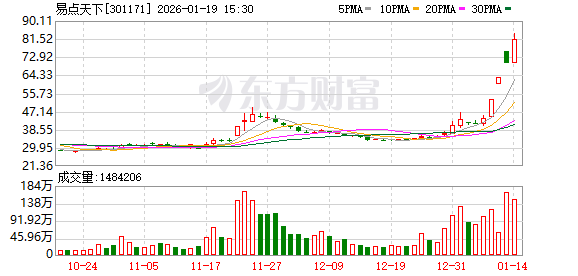
易点天下:股票1月20日复牌,提示交易及业绩相关风险
Xin Lang Cai Jing· 2026-01-19 09:09
Core Viewpoint - The company announced a stock suspension for verification starting January 15, 2026, with a resumption on January 20, 2026, due to a significant stock price increase and deviation from fundamentals [1] Group 1: Stock Performance - The company's stock price increased by 100.79% from January 5 to January 14, 2026, significantly outperforming the ChiNext Composite Index and industry peers during the same period [1] - The current stock price is considered to be severely misaligned with the company's fundamentals, indicating high trading risk [1] Group 2: Financial Performance - For the first three quarters of 2025, the company's net profit excluding non-recurring items was 112.38 million, representing a year-on-year decline of 39.16% [1] - The company's main business remains unchanged, and it does not engage in GEO-related business, resulting in no related revenue [1]
黄金重回“00后”时代,你是几“零”后?
Sou Hu Cai Jing· 2026-01-14 03:44
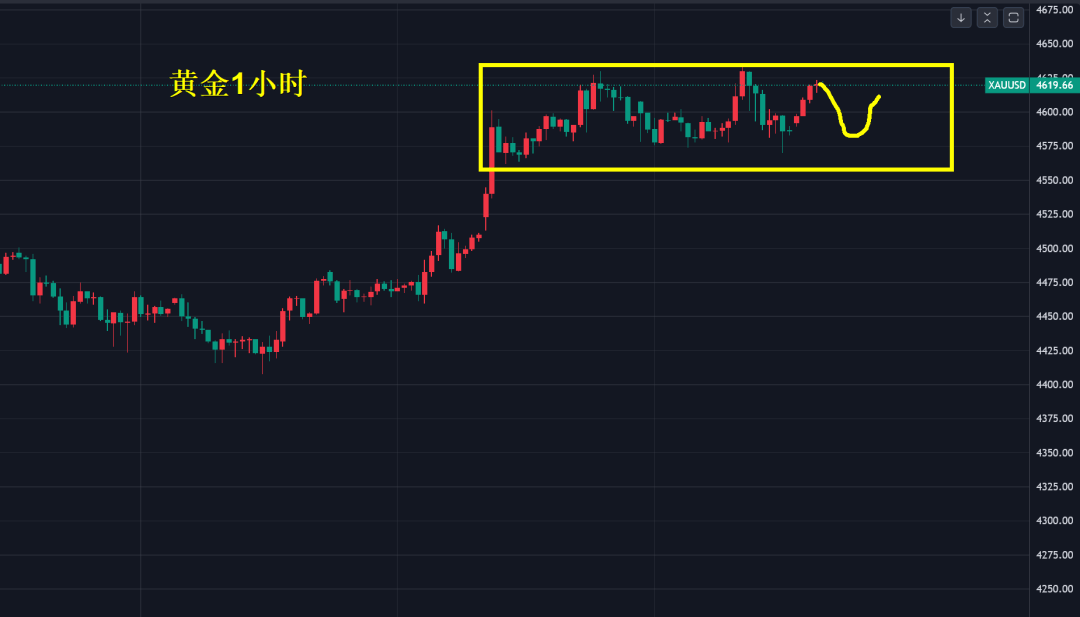
Core Insights - The essence of trading is not about defeating the market but understanding oneself [1] - Many traders shift their focus from making profits to merely recovering losses over time [2] - The real risk lies within the trader, stemming from emotional responses and the need for validation [2][3] Group 1: Trading Philosophy - Trading is not just about executing trades but involves a deeper self-reflection on one's acceptance of market uncertainties and losses [6][7] - Successful traders are characterized by their patience and ability to remain calm during market fluctuations [4] - The market is filled with opportunities, but in the wrong mindset, every opportunity can become a risk [5] Group 2: Market Analysis - Recent gold prices have returned to four-digit levels domestically, indicating a significant shift in market perception [8] - The gold market is currently influenced more by emotions and consensus rather than technical and fundamental factors [10] - The price of gold is currently facing resistance around $4630, with strategies in place for potential market movements [10]
胜通能源:股价异常波动,多项交易风险待解
Xin Lang Cai Jing· 2026-01-08 09:33
Core Viewpoint - The stock price of Victory Energy experienced an abnormal fluctuation, with a cumulative increase of over 20% from January 6 to January 8, 2026, and a total increase of 307.05% from December 12, 2025, to January 8, 2026, indicating significant trading risks [1] Group 1 - The company announced that it had suspended trading on December 30, 2025, for verification and resumed trading on January 6, 2026 [1] - An investigation revealed that two insiders had traded the stock, but these transactions occurred before the formation or knowledge of insider information, thus not constituting insider trading [1] - The acquisition funding application is still under review, and some shareholders intend to apply for exemptions from share transfer commitments, indicating uncertainties regarding share transfer matters [1]
天普股份:2025年前三季度营收降4.98%,提示交易风险
Xin Lang Cai Jing· 2025-11-19 10:36
Core Insights - The company reported a revenue of 230.37 million yuan for the first three quarters of 2025, representing a year-on-year decline of 4.98% [1] - The net profit for the same period was 17.85 million yuan, down 2.91% year-on-year [1] - The company's stock price experienced significant volatility, increasing by 348.24% from August 22 to November 19, with 9 instances of abnormal fluctuations and 2 instances of severe abnormal fluctuations [1] Financial Metrics - As of November 19, the company's price-to-earnings (P/E) ratio stood at 492.16, and the price-to-book (P/B) ratio was 19.84, both significantly higher than industry averages [1] - On November 3, the company completed a share transfer agreement involving 25.14 million shares, accounting for 18.75% of total shares, with no change in the actual controller [1] Control and Governance - The share transfer transaction is still subject to procedural requirements, and there is uncertainty regarding any potential change in control [1]

什么是汇率风险,利多星为你层层揭秘
Sou Hu Cai Jing· 2025-04-12 05:22
Core Viewpoint - Exchange rate risk, also known as foreign exchange risk, refers to the potential for loss (or gain) due to fluctuations in currency exchange rates affecting the value of assets, liabilities, income, or expenses denominated in foreign currencies [1][5]. Group 1: Types of Exchange Rate Risk - Transaction risk is the most common form of exchange rate risk, occurring during transactions priced in foreign currencies. For example, a Chinese export company expecting to receive 1 million USD may face a loss if the exchange rate changes unfavorably before payment is received [4]. - Translation risk, also known as accounting risk, arises when a company needs to convert its functional currency into its reporting currency for financial statements. A depreciation of the local currency against the reporting currency can lead to reduced asset and profit values in the consolidated financial statements [4]. - Economic risk, or operational risk, involves unexpected exchange rate changes that can affect a company's future revenues or cash flows by altering production costs, sales volumes, and pricing strategies. For instance, a sudden appreciation of the local currency can make exported products more expensive, potentially reducing sales [4]. Group 2: Impact and Management of Exchange Rate Risk - In the current international trade environment, exchange rate risk significantly impacts companies, particularly in foreign trade. For export-oriented firms, local currency appreciation can reduce price competitiveness and profit margins, while for import-oriented firms, local currency depreciation can increase costs [5]. - To assess and manage exchange rate risk, companies need to monitor factors influencing currency fluctuations, such as international balance of payments, foreign exchange reserves, interest rates, inflation, and political conditions. Financial instruments like foreign exchange forward contracts, futures, and options can be utilized for hedging [5]. - Companies should also optimize their choice of settlement currencies and adjust pricing strategies for imports and exports to mitigate the impact of exchange rate fluctuations [5].

Is the stock market open on MLK Day? What to know about the holiday trading schedule in 2026.
Yahoo Finance· 2024-03-25 21:02
Core Points - The U.S. stock market will observe 10 holidays in 2026, along with two early closures [1] - Regular trading hours for the U.S. stock market are from 9:30 a.m. to 4 p.m. Eastern time, Monday through Friday [1] - The NYSE and Nasdaq will close early at 1 p.m. Eastern time on specific days [3][4] Stock Market Holidays - In 2026, the stock market will be closed on the following holidays: Thanksgiving Day (Nov. 27), Christmas Day (Dec. 25), Black Friday (Nov. 28), Christmas Eve (Dec. 24), New Year's Day (Jan. 1), Martin Luther King Jr. Day (Jan. 19), Presidents' Day (Feb. 16), Good Friday (Apr. 3), Memorial Day (May 25), Juneteenth (Jun. 19), Independence Day (observed on Jul. 3), Labor Day (Sept. 7), Thanksgiving Day (Nov. 26), and Christmas Day (Dec. 25) [3][4] Bond Market Schedule - The bond market will close for all 10 stock market holidays in 2026 and 2027, in addition to Indigenous Peoples' Day and Veterans Day [6] - The bond market will also close early at 2 p.m. on specific days, including the day after Thanksgiving and Christmas Eve [6] Additional Information - The stock market is open on the Friday after Thanksgiving but closes early at 1 p.m. Eastern time [9] - Unlike stock and bond markets, cryptocurrency markets operate 24/7 and do not observe a holiday schedule [10]