
产学研医协同创新

Search documents
湖北省医工交叉融合创新产业联盟揭牌成立
Zhong Guo Xin Wen Wang· 2026-01-22 08:43
Group 1 - The core event is the establishment of the Hubei Province Medical-Engineering Cross-Integration Innovation Industry Alliance, which aims to foster collaboration in the medical-engineering sector with a total intended investment of approximately 1.2 billion yuan [1] - The alliance is guided by various provincial departments and includes a wide range of stakeholders such as medical institutions, universities, investment institutions, and leading pharmaceutical companies, creating a comprehensive innovation ecosystem [1] - Hubei has maintained a leading position in several sub-sectors, including high-end medical imaging, smart ECG monitoring, digital diagnostic equipment, and AI-based screening systems [1] Group 2 - A series of policies have been implemented by multiple departments in Hubei to support the high-quality development of the biomedicine and medical equipment industries, promoting collaborative innovation among enterprises, academia, and medical institutions [2] - The Hubei Province has announced the top ten innovative projects for medical-engineering cross-integration for 2025, with funding support of up to 5 million yuan for the selected projects [2] - The initiative aims to accelerate the deep integration of innovation chains, industry chains, and capital chains, focusing on the high-quality development of the health industry centered around biomedicine [2]
苏州大学:以有组织科研推动政产学研医创新融合
Yang Zi Wan Bao Wang· 2025-12-17 05:25
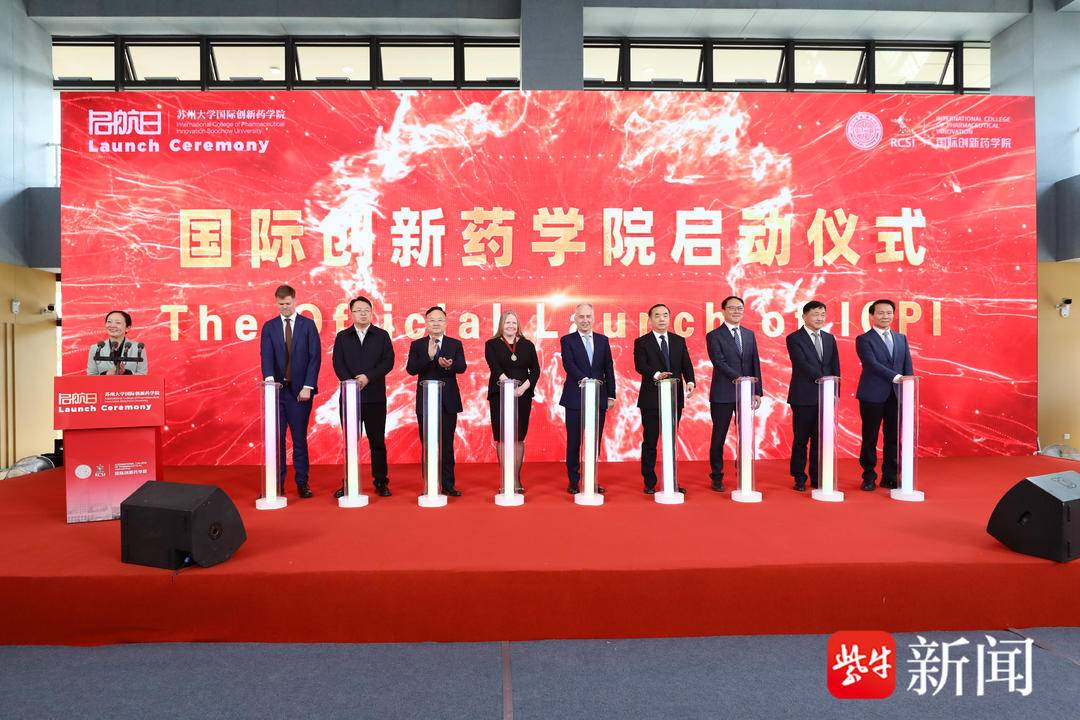
Core Viewpoint - The article discusses how Suzhou University is effectively transforming academic research into practical applications in the biopharmaceutical industry, emphasizing the need for collaboration and innovation in drug development. Group 1: Talent Development and Education - Suzhou University has established the International Innovation Drug Academy, the first Sino-foreign cooperative education institution focused on pharmacy in China, aiming to cultivate interdisciplinary talents with a global perspective [2] - The university's strategy includes deepening industry-academia-research collaboration and enhancing international cooperation to build a world-class innovation and transformation platform in the pharmaceutical field [2][3] Group 2: Collaborative Mechanisms and Research - The establishment of the Suzhou Innovation Drug Research Institute represents a collaborative effort among the Suzhou municipal government, Suzhou Industrial Park, and Suzhou University, focusing on organized research that connects laboratory discoveries with industry needs [5] - The research institute aims to create a closed-loop of collaborative innovation among laboratories, enterprises, and hospitals, addressing real technical challenges and facilitating the transition from basic research to industrial application [5][6] Group 3: Clinical Research and Application - The Suzhou Innovation Drug Clinical Research Cooperation Alliance has been formed to bridge the gap between laboratory research and clinical application, involving 13 affiliated hospitals and 3 partner hospitals [8] - This "medical-research integration" model aims to create a feedback loop between basic biological discoveries and clinical practices, enhancing the involvement of clinical doctors in early-stage drug development [8][9] Group 4: Sustainable Development and Future Goals - The alliance will establish a comprehensive clinical trial service platform, integrating research data sharing and supporting innovative projects, contributing to a sustainable development model that merges policy, industry, and education [9] - Suzhou University aims to create a symbiotic system through its educational, research, and clinical initiatives, ultimately contributing to the improvement of public health and the advancement of health in China [11]

中国同辐(01763)附属原子高科参与“儿童神经母细胞瘤多模态核医学分子影像体系的建立”项目荣获北京医学科技奖一等奖
智通财经网· 2025-12-15 14:05
Core Insights - China Tongfu (01763) announced that the project "Establishment of a Multimodal Nuclear Medicine Molecular Imaging System for Pediatric Neuroblastoma," participated by Atomic High-Tech Co., Ltd., won the first prize at this year's Beijing Medical Science and Technology Awards [1] Group 1: Project Overview - Neuroblastoma is the most common extracranial solid tumor in children, accounting for approximately 8%-10% of pediatric malignant tumors and leading to about 10%-15% of childhood cancer-related deaths [1] - The project focuses on addressing the challenges posed by neuroblastoma, which has a poor prognosis with a 5-year survival rate of less than 50% for high-risk patients [1] - The project aims to establish a complete independent innovation chain for neuroblastoma diagnosis and treatment, utilizing multimodal nuclear medicine molecular imaging technology [1] Group 2: Contributions of Atomic High-Tech - Atomic High-Tech has played a key role in the development of radiopharmaceuticals for neuroblastoma, including the successful registration of sodium fluoride injection, filling a gap in domestic bone imaging radiopharmaceuticals [2] - The company has established a long-term strategic partnership with Friendship Hospital, focusing on collaborative innovation in radiopharmaceutical supply, research platform construction, and clinical trial advancement [2] - Future efforts will include increased investment in radiopharmaceutical research and technology innovation, aiming to enhance precision medicine and safeguard public health [2]
价值为锚:贝泰妮的2025中场思考
市值风云· 2025-08-28 10:40
Core Viewpoint - The article highlights the strategic transformation of Yunnan Betaini Biotechnology Group Co., Ltd. (Betaini) in response to the changing dynamics of the Chinese cosmetics industry, focusing on long-term value and quality improvement rather than short-term scale growth [1][4][22]. Financial Performance - In the first half of 2025, Betaini achieved operating revenue of 2.372 billion yuan and a net profit attributable to shareholders of 247 million yuan, reflecting resilience amid industry challenges [1]. - The company reported a significant improvement in operating cash flow, reaching 347 million yuan, a year-on-year increase of 145.70%, indicating strong cash flow management [4][6]. - The gross profit margin remained stable, with an overall gross margin of 76.01% in the first half of 2025, showcasing strong profitability and operational efficiency [13]. Strategic Adjustments - Betaini is actively shifting its strategy from pursuing short-term growth to focusing on quality enhancement and structural optimization, which is evident in its reduced reliance on ineffective promotional activities and price competition [4][6]. - The company has optimized its inventory management, improving inventory turnover and focusing on core product categories, laying a solid foundation for future growth [6][11]. Brand and Market Positioning - Betaini has established a clear brand matrix covering various market segments, from high-end anti-aging to mass skincare, with its main brand, Winona, leading the sensitive skin care market in China [7][9]. - The company has successfully activated differentiated market segments, with brands like Aikeman showing a revenue increase of 93.90% year-on-year, indicating strong growth momentum [9]. Research and Development - Betaini has increased its R&D investment, with a research expense ratio of 4.91%, up 0.83 percentage points from the previous year, positioning itself as a leader in the industry [13][14]. - The company has built a comprehensive R&D chain, focusing on basic research and raw material development, which is expected to create a sustainable competitive advantage [14][16]. Operational Strategy - The company is refining its channel strategy, enhancing online marketing efficiency and expanding its offline presence to over 120,000 pharmacies, while also implementing a "BA content" strategy to deepen user engagement [17][18]. - Betaini is expanding its global footprint, particularly in Southeast Asia, focusing on brand building and local adaptation, which is crucial for its international growth [18][20]. Sustainability and ESG Practices - Betaini integrates ESG principles into its operations, achieving high ratings in environmental, social, and governance aspects, which enhances its brand differentiation and aligns with consumer values [20][22]. - The company is building a resilient and sustainable growth model through channel optimization, global expansion, and ESG initiatives, preparing for a potential recovery in performance in the latter half of 2025 [20][22].

中国经济样本观察·企业样本篇|品驰医疗:让中国人用上自己的脑起搏器
Xin Hua She· 2025-07-11 07:04
Core Viewpoint - The emergence of Beijing Pinchi Medical Equipment Co., Ltd. has significantly reduced the cost of implantable brain stimulators in China, benefiting approximately 3 million Parkinson's disease patients and breaking the foreign monopoly in the neuroregulation field [1][8]. Company Development - Pinchi Medical was established in 2008 and began clinical trials for its brain stimulator in 2009, receiving product registration from the National Medical Products Administration in 2013, making China the second country after the U.S. capable of independently developing and producing brain stimulators [5][6][7][8]. - The company has achieved significant milestones, including the development of key technologies and the production of a brain stimulator that holds over 50% market share in China, benefiting thousands of patients [10][11]. Innovation and Technology - Pinchi Medical has transitioned from imitating foreign products to leading innovation in the neuroregulation sector, focusing on quality and independent research in areas such as rechargeable technology and remote control systems [9][10]. - The company has successfully addressed technical challenges, such as the development of a key component that was previously imported, showcasing its commitment to innovation and self-sufficiency [9][11]. Collaboration and Research - The company emphasizes the importance of collaboration between industry, academia, and healthcare, which has accelerated the commercialization of research outcomes and improved product development [11][12]. - Pinchi Medical has established partnerships with institutions like Tsinghua University and Beijing Tiantan Hospital to enhance its research capabilities and address clinical needs [11][12]. Global Expansion - Pinchi Medical has begun to expand its reach internationally, with its vagus nerve stimulator being implanted in patients in Latin America, marking its first overseas operation [13]. - The company aims to integrate traditional Chinese medical practices with neuroregulation technology to create unique medical solutions, while also navigating the challenges of entering competitive global markets [14].
领航细胞病理新赛道 打造肿瘤早筛"中国芯"——言鼎生物医疗团队斩获青岛产业领军殊荣
Hua Xia Shi Bao· 2025-05-30 11:49
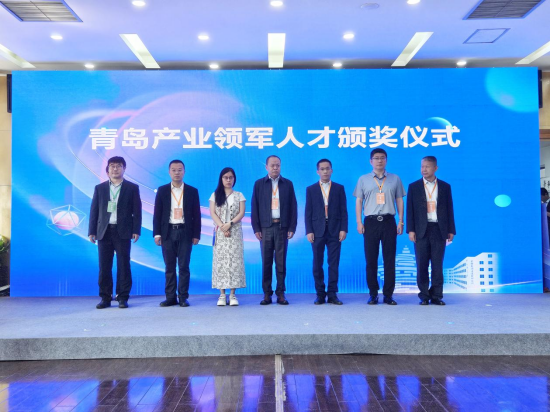
Group 1 - The 2025 Qingdao Science and Technology Activity Week was officially launched with the theme "Innovation-Driven Development, Technology Leading the Future" [1] - The project team led by Professor Xiao Leyi from Shandong Yanding Holding Group was recognized for their breakthrough achievements in tumor early screening, successfully selected as a leading talent team in Qingdao [1][3] - The evaluation of leading talent teams focused on key areas such as new generation information technology, high-end equipment, and biomedicine, aiming to select core forces that can break through key technologies and promote industrial upgrades [3] Group 2 - Under the strategic layout of Chairman Liu Yuanzhu, Yanding Group has established a talent cultivation system that integrates both introduction and training [5] - The project team has formed a cross-disciplinary innovation consortium by integrating expertise in biomedical engineering, microfluidic technology, and multimodal medical big data [5] - The group has established collaborations with various universities and research institutions, creating multiple research platforms to enhance public health and clinical research capabilities [5] Group 3 - Professor Xiao Leyi has extensive experience in the field of genetics and microfluidic chips, having led four national-level research projects and published 48 papers [7] - The team focuses on the research and industrialization of liquid cell pathology biopsy technology, aiming to develop equipment and reagents with independent intellectual property rights and stable quality [7][8] - The project aims to enhance the early detection rate of tumors, reduce medical expenses for the public, and support the construction of a healthy China and high-quality urban economic development [8] Group 4 - Yanding Group plans to continue deepening its "talent-driven enterprise" strategy through a collaborative innovation model that integrates industry, academia, research, and medicine [10] - The goal is to create a comprehensive industrial chain ecosystem covering tumor early screening, precise diagnosis, and personalized treatment, injecting new technological momentum into the construction of a healthy China [10]
深圳先进院研究成果填补行业空白 “含镁可降解高分子骨修复材料”获国家药监局批准上市
Shen Zhen Shang Bao· 2025-05-15 17:01
Core Viewpoint - The "magnesium-containing biodegradable polymer bone repair material" developed by the Shenzhen Advanced Institute of Technology has received approval from the National Medical Products Administration, marking a significant advancement in bone defect repair technology and filling a gap in the industry [1][2]. Group 1: Product Development - The product was developed over 15 years by a team led by Qin Ling and Lai Yuxiao at the Translational Medicine Research and Development Center [1]. - The material utilizes a low-temperature 3D printing method, overcoming multiple technical challenges in orthopedic device manufacturing [1]. - The inclusion of magnesium allows the material to achieve mechanical strength comparable to human cancellous bone, providing stable mechanical support during surgical procedures [1]. Group 2: Clinical Trials - A multicenter clinical trial involving 176 patients with bone defects was conducted across eight major research hospitals in China, including Beijing Jishuitan Hospital and Shanghai Sixth People's Hospital [2]. - The results indicated a bone fusion rate exceeding 98% at 24 weeks, with no reported adverse reactions, demonstrating excellent biocompatibility of the material [2]. - Currently, there are no magnesium-related bone repair materials approved for clinical use as medical devices according to public data from the National Medical Products Administration and the U.S. Food and Drug Administration [2].