
产权改革

Search documents
大力发展农村新型经营主体 | 政和探索“产权+金融”模式,让乡村资源焕发新生
Xin Lang Cai Jing· 2026-02-06 11:26
Core Insights - The article highlights the innovative financial strategies implemented in Zhenghe County to empower rural industries, focusing on transforming dormant resources into active capital for economic development [3][6]. Group 1: Financial Innovation - Zhenghe County has addressed challenges related to the activation of rural resources and the high cost of financing for operating entities by exploring a new path for rural revitalization through "property rights reform" and "financial empowerment" [3][6]. - The issuance of the "Rural Asset Resource Operation Rights Certificate" has stabilized farmers' expectations for resource transfer income and alleviated concerns for external investors, thereby establishing a solid credit foundation for the conversion of resources into capital [3][6]. Group 2: Property Rights and Financial Support - The county has made significant progress in the registration of rural land, forest rights, and housing assets, which is essential for clarifying ownership and enabling the effective use of these resources [3][6]. - Financial institutions, such as Zhenghe Rural Credit Cooperative, have tailored flexible credit products with favorable interest rates to meet the needs of new agricultural operating entities, thus addressing their funding challenges for expansion [3][6]. Group 3: Impact and Future Plans - The dual approach of "property empowerment" and "financial drip irrigation" has shown significant results, with idle rural houses being transformed into specialty shops and scattered land developed into camping bases and guesthouses, leading to increased income for villagers [4][7]. - The model has been promoted throughout the county, continuously activating dormant rural resources and injecting momentum into the quality enhancement of specialty industries such as tea, bamboo, and cultural tourism [4][7]. - Future plans include deepening rural property rights reform, enriching financial products suitable for rural areas, and fostering new operating entities to promote collective economic growth and shared prosperity among farmers [4][7].

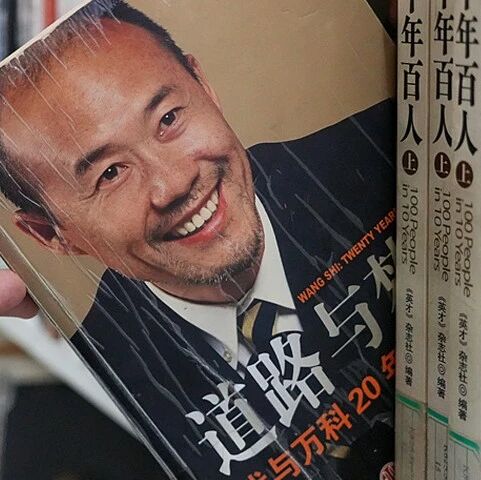
羡慕段永平的王石,真的老了
36氪· 2025-12-16 11:08
Core Viewpoint - The article reflects on the journey of Vanke and its founder Wang Shi, highlighting the company's rise and subsequent challenges, emphasizing the impact of market dynamics and Wang's management style on Vanke's trajectory [5][25][27]. Group 1: Company History and Development - Wang Shi began his career in 1983 at Shenzhen Special Economic Zone Development Company, where he gained initial capital through feed trade, leading to the establishment of Vanke's predecessor in 1984 [9][11]. - Vanke underwent significant transformations, including a shareholding reform in 1986, which aimed to clarify ownership but faced challenges due to the political landscape of the time [13][14]. - By 1991, Vanke was listed on the Shenzhen Stock Exchange, with a diverse shareholding structure that included state-owned and foreign investments, setting the stage for its future growth in the real estate sector [16][17]. Group 2: Market Position and Strategy - Vanke quickly adapted to the real estate market, transitioning from a diversified business model to a focused real estate developer, becoming a leader in the industry by the late 1990s [19][20]. - The company emphasized product quality and customer service, distinguishing itself from competitors and establishing a strong brand reputation in the mid to late 2000s [21][22]. - Vanke's strategic decisions during the "Silver Age" of real estate focused on enhancing quality over mere expansion, which contributed to its strong financial health and market position [22]. Group 3: Challenges and Controversies - Vanke faced significant challenges during two major shareholder disputes, the "Junwan Battle" in 1994 and the "Baowan Battle" starting in 2015, which highlighted Wang Shi's confrontational approach and strong desire for control [25][26]. - The aftermath of the "Baowan Battle" led to substantial financial strain on Vanke, as aggressive tactics resulted in a depletion of resources and a shift away from its previously stable growth strategy [26][27]. - The article suggests that Wang Shi's reluctance to adapt to market dynamics and his intense control over the company contributed to Vanke's current difficulties, reflecting broader issues within the entrepreneurial landscape of China [27].

山西汾酒净资产收益率31.82%超茅台 控股股东与实控人间产权层级将减
Chang Jiang Shang Bao· 2025-12-04 02:13
Core Viewpoint - Shanxi Fenjiu continues to achieve growth in performance despite the challenges faced by the liquor industry, while also clarifying its ownership structure through a recent equity transfer by the Shanxi provincial government [1][2]. Ownership Structure - The Shanxi provincial government has decided to transfer 90% of the shares held by Shanxi State Capital Operation Company in Fenjiu Group to the Shanxi Provincial State-owned Assets Supervision and Administration Commission [2]. - After the transfer, the ownership structure will be 90% held by the Shanxi Provincial State-owned Assets Supervision and Administration Commission and 10% by the Shanxi Provincial Finance Department, without changing the direct controlling shareholder or actual controller of the company [2][3]. Financial Performance - In the first three quarters of 2025, Shanxi Fenjiu reported revenue of 32.924 billion yuan, a year-on-year increase of 5%, maintaining its position as the third-largest liquor company in China [10]. - The net profit attributable to shareholders reached 11.405 billion yuan, with a slight increase of 0.48% [10]. - The return on equity for Shanxi Fenjiu reached 31.82%, the highest among A-share listed liquor companies, surpassing Kweichow Moutai and Wuliangye [11]. Market Trends - The liquor industry is currently facing a challenging environment characterized by policy adjustments, changes in consumer preferences, and intensified competition [9]. - Despite the overall industry slowdown, Shanxi Fenjiu's performance remains positive, with a notable increase in revenue from sales outside the province, which accounted for 66.5% of total revenue in the first three quarters of 2025 [11]. Strategic Goals - Shanxi Fenjiu aims to enter the top tier of the liquor industry by the end of the 14th Five-Year Plan, with a goal of achieving a significant market share [7]. - The company has successfully entered the "200 billion club" in 2022, with revenue of 26.214 billion yuan, and aims to continue this upward trajectory [7][8].

山西汾酒净资产收益率31.82%超茅台 控股股东与实控人间产权层级将减少
Chang Jiang Shang Bao· 2025-12-04 00:12
Core Viewpoint - Shanxi Fenjiu continues to achieve growth in performance despite the challenges faced by the liquor industry, while also clarifying its ownership structure through a recent equity transfer [1][2][10]. Group 1: Ownership Structure - The Shanxi Provincial Government has decided to transfer 90% of the shares held by Shanxi State Capital Operation Company in Fenjiu Group to the Shanxi Provincial State-owned Assets Supervision and Administration Commission [1][2]. - After the transfer, the ownership structure will be clearer, with the Shanxi Provincial State-owned Assets Supervision and Administration Commission holding 90% and the Shanxi Provincial Finance Department holding 10% [2][3]. - The direct controlling shareholder remains Fenjiu Group, and the actual controller continues to be the Shanxi Provincial State-owned Assets Supervision and Administration Commission [2][3]. Group 2: Financial Performance - In the first three quarters of 2025, Shanxi Fenjiu achieved operating revenue of 32.924 billion yuan, a year-on-year increase of 5%, maintaining its position as the third-largest liquor company in China [1][10]. - The net profit attributable to shareholders reached 11.405 billion yuan, with a slight increase of 0.48% year-on-year [1][10]. - The return on equity for Shanxi Fenjiu reached 31.82%, surpassing competitors like Kweichow Moutai and Wuliangye, ranking first among A-share listed liquor companies [11]. Group 3: Market Dynamics - The liquor industry is currently facing a challenging environment characterized by policy adjustments, changes in consumer structure, and intensified competition [9][11]. - Despite the overall industry slowdown, Shanxi Fenjiu's revenue from outside the province accounted for 66.5% of total revenue, showing a year-on-year growth of 12.72% [11]. - The company is adapting to changing consumer preferences, shifting from traditional business and government consumption to a new model that emphasizes personal enjoyment [11].