
人工智能与实体经济融合

Search documents
新华社:从“贡献超四成”读懂现代产业的分量
Xin Hua She· 2026-01-27 05:58
Core Insights - The contribution of the industrial and information sectors to China's economic growth exceeds 40%, highlighting the importance of these sectors in the modernization of the industrial system [1] - In 2025, China's industrial added value is projected to reach 41.7 trillion yuan, contributing 35% to economic growth, an increase of 1.8 percentage points from the previous year [1] - The manufacturing sector continues to dominate, maintaining the world's largest added value for 16 consecutive years, while the information transmission, software, and IT services sector achieved a value of 7.06 trillion yuan, showing double-digit growth [1] Group 1 - The industrial sector's core components include traditional industries and digital economy-related sectors, emphasizing the need for a modernized industrial system [1] - In response to international trade changes, Chinese industrial enterprises are diversifying market layouts and upgrading product structures, showcasing resilience amid external challenges [2] - The growth of advanced manufacturing and the optimization of industrial structure are evident, with significant increases in new energy vehicle sales and industrial robot production [3] Group 2 - The integration of information technology and industrialization is a key path for building a modern industrial system, with 5G and industrial internet technologies being widely adopted across various economic sectors [3] - Recent initiatives, such as the "Industrial Internet and Artificial Intelligence Integration Empowerment Action Plan," aim to deepen the integration of digital technologies with the real economy [4] - The focus on solidifying the foundation of the real economy and seizing opportunities for digital transformation is crucial for maintaining a competitive edge in the global market [4]
一座世遗古城的现代化都市进阶之路
Xin Lang Cai Jing· 2026-01-25 23:27
Economic Development - The economic total of Licheng has surpassed 65 billion, with growth rates consistently ranking first in Quanzhou for five consecutive years, and tourism revenue has doubled compared to 2021 [1][4] - Licheng has implemented systematic measures to enhance industrial capabilities, resulting in the addition of 45 enterprises with annual output value exceeding 100 million and 84 "four above" enterprises, with an increase rate exceeding 40% [3] - The region's economic strength has achieved a leap forward, with an average annual growth rate of 8% during the 14th Five-Year Plan period, successfully crossing two hundred billion thresholds [4] Industrial Innovation - The Jinshang Low-Carbon Green Industrial Park has reached a new construction phase, serving as a key carrier for the electronic information and new energy materials industry chain [2] - Licheng has adopted a "three-fold increase" action plan and has been recognized for its innovative integration of artificial intelligence with the real economy, with a model selected as a typical case by the Ministry of Industry and Information Technology [3] Cultural Heritage and Tourism - Licheng is actively promoting the protection and revitalization of its ancient city, with 26 cultural heritage units and 60 traditional streets undergoing protective repairs [5] - The region has launched various cultural initiatives, including the "Song and Yuan China: Maritime Silk Road Quanzhou" brand, enhancing cultural competitiveness and increasing tourism service capabilities [7][8] - The number of accommodation beds has increased from 7,766 to 12,068, with a projected 12.1% increase in tourist numbers by 2025 [7] Urban Development - Licheng is constructing a comprehensive road network and has initiated multiple large-scale infrastructure projects, with an average annual investment growth rate exceeding 15% since 2021 [5][6] - The region is focusing on enhancing urban functions and livability through the integration of population development, industrial innovation, and cultural protection [6]
具身机器人“保险+租赁”保单落
Jing Ji Guan Cha Wang· 2026-01-04 12:55
Core Viewpoint - The strategic cooperation agreement signed between Ping An Property & Casualty Insurance, Shanghai Electric Leasing Co., Ltd., and Shanghai Electric Insurance Brokerage Co., Ltd. marks a significant milestone in the integration of insurance and financing leasing for embodied intelligent robots in China, representing the first successful implementation of this model in the industry [1] Group 1: Partnership and Innovation - The collaboration involves the signing of an insurance cooperation agreement for the financing leasing project of embodied intelligent robots, indicating a breakthrough in the commercial application of such technology [1] - Ping An Property & Casualty Insurance has innovatively designed comprehensive coverage that includes third-party liability, product quality liability, and information leakage liability, moving beyond traditional hardware insurance limitations [1] Group 2: Risk Management and Financial Services - The new "insurance + leasing" model addresses the issue of information asymmetry in insuring single embodied intelligent robot devices and establishes a full-chain risk control loop from manufacturing to usage to insurance [1] - This approach aims to shift insurance from a reactive "post-compensation" model to a proactive "prevention" and "intervention" model, providing sustainable financial support for the stable development of the intelligent manufacturing industry [1]


到2028年,张家港力争实现战略性新兴产业及未来产业新招引项目占比超80%
Su Zhou Ri Bao· 2025-12-22 01:53
Group 1 - The core objective of the "Science and Innovation Rainforest" plan is to establish a systematic cultivation system for technology enterprises, aiming to inject new momentum into the high-quality development of Zhangjiagang by 2028 [1] - Zhangjiagang aims for over 80% of newly attracted projects to be in strategic emerging industries and future industries, with a 100% matching rate for traditional advantageous industries [1] - The plan includes increasing the ratio of technology projects included in the cultivation database for small and medium-sized technology enterprises, high-tech enterprises, and talent enterprises to 70%, 60%, and 50% respectively [1] Group 2 - Zhangjiagang will implement the "Science and Technology Recruitment" action, creating three maps for industry, talent, and enterprises to guide differentiated investment directions [2] - A comprehensive evaluation system focusing on quality and efficiency will be established to select high-quality projects, with financial support of up to 400,000 yuan for newly recognized or high-performing technology incubators [2] - The "Science and Technology Cultivation" action will provide a full-cycle support system for enterprises, including funding of up to 200,000 yuan for high-tech enterprise recognition and up to 2 million yuan for major technology achievement transformation projects [2] Group 3 - The "Technology Nurturing" action will focus on enhancing services, finance, and intellectual property support, including the establishment of the "Rongchuang X" platform and the issuance of technology policy guides [2] - Financial support will be strengthened through expanded credit risk compensation funds of up to 7 million yuan and funding of up to 150,000 yuan for high-value invention patents [2] - The plan aims to foster the integration of artificial intelligence with the real economy to continuously empower enterprise transformation and upgrading [2]
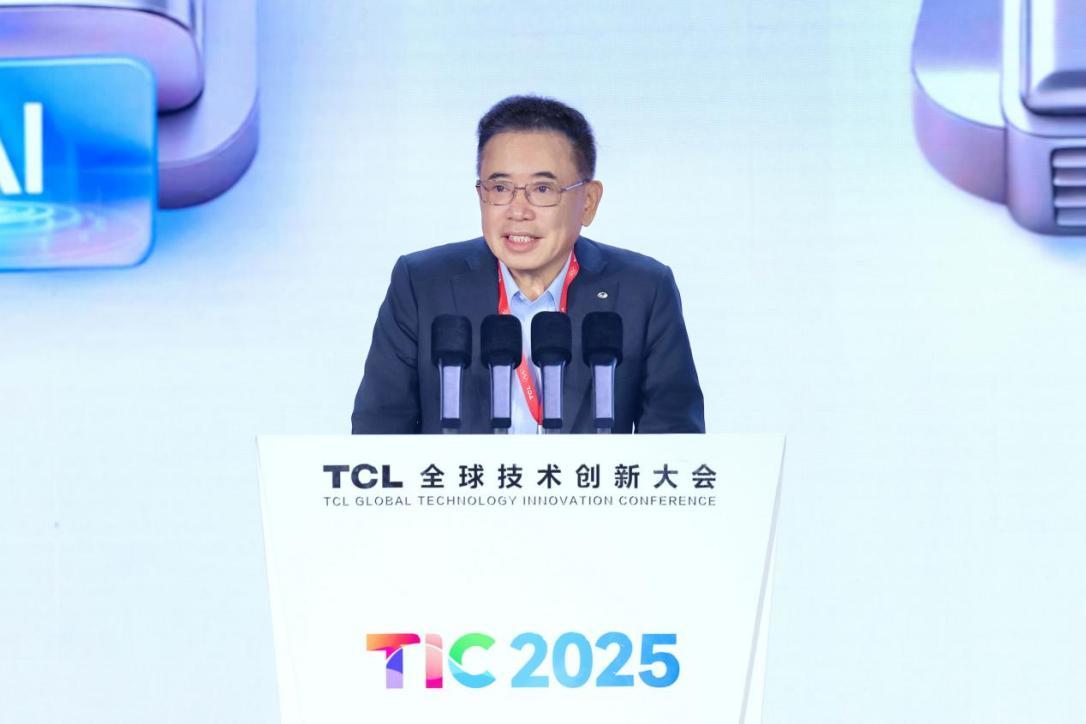
TCL:加码“AI向实”,以AI重新定义智慧生活场景与绿色能源科技
Huan Qiu Wang· 2025-12-12 03:21
Core Viewpoint - TCL is committed to increasing investment in AI technology to drive innovation across the entire value chain, including research and development, manufacturing, supply chain, and operations, aiming for significant value realization by 2025 [1][3]. Group 1: AI Application and Impact - The theme of the 2025 TCL Global Technology Innovation Conference is "AI for Real," focusing on how AI can be applied in real-world scenarios to enhance efficiency and redefine various aspects of life, such as travel, health, and entertainment [3][4]. - TCL announced the launch of ten AI application scenarios and a global AI talent recruitment plan, projecting to create comprehensive benefits exceeding 1 billion yuan by 2025 through the implementation of AI applications [3][4]. - The "X-Intelligence 3.0" model, launched by TCL Huaxing, is the first domain-specific large model in the display field with strong reasoning capabilities, expected to penetrate more core areas of production and R&D, serving as a benchmark for intelligent transformation in China's manufacturing industry [4][5]. Group 2: AI in Manufacturing - In the manufacturing sector, TCL integrates AI into semiconductor display and new energy photovoltaic industries, enhancing quality and efficiency, which in turn improves the core value of consumer products [5][6]. - The ADC (Auto Defect Classification) technology implemented by TCL Huaxing has improved defect detection accuracy from 85% to 95%, with plans to upgrade to ADR (Auto Defect Repair) for automated defect repair processes [5][7]. - The "X-Intelligence" model ranks 11th globally in industrial large models and first in the display field, enhancing product development efficiency by 20% and material development efficiency by 30% [7]. Group 3: AI in New Energy Photovoltaics - TCL Zhonghuan utilizes the Deep Blue AI model for automated single crystal growth and digital twin analysis, achieving remote operation of up to 384 furnaces [8][10]. - The company has successfully implemented large-scale applications of G12-sized silicon wafers and has established product layouts across various technological routes, contributing to global energy structure transformation [10]. Group 4: AI in Consumer Products - TCL leverages AI to redefine consumer experiences in various scenarios, including travel, health, and entertainment, ensuring products return to their fundamental principles [11][13]. - The AI/AR glasses developed by TCL serve as personal AI assistants, while smart home appliances like the TCL air conditioner and refrigerator utilize AI for enhanced health and energy efficiency [11][12]. - The TCL AiMe robot represents a significant advancement in AI companionship, offering emotional support and interactive experiences for users [13].


中关村丰台园给工业智能体获奖企业“发红包”,最高300万元
Xin Jing Bao· 2025-11-19 06:51
Group 1 - The 14th China Innovation and Entrepreneurship Competition focused on high-quality development of industrial intelligent entities, with over 200 projects participating and awards distributed to top projects [1][2] - The event was co-hosted by the Ministry of Industry and Information Technology and the Fengtai District Government, emphasizing the integration of artificial intelligence with the real economy [1] - The first industrial large model and an AI-enabled new industrial supply-demand matching service platform were showcased, gathering over 2,000 supply resources and facilitating more than 300 supply-demand matches [1] Group 2 - Fengtai Park offers up to 3 million yuan in funding support and 300 square meters of "zero-rent space" to award-winning enterprises, along with 140,000 hours of domestic computing power and hardware validation platforms [2] - The application scenarios provided cover three major areas: rail transit equipment design and operation, high-speed rail intelligent operation, and intelligent manufacturing and logistics supply chain [2] - The Fengtai District has established a comprehensive industrial development system, aiming to support innovative projects throughout their lifecycle and enhance collaboration among government, industry, academia, research, and finance [2]

智能体技术加快多场景应用
Jing Ji Ri Bao· 2025-11-17 22:07
Core Insights - The article discusses the rapid advancement and industrial application of intelligent agents, which are becoming a significant driver for the smart transformation of industries [1] Group 1: Technological Empowerment and Efficiency Improvement - Intelligent agents combine environmental perception, task orchestration flexibility, and complex task automation capabilities with technologies like cloud computing and big data, showcasing vast application prospects across various fields [2] - The transition from traditional models to intelligent agents represents a paradigm shift, allowing machines to perform non-structured tasks that previously required human understanding and judgment, thus greatly expanding machine capabilities [2][3] Group 2: Application Scenarios and Expansion - 2023 is viewed as the year of industrialization for intelligent agents, with companies increasing their application efforts and expanding use cases across different sectors [4] - Examples include the use of digital patient intelligent agents in medical training at Shandong University and Lenovo's city super intelligent agents enhancing urban management processes [4] Group 3: Market Predictions and Trends - IDC predicts that by 2026, approximately 50% of the top 500 companies in China will utilize intelligent agents for data preparation and analysis, indicating a growing trend towards the commercialization of both general and specialized intelligent agent products [5][6] Group 4: Challenges to Large-Scale Implementation - Despite the rapid development, the industrial application of intelligent agents faces challenges such as model performance limitations, quality data set availability, and issues with decision-making quality and cross-scenario collaboration [7] - There is a need for unified standards and norms for intelligent agent interconnectivity to overcome current challenges in tool invocation and cloud resource utilization [7] Group 5: Recommendations for Development - To transition intelligent agents from experimental to commercial products, efforts should focus on enhancing reliability and collaboration, establishing a "safety belt" for human-machine cooperation, and reducing development barriers [7][8] - Companies are encouraged to treat intelligent agents as team members, prioritizing roles in clear processes and utilizing virtual teams for complex task handling [7]
赛道Hyper | 字节跳动VMR²L系统实现工程秒级推理
Hua Er Jie Jian Wen· 2025-06-06 03:22
Core Insights - ByteDance's ByteBrain team, in collaboration with UC Merced and UC Berkeley, has developed VMR²L, a deep reinforcement learning-based virtual machine rescheduling system that achieves near-optimal performance while reducing inference time to 1.1 seconds, thus unifying system performance with industrial deployability [1][2]. Group 1: VMR²L System Features - VMR²L utilizes a hierarchical attention network to capture resource dependencies between virtual and physical machines, combined with asynchronous policy gradient algorithms for distributed training, enabling state evaluation and action selection within milliseconds [2]. - The dynamic graph pruning technology allows for real-time elimination of ineffective computation nodes, enhancing inference speed by 270 times compared to traditional Mixed Integer Programming (MIP) methods, reducing migration time from 50 minutes to 1.1 seconds with only a 3% higher fragmentation rate than the optimal solution [2]. - The system's two-stage agent architecture filters illegal actions through explicit constraints, naturally adhering to industrial scheduling rules such as resource capacity and affinity, with a generalization error of less than 5% across different load scenarios [2]. Group 2: Market Impact and Efficiency - In typical cloud computing clusters, VMR²L can improve resource utilization by 18%-22% and reduce migration time from minutes to seconds, providing a feasible solution for real-time resource scheduling in high-density data centers [2][3]. - The system reduces resource fragmentation by 20% and saves over 5% in annual server procurement costs, while maintaining performance fluctuations of less than 8% across various industry load models [4]. - The lightweight model, with only 1.2GB of parameters, supports edge deployment, reducing data transmission by 70% and improving response times at edge nodes by five times [4]. Group 3: Technological Advancements and Future Directions - VMR²L's event-driven communication protocol reduces inter-node latency to 5 milliseconds, supporting distributed decision-making for large-scale clusters with tens of thousands of nodes, improving task completion efficiency by 40% compared to traditional polling mechanisms [5]. - The system's standardized interface design provides compatibility with major cloud platforms like OpenStack and Kubernetes, significantly lowering the technical migration costs for enterprises [5]. - The development of VMR²L marks a shift in reinforcement learning from "algorithm competition" to "value creation," directly enhancing resource utilization for IaaS providers and supporting latency-sensitive fields such as autonomous driving and industrial robotics [5][6]. Group 4: Broader Implications - The emergence of VMR²L reflects the deep integration of artificial intelligence with the real economy, offering a universal solution for real-time decision-making in smart manufacturing and smart city applications [6]. - Despite challenges in areas like autonomous driving certification and quantum computing integration, this achievement outlines a clear industrialization path for reinforcement learning technology, focusing on balancing efficiency, cost, and reliability [6][7].