
工业大模型

Search documents
智洋创新终止买灵明光子控股权改3亿现金战投 标的连亏
Zhong Guo Jing Ji Wang· 2026-02-26 06:35
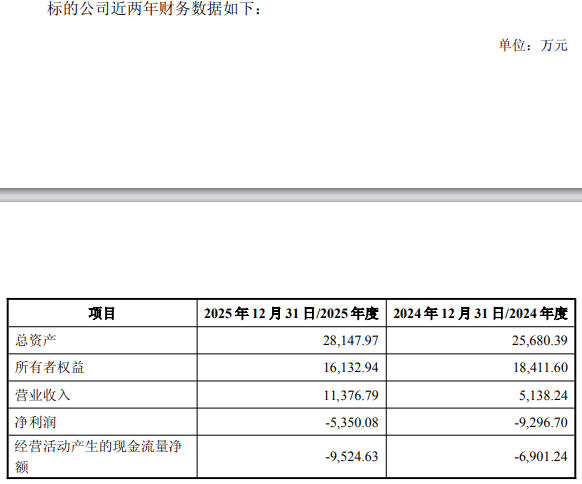
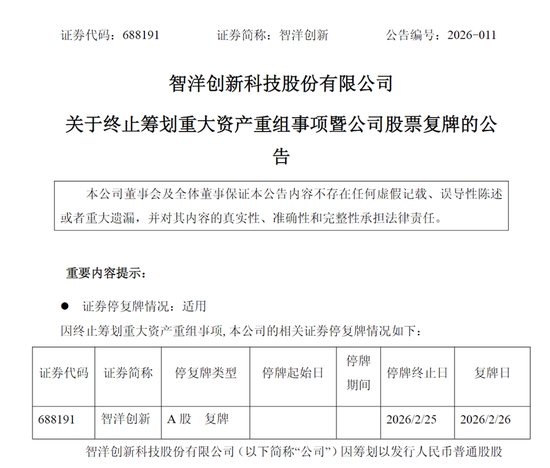
Core Viewpoint - Zhiyang Innovation (688191.SH) has decided to terminate its major asset restructuring plan to acquire controlling interest in Shenzhen Lingming Photon Technology Co., Ltd. due to failure to reach consensus on key transaction terms amid changing market conditions. The company's stock resumed trading on February 26, 2026, after being suspended since February 4, 2026 [1][2]. Group 1: Termination of Major Asset Restructuring - The company announced the termination of the major asset restructuring plan, which involved issuing ordinary shares, convertible bonds, and cash to acquire control of Lingming Photon [1][2]. - The decision to terminate was made after careful consideration, as the company and related parties could not agree on core transaction terms despite ongoing discussions [2]. - The termination will not adversely affect the company's business operations, financial status, or the interests of shareholders, particularly minority shareholders [2]. Group 2: Strategic Investment Agreement - On February 25, 2026, the company signed a strategic investment intention agreement with Lingming Photon, agreeing to invest approximately 300 million yuan in cash to acquire a minority stake in the company [3][4]. - The pre-investment valuation of Lingming Photon is estimated to be between 2.7 billion yuan and 3 billion yuan, with the company expected to hold approximately 9.09% to 10% of the shares post-investment [3]. - The investment will allow the company to nominate a board candidate and hold veto rights on major decisions, although it does not aim to gain control over Lingming Photon [3][4]. Group 3: Financial Performance of Lingming Photon - Lingming Photon reported revenues of 51.38 million yuan and 113.77 million yuan for the years 2024 and 2025, respectively, with net losses of 92.97 million yuan and 53.50 million yuan for the same periods [5][6]. - The company's total assets increased from 256.80 million yuan in 2024 to 281.48 million yuan in 2025, while owner’s equity decreased from 184.12 million yuan to 161.33 million yuan [6][7]. Group 4: Synergies and Strategic Importance - The company’s product portfolio includes industrial models, intelligent perception terminals, and smart drones, which align with Lingming Photon’s technology, creating potential synergies in supply chain and market [7]. - The strategic investment is seen as a way to strengthen the supply chain, enhance research and development capabilities, and accelerate the implementation of smart terminal products [7].


688191复牌!终止重组,改战略投资
Xin Lang Cai Jing· 2026-02-25 23:16
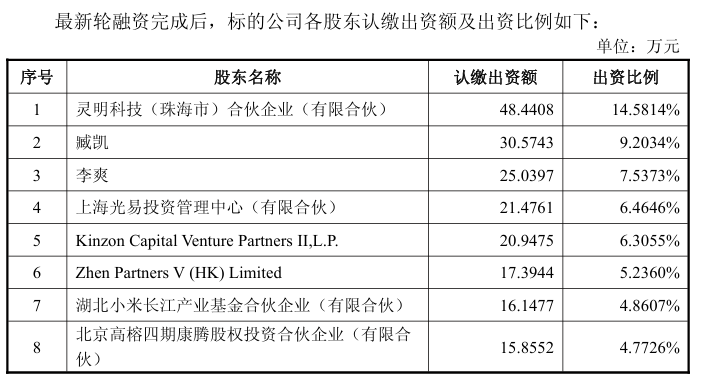
Core Viewpoint - Zhiyang Innovation has decided to terminate its major asset restructuring plan to acquire control of Lingming Photon due to disagreements on core transaction terms, but will proceed with a strategic investment and collaboration with Lingming Photon [1][2]. Group 1: Investment Details - Zhiyang Innovation signed a Strategic Investment Intent Agreement with Lingming Photon, planning to invest approximately 300 million RMB, with Lingming Photon’s pre-investment valuation estimated between 2.7 billion to 3 billion RMB [6][15]. - Post-investment, Zhiyang Innovation is expected to hold approximately 9.09% to 10.00% of Lingming Photon’s shares and will have the right to nominate one board candidate and veto any overall sale of Lingming Photon [7][17]. Group 2: Financial Overview of Lingming Photon - Lingming Photon, established in 2018, focuses on high-quality dToF sensor chips and solutions, with total assets projected to be approximately 281 million RMB by the end of 2025, and revenues of 51.38 million RMB and 114 million RMB for 2024 and 2025, respectively [7][8]. - Despite revenue growth, Lingming Photon is expected to incur losses, with net profits projected at -92.97 million RMB for 2024 and -53.50 million RMB for 2025 [7][8]. Group 3: Strategic Collaboration - The agreement outlines four areas of strategic cooperation, including joint R&D on laser radar chips and modules, leveraging Zhiyang Innovation's data and Lingming Photon’s design expertise [9][19]. - Both companies aim to enhance the application of laser radar technology in smart inspection services and prioritize mutual capital and equity cooperation to support Lingming Photon’s funding and governance [10][19]. Group 4: Zhiyang Innovation's Performance - For the first three quarters of 2025, Zhiyang Innovation reported revenues of 753 million RMB, a year-on-year increase of 11.38%, and a net profit of approximately 45.94 million RMB, up 24.97% year-on-year [10][19]. - The company's market capitalization before the suspension was approximately 8.898 billion RMB [10].
突发!688191,重大资产重组终止
Zhong Guo Ji Jin Bao· 2026-02-25 13:17
Core Viewpoint - Zhiyang Innovation has decided to terminate its major asset restructuring plan due to the inability to reach an agreement on core terms with the counterpart, Shenzhen Lingming Photon Technology Co., Ltd. The company will now proceed with a cash investment of 300 million yuan in Lingming Photon instead [1][2]. Group 1: Termination of Major Asset Restructuring - Zhiyang Innovation announced the termination of its major asset restructuring plan, which involved acquiring control of Lingming Photon through stock issuance and other means [2][3]. - The decision to terminate was influenced by changes in the market environment, which prevented both parties from agreeing on key transaction terms [2][3]. - Following the termination, Zhiyang Innovation signed a Strategic Investment Intent Agreement to invest 300 million yuan in Lingming Photon through cash and potential equity purchase [2][3]. Group 2: Investment Details - The investment amount of 300 million yuan is expected to come from the company's own and raised funds, and it is not anticipated to constitute a major asset restructuring or related party transaction [2][3]. - Lingming Photon is valued between 2.7 billion yuan and 3 billion yuan, and after the investment, Zhiyang Innovation will hold approximately 9.09% to 10.00% of Lingming Photon’s shares [2][3]. Group 3: Strategic Importance - The investment is characterized as a strategic industrial investment aimed at strengthening the supply chain and enhancing research and development capabilities for Zhiyang Innovation [6]. - Zhiyang Innovation's product portfolio includes industrial models, intelligent perception terminals, and intelligent drones, which align with Lingming Photon’s technology and market [6]. - Lingming Photon is a provider of high-quality dToF (direct time-of-flight) sensor chips and systems, focusing on improving machine vision capabilities for various applications [6]. Group 4: Financial Performance of Lingming Photon - Lingming Photon is currently operating at a loss, with projected revenues of 51.38 million yuan in 2024 and 114 million yuan in 2025, alongside net losses of 92.97 million yuan and 53.50 million yuan for the same years [6][7]. - The total assets of Lingming Photon are expected to reach approximately 281.48 million yuan by the end of 2025, with owner equity projected at around 161.33 million yuan [7].
曾进泽:广东推动超5万家规上工业企业数字化转型
2 1 Shi Ji Jing Ji Bao Dao· 2026-02-24 08:47
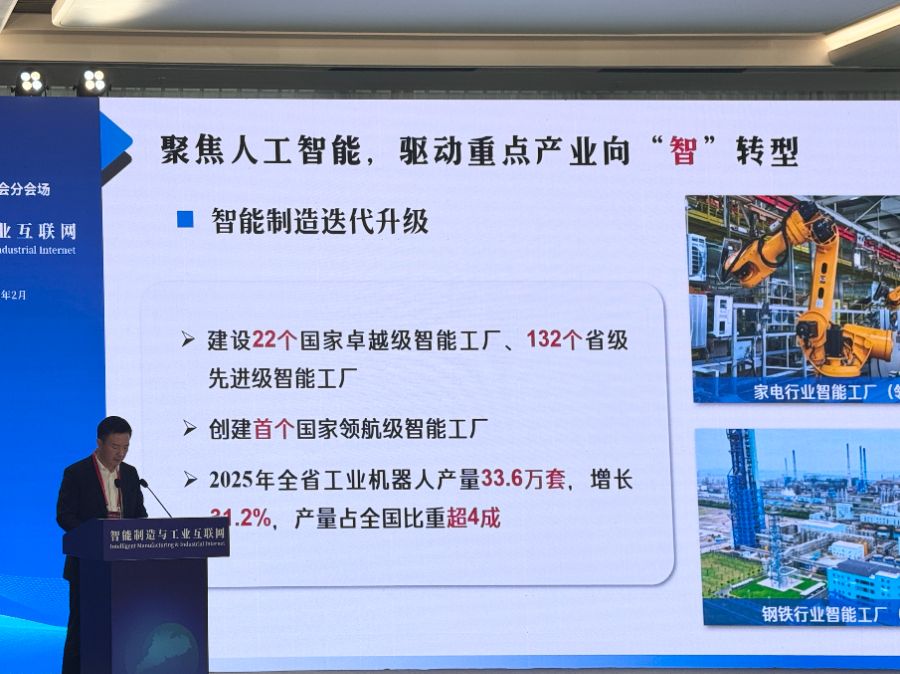
Core Viewpoint - Guangdong Province is making significant strides in digital transformation and smart manufacturing, aiming to exceed its "14th Five-Year Plan" goals by promoting over 50,000 industrial enterprises to undergo digital transformation by the end of 2025 [3][4]. Group 1: Digital Transformation Initiatives - Guangdong is focusing on the digital transformation of key industries, supporting leading enterprises in electronics, advanced equipment, and pharmaceuticals, with over 400 "lighthouse" projects, including more than 200 national model projects [4]. - The province has initiated pilot cities for small and medium-sized enterprises (SMEs) digital transformation, with over 4,000 SMEs undergoing digital upgrades across 38 key sectors [4][6]. - A long-term mechanism for digital transformation is established, including "diagnosis and assessment - implementation - sample promotion," with six cities recognized as national pilot cities [4][6]. Group 2: Artificial Intelligence Integration - By 2025, the core AI industry in Guangdong is expected to exceed 300 billion, accounting for about one-quarter of the national total [4]. - The province is developing industrial AI models and creating innovative platforms to enhance the integration of AI and manufacturing [5]. - The production of industrial robots is projected to reach 336,000 units by 2025, representing a growth of 31.2% and over 40% of the national share [5]. Group 3: Supply Chain and Industry Upgrades - Guangdong is promoting a "chain-based transformation" to enhance the supply chain, encouraging leading enterprises to build digital supply chains and improve efficiency [6]. - The province is leveraging industrial internet platforms to provide cost-effective digital solutions for upstream and downstream enterprises, fostering new business models [6]. - AI is being integrated into software development, with 50% of new code generated with AI assistance, reducing coding time by 40% and improving development efficiency by 20% [6]. Group 4: Investment and Technological Upgrades - Guangdong aims to drive technological upgrades in over 9,300 industrial enterprises by 2025, with a 12.6% year-on-year increase in investment for upgrading equipment [7]. - The province is facilitating deep cooperation between manufacturing and AI companies through targeted events, promoting the transformation of projects into actual investments [7]. - A comprehensive manufacturing empowerment system is being established, with the creation of national industrial internet platforms and partnerships to support digital transformation [7].
财富通每日策略-20260206
Dongguan Securities· 2026-02-06 01:43
Market Performance - The Shanghai Composite Index closed at 4075.92, down by 0.64% (-26.29 points) [2] - The Shenzhen Component Index closed at 13952.71, down by 1.44% (-203.56 points) [2] - The CSI 300 Index closed at 4670.42, down by 0.60% (-28.26 points) [2] - The ChiNext Index closed at 3260.28, down by 1.55% (-51.24 points) [2] - The STAR 50 Index closed at 1432.52, down by 1.44% (-20.95 points) [2] - The Beijing Stock Exchange 50 Index closed at 1507.29, down by 2.03% (-31.28 points) [2] Sector Performance - The top-performing sectors included Beauty Care (3.21%), Banks (1.57%), and Food & Beverage (1.31%) [3] - The worst-performing sectors included Non-ferrous Metals (-4.57%), Electric Power Equipment (-3.41%), and Coal (-2.22%) [3] - Concept sectors showing strength included Horse Racing (1.89%) and Duty-Free Shops (1.33%) [3] - Concept sectors underperforming included BC Battery (-5.18%) and Lead Metal (-4.14%) [3] Market Outlook - The market experienced a weak adjustment with all major indices closing lower, particularly the ChiNext Index [4] - Consumer sectors showed resilience with significant activity in Food & Beverage, Retail, and Tourism [4] - The financial sector strengthened in the afternoon, while commodities like Non-ferrous Metals and Oil & Gas faced declines [4] - The overall market sentiment indicated more stocks declining than rising, with over 3700 stocks down [6] Economic Indicators - The total trading volume in the Shanghai and Shenzhen markets was 2.18 trillion, a decrease of 304.8 billion from the previous trading day [6] - Industrial profits for large-scale industrial enterprises are projected to grow by only 0.6% in 2025, below GDP growth [6] - The People's Bank of China emphasized support for key sectors like technology innovation and small to medium enterprises [5] Risks - Potential risks include unexpected declines in the overseas economy and prolonged high interest rates affecting domestic liquidity [7] - Trade tensions between China and the U.S. could further pressure domestic exports [7]
创新奇智与上海交大海南研究院签署战略合作协议
Zhi Tong Cai Jing· 2026-01-30 11:22
Core Viewpoint - The company has signed a strategic cooperation agreement with Shanghai Jiao Tong University Hainan Research Institute to advance collaboration in technology and projects, particularly in marine technology and robotics [1][2] Group 1: Strategic Cooperation - The agreement aims to leverage the core research capabilities of Shanghai Jiao Tong University in deep-sea technology and marine equipment, alongside the company's expertise in artificial intelligence and industrial large model technology [1] - The collaboration will focus on areas such as underwater intelligent operation equipment, underwater multi-axis robotic arms, underwater target recognition and tracking, integrated unmanned equipment for air-sea-submarine operations, marine environmental perception, and optimization of marine equipment structural design [1] Group 2: Benefits of Collaboration - The partnership is expected to enhance the integration of industry, academia, and research, promoting resource sharing and mutual benefits under the principles of leveraging advantages, integrating resources, and joint efforts [2] - The collaboration will also include talent cultivation, achievement transformation, and resource sharing, which will facilitate the industrialization of technological achievements [2]
安徽省首批工业大模型发布
Xin Lang Cai Jing· 2026-01-29 16:41
Core Insights - The article discusses the launch of the first batch of 23 industrial large models in Anhui Province, aimed at enhancing the integration of artificial intelligence with the manufacturing sector [1] Group 1: Industrial Large Models - The first batch of 23 industrial large models covers various aspects including research and design, production, quality inspection, and fault prediction [1] - The release of these models is a significant step towards the intelligent transformation of the manufacturing industry and the establishment of a modern industrial system in Anhui [1] Group 2: Strategic Implementation - Anhui is seizing the strategic opportunity of deep integration between artificial intelligence and the real economy, systematically advancing technology breakthroughs, scenario expansion, and ecosystem construction [1] - The launch event signifies a transition from technical exploration to systematic and large-scale application of industrial large models [1] Group 3: Future Directions - Future efforts will focus on strengthening policy guidance, deepening scenario openness, and optimizing service supply to enhance the quality and efficiency of Anhui's manufacturing sector [1]
广东科技创新,如何激发“新动能”?
Nan Fang Du Shi Bao· 2026-01-26 07:48
Core Insights - The Guangdong Provincial Government emphasizes the importance of strengthening original innovation and key core technology breakthroughs to enhance the region's competitive edge and future development [2][4]. Group 1: Original Innovation and Key Technologies - Original innovation is identified as the source of technological advancement and a means to overcome reliance on critical technologies [2]. - The report highlights the need for Guangdong to master key core technologies with independent intellectual property rights to secure a leading position in global industrial and value chains [2]. - Experts suggest that focusing resources on strategic areas such as artificial intelligence, integrated circuits, and biomedicine is essential for achieving long-term stable investment and innovation [3]. Group 2: Strengthening Corporate Innovation - Companies are recognized as the main drivers of technological innovation and the core carriers of technology transfer [4]. - Establishing a "demand-driven" mechanism is crucial for encouraging companies to take the lead in innovation, with major enterprises regularly publishing technology demand lists [4]. - The integration of industry, academia, and research is recommended to ensure that research and development align closely with real industry challenges [4]. Group 3: Artificial Intelligence Applications - The report outlines a clear vision for the high-level application of artificial intelligence across all sectors and times, positioning it as a strategic technology for the next wave of industrial transformation [5][6]. - AI is expected to enhance traditional industries by improving efficiency and activating existing value, particularly in manufacturing and agriculture [7]. - The development of new industries driven by AI, such as intelligent robotics and low-altitude economy, is anticipated to create new growth points [7]. - The report also emphasizes the importance of AI governance to mitigate risks such as algorithm bias and privacy breaches, ensuring sustainable development [7].
专家共读报告 | 广东科技创新,如何激发“新动能”?
Nan Fang Du Shi Bao· 2026-01-26 05:30
Core Insights - The Guangdong Provincial Government's work report emphasizes the importance of strengthening the role of enterprises in innovation and advancing original innovation and key core technology breakthroughs to enhance technological development and competitiveness [1][2]. Group 1: Original Innovation and Key Technologies - Original innovation is identified as the source of technological innovation and is crucial for overcoming reliance on key technologies from external sources [2]. - The report highlights that strengthening original innovation and key technology breakthroughs is a significant decision for Guangdong, impacting national strategic missions and regional competitive dynamics [2][5]. - Experts suggest that focusing on original innovation will help Guangdong gain more self-owned intellectual property rights and occupy a more proactive position in global industrial and value chains [5]. Group 2: Strengthening Enterprise Innovation - The report calls for reinforcing the role of enterprises as the main body of technological innovation and the core vehicle for transforming scientific achievements [6]. - To enable enterprises to take the lead in innovation, a "demand-driven" mechanism should be established, allowing major industry players to regularly publish significant technology demand lists [8]. - Suggestions include building closer industry-academia-research collaboration and ensuring that research and development align with real industry challenges [9]. Group 3: Artificial Intelligence Applications - The report outlines a clear vision for the high-level application of artificial intelligence (AI) across all sectors, recognizing AI as a strategic technology leading the new round of technological revolution [10]. - AI is expected to enhance traditional industries by optimizing production processes and improving efficiency, thus revitalizing existing value [13]. - The integration of AI into various sectors is anticipated to create new growth points and ensure sustainable development through inclusive technology and governance [13].
打通传统制造业数智转型堵点
Jing Ji Ri Bao· 2026-01-23 22:03
Core Viewpoint - The Chinese government is accelerating the integration of artificial intelligence in the manufacturing sector to enhance productivity and support the transition from a manufacturing powerhouse to an intelligent manufacturing leader [1] Group 1: Progress in Digital Transformation - Since the 14th Five-Year Plan, traditional manufacturing has made significant strides in digital transformation, achieving breakthroughs in industrial clusters, management reform, technological innovation, and brand building [1] - China has established over 30,000 basic intelligent factories, more than 1,200 advanced intelligent factories, and over 230 excellent intelligent factories, showcasing the emergence of benchmark enterprises in traditional manufacturing sectors [1] - By September 2025, China is expected to have 85 "lighthouse factories," leading globally in smart manufacturing standards [1] Group 2: Challenges in Digital Transformation - The digital transformation of traditional manufacturing is a long-term systemic project facing challenges such as reliance on imported core technologies like high-end chips and industrial software [2] - Many traditional enterprises lack a holistic view of smart manufacturing, leading to difficulties in integrating technology with operations and addressing the "data silo" issue [2] - There are significant disparities in smart manufacturing capabilities among enterprises, with small and medium-sized enterprises (SMEs) needing to enhance their transformation capabilities [2] Group 3: Strategies for Accelerating Transformation - The strategy involves constructing an industrial ecosystem that promotes collaboration between advanced enterprises and SMEs, focusing on innovation and shared resources [3] - Emphasis on deep integration of technology, management, and strategy to create a comprehensive smart manufacturing system that addresses the "data silo" problem [3] - The approach includes enhancing green manufacturing and service-oriented manufacturing through digital empowerment [3] Group 4: Innovation and Talent Development - Strengthening original innovation by focusing on critical areas such as high-end chips and industrial software to build a self-owned intellectual property system [4] - Cultivating full-stack intelligent manufacturing service providers to enhance systematic service capabilities and create value in collaboration with manufacturing enterprises [4] - Promoting integrated education and talent development to address the pain points of digital transformation in manufacturing, optimizing academic structures, and fostering interdisciplinary high-end talent [4]