
人工智能卫星

Search documents
马斯克剑指“外星造城”,时间表曝光!月球只需不到10年
Bei Jing Shang Bao· 2026-02-09 05:48
Core Viewpoint - SpaceX has shifted its focus to building a self-expanding city on the Moon, with expectations to achieve this within a decade, while still pursuing its Mars vision which is projected to take over 20 years [3][4]. Group 1: Strategic Shift - Elon Musk announced that SpaceX's primary goal is now the construction of a lunar city, which can be developed much faster than a Martian city due to shorter travel times and more frequent launch opportunities [3][4]. - The lunar city concept emphasizes self-sufficiency and continuous expansion through automation and robotics, akin to cellular growth, rather than relying on supplies from Earth [6]. Group 2: Technological Development - SpaceX is reportedly hiring engineers in Austin and Seattle to develop AI satellites and space data centers, indicating a push towards advanced technology to support lunar and Martian endeavors [4]. - Previous demonstrations by SpaceX have shown the feasibility of using lunar regolith for building materials and extracting oxygen and water, aligning with the vision of a self-sustaining lunar city [6]. Group 3: Collaboration and Future Plans - SpaceX is concentrating resources on NASA's Artemis program, which aims to establish a lunar base and explore further space opportunities, including the extraction of helium-3 isotopes [6][8]. - The U.S. government has set ambitious goals for lunar exploration, including a return to the Moon by 2028 and the establishment of a permanent lunar outpost by 2030, which will involve collaboration with private companies like SpaceX [11][12].

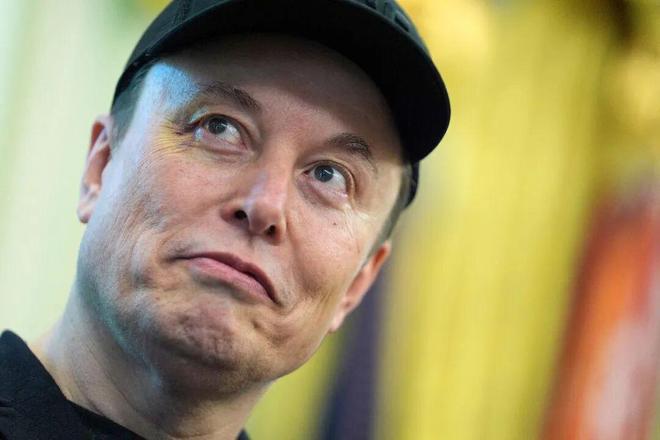
马斯克:是时候大规模重返月球,SpaceX已将重心转移到在月球上建造城市
Ge Long Hui· 2026-02-09 03:25
Core Viewpoint - Elon Musk announced on social media that it is time for a large-scale return to the Moon, indicating a shift in SpaceX's focus towards building a self-sustaining city on the Moon within the next decade, while Mars colonization will take over 20 years [1] Group 1: Moon Mission - SpaceX is recruiting engineers in Austin and Seattle to develop AI satellites and a space data center, confirming the company's commitment to lunar exploration [1] - Musk emphasized that the Moon offers a quicker turnaround for city construction, with travel time of 2 days compared to 6 months for Mars, allowing for faster iterations in building a lunar city [1] Group 2: Mars Mission - Despite prioritizing the Moon, SpaceX will still work towards establishing a city on Mars, aiming to initiate efforts in approximately 5-7 years [1] - Musk reiterated that the overarching mission of SpaceX remains to expand consciousness and life into the cosmos [1]
马斯克:SpaceX已将重心转移至在月球建造城市,10年内有望实现;回应“大规模招聘工程师”:是真的
Sou Hu Cai Jing· 2026-02-09 03:04
Core Viewpoint - SpaceX is shifting its focus to building a self-expanding city on the Moon, aiming to achieve this goal within 10 years, while Mars colonization is projected to take over 20 years [1][3]. Group 1: Lunar City Development - The construction of the lunar city can occur every 10 days, with a travel time of 2 days, significantly faster than the Mars mission, which is limited to every 26 months with a 6-month travel time [3]. - SpaceX plans to initiate work on the Mars city within 5 to 7 years, despite the current focus on lunar development [3]. Group 2: Recruitment and Expansion - SpaceX is actively recruiting engineers in Austin and Seattle to develop AI satellites and space data centers, indicating a significant expansion in its workforce [3]. - The company has postponed its planned Mars mission for this year to concentrate on the long-promised NASA lunar flights [3]. Group 3: Financial Context - Following the merger of xAI, Elon Musk's personal wealth has surpassed $800 billion, marking his fourth record-breaking wealth milestone in four months [3].
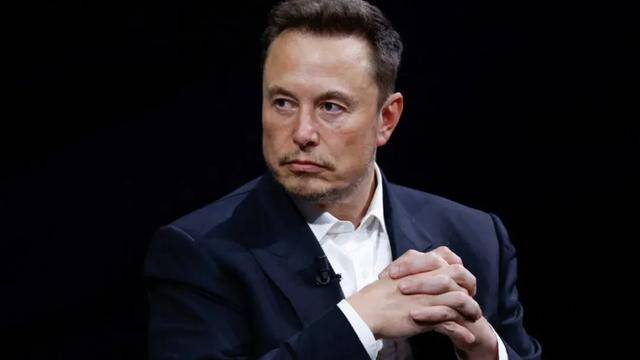
马斯克:SpaceX已将重心转移至在月球建造城市,10年内有望实现 回应“大规模招聘工程师”:是真的
Xin Lang Cai Jing· 2026-02-09 02:10
Core Viewpoint - SpaceX has shifted its focus to building a self-expanding city on the Moon, aiming to achieve this goal within 10 years, while Mars colonization is projected to take over 20 years [1][4]. Group 1: Moon City Development - The construction of the Moon city can occur every 10 days with a travel time of 2 days, significantly faster than the Mars mission, which is limited to every 26 months with a 6-month travel time [3][6]. - SpaceX plans to initiate work on the Mars city within 5 to 7 years, despite the current focus on lunar development [7]. Group 2: Recruitment and Strategic Shift - SpaceX is actively recruiting engineers in Austin and Seattle to develop AI satellites and space data centers, indicating a strategic expansion in its technological capabilities [7]. - The company has postponed its planned Mars mission for this year to concentrate on the long-awaited NASA lunar flight [7]. Group 3: Financial Context - Following the merger of SpaceX with xAI, Elon Musk's personal wealth has surpassed $800 billion, marking his fourth wealth record in four months [7].
马斯克:是时候大规模重返月球了
财联社· 2026-02-08 10:55
Core Viewpoint - Elon Musk has indicated that it is time for a large-scale return to the Moon [1] Group 1 - SpaceX is reportedly hiring engineers in Austin and Seattle to develop artificial intelligence satellites and space data centers [2] - Musk confirmed the hiring news by retweeting and responding affirmatively [2]

影响市场重大事件:我国星地微波高码率通信技术取得突破;马斯克称计划每年在太空中部署100吉瓦人工智能卫星
Mei Ri Jing Ji Xin Wen· 2025-11-16 22:37
Group 1 - China's space-ground microwave high-rate communication technology has achieved a breakthrough, with data transmission rates reaching 6.0 Gbps in the X band and 20.16 Gbps in the Ka band, marking significant progress in high-speed data transmission solutions [1] - The experiment confirmed the feasibility of high-order modulation technology, achieving stable communication far exceeding previous capabilities, with negligible distortion in the constellation diagram and a zero error rate [1] Group 2 - Elon Musk announced plans to deploy 100 GW of solar-powered AI satellites annually, which could enable large-scale AI operations at minimal costs [2] Group 3 - The Shenzhen Low-altitude Economy Standard System 2.0 and standardization roadmap were officially released, featuring a three-layer vertical and two-wing horizontal design, supporting the entire low-altitude economy chain [3] Group 4 - A new "flash annealing" process developed by researchers allows for rapid temperature changes of up to 1000 degrees Celsius per second, paving the way for high-performance energy storage films [4] Group 5 - The "Automotive Data Export Security Assessment Method" standard has been approved, filling a gap in the automotive industry's data export security assessment, providing clear guidelines for companies [5] Group 6 - Zhejiang Province aims to lower investment thresholds for private enterprises in sectors like renewable energy and AI, enhancing market vitality and encouraging private investment [6] Group 7 - The 2025 Youth Embodied Intelligence and Humanoid Robot Technology Education Seminar was held, focusing on the impact of cutting-edge technology on basic education [7] Group 8 - The Chang'e 6 mission has discovered crystalline hematite in lunar samples, providing new insights into lunar oxidation mechanisms and the causes of large impact events [8] Group 9 - Rokid, a smart glasses company, reported a surge in orders and set ambitious sales targets, aiming to sell over 1 million units next year and reach 10 million by 2028, indicating a potential "iPhone moment" for smart glasses [9] Group 10 - Yiwei Lithium Energy's chairman highlighted two core challenges for the future of power batteries: reducing lifecycle costs and addressing battery performance in extreme cold, emphasizing the need for integration with distributed energy systems [10]
影响市场重大事件:我国星地微波高码率通信技术取得突破;嫦娥六号月背样品中首次发现晶质赤铁矿;马斯克称计划每年在太空中部署100吉瓦人工智能卫星
Mei Ri Jing Ji Xin Wen· 2025-11-16 22:36
Group 1 - China's space-ground microwave high-rate communication technology has achieved a breakthrough, with data transmission rates reaching 6.0 Gbps in the X band and 20.16 Gbps in the Ka band, marking significant progress in high-speed data transmission solutions [1] - The experiment confirmed the feasibility of high-order modulation technology, achieving stable communication far exceeding previous capabilities, with negligible distortion in the constellation diagram and a zero error rate [1] Group 2 - Elon Musk announced plans to deploy 100 GW of solar-powered AI satellites annually, indicating a viable path for large-scale AI operations at minimal costs [2] Group 3 - Shenzhen has released the "Low-altitude Economy Standard System 2.0 and Standardization Route Planning," which features a three-layer vertical and two-wing horizontal design, supporting the entire low-altitude economy chain with a comprehensive set of standards [3] Group 4 - Researchers have developed a "flash annealing" process capable of heating and cooling at rates of 1000 degrees Celsius per second, paving the way for the production of high-performance energy storage films [4] Group 5 - A new group standard for "Automotive Data Export Security Assessment Methods" has been approved, filling a gap in the automotive industry's data export security evaluation standards, providing clear guidelines for companies [5] Group 6 - Zhejiang Province aims to lower investment thresholds for private enterprises in sectors like renewable energy and AI, fostering a more vibrant market environment and encouraging private investment [6] Group 7 - The "2025 Youth Embodied Intelligence and Humanoid Robot Technology Education Seminar" was held, showcasing advancements in embodied intelligence and discussing the impact of cutting-edge technology on basic education [7] Group 8 - The discovery of crystalline hematite in samples from the Chang'e 6 mission reveals new insights into lunar oxidation mechanisms and the causes of large impact events on the moon [8] Group 9 - Rokid, a smart glasses company, reported a surge in orders and set ambitious sales targets, aiming to sell over 1 million units next year and reach 10 million by 2028, indicating a potential market boom for smart glasses [9] Group 10 - The chairman of EVE Energy highlighted two core challenges for the future of power batteries: reducing lifecycle costs and addressing battery performance in extreme cold, emphasizing the need for integration into distributed energy systems [10]