火星城市建设

Search documents
马斯克酝酿在月球造AI卫星工厂,此前称要10年内建成月球城市
Sou Hu Cai Jing· 2026-02-11 08:43
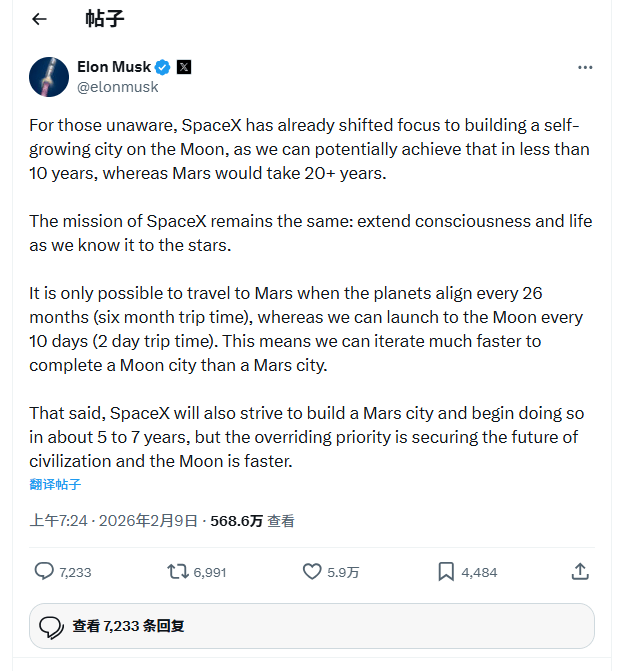
Group 1 - Elon Musk outlined plans for a lunar satellite factory during an all-hands meeting at his AI company xAI, emphasizing the need to build AI satellites on the Moon to enhance computational capabilities for AI development [1] - SpaceX has shifted its focus to constructing a "self-expanding city" on the Moon, with expectations to achieve this within a decade, while still pursuing the long-term vision of Mars colonization [1][3] - Musk stated that the construction of a lunar city can progress much faster than a Martian city due to the shorter travel times and more frequent launch opportunities, with lunar missions possible every 10 days compared to Mars missions every 26 months [3]

马斯克宣布:重返月球!
国芯网· 2026-02-09 12:43
Group 1 - The core viewpoint is that SpaceX is shifting its focus from Mars colonization to building a self-sustaining city on the Moon, aiming to achieve this within a decade, while Mars colonization is projected to take over 20 years [2][7]. - The time cost for Mars missions is significant, with launch windows occurring every 26 months and a travel time of 6 months, whereas lunar missions can be launched every 10 days with a travel time of 2 days [7][8]. - Policy pressure from the U.S. government, specifically the Trump administration's goal for astronauts to return to the Moon by 2028, necessitates that SpaceX, as a key contractor for NASA, prioritize lunar missions [8]. - The commercial reality indicates that lunar missions can generate revenue more quickly than Mars missions, as they can secure contracts from NASA, mine helium-3 for future nuclear fusion, and lease lunar land for commercial ventures [8].

马斯克又改口:先造月球城市 再登陆火星
Xin Lang Cai Jing· 2026-02-09 08:56
Core Viewpoint - SpaceX is shifting its focus towards building a "self-sustaining city" on the Moon, which could be realized in less than a decade, while still planning to initiate its long-term Mars colonization project within the next 5 to 7 years [1] Group 1: Lunar Focus - SpaceX aims to prioritize lunar landings, with a target for an unmanned lunar mission by March 2027 [1] - The company believes that constructing a city on the Moon can be achieved more rapidly than on Mars due to more frequent launch opportunities, with a launch window to the Moon every 10 days compared to every 26 months for Mars [1] Group 2: Mars Plans - Despite the shift in focus to the Moon, SpaceX still intends to pursue its Mars colonization plans, with an initial goal of launching an unmanned spacecraft to Mars by the end of 2026 [1] - Elon Musk previously expressed confidence in achieving a manned landing on Mars by the end of 2026, contingent on favorable conditions [1]
“是时候大规模重返月球了”,马斯克:将用10年时间建一座月球城市
Sou Hu Cai Jing· 2026-02-09 06:53
Core Viewpoint - SpaceX is shifting its focus to building a self-sustaining city on the Moon, aiming to achieve this goal within 10 years, while Mars colonization is projected to take over 20 years [2][4]. Group 1: Lunar City Development - SpaceX plans to construct a city on the Moon, with a construction iteration speed significantly faster than that for Mars, as lunar missions can occur every 10 days compared to Mars missions every 26 months [4]. - The company aims to initiate work on the lunar city within the next 5 to 7 years, despite still committing to Mars city development [4]. Group 2: Strategic Shift and Recruitment - SpaceX has delayed its planned Mars mission to prioritize NASA's lunar missions, with an unmanned lunar landing targeted for March 2027 [6][7]. - The company is actively recruiting engineers in Austin and Seattle to develop AI satellites and space data centers, indicating a strategic pivot towards AI integration in space operations [6]. Group 3: Collaboration with NASA - NASA has commissioned SpaceX to prepare a modified Starship vehicle for docking with its spacecraft near the Moon, which is a key component of NASA's Artemis program aimed at returning astronauts to the lunar surface [7]. - SpaceX has utilized billions in funding from NASA to assist in the development of the Starship, a fully reusable rocket over 400 feet tall [7]. Group 4: Financial Developments - SpaceX's recent acquisition of Elon Musk's startup xAI has led to a combined company valuation of $1.25 trillion, reflecting the company's growth and ambitions in the AI and space sectors [6]. - The company is also planning for an initial public offering (IPO), potentially launching as early as this summer [6].

马斯克:SpaceX已将重心转移至在月球建造城市 10年内有望实现
Mei Ri Jing Ji Xin Wen· 2026-02-09 06:44
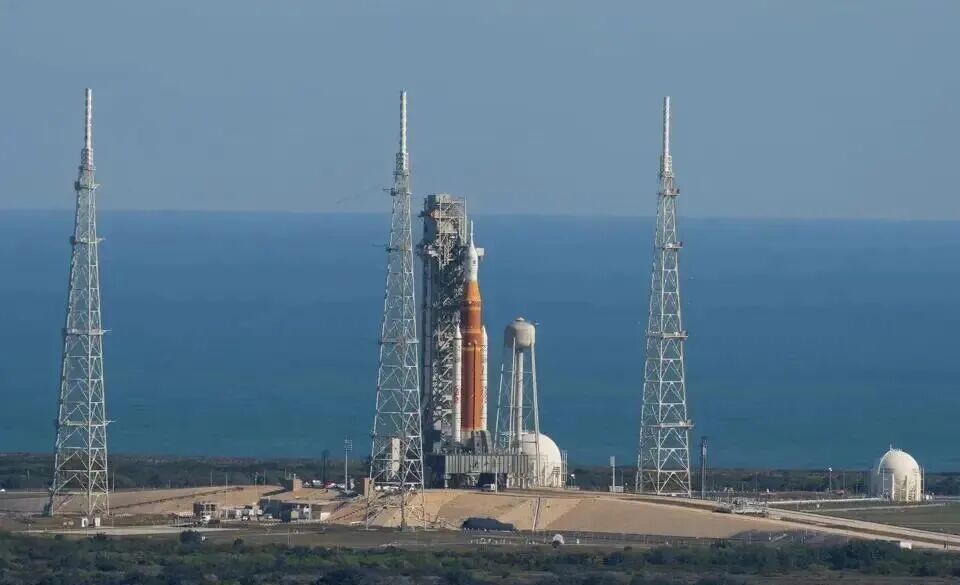
Group 1 - SpaceX has shifted its focus to building a self-sustaining city on the Moon, aiming to achieve this goal within 10 years, while Mars colonization is projected to take over 20 years [1] - The launch frequency for lunar missions can be reduced to every 10 days with a travel time of 2 days, compared to Mars missions which are limited to every 26 months with a 6-month travel time [1] - Despite the focus on lunar development, SpaceX plans to initiate work on Mars city within 5 to 7 years [2] Group 2 - NASA's Artemis 2 crewed lunar mission has been delayed from February to March due to a liquid hydrogen leak during a recent rehearsal [3][4] - The rehearsal included critical operations such as fueling the Space Launch System with cryogenic liquid hydrogen and countdown procedures, which faced multiple interruptions due to technical issues [3] - The Artemis program aims to send astronauts to the Moon, with Artemis 2 involving a 10-day lunar orbit mission with four astronauts aboard the Orion spacecraft [4]
马斯克放大招:10年内建月球城,火星计划推迟!百万亿梦还远吗?
Sou Hu Cai Jing· 2026-02-09 06:35
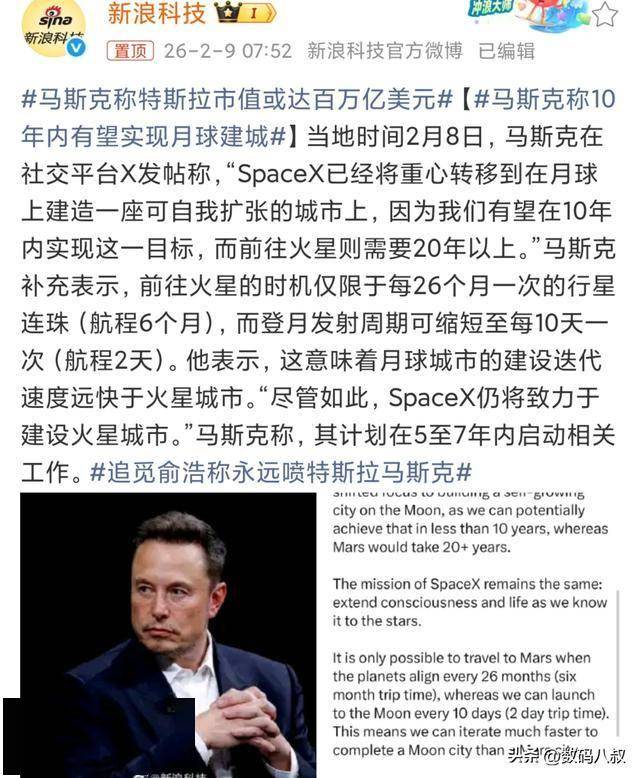
Group 1 - Musk announced that SpaceX is shifting its focus to building a self-expanding city on the Moon, aiming to achieve this within 10 years, while the Mars plan will take over 20 years [1][3] - The Moon is positioned as a "forward base" for deep space exploration, with launch cycles potentially every 10 days and a travel time of only 2 days, compared to Mars which has a 6-month journey and a launch window every 26 months [3] - SpaceX plans to start work on the Mars city within 5 to 7 years, following a "Moon first, Mars next" roadmap, indicating a clear path for human civilization's interplanetary existence [3] Group 2 - Supporters believe Musk's vision is pushing the boundaries of human technology, while critics question the feasibility of building a city on the Moon due to significant technical barriers related to materials, energy, and life support [5] - Musk's statements often evoke mixed reactions, with some viewing them as market speculation, particularly regarding the ambitious valuation of Tesla reaching a trillion dollars [5] - Despite controversies, Musk is seen as a "disruptor," redefining human possibilities through actions that may herald a new era in space exploration [6]

马斯克:是时候大规模重返月球,SpaceX已将重心转移到在月球上建造城市
Ge Long Hui· 2026-02-09 03:25
Core Viewpoint - Elon Musk announced on social media that it is time for a large-scale return to the Moon, indicating a shift in SpaceX's focus towards building a self-sustaining city on the Moon within the next decade, while Mars colonization will take over 20 years [1] Group 1: Moon Mission - SpaceX is recruiting engineers in Austin and Seattle to develop AI satellites and a space data center, confirming the company's commitment to lunar exploration [1] - Musk emphasized that the Moon offers a quicker turnaround for city construction, with travel time of 2 days compared to 6 months for Mars, allowing for faster iterations in building a lunar city [1] Group 2: Mars Mission - Despite prioritizing the Moon, SpaceX will still work towards establishing a city on Mars, aiming to initiate efforts in approximately 5-7 years [1] - Musk reiterated that the overarching mission of SpaceX remains to expand consciousness and life into the cosmos [1]
马斯克:SpaceX已将重心转移至在月球建造城市,10年内有望实现;回应“大规模招聘工程师”:是真的
Sou Hu Cai Jing· 2026-02-09 03:04
Core Viewpoint - SpaceX is shifting its focus to building a self-expanding city on the Moon, aiming to achieve this goal within 10 years, while Mars colonization is projected to take over 20 years [1][3]. Group 1: Lunar City Development - The construction of the lunar city can occur every 10 days, with a travel time of 2 days, significantly faster than the Mars mission, which is limited to every 26 months with a 6-month travel time [3]. - SpaceX plans to initiate work on the Mars city within 5 to 7 years, despite the current focus on lunar development [3]. Group 2: Recruitment and Expansion - SpaceX is actively recruiting engineers in Austin and Seattle to develop AI satellites and space data centers, indicating a significant expansion in its workforce [3]. - The company has postponed its planned Mars mission for this year to concentrate on the long-promised NASA lunar flights [3]. Group 3: Financial Context - Following the merger of xAI, Elon Musk's personal wealth has surpassed $800 billion, marking his fourth record-breaking wealth milestone in four months [3].

马斯克称SpaceX有望10年内在月球上建造城市,而火星则需20年以上;回应“大规模招聘工程师,以开发人工智能卫星和太空数据中心”:是真的
Sou Hu Cai Jing· 2026-02-09 02:23
Core Viewpoint - SpaceX is shifting its focus to building a self-expanding city on the Moon, aiming to achieve this goal within 10 years, while Mars colonization is projected to take over 20 years [1][3]. Group 1: Lunar City Development - The construction of the lunar city can occur every 10 days with a travel time of 2 days, significantly faster than the Mars mission, which is limited to every 26 months with a 6-month travel time [3]. - SpaceX plans to initiate work on the Mars city within 5 to 7 years, despite the current focus on lunar development [3]. Group 2: Recruitment and Financial Status - SpaceX is reportedly conducting large-scale recruitment of engineers in Austin and Seattle to develop AI satellites and space data centers [3]. - Following the merger of xAI, Elon Musk's personal wealth has surpassed $800 billion, marking his fourth wealth record in four months [3].

马斯克:SpaceX已将重心转移至在月球建造城市,10年内有望实现 回应“大规模招聘工程师”:是真的
Xin Lang Cai Jing· 2026-02-09 02:10
Core Viewpoint - SpaceX has shifted its focus to building a self-expanding city on the Moon, aiming to achieve this goal within 10 years, while Mars colonization is projected to take over 20 years [1][4]. Group 1: Moon City Development - The construction of the Moon city can occur every 10 days with a travel time of 2 days, significantly faster than the Mars mission, which is limited to every 26 months with a 6-month travel time [3][6]. - SpaceX plans to initiate work on the Mars city within 5 to 7 years, despite the current focus on lunar development [7]. Group 2: Recruitment and Strategic Shift - SpaceX is actively recruiting engineers in Austin and Seattle to develop AI satellites and space data centers, indicating a strategic expansion in its technological capabilities [7]. - The company has postponed its planned Mars mission for this year to concentrate on the long-awaited NASA lunar flight [7]. Group 3: Financial Context - Following the merger of SpaceX with xAI, Elon Musk's personal wealth has surpassed $800 billion, marking his fourth wealth record in four months [7].