人工智能投资周期

Search documents
2025年资产格局大逆转:贵金属与美股“吸金”,加密货币跌回高风险阵营
智通财经网· 2025-12-24 02:20
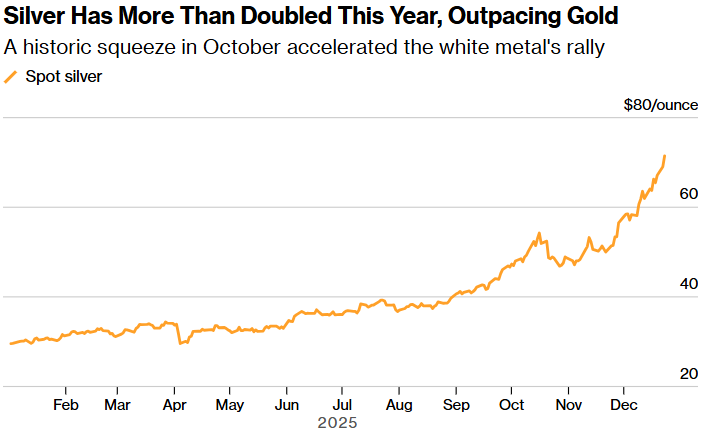
Core Insights - In 2025, cryptocurrencies experienced a significant decline, losing their status as a defensive or alternative asset, while traditional assets like gold and silver thrived, highlighting a shift in investor preferences towards safer, more predictable investments [1][8][16] Group 1: Performance of Assets - Precious metals, particularly silver and gold, saw remarkable gains in 2025, with silver prices rising approximately 140% and gold prices increasing around 70%, both reaching historical highs [1][2] - The U.S. stock indices also performed well, with the Nasdaq up 19%, S&P 500 up 17%, and Russell 2000 up 14%, supported by expectations of easing monetary policy and a focus on artificial intelligence investments [5][8] Group 2: Cryptocurrency Market Dynamics - The cryptocurrency market initially benefited from the launch of the U.S. spot Bitcoin ETF, leading to a surge in Bitcoin prices, but this momentum faded in the second half of the year due to weak liquidity and high regulatory risks [8][12] - Bitcoin ended 2025 with a price around $88,000, reflecting a decline of about 6% from the beginning of the year, indicating that even with the ETF, overall demand for risk assets remained weak [12][9] Group 3: Ethereum and Altcoins - Ethereum struggled to convert its technological advantages into price growth, experiencing a decline of approximately 12% throughout the year, as it lacked strong market demand catalysts compared to Bitcoin [13] - The altcoin market was the weakest segment, with an average value drop of about 42%, as investors shifted focus to more liquid assets, leading to a significant reduction in the total market capitalization of altcoins [14][15] Group 4: Investor Behavior and Market Trends - Investors increasingly favored assets with clear regulatory frameworks and high liquidity, leading to a preference for traditional investments over cryptocurrencies, which are viewed as high-volatility risk assets [1][16] - The initial excitement surrounding ETFs could not sustain ongoing demand, resulting in a market shift towards profit-taking and consolidation, as investor attention moved to more transparent risk profiles [15][16]

从AI交易、美联储新主席到铜,这是高盛列出的“2026年最重要的五大交易主题”
Hua Er Jie Jian Wen· 2025-12-13 03:03
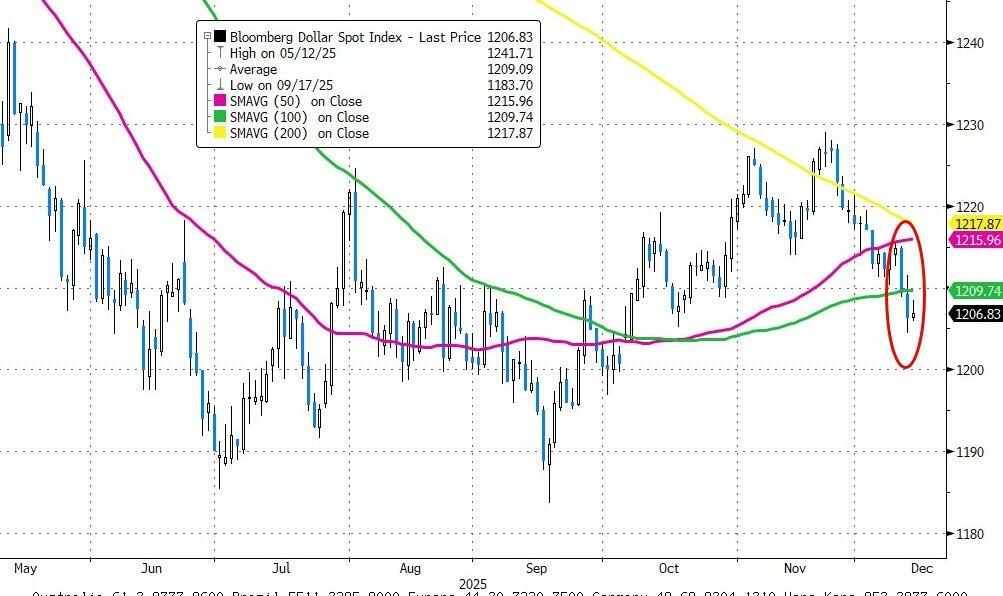
Group 1: Key Investment Themes for 2026 - Goldman Sachs identifies five key investment themes for 2026, including the turning point in the AI investment cycle, the impact of the Federal Reserve leadership change on the dollar, the strategic reassessment of commodities, the necessity of portfolio diversification, and structural changes in the European market [1] Group 2: AI Investment Cycle - Goldman Sachs compares the current AI investment cycle to a modern "space race," suggesting that the era of broad optimism around AI-related assets may be ending [2] - Companies providing infrastructure for AI, such as computing hardware and data centers, are expected to remain attractive investments, while the market will become more discerning in identifying true beneficiaries of AI [2] Group 3: Federal Reserve Leadership and Dollar Weakness - The anticipated appointment of Hassett as the next Federal Reserve Chair could lead to a scenario where the economy is allowed to "run hot," resulting in a weaker dollar [3] - Goldman Sachs' foreign exchange team predicts significant depreciation of the dollar by 2026, with the dollar index already showing signs of weakness [3][7] Group 4: Commodities and Copper - The performance of precious metals underscores the necessity of investing in "hard assets," with copper emerging as a particularly attractive option due to tightening supply and increasing demand [8] - Goldman Sachs forecasts that over 60% of copper demand growth by 2030 will be driven by power grid and infrastructure needs, equating to an additional demand level comparable to that of the United States [8] Group 5: Importance of Diversification - Given the high valuation of the U.S. stock market relative to global markets, diversification is emphasized as essential for investors to maintain exposure to equities [9] - Strong performance in non-U.S. markets has been observed, with European and emerging market assets gaining traction as investors shift away from U.S. equities [9] Group 6: European Market Opportunities - The year 2025 is described as a "global inflection point," with significant changes anticipated in the European market [10] - Despite challenges, Europe is seen as having strong industries and research capabilities, making it an important area for diversified investment [12][13]