
人工智能生成合成内容标识

Search documents
一批存在人工智能生成合成内容标识违法违规问题的移动互联网应用程序被查处
Xin Hua She· 2025-11-25 09:04
Core Viewpoint - The National Internet Information Office of China has taken action against several mobile internet applications for failing to comply with regulations regarding the labeling of AI-generated synthetic content [1] Group 1: Regulatory Actions - A number of mobile internet applications were recently penalized for not effectively implementing the requirements for labeling AI-generated synthetic content [1] - The penalties included interviews, orders to rectify within a specified timeframe, and removal from platforms [1] Group 2: Violations Identified - Key violations included the lack of explicit labeling on AI-generated content, failure to include labels in exported files, and absence of implicit identifiers in file metadata [1] - Providers of content dissemination services did not verify implicit identifiers or add significant prompts around published content [1] - Users were not provided with the option to declare the generation of synthetic content [1] Group 3: Future Compliance and Development - The National Internet Information Office emphasized the need for platforms to strictly adhere to regulations regarding AI-generated content labeling and to enhance content detection capabilities [1] - There is a commitment to strengthen supervision and management of AI-generated content labeling to promote healthy and orderly development of artificial intelligence [1]
涉及AI生成合成内容标识违法违规问题 一批移动互联网应用程序被查
Yang Shi Xin Wen· 2025-11-25 08:47
Core Viewpoint - The recent enforcement actions by the National Internet Information Office (NIIO) highlight the need for compliance with regulations regarding the identification of AI-generated content, addressing issues such as the lack of explicit and implicit labeling of such content [1][2]. Group 1: Regulatory Actions - The NIIO has conducted a crackdown on mobile internet applications that fail to effectively implement regulations for labeling AI-generated synthetic content, resulting in measures such as consultations, deadlines for corrections, and removal from platforms [1]. - Violations include the absence of explicit labels on generated content, failure to include identifying information in metadata, and improper placement of implicit identifiers [1]. Group 2: Policy Development - The NIIO has emphasized the importance of AI technology in economic and social development while acknowledging the challenges posed by misuse and the spread of false information [2]. - A new guideline titled "Identification Measures for AI-Generated Synthetic Content" has been established, outlining requirements for labeling such content and urging platforms to enhance their content detection capabilities and user management [2]. - The NIIO is committed to strengthening supervision and management of AI-generated content identification to promote healthy and orderly development of AI technologies [2].
网信部门依法集中查处一批存在AI生成合成内容标识违法违规问题的移动互联网应用程序
Ge Long Hui· 2025-11-25 07:41
Core Viewpoint - The Chinese internet regulatory authority has recently taken action against several mobile internet applications for failing to comply with regulations regarding the identification of AI-generated synthetic content [1] Group 1 - The regulatory body has conducted a concentrated crackdown on non-compliant mobile internet applications [1] - Actions taken include formal discussions, orders for rectification within a specified timeframe, and the removal of non-compliant applications from platforms [1]
当AI遇上电商:数字人、短视频与品牌智能体怎么玩?| 杭州AI DAY
吴晓波频道· 2025-11-12 00:29
Core Insights - The article discusses the rapid evolution of AI digital humans in e-commerce, highlighting their ability to engage in live streaming and sales, which enhances efficiency and reduces costs [2][3] - It emphasizes the challenges that come with this technology, particularly regarding compliance and the need for clear identification of AI-generated content following the implementation of new regulations [2][3] Group 1: AI in E-commerce - AI digital humans are transforming content production and sales by being available 24/7, leading to a smarter era in e-commerce [2][3] - The implementation of the "Artificial Intelligence Generated Synthetic Content Identification Measures" on September 1 requires clear labeling of AI-generated content across various media [2][3] Group 2: Upcoming Events and Expert Insights - The upcoming AI DAY event on November 27 will focus on leveraging AI in e-commerce, featuring experts who will share practical strategies for short video content creation and brand building [4][5] - Key topics include avoiding regulatory risks in specific categories, rapid brand establishment, and enhancing customer retention through targeted video content [20][23] Group 3: Community and Collaboration - The AI DAY initiative aims to create a collaborative ecosystem for various stakeholders in AI, including researchers, investors, and brand operators, to share knowledge and resources [7][8][10] - Participants will have opportunities to connect with industry leaders, gain insights into the latest technologies, and explore investment opportunities [11][12]

你刷的短视频,标注“AI生成”了吗?
Ren Min Ri Bao Hai Wai Ban· 2025-10-23 23:05
Core Viewpoint - The implementation of the "Artificial Intelligence Generated Synthetic Content Identification Measures" in China mandates explicit and implicit labeling for all AI-generated content, aiming to enhance transparency and combat misinformation in the digital landscape [4][9][10]. Regulatory Framework - The new regulations require all AI-generated text, images, and videos to have a clear identification, referred to as a "digital identity card" [4][5]. - The measures include both explicit labeling, which is easily noticeable by users, and implicit labeling, which embeds metadata within the content for traceability [6][7]. Industry Impact - As of June 2025, the user base for generative AI in China is projected to reach 515 million, highlighting the rapid growth and potential challenges in content verification [5]. - Major platforms like Douyin, Kuaishou, and Xiaohongshu are already implementing these identification measures, enhancing user awareness and compliance with the new regulations [8][9]. Technical Specifications - Explicit labels must be clearly visible and placed at the beginning, end, or key positions of the content, while implicit labels involve embedding metadata that includes identifiers and verification information [6][7]. - The regulations aim to create a comprehensive governance model that covers the entire content lifecycle, from creation to distribution [7][10]. Social Responsibility - The measures are designed to mitigate the risks associated with AI-generated misinformation, particularly targeting vulnerable populations who may be misled by unverified content [9][10]. - The initiative encourages companies to integrate ethical considerations into their technology development processes, promoting responsible AI usage [10].
保时捷女销冠的反击:AI合成乱象的“安全闸”在哪里?
Di Yi Cai Jing· 2025-10-12 07:48
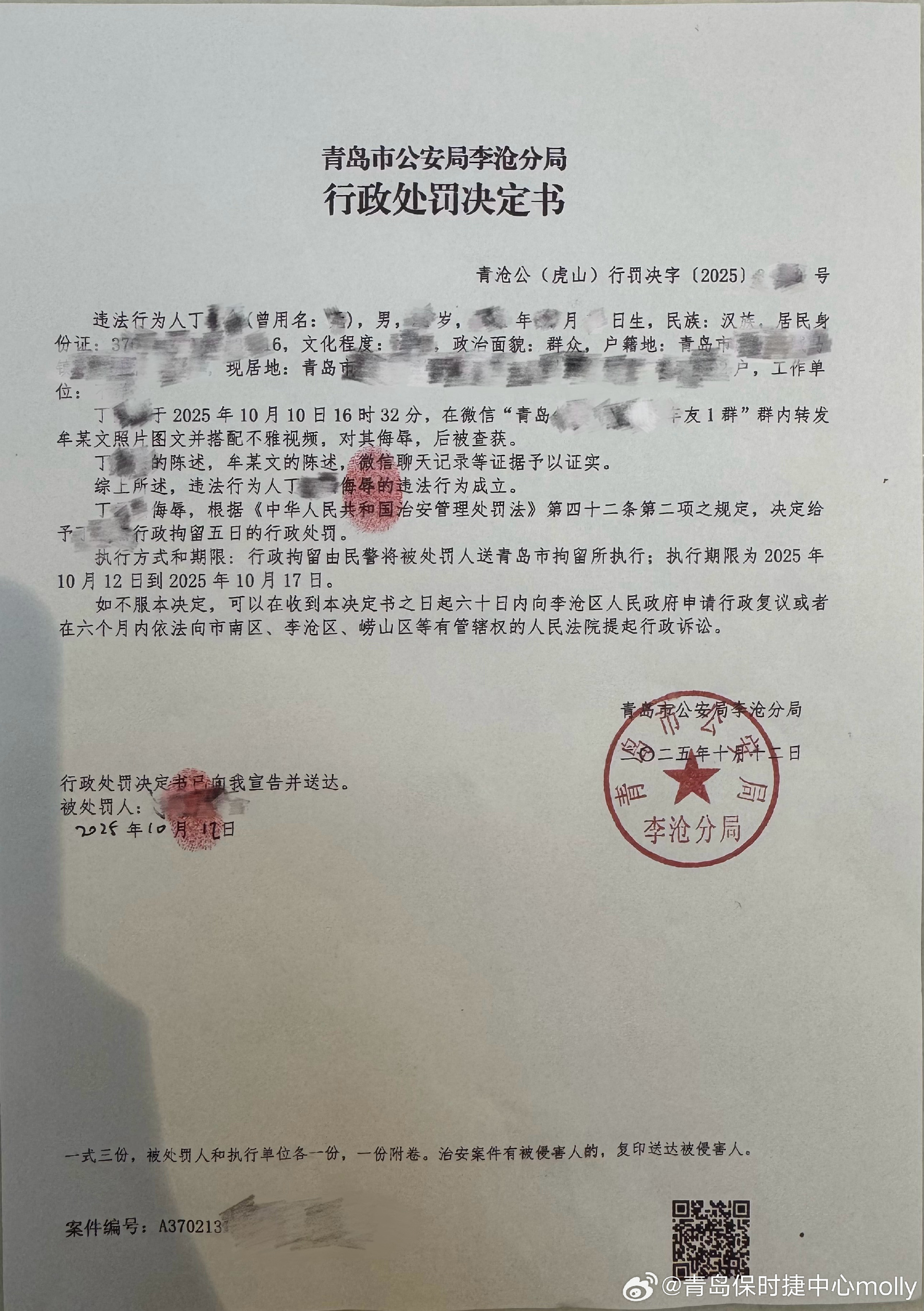
Group 1 - The incident involving Ms. Miu from Qingdao highlights the misuse of AI technology for malicious purposes, including the creation of fake videos that defame individuals [2] - Ms. Miu has initiated legal proceedings against those responsible for the dissemination of these AI-generated defamatory materials, indicating a growing trend of legal action in response to AI misuse [2] - The Qingdao Public Security Bureau has taken action against an individual, Ding, who shared defamatory content, resulting in a five-day administrative detention [2] Group 2 - The AI industry in China is moving towards a more regulated environment, transitioning from principle-based advocacy to a phase of legal and technical standardization [5] - The introduction of the "Artificial Intelligence Generated Synthetic Content Identification Measures" aims to establish explicit and implicit identification for AI-generated content, enhancing public safety and content authenticity [5][6] - Major platforms like Douyin, Kuaishou, Tencent, Weibo, and Bilibili have implemented dual identification features and associated measures to manage AI-generated content [5] Group 3 - The legal framework for AI-generated content is evolving, with new regulations mandating that service providers include identification markers to distinguish synthetic content from real information [6] - Despite regulatory efforts, challenges remain in effectively managing AI-generated content due to the low technical barriers for misuse and the existing content moderation practices that allow for delayed responses to violations [6][7] - The profitability of AI-generated content misuse, such as deepfake technology, has led to the proliferation of gray market activities, necessitating ongoing improvements in regulatory measures and technological defenses [7]
专家解读|从制度破冰到体系完善 AI生成内容标识打造可信网络空间
Xin Lang Cai Jing· 2025-09-05 23:31
Core Viewpoint - The introduction of the "Artificial Intelligence Generated Synthetic Content Identification Measures" marks a significant advancement in China's governance of generative AI, transitioning from principle-based regulations to detailed, systematic governance [1][4]. Group 1: Framework and Implementation - The "Identification Measures" establish a comprehensive framework for identifying AI-generated content, utilizing both explicit (textual and audio prompts) and implicit (metadata embedding) identification methods to create a trust mechanism for users and machines [1][2]. - The measures provide operational guidelines for four main file formats: video, text, images, and audio, enhancing the granularity and operability compared to previous regulations [1][2]. - The identification requirements are differentiated based on content types, which helps reduce compliance costs for businesses and avoids unnecessary investments due to vague standards [1][2]. Group 2: Long-term Systematic Engineering - Establishing a robust content identification system is a long-term, systematic project requiring ongoing collaboration between government and enterprises, emphasizing a co-governance model [2]. - The "Identification Measures" delineate clear responsibilities across different stakeholders, enhancing control over critical processes and curbing issues like AI-generated misinformation [2][3]. - The measures also allow for flexibility in implementation, accommodating the varying capabilities of businesses, particularly small and traditional enterprises [2][3]. Group 3: Dynamic Iteration and Future Directions - The "Identification Measures" serve as a foundational starting point for the ongoing evolution of China's generative AI governance framework, addressing current industry challenges while setting a long-term direction [3][4]. - There is a need for the introduction of advanced technical methods for identification, as the complexity of content generation continues to increase with the integration of multimodal models [3]. - Future efforts should focus on enhancing the identification dimensions and accuracy, promoting a comprehensive certification technology system that is compatible across platforms and modalities [4].
商汤科技:面向公众提供的生成合成服务均已添加显式标识与隐式标识
Jing Ji Guan Cha Wang· 2025-09-02 03:30
Core Viewpoint - SenseTime Technology has announced compliance with new regulatory policies regarding generative artificial intelligence content, effective from September 1, 2025, ensuring that all generated content includes explicit and implicit identification markers [1] Regulatory Compliance - The company is implementing measures to adhere to the "Measures for the Identification of Generative Synthetic Content" and other related regulations [1] - All generative services offered to the public, including text, images, audio, video, and virtual scene generation, will strictly follow these regulatory requirements [1] User Guidelines - Users of SenseTime's AI service platform are prohibited from maliciously deleting, altering, forging, or concealing identification information from the AI-generated content [1]
9月起,这些新规将施行
财联社· 2025-09-01 01:08
Group 1 - The State Council has issued opinions on gradually promoting free preschool education, starting from the autumn semester of 2025, which will exempt public kindergartens from charging care education fees for children in their final year [1] - Private kindergartens approved by the education department will also have their care education fees reduced in accordance with local public kindergarten standards [1] - The Ministry of Finance and the Ministry of Education will consider factors such as school-age population changes and financial conditions to improve the free preschool education policy [1] Group 2 - The Housing Rental Regulations will take effect on September 15, 2025, mandating that rental housing must comply with safety and health standards [2] - Non-residential spaces such as kitchens and bathrooms cannot be rented out separately for living purposes [2] - Landlords must specify the deposit amount, return time, and conditions for deduction in the rental contract, and cannot unjustly withhold deposits [2] Group 3 - The Rural Road Regulations will also come into effect on September 15, 2025, focusing on improving road network quality and coordinating with national and provincial road construction [3] - New rural roads must meet technical standards, and existing roads that do not meet minimum standards must be upgraded [3] - The regulations encourage the use of existing roads for reconstruction to minimize land occupation [3] Group 4 - The personal consumption loan interest subsidy policy will be implemented from September 1, 2025, to August 31, 2026, covering loans used for consumption [4] - The subsidy applies to single transactions below 50,000 yuan and for key areas such as home appliances and healthcare for transactions above that amount [4] - The policy may be extended or expanded based on its effectiveness after the expiration [4] Group 5 - The Ministry of Human Resources and Social Security has introduced new conditions for receiving personal pensions, effective from September 1 [5] - New eligibility includes significant medical expenses, prolonged unemployment insurance, and receiving minimum living security [5] - Previously, eligibility was limited to reaching retirement age, total loss of work capacity, or settling abroad [5] Group 6 - The new Electric Bicycle Safety Technical Specifications will be enforced starting September 1, 2025, prohibiting the production of non-compliant electric bicycles [6] - The new standards include requirements for battery packs and control systems, and a weight limit for lead-acid battery models has been adjusted [6] - A transition period until November 30, 2025, is allowed for bicycles produced under the old standards [6] Group 7 - The AI-generated content labeling method will be implemented on September 1, 2025, requiring explicit and implicit labeling of AI-generated content [7] - Explicit labels must be clearly perceivable by users, while implicit labels are embedded in the content data [7] Group 8 - The revised Infectious Disease Prevention Law will take effect on September 1, 2025, categorizing infectious diseases into three classes based on their severity [8] - The law emphasizes the protection of personal information and restricts its use beyond epidemic prevention [8] - Local governments can take preventive measures for unexplained infectious diseases and must report to higher authorities [8] Group 9 - The Ministry of Commerce has issued the Product Oil Circulation Management Measures, effective September 1, 2025, detailing regulations for wholesale and retail operations [10] - The measures include requirements for compliance, management systems, and data reporting for oil trading enterprises [10] - It establishes a framework for supervision and legal responsibilities regarding oil circulation [10] Group 10 - The Ministry of Civil Affairs has released the Administrative Division Code Management Measures, effective September 1, 2025, clarifying the code assignment process for administrative divisions [11] - The measures specify the responsibilities of municipal and provincial civil affairs departments in code determination [11] Group 11 - The revised Allocation of Land Directory will be implemented on September 1, 2025, strictly limiting the allocation of state-owned construction land use rights [12] - Applications for land allocation must be approved by the government, and alternative methods such as leasing must be pursued when possible [12] Group 12 - The Ministry of Agriculture and Rural Affairs has announced new animal diagnosis management regulations, effective September 1, 2025, introducing a new animal diagnosis license [13] - The regulations emphasize the standardization of veterinary prescriptions and the prohibition of substandard veterinary drugs [13]

事关养老金、学前教育、“小电驴”新国标……这些新规即将施行!
Zheng Quan Shi Bao· 2025-08-31 13:43
Group 1 - The State Council has issued an opinion to gradually implement free preschool education, starting from the autumn semester of 2025, exempting public kindergarten fees for children in their final year [4] - Private kindergartens approved by the education department will also have their fees reduced in accordance with the exemption levels of similar public kindergartens [4] Group 2 - The Housing Rental Regulations will take effect on September 15, 2025, prohibiting landlords from deducting deposits without legitimate reasons and requiring clear terms in rental contracts [5] - The regulations also set basic standards for rental properties and prevent the illegal use of non-residential spaces for living [5] Group 3 - A new mandatory national standard for electric bicycles will be implemented on September 1, enhancing fire resistance requirements and limiting the use of plastic materials [6] - The standard also imposes restrictions on motor speed and braking distances, with a transition period for manufacturers [6] Group 4 - The revised Infectious Disease Prevention Law will come into effect on September 1, emphasizing the establishment of a comprehensive prevention system and clarifying responsibilities at various levels [7] Group 5 - The "Artificial Intelligence Generated Synthetic Content Identification Measures" will be enforced from September 1, requiring explicit labeling of AI-generated content across various media [11] - Service providers must ensure that generated content includes both explicit and implicit identifiers [11] Group 6 - The Rural Road Regulations will be effective from September 15, 2025, focusing on improving road network quality and upgrading existing roads to meet technical standards [12] Group 7 - The Administrative Division Code Management Measures will take effect on September 1, establishing rules for determining administrative codes at various levels [13] Group 8 - Beijing will raise its minimum wage from 2420 yuan to 2540 yuan per month, effective September 1 [15] Group 9 - The "Decision on Promoting Collaborative Development of Technological Innovation in the Yangtze River Delta" will be implemented on September 1, focusing on joint development of strategic technology and innovation platforms [17] Group 10 - The Fujian Province Safety Construction Regulations will be effective from September 1, focusing on combating telecom fraud and enhancing public safety [18] Group 11 - The Shandong Province Veterans Protection Regulations will take effect on September 1, prioritizing the hiring of veterans in public and state-owned enterprises [20] Group 12 - The Henan Province Vocational Education Regulations will be implemented on September 1, emphasizing practical skills training in vocational schools [22] Group 13 - The Hainan Province Administrative Inspection Regulations will take effect on September 1, protecting businesses from excessive and irrelevant inspections [24]
