
人机共智

Search documents
政策研究报告:中国提振消费的战略选择与国际经验,提振消费、扩大内需-国泰海通证券
GUOTAI HAITONG SECURITIES· 2026-02-12 06:35
Investment Rating - The report does not explicitly state an investment rating for the industry under review [3]. Core Insights - The new era of content marketing is characterized by human-machine collaboration, where AI evolves from an efficiency tool to a foundational infrastructure for content production [6]. - Brands must transform abstract emotions into visual assets, deconstruct cultural genes, create immersive worlds, shape resonant IPs, communicate through technology, and encourage user co-creation [7]. Summary by Relevant Sections Research Background Assessment - The research is conducted by NetEase Media and Zhimeng Consulting, both reputable in content marketing and consumer trend analysis [4]. - The study focuses on AI-driven content marketing strategies and trends across various sectors including culture, automotive, finance, fast-moving consumer goods, cultural creativity, intangible cultural heritage, and gaming, specifically targeting young consumers born in the 1990s and 2000s [5]. Key Data Capture and Presentation - As of August 2025, a total of 538 generative AI services have been registered [9]. - By June 2025, the user base for generative AI in China reached 515 million, with a penetration rate of 36.5% [9]. - 36% of generative AI users utilize it for text generation/processing, while 33% use it for generating images and videos [9]. - 85.2% of consumers show increasing interest in traditional culture [9]. - 61% of users find AIGC content easier to understand regarding technical highlights [9]. - The AI co-creation initiative by Pop Mart during the Double Eleven shopping festival boosted sales of co-branded products by 40% [9]. - Over 90% of young people have used AIGC products [9].
2026年AI内容营销六大趋势报告
Sou Hu Cai Jing· 2026-02-09 05:42
Core Insights - The report highlights a fundamental shift in content marketing driven by AI, moving from a focus on creating "viral hits" to building a sustainable system for producing high-value content that fosters deep emotional connections with users [1][6] - Consumers increasingly rely on emotional value in their decision-making, transforming content from mere information carriers to key elements that resonate and build long-term relationships [1][3] Group 1: Key Trends in AI Content Marketing - Emotional visualization is becoming a significant trend, with brands needing to translate abstract "emotional value" into perceivable and shareable visual assets [2] - The contemporary reinterpretation of cultural elements is gaining attention, as consumers seek interactive experiences rather than static observations of traditional culture [2] - The integration of virtual and real experiences is deepening, with AI enabling seamless embedding of virtual characters or scenes into real environments, creating immersive experiences [2] Group 2: Communication and User Engagement - AI is changing the marketing language for high-tech products, transforming complex parameters and technical principles into intuitive content that bridges the gap between professionals and the general public [3] - The trend of co-creation is emerging as a new norm in the content ecosystem, particularly among younger generations who wish to participate actively in brand building [3] Group 3: The Evolution of Content Marketing - AI is not just a tool for efficiency but is reshaping the underlying logic of content production, transitioning from "one-time creation" to "continuous generation" and from "tool-assisted" to "human-machine collaboration" [1][6] - The future of content marketing will focus on achieving true "human-machine intelligence," combining human strategic insights with AI's scalable and personalized production capabilities [3][20] Group 4: The Role of Generative AI - Generative AI is experiencing explosive growth, with a significant increase in user base and application, leading to a reality of large-scale content production [14][15] - By August 2025, the number of generative AI users in China surged from 249 million to 515 million, indicating a 36.5% penetration rate [15] Group 5: The Shift from Quantity to Quality - The transition from AI content marketing 1.0, which focused on quantity, to 2.0, which emphasizes quality, is crucial for brands to convey value and foster emotional resonance with users [21][22] - The collaboration between human creativity and AI's efficient execution is essential for achieving a new growth cycle in content marketing [24]

人工智能行业:人机共智·创变未来千梦引擎AI内容营销白皮书
网易新闻· 2026-01-14 02:35
Investment Rating - The report does not explicitly state an investment rating for the industry. Core Insights - The integration of AI in content marketing is transforming the industry, shifting from efficiency tools to becoming the "second brain" for creative production and brand expression [15][21][23]. - AI is evolving from a tool for generating content to a core driver of creative production, enabling brands to produce high-quality, multi-modal content [23][24]. - The focus of competition is shifting from superficial creative contests to building a robust "multi-modal brand corpus" that AI can understand and utilize [11][12]. Summary by Sections AI-Driven Content Marketing - The report highlights the transition of AI from a mere efficiency tool to a central figure in creative production, allowing brands to engage in deeper emotional connections with users [15][21]. - AI's role is evolving to encompass not just content generation but also understanding brand aesthetics and conveying brand values effectively [23][24]. New Creative Standards - The report emphasizes the need for AI systems to deeply understand brand tone, visual style, and core values to ensure consistent brand expression [27]. - AI's capabilities are expanding to include semantic understanding, aesthetic consistency, and alignment with brand values [29]. Content Production Efficiency - AI is significantly reducing the time and cost associated with content production, enabling rapid generation of diverse content tailored for various platforms [30][31]. - Traditional content production timelines are being compressed from weeks to days, allowing brands to respond quickly to market trends [30][31]. Contextual Marketing Shift - The report notes a shift from static user profiling to real-time contextual understanding, enabling brands to create personalized content that resonates with users' immediate needs [32][33]. - AI's ability to generate content based on real-time user context is becoming crucial for effective marketing strategies [35][36]. Human-AI Collaboration - The concept of "human-machine co-intelligence" is introduced, where humans set strategic directions while AI enhances creative boundaries and execution efficiency [37][38]. - This collaboration aims to produce innovative outcomes that neither humans nor AI could achieve alone [43][44]. AI Content Generation Innovations - The report discusses the emergence of multi-modal content forms, such as interactive narratives and AI-generated videos, which enhance user engagement [46][47]. - AI is enabling brands to create immersive experiences that transform traditional content consumption into participatory interactions [50][51]. Challenges in AI Content Marketing - The report identifies four core challenges: inconsistency in content quality, content homogenization, difficulties in maintaining brand alignment, and high costs of manual content review [55][56][61]. - Brands face a growing imbalance between the demand for rapid content production and the limitations of traditional content creation processes [61][62]. 千梦引擎 (Qianmeng Engine) - The Qianmeng Engine is introduced as a comprehensive AI creative engine designed to facilitate the entire content marketing process, from creative generation to large-scale distribution [74][75]. - It aims to provide brands with a platform that combines powerful AI capabilities with human creativity to produce emotionally resonant content [74][75].
今日人才首发“会议与销售大师”AI智能体,破解企业低效难题
Feng Huang Wang· 2025-09-03 04:24
Core Insights - Shenzhen Today Talent Information Technology Co., Ltd. launched two enterprise-level AI digital employee products, "Meeting Master" and "Sales Master," at the Huawei 828 B2B Enterprise Festival, marking a significant expansion of its AI capabilities into various industries [1][2] - The company has established an "AI Digital Employee Scenario Laboratory" in collaboration with the Futian District government, aimed at optimizing AI employees across multiple sectors including government, corporate meetings, sales, and cultural tourism [2] Group 1 - The "Meeting Master" product addresses corporate meeting management challenges with a "Four Stages and Eighteen Steps" methodology, ensuring comprehensive management from preparation to post-meeting follow-up [1] - The "Sales Master" integrates the global leading Leads to Cash (LTC) process with insights from over 300 small and medium-sized enterprises in China, offering a "Seven Stages and Thirty-Six Steps" method to enhance opportunity identification and sales efficiency [1] Group 2 - The collaboration with the Futian District aims to create standardized, reusable AI employee templates, focusing on real-world scenarios for training and optimization [2] - The founder of Today Talent emphasized that each new AI employee created will generate a new job position, highlighting the "human-machine collaboration" model to enhance overall organizational efficiency and foster new technical talent [2] - The company is building a comprehensive pathway for productized and ecological AI employee deployment, addressing the challenge of AI implementation in industries and providing a new paradigm for Chinese enterprises transitioning from "digitalization" to "intelligentization" [2]
「鼎捷数智」发布新一代AI技术解决方案成果|最前线
3 6 Ke· 2025-07-22 07:05
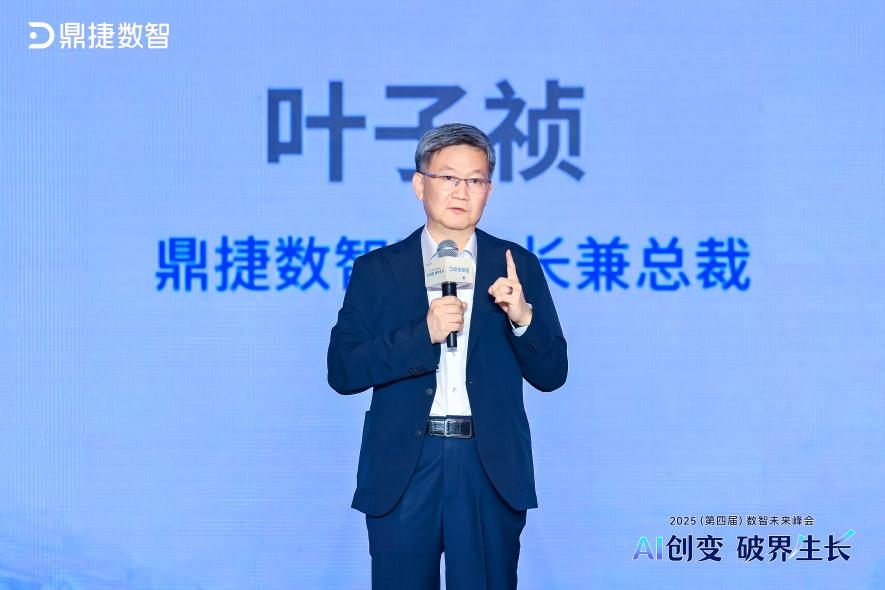
Core Insights - Dingjie Smart held the 2025 Smart Future Summit, unveiling new AI solutions aimed at enhancing enterprise digital transformation [1] - The year 2023 is recognized as the year of AI Agents, marking a shift from weak to strong AI capabilities in enterprise software [1][2] - Dingjie has developed a native PaaS platform, Athena, focusing on data intelligence and knowledge encapsulation, which has been applied across various industries [2] AI Solutions and Applications - The newly launched AI solutions include data intelligence and enterprise intelligence suites, four industrial software AI suites (ERP/PLM/MES/WMS+AI), AIOT command center, and industrial mechanism AI suite [1][2] - These solutions aim to break down information silos and enhance decision-making speed and accuracy for enterprises [2] - The integration of AI with industrial software is designed to improve efficiency across the entire supply chain, from R&D to logistics [2] Human-Centric AI Development - The development of AI is seen as a means to empower human creativity rather than replace human labor, allowing individuals to focus on higher-value tasks [3] - The vision for the future includes adaptive intelligent ecosystems where humans and their digital counterparts work together for improved productivity and quality of life [3] Research and Reports - The summit featured the release of the "2025 Generative AI Enterprise Application Practical Report," co-authored by Dingjie and Zhejiang University, analyzing ten key areas of generative AI applications in enterprises [5] - The report includes over 30 practical application cases and provides a blueprint for enterprises navigating the new operational landscape [5] Summit Highlights - The summit included three parallel forums focusing on AI technology applications in various business scenarios, with discussions on strategic choices and risk management [6] - An exhibition area showcased cutting-edge AI applications and innovations from Dingjie and partners like Huawei Cloud, illustrating the future of smart enterprises [6] - According to Dingjie’s estimates, smart factories could achieve a 25% increase in space utilization, a 150% increase in capacity, and a 15% reduction in overall costs [6]

2025年粤港澳学生信息科创大赛开幕 2088支参赛队伍同台竞技
Nan Fang Ri Bao Wang Luo Ban· 2025-05-26 07:56
Group 1 - The 2025 Guangdong-Hong Kong-Macao Student Information Technology Innovation Competition opened on May 24, featuring over 2,088 teams from more than 1,000 schools across the three regions [1] - The competition is themed "Creativity, Creation, Innovation, and Invention - Embracing a Beautiful Future of Human-Machine Intelligence" and aims to foster collaboration in science and technology education among students from Guangdong, Hong Kong, and Macao [1] - The event attracted around 20,000 spectators on the opening day, showcasing a significant interest in technological innovation among students [1] Group 2 - The competition introduced a "Guangdong-Hong Kong-Macao Joint Team" format, allowing students from different regions to form mixed teams, enhancing cross-border collaboration and exchange in science and technology education [2] - Participants are engaged in various projects, including a 3D artificial intelligence national defense challenge, which tests programming skills and teamwork [2] - The competition features five thematic tracks, including "Artificial Intelligence Applications," "Intelligent Robotics," "Creative Makers," "Computational Thinking," and "Digital Art," with a total of 24 participating projects [1]