千梦引擎

Search documents
AI音乐人、脱口秀齐上阵 AI为人文娱乐体验注入新玩法丨新经济观察
Xin Lang Cai Jing· 2026-02-16 05:42
Group 1 - The first AI Spring Festival Gala, co-hosted by NetEase Cloud Music and NetEase Media, received positive feedback from users and was praised as the "highest content-rich gala on the internet" [1] - The gala adopted a new format to cater to users' consumption habits of "short, quirky, and fast," presenting a diverse and exciting content feast in just 15 minutes [3] - The program "Dance, Ancestors!" showcased cultural relics in an innovative way, bringing ancient artifacts to life through AI technology, highlighting the charm of cultural heritage [3] Group 2 - The rapid development of AI technology has created disruptive opportunities for content creation, allowing for the realization of creative ideas in a convenient manner [3] - The gala featured a song performed by the AI musician "Wandering Conference Room," which successfully brought iconic characters from "Journey to the West" into the recording studio, gaining widespread popularity [3] - The AI talk show segment "Praising Techniques Manual" taught viewers fun techniques for complimenting others, addressing a common need during the New Year celebrations [3] Group 3 - Industry experts noted that the AI Spring Festival Gala explored new opportunities in digital arts, injecting fresh gameplay into cultural and entertainment experiences through AI [3] - The event resonated with young audiences by combining humor and warmth, demonstrating that the integration of technology and culture can create a more impactful experience [3]



政策研究报告:中国提振消费的战略选择与国际经验,提振消费、扩大内需-国泰海通证券
GUOTAI HAITONG SECURITIES· 2026-02-12 06:35
Investment Rating - The report does not explicitly state an investment rating for the industry under review [3]. Core Insights - The new era of content marketing is characterized by human-machine collaboration, where AI evolves from an efficiency tool to a foundational infrastructure for content production [6]. - Brands must transform abstract emotions into visual assets, deconstruct cultural genes, create immersive worlds, shape resonant IPs, communicate through technology, and encourage user co-creation [7]. Summary by Relevant Sections Research Background Assessment - The research is conducted by NetEase Media and Zhimeng Consulting, both reputable in content marketing and consumer trend analysis [4]. - The study focuses on AI-driven content marketing strategies and trends across various sectors including culture, automotive, finance, fast-moving consumer goods, cultural creativity, intangible cultural heritage, and gaming, specifically targeting young consumers born in the 1990s and 2000s [5]. Key Data Capture and Presentation - As of August 2025, a total of 538 generative AI services have been registered [9]. - By June 2025, the user base for generative AI in China reached 515 million, with a penetration rate of 36.5% [9]. - 36% of generative AI users utilize it for text generation/processing, while 33% use it for generating images and videos [9]. - 85.2% of consumers show increasing interest in traditional culture [9]. - 61% of users find AIGC content easier to understand regarding technical highlights [9]. - The AI co-creation initiative by Pop Mart during the Double Eleven shopping festival boosted sales of co-branded products by 40% [9]. - Over 90% of young people have used AIGC products [9].
2026年AI内容营销六大趋势报告
Sou Hu Cai Jing· 2026-02-09 05:42
Core Insights - The report highlights a fundamental shift in content marketing driven by AI, moving from a focus on creating "viral hits" to building a sustainable system for producing high-value content that fosters deep emotional connections with users [1][6] - Consumers increasingly rely on emotional value in their decision-making, transforming content from mere information carriers to key elements that resonate and build long-term relationships [1][3] Group 1: Key Trends in AI Content Marketing - Emotional visualization is becoming a significant trend, with brands needing to translate abstract "emotional value" into perceivable and shareable visual assets [2] - The contemporary reinterpretation of cultural elements is gaining attention, as consumers seek interactive experiences rather than static observations of traditional culture [2] - The integration of virtual and real experiences is deepening, with AI enabling seamless embedding of virtual characters or scenes into real environments, creating immersive experiences [2] Group 2: Communication and User Engagement - AI is changing the marketing language for high-tech products, transforming complex parameters and technical principles into intuitive content that bridges the gap between professionals and the general public [3] - The trend of co-creation is emerging as a new norm in the content ecosystem, particularly among younger generations who wish to participate actively in brand building [3] Group 3: The Evolution of Content Marketing - AI is not just a tool for efficiency but is reshaping the underlying logic of content production, transitioning from "one-time creation" to "continuous generation" and from "tool-assisted" to "human-machine collaboration" [1][6] - The future of content marketing will focus on achieving true "human-machine intelligence," combining human strategic insights with AI's scalable and personalized production capabilities [3][20] Group 4: The Role of Generative AI - Generative AI is experiencing explosive growth, with a significant increase in user base and application, leading to a reality of large-scale content production [14][15] - By August 2025, the number of generative AI users in China surged from 249 million to 515 million, indicating a 36.5% penetration rate [15] Group 5: The Shift from Quantity to Quality - The transition from AI content marketing 1.0, which focused on quantity, to 2.0, which emphasizes quality, is crucial for brands to convey value and foster emotional resonance with users [21][22] - The collaboration between human creativity and AI's efficient execution is essential for achieving a new growth cycle in content marketing [24]

人工智能行业:人机共智·创变未来千梦引擎AI内容营销白皮书
网易新闻· 2026-01-14 02:35
Investment Rating - The report does not explicitly state an investment rating for the industry. Core Insights - The integration of AI in content marketing is transforming the industry, shifting from efficiency tools to becoming the "second brain" for creative production and brand expression [15][21][23]. - AI is evolving from a tool for generating content to a core driver of creative production, enabling brands to produce high-quality, multi-modal content [23][24]. - The focus of competition is shifting from superficial creative contests to building a robust "multi-modal brand corpus" that AI can understand and utilize [11][12]. Summary by Sections AI-Driven Content Marketing - The report highlights the transition of AI from a mere efficiency tool to a central figure in creative production, allowing brands to engage in deeper emotional connections with users [15][21]. - AI's role is evolving to encompass not just content generation but also understanding brand aesthetics and conveying brand values effectively [23][24]. New Creative Standards - The report emphasizes the need for AI systems to deeply understand brand tone, visual style, and core values to ensure consistent brand expression [27]. - AI's capabilities are expanding to include semantic understanding, aesthetic consistency, and alignment with brand values [29]. Content Production Efficiency - AI is significantly reducing the time and cost associated with content production, enabling rapid generation of diverse content tailored for various platforms [30][31]. - Traditional content production timelines are being compressed from weeks to days, allowing brands to respond quickly to market trends [30][31]. Contextual Marketing Shift - The report notes a shift from static user profiling to real-time contextual understanding, enabling brands to create personalized content that resonates with users' immediate needs [32][33]. - AI's ability to generate content based on real-time user context is becoming crucial for effective marketing strategies [35][36]. Human-AI Collaboration - The concept of "human-machine co-intelligence" is introduced, where humans set strategic directions while AI enhances creative boundaries and execution efficiency [37][38]. - This collaboration aims to produce innovative outcomes that neither humans nor AI could achieve alone [43][44]. AI Content Generation Innovations - The report discusses the emergence of multi-modal content forms, such as interactive narratives and AI-generated videos, which enhance user engagement [46][47]. - AI is enabling brands to create immersive experiences that transform traditional content consumption into participatory interactions [50][51]. Challenges in AI Content Marketing - The report identifies four core challenges: inconsistency in content quality, content homogenization, difficulties in maintaining brand alignment, and high costs of manual content review [55][56][61]. - Brands face a growing imbalance between the demand for rapid content production and the limitations of traditional content creation processes [61][62]. 千梦引擎 (Qianmeng Engine) - The Qianmeng Engine is introduced as a comprehensive AI creative engine designed to facilitate the entire content marketing process, from creative generation to large-scale distribution [74][75]. - It aims to provide brands with a platform that combines powerful AI capabilities with human creativity to produce emotionally resonant content [74][75].
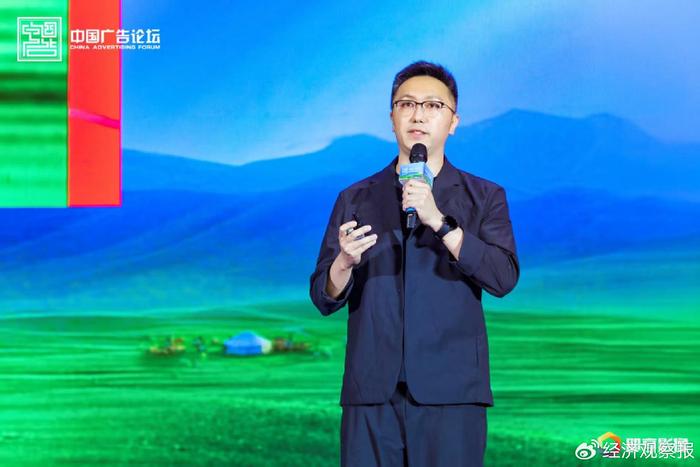
网易传媒李淼:以AI、态度与年轻人破局,凭“好内容”激活品牌增长
Jing Ji Guan Cha Wang· 2025-10-31 14:55
Core Insights - The 32nd China International Advertising Festival and the 34th Asia Advertising Conference focused on innovation and international cooperation in the advertising industry, emphasizing the theme "Empowering Advertising with Technology" [1] Group 1: Industry Challenges - The advertising industry is undergoing significant transformation, with brands facing internal competition and the risk of losing core values due to traffic obsession [1] - Advertising companies must balance marketing effectiveness with long-term brand value [1] - Platforms are contending with content homogenization while vying for traffic [1] Group 2: Company Strategies - The company emphasizes its core competency in content creation, which has been pivotal in maintaining its leading position through various technological waves over its 28-year history [1] - The company has introduced three core strategies to address industry challenges and support brand growth: - AI-driven content innovation through the "Qianmeng Engine" marketing platform, which leverages mature AI technology and a professional execution team to enhance content creation speed and brand stability [1] - The "Brand Cube" working model, which dissects brand needs to create effective marketing content that satisfies both clients and users, exemplified by a collaboration with BYD [2] - Deep engagement with young user demographics by creating a diverse product ecosystem that encourages active user participation [2] Group 3: AI Integration - The company applies AI to enhance product models and content, ensuring that AI serves a positive role in user experience rather than merely replacing traditional content [3] - To mitigate young users' resistance to AI-generated content, the focus is on amplifying the inherent value and uniqueness of the content rather than using AI as a cost-saving measure [4]
网易顾晓琨:以内容基因+数字技术重构文旅产业价值生态
Jing Ji Guan Cha Bao· 2025-07-28 06:57
Core Viewpoint - The forum emphasizes the integration of advertising, branding, and cultural tourism, showcasing innovative achievements in the digital era to inject new momentum into industry transformation and upgrading [1] Group 1: Industry Challenges and Solutions - The cultural tourism industry faces three main pain points: supply imbalance, homogenized experiences, and a scarcity of quality content [3] - NetEase proposes a unique content production model: "Destination Self-Creation + Institutional Empowerment + User Co-Creation" to address these challenges [3] Group 2: Project Highlights - NetEase collaborates with Wenzhou Taishun to create a cultural tourism project using a "1+N" model, focusing on local characteristics and integrating various platform resources [3] - The project includes initiatives like promoting local specialties through e-commerce, transforming traditional clothing into digital skins for games, and creating original songs inspired by local culture [3] Group 3: Differentiation in Content Creation - Key breakthroughs for differentiation in cultural tourism marketing include deep cultural exploration, reconstructing experiential scenarios, and promoting cross-industry integration [4][5] - NetEase leverages its comprehensive capabilities as an internet technology company to create differentiated cultural tourism content [5] Group 4: Evolving Consumer Demands - There is a notable shift in consumer demands towards emotional consumption, with a focus on obtaining emotional value rather than just functional satisfaction [7] - The transfer of experience sovereignty is evident, as consumers now have more autonomy in deciding their travel destinations [7] - Marketing strategies have evolved from "buying traffic" to "creating traffic," necessitating the development of projects that genuinely attract user interest [7] Group 5: Response to Market Changes - In response to changing demands, NetEase has initiated projects focused on traditional culture, collaborating with non-heritage masters to create content that resonates with younger audiences [8] - The company has made significant investments in AI to enhance content creation efficiency, reducing the time required for content development [8] - NetEase continues to partner with various organizations to co-create content, leveraging its content insight and production capabilities for mutual benefits [8]