
价格联动机制

Search documents
二线锂电厂从亏损到净利翻倍,澳洲客户抢着打款,欧洲订单爆满
21世纪经济报道· 2026-03-27 06:46
Core Viewpoint - The article highlights the significant turnaround of Ruipu Lanjun (0666.HK) in the lithium battery industry, marking its first annual profit in 2025, driven by explosive demand from overseas markets, particularly in the home energy storage sector [4][6]. Financial Performance - In 2025, Ruipu Lanjun achieved a revenue of 24.334 billion yuan, a year-on-year increase of 36.7%, and a net profit of 623 million yuan, marking a turnaround from losses with an increase of over 150% compared to the previous year [4][5]. - The company sold 82.7 GWh of lithium battery products in 2025, representing a year-on-year growth of approximately 89.2% [4]. Market Dynamics - The lithium battery industry is characterized by a "one strong, many strong" dynamic, with CATL holding over 60% of the global market share and more than 90% of the industry's operating profit [5][6]. - Ruipu Lanjun and other second-tier battery manufacturers have shown significant improvement in performance, breaking free from the narrative of struggling in a price war against industry leaders [6][7]. Strategic Focus - The company has prioritized overseas markets, particularly in response to subsidy policies in Europe and Australia, which have driven demand for home energy storage solutions [9]. - Ruipu Lanjun has adopted a strategy of maintaining price discipline and healthy cash flow, avoiding price wars, and focusing on high-quality growth rather than aggressive market share expansion [11][12]. Production and Capacity - In 2025, Ruipu Lanjun's annual production capacity reached approximately 90 GWh, with plans for steady increases in 2026 while ensuring high utilization rates [13]. - The company has transitioned from being a battery cell supplier to a system solution provider, significantly increasing its capacity for large-scale energy storage systems by over 30 times in 2025 [13].

锂电排产与隔膜专家交流
2026-03-19 02:39
Summary of Key Points from Conference Call Records Industry Overview - The records focus on the lithium battery production and separator industry, with projections for 2026 indicating a total battery production of 2,816 GWh, representing a 31% year-on-year increase. The breakdown includes 1,774 GWh for power batteries, 846 GWh for energy storage, and 196 GWh for consumer batteries [1][2][17]. Core Insights and Arguments Battery Production and Demand - Power battery production in February 2026 was 102 GWh, showing a month-on-month decrease of 15% but a year-on-year increase of 25.1%. The production of lithium iron phosphate batteries accounted for 75% of this output, demonstrating resilience [1][5]. - The energy storage sector is expected to see a significant growth rate of 57% in 2026, driven by a transition to larger capacity cells [2][17]. - The demand for separators is projected to reach 36.3 billion square meters by 2026, with a critical shortage in the 5μm specification due to the needs of power and energy storage applications [1][10][12]. Pricing Mechanisms - The pricing transmission mechanism for power battery cells has improved, with 80% of contracts now linked to raw material prices. In March, separator companies attempted a price increase of 30%, with expectations of a 10% increase for second and third-tier battery manufacturers [1][7][13]. - The energy storage market shows a bifurcation in project types, with 20%-30% of conventional projects being highly sensitive to lithium carbonate prices exceeding 150,000 yuan/ton [1][9][22]. Supply Chain Dynamics - The separator industry is experiencing a tight supply-demand balance, with a projected annual supply surplus of only 176 million square meters. The production of 5μm separators is expected to dominate, with a significant shift from dry to wet processes [10][12][14]. - The domestic market for separators is characterized by a high degree of reliance on imported base film production equipment, although coating equipment has seen a domestic production rate of nearly 90% [1][10][20]. Additional Important Insights - The energy storage market's structure is evolving, with a notable sensitivity to raw material costs impacting project timelines and decisions. Projects with average return rates are particularly vulnerable to cost fluctuations [22][23]. - The geopolitical situation, particularly in the Middle East, is affecting supply chains and pricing strategies, with some companies halting shipments to the region [8][18]. - The transition to larger battery cells (e.g., 314Ah to larger capacities) is a significant driver of demand growth, with implications for production capacity and supply chain dynamics [25]. Conclusion - The lithium battery and separator industries are poised for significant growth in 2026, driven by technological advancements and market demand shifts. However, challenges such as raw material price volatility, geopolitical risks, and supply chain dependencies remain critical factors to monitor [1][17][21].
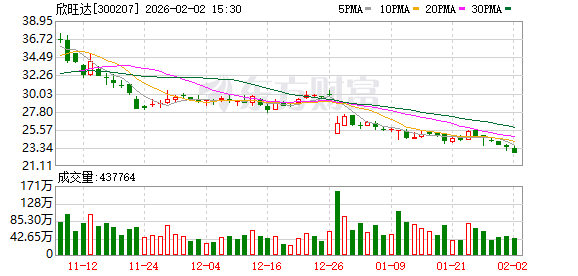
欣旺达:公司通过多种途径保障上游资源稳定供应
Zheng Quan Ri Bao· 2026-02-02 13:41
Group 1 - The company, XINWANDA, is ensuring stable supply of upstream resources through various methods such as cooperative mining, establishing joint ventures with mining companies, and investing in upstream enterprises [2] - In response to rising prices of raw materials like lithium carbonate, the company has established a price linkage mechanism with downstream customers to share the burden of increased raw material costs [2]

宁德时代招投标最新情况
数说新能源· 2026-01-19 03:36
Core Viewpoint - The article discusses the current state of negotiations and pricing for key materials in the lithium battery industry, highlighting the shift from traditional long-term contracts to more flexible, order-based pricing due to market volatility [2] Group 1: Progress and Pricing of Key Materials - Negotiations for most materials for 2026 are not yet locked, with discussions expected to intensify around the Chinese New Year. Currently, only the price for lithium hexafluorophosphate is confirmed at 150,000 yuan/ton [3][5] - Major suppliers include Tianqi Lithium, Tianji, and others, with a general price increase demand of about 10%-15% or higher from suppliers across the board [5] - The price of lithium hexafluorophosphate has risen to approximately 160,000 yuan/ton, while electrolyte prices have surged from about 19,000 yuan/ton to around 60,000 yuan/ton [5] Group 2: Changes in Procurement Models - The traditional "annual bidding" model is no longer viable, with most transactions shifting to spot or short-term agreements due to frequent price fluctuations [5] - The procurement cycle is now aligned with the Chinese New Year, with current production still using prices from the previous cycle [6] Group 3: CATL's Operations and Supply Chain - CATL has a strong ability to absorb and pass on cost increases due to its strategic investments in key material companies and production efficiency improvements [6] - The company has not implemented a blanket price increase for major clients but is focusing on maintaining market share through a responsive pricing mechanism [5][6] Group 4: Product Pricing and Market Outlook - The production plan for Q1 2026 is approximately 229 GWh, slightly down from 249 GWh in Q4 2025, with expectations of a potential recovery in February [6] - The expected revenue per watt-hour is estimated at around 0.6 yuan, with material prices anticipated to rise throughout the year, provided demand remains stable [6][7] - CATL's cost absorption capability is enhanced through production efficiency improvements, allowing it to mitigate the impact of rising raw material costs [7]


津荣天宇:公司采用“主要原材料价格+加工费”的产品定价模式,与客户建立了长期稳定的价格联动机制
Zheng Quan Ri Bao Wang· 2026-01-15 09:43
Core Viewpoint - The company, Jintong Tianyu (300988), has established a pricing model based on "main raw material prices + processing fees," which allows for a stable price linkage mechanism with customers [1] Group 1: Pricing Mechanism - The company regularly updates and adjusts the base prices of main raw materials according to market fair prices [1] - This pricing mechanism effectively transmits market price fluctuations of bulk materials such as copper and aluminum [1] - The approach helps to mitigate the direct impact of drastic changes in raw material costs on the company's overall operating performance [1]
孚能科技:目前公司正在和客户积极沟通涨价事宜
Zheng Quan Ri Bao Wang· 2025-12-09 13:12
Group 1 - The core viewpoint of the article is that the company has established a comprehensive price linkage mechanism to effectively transmit price increases [1] - The company acknowledges that certain raw material prices have risen, coupled with an expanding market demand, leading to an upward trend in lithium battery prices [1] - The company is actively communicating with customers regarding price increases, and some products have already seen price hikes [1]
