企业传播

Search documents
铁骑力士亮相中国工业论坛,李全以"微笑 世界"解码企业品牌建设之路
Zhong Guo Shi Pin Wang· 2026-01-15 04:54
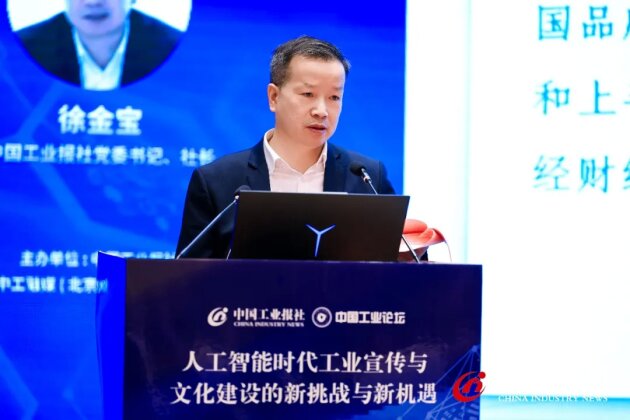
Core Insights - The 18th China Industrial Forum focused on the innovation and practice of industrial culture, gathering government leaders, industry experts, and corporate representatives to discuss the integration of artificial intelligence and industrial promotion [1][4]. Group 1: Industrial Culture and AI Integration - The China Industrial News Agency emphasized the need for industrial enterprises to adapt to the new media landscape by shifting from "one-way output" to "interactive integration" and from "single-channel" to "multi-channel" communication [3]. - The report by Zhu Hongren highlighted the importance of embedding corporate culture within the context of AI development, focusing on three strategic goals: aligning with new industrialization tasks, enhancing employee recognition of innovation, and guiding employees to adapt to AI applications [4][5]. Group 2: Crisis Management in the AI Era - Expert Shan Xuegang discussed the profound changes in public opinion ecology due to AI, noting the increase in "flammable points" and the proliferation of rumors and false information, which pose significant challenges for corporate public opinion management [7]. - He outlined a three-stage evolution of public opinion management, advocating for a comprehensive management approach that includes preemptive information gathering, enhancing media literacy during crises, and post-crisis image reconstruction [7][8]. Group 3: Corporate Culture and Long-term Development - Li Quan from TQY shared insights on the company's 30-year journey, emphasizing a culture centered around "people" and the concept of "three smiles," which focuses on employee satisfaction, consumer trust, and social responsibility [10][11]. - The four key pillars supporting TQY's sustainable development include a commitment to long-termism, specialization in the agricultural and food sector, technological innovation, and talent development [12]. - Li Quan illustrated TQY's social responsibility through initiatives that have evolved from farmer assistance to rural revitalization, showcasing a sustainable development model that benefits multiple stakeholders [13][15].

活动报名!医疗器械.传播策略.闭门交流 | 北京站
思宇MedTech· 2025-12-20 01:11
Core Viewpoint - The article emphasizes the importance of communication strategies in the development of medical device startups, focusing on how to effectively convey messages to various stakeholders in the industry [2]. Group 1: Communication Strategies - Different types of companies should prioritize their communication focus differently, including startups, growth-stage clinical-driven companies, and publicly listed or pre-IPO companies [4]. - Public Relations (PR) should not be simplistically viewed as just "press releases and exposure"; when budgets are limited, companies should consider whether to reduce efforts or change strategies [5]. - Companies should transition from "scattered content output" to creating reusable cognitive assets that can be leveraged in key scenarios such as financing, market promotion, and hospital communication [5]. Group 2: Key Messaging and Timing - Companies need to determine when to initiate promotional activities and identify their target audience, including what to say and what to avoid [5]. - Communication should genuinely assist in physician decision-making rather than merely presenting product information [5]. - Clinical content must evolve from being "professionally correct" to being "useful for decision-making" [5]. Group 3: International Expansion and Consistency - The discussion will extend to companies looking to expand internationally, focusing on maintaining consistency and long-term narratives in external communications [6][8]. - Companies should identify which content is worth refining for communication with doctors, distributors, secondary markets, and partners [8]. - There is a need to understand which cognitive elements are prioritized in overseas markets and the content channels available for international communication [8].
360集团董事长、CEO周鸿祎:《传播的逻辑》是一套企业传播的实战方法论
Hua Xia Shi Bao· 2025-10-23 05:07
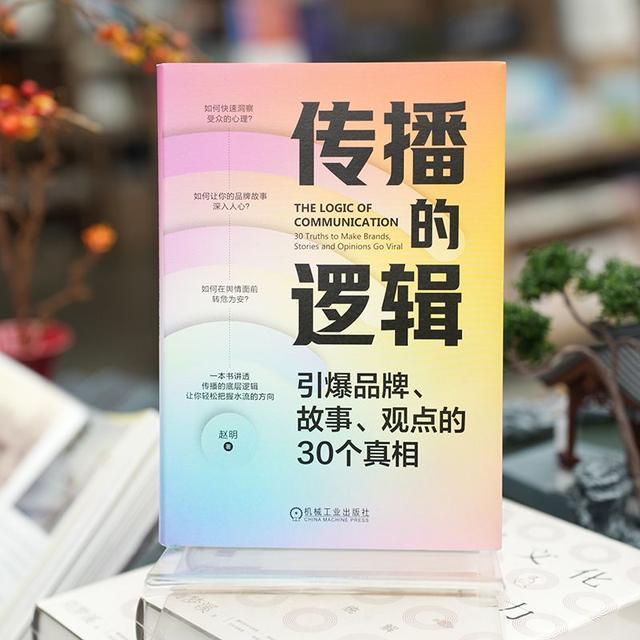
Core Insights - The article discusses the evolution of communication strategies in the context of the internet and social media, emphasizing the importance of adapting to new media channels for effective brand promotion and user engagement [3][4][5]. Group 1: Communication Evolution - Successful companies in China have historically prioritized communication, especially during the era of traditional media dominance [3]. - The emergence of social media platforms like podcasts, Weibo, WeChat, and short videos has diminished the effectiveness of traditional public relations methods [3]. - The book "The Logic of Communication" by Zhao Ming explores contemporary communication strategies, addressing topics such as "logic reconstruction in the short video era" and "new pathways for live streaming sales and personal branding" [3][4]. Group 2: Role of Entrepreneurs - Entrepreneurs are increasingly using social media to build their personal brands and promote their companies, similar to past practices of appearing in traditional media [4]. - Notable figures like Elon Musk and Lei Jun have effectively utilized social media to save significant advertising costs while enhancing their companies' visibility [4]. - The article highlights that the choice of media channels is crucial for entrepreneurs to maintain influence and connect with users [4]. Group 3: New Communication Strategies - Companies must recognize that the logic of communication has shifted from simple information dissemination to building emotional and value-based connections with users [5]. - The article stresses the importance of proactive communication with the public to avoid misunderstandings and manage crises effectively [5]. - The book offers solutions for navigating communication in the new era, aiming to provide readers with a fresh understanding of communication dynamics [6][7].