优先股

Search documents
干货分享丨关于【股权投资】必知必懂的基础知识点
Sou Hu Cai Jing· 2025-11-13 09:20
Group 1 - Equity investment refers to acquiring shares of a company, aiming for significant economic benefits through investments in both listed and unlisted companies [1] - Equity investment can occur at various stages of a company's lifecycle, including startup, growth, and expansion phases, with different investor focuses at each stage [1] - Private equity funds primarily invest in unlisted companies, aiming to recover investment returns through future public offerings or acquisitions [2] Group 2 - The profit points of private equity mainly arise from the price differences between the primary and secondary markets, with a strong influence from the IPO market [3] - Angel investments typically target very early-stage companies, often with minimal funding requirements, and investors usually acquire 10% to 30% equity [4] - Venture capital is suited for companies in early stages of development, where initial funding is insufficient for significant growth [5] Group 3 - Investment banks assist companies with public offerings, restructuring, mergers, and acquisitions, earning fees from successful financing [6] - M&A encompasses both mergers and acquisitions, with subtle differences in their definitions and implications [7][10] - M&A funds are more common in mature markets and focus on established companies, contrasting with angel and venture capital funds that target startups [11] Group 4 - Fund of Funds (FOF) is a type of investment strategy that invests in other funds rather than direct assets, distinguishing it from traditional funds [12] - The investment threshold for private equity funds varies, with common minimums of 3 million to 10 million depending on the fund size [22] - Private equity funds typically have a long duration of 5 to 8 years, divided into investment, exit, and extension periods [22] Group 5 - The valuation of a company is crucial in private equity transactions, determining the financing amount and investor equity stake [25] - Valuation methods include the price-to-earnings ratio and comparative analysis with similar companies in the industry [26] - Investment protection mechanisms, such as board veto rights, are essential for safeguarding private equity investors' interests [27]
老将新帅、优先股增发,招商蛇口深夜换帅背后的业绩压力与资本筹谋
Hua Xia Shi Bao· 2025-09-17 09:05
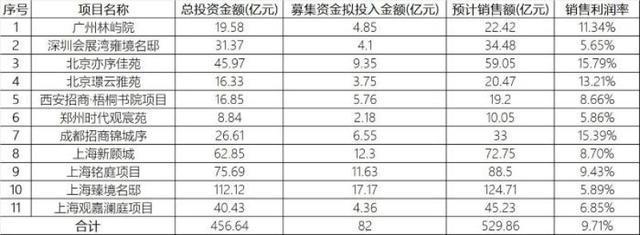
Core Viewpoint - The recent management changes and capital raising efforts by China Merchants Shekou (招商蛇口) signal a strategic shift aimed at enhancing operational efficiency and stabilizing cash flow amid a challenging real estate market [2][4][8]. Group 1: Management Changes - Chairman Jiang Tiefeng resigned due to work adjustments, with Zhu Wenkai appointed as the new chairman and Nie Liming taking over as general manager, indicating a rapid leadership transition [2][9]. - The management's focus is on maintaining strategic direction and ensuring cash flow stability, as highlighted by their "four no losses" strategy [2][8]. Group 2: Capital Raising and Financial Strategy - China Merchants Shekou announced a plan to raise up to 8.2 billion yuan through a private placement of preferred shares, aimed at funding ongoing real estate projects [6][7]. - The funds will primarily support 11 ongoing projects, with total investments amounting to 456.64 billion yuan and projected sales revenue of 529.86 billion yuan [7][8]. - The average sales profit margin for these projects is estimated at 9.7%, with the lowest being 5.65% and the highest at 15.79% [7][8]. Group 3: Market Response and Financial Performance - Following the announcement of the capital raise, the company's stock price initially rose but later experienced a slight decline, reflecting mixed investor sentiment regarding the management changes [9][10]. - The mid-year financial report indicated a slight revenue increase of 0.41% year-on-year, but traditional development business revenues fell by 1.02%, highlighting ongoing challenges in the real estate sector [12][13]. - The company’s net profit for the period was 14.48 billion yuan, up 2.18% year-on-year, but the underlying profit showed a significant decline when excluding non-recurring gains [13][14].


评评“理”第37期:微众银行推荐产品主投江浙地区信用债,邮储银行热销产品分数下降过半丨银行热销理财产品测评系列
2 1 Shi Ji Jing Ji Bao Dao· 2025-05-30 12:31
Core Viewpoint - The recent performance of the bond market has been characterized by fluctuations, while the stock market has also seen slight adjustments, leading to increased pressure on the yields of wealth management products [1] Group 1: Product Overview - The product "Ningyin Wealth Management Ningxin Fixed Income Daily Open 8" is primarily focused on fixed income investments, with a minimum holding period of 300 days [8] - The product mainly invests in AA-rated and above credit bonds in the Jiangsu and Zhejiang regions, reflecting a common preference among local commercial banks for regional credit bonds, particularly urban investment bonds [4][16] - The product's net value has shown greater sensitivity to the bond market, experiencing slight declines during the bond market adjustments in February and March, indicating a lower allocation to true equity assets [4][10] Group 2: Performance Metrics - The product scored 38 points for yield, 96 points for risk control, and 22 points for risk-adjusted return, ranking 94th, 124th, and 131st respectively among 227 similar products, with an overall score of 60, outperforming 39.21% of its peers [6][10] - The annualized yield over the past month is 4.47%, with the product outperforming 72.25% of similar products, while the annualized yield since inception is 4.49%, beating 63.44% of similar products [13][20] - The maximum drawdown since inception is 0.16%, indicating relatively good risk control, and the comprehensive fee rate is 0.8% [14][20] Group 3: Investment Strategy - The product employs a flexible asset allocation strategy, with a maximum of 20% allocated to non-fixed income assets, while maintaining over 80% in fixed income investments [10][20] - The underlying assets primarily consist of fixed income securities, with equity investments made indirectly through asset management products, although specific allocations remain undisclosed [16][20] - The product has slightly reduced its bond investment ratio while increasing allocations to equity and public funds in the first quarter of this year [16]



特朗普失望了,外资转购中国资产,美联储通告全国,最大风险出现!
Sou Hu Cai Jing· 2025-03-24 09:57
Group 1 - The OECD report indicates that US tariff policies are slowing down both US and global economic growth, with forecasts for US economic growth dropping significantly to 2.2% in 2025 and 1.6% in 2026 [1] - The report predicts that inflation in the US will rebound in 2025, suggesting ongoing economic challenges [1] - Trump's tariffs have adversely affected major US industries, particularly agriculture and energy, as China has retaliated with tariffs on US imports, including natural gas and crude oil [3] Group 2 - The Federal Reserve has maintained the federal funds rate target range at 4.25% to 4.50%, with Chairman Powell acknowledging that a significant portion of inflation is attributable to tariffs [5] - Global investors are increasingly selling off Indian stocks at record rates, with nearly $29 billion withdrawn since last October, while turning their attention to Chinese stocks due to economic stimulus measures [5][7] - The Indian stock market has seen a decline of 13% since its peak in September 2022, leading to a market capitalization loss of $1 trillion, raising concerns about overvaluation and potential risks [5][7] Group 3 - High long-term borrowing rates in the US are creating a competitive advantage for government bonds, making corporate debt issuance costly and uncertain [7] - The US stock market is facing valuation adjustments, with increased risks of IPO failures and uncontrollable costs in equity financing [7]