供应安全

Search documents
南华期货原油2026年二季度展望:中东局未定,原油亦难平
Nan Hua Qi Huo· 2026-03-29 13:10
Group 1: Report Industry Investment Rating - No relevant information provided Group 2: Core Views of the Report - In Q1 2026, the prices of domestic and foreign crude oil futures showed a trend of "mild accumulation in the early stage, slow increase and stalemate in the mid - stage, and extreme sharp rise in the late stage" driven by geopolitical factors [1] - In Q2, geopolitical risks and supply security are still the core variables. The Iran - US conflict has led to the continuous closure of the Strait of Hormuz, a shortage of crude oil supply, and production cuts by many countries. The geopolitical situation in Q2 will still dominate crude oil supply and prices, with three possible scenarios: low - intensity stalemate, marginal easing, or conflict escalation [1] - The buffer effect of supply supplements mainly comes from the consumption of inventories of related substitute products and reserve inventories. In Q2, OPEC's production will be relatively limited due to the closure of the Strait of Hormuz and inventory pressure, while the production of the US, Russia, etc. has room for moderate growth [1] - There is a risk of demand decline due to supply shortages and high oil prices. The continuous closure of the Strait of Hormuz has caused refineries in the Middle East and Asia to reduce their loads. If high oil prices and supply shortages persist, it will lead to a negative demand feedback [2] - In terms of macro and monetary policy transmission, the market is pricing in some inflation expectations, and it is expected that the US may only cut interest rates once this year, possibly postponed to September or later [2] - Based on three scenarios for price estimation: in the case of low - intensity long - term stalemate, Brent is expected to fluctuate between $80 - 120 per barrel; if some oil fields in the Gulf countries stop production and the strait gradually resumes navigation, Brent may fall to $70 - 90 per barrel; if the conflict escalates to a ground war, Brent may break through the previous high of $120 per barrel [3] Group 3: Summary of Each Chapter Chapter 1: Core Views - **Price Trend in Q1 2026**: The international crude oil price showed a trend of "mild accumulation in the early stage, slow increase and stalemate in the mid - stage, and extreme sharp rise in the late stage" under the influence of the Iran - US situation. The price of Brent rose from above $60 to $120 [1][5] - **Key Points to Focus on in Q2**: Geopolitical risks, supply supplements, demand decline risks due to supply shortages and high oil prices, and macro and monetary policy transmission [1][2] - **Price Estimation**: Based on three scenarios, the longer the strait is closed, the higher the price center of oil will be [3] Chapter 2: Market Review - **Low - level Oscillation and Accumulation Period (Late December 2025 - January 2026)**: Due to domestic turmoil in Iran and increased US military deployment, the price center of Brent rose above $60 [5] - **Negotiation Stalemate and Slow - rise Period (Early February - February 27, 2026)**: Three rounds of negotiations between the US and Iran ended in stalemate, and the price of Brent rose to $70 [5] - **Conflict Outbreak and Sharp - rise Period (February 28, 2026 - Present)**: After the US - Israel joint air strikes, Iran launched counter - attacks and threatened to block the Strait of Hormuz, causing the price of Brent to soar to $120 [5] - **Impact on the Market**: The closure of the Strait of Hormuz has led to a significant reduction in exports from major Middle Eastern oil - producing countries, and Asian buyers have adjusted their procurement structures, driving up the prices of non - mainstream oil types and subsequent arrival costs in the Asian market. The monthly spread of the crude oil market has changed from relatively flat to steeply ascending [7][9] Chapter 3: Core Focus Points - **Geopolitical Risks and Supply Security**: Geopolitical situation in Q2 remains the key factor determining crude oil supply and price. The Strait of Hormuz is still closed, resulting in a daily supply shortage of about 8 - 9 million barrels and a total production cut of about 7 - 8 million barrels per day. Three possible future scenarios are low - intensity long - term stalemate, marginal easing, and conflict escalation [11][12] - **Supply Supplements**: OPEC+'s production increase is limited by the closure of the Strait of Hormuz and inventory pressure. The US has room for moderate production increase but is also affected by policies. The production of some South American countries has a limited increase. The short - term supply increment mainly comes from Russia's inventory reduction and SPR release, but it is insufficient to fill the Middle Eastern supply gap [15][18][21] - **Risk of Demand Decline**: In Q2, there is a risk of demand decline. Refineries may reduce their loads due to high - priced raw materials and feedstock shortages, and high oil prices will also suppress terminal consumption demand [28] - **Macro and Monetary Policy Transmission**: The market is pricing in the stagflation chain. The Fed is expected to cut interest rates only once this year, possibly postponed to September or later. If the Strait of Hormuz remains closed for more than two months, it may lead to inflation and even stagflation or recession [30][31] Chapter 4: Valuation Feedback and Supply - Demand Outlook - **Valuation Feedback** - **Monthly Structure**: The Back structure of Brent may continue, and its strength depends on the evolution of the Middle East situation. The WTI structure is more affected by the US domestic situation, and the SC structure is expected to remain relatively flat [35][36] - **Regional Spread**: It is affected by the conflict progress. In different scenarios, the spreads of Brent - WTI, SC - Brent, and BDSS will change differently [39][40] - **Supply - Demand Outlook** - **Supply - Demand Balance**: EIA and IEA maintain the view of a surplus in the global crude oil supply - demand pattern in 2026, but the surplus has decreased. Q2 is the most tense quarter [43] - **Supply Side**: There is room for moderate growth in production in Q2 compared to Q1, with the US, Russia, Kazakhstan, and Brazil as the main sources of increment [46] - **Demand Side**: There is an expectation of weakening short - term demand. Refinery开工率 may decline, and the 3 - month crude oil processing volume has decreased, especially in Asia and the Middle East [48] - **Inventory**: Russian oil inventory has decreased, Iranian oil inventory has started to decline, European inventory is relatively low, and Middle Eastern inventory is increasing, which may lead to more production cuts [50]
200万吨美国大豆订单,中国当冤大头?这盘棋比你想的深
Sou Hu Cai Jing· 2025-12-01 08:14
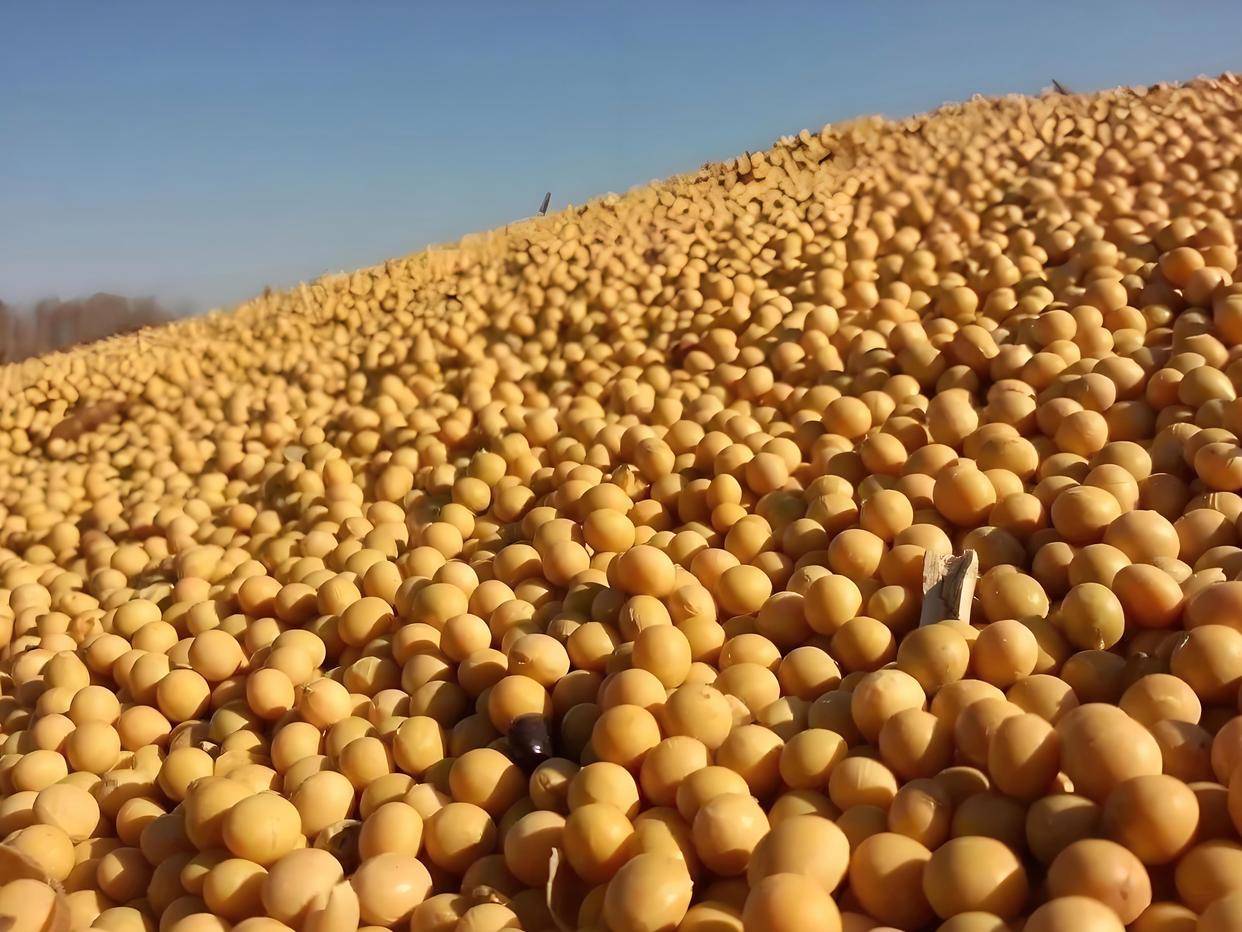
Group 1 - The core point of the news is that COFCO's decision to purchase 2 million tons of soybeans from the U.S. has sparked discussions, particularly regarding the higher price compared to Brazilian soybeans, raising questions about the strategic implications behind this decision [1][5] - The soybean procurement agreement is linked to a significant U.S.-China high-level meeting where the U.S. agreed to reduce tariffs on Chinese goods by 10% and suspend a planned 24% reciprocal tariff, while China committed to purchasing 87.5 million tons of U.S. soybeans over four years [6][8] - The purchasing plan is detailed, with 12 million tons to be bought in the first year and 25 million tons annually for the next three years, indicating that this transaction is a restoration of normal purchasing levels rather than an additional expense [8][10] Group 2 - The rationale for resuming soybean purchases from the U.S. is to ensure a stable and reliable import channel, avoiding over-reliance on a single source, as the global soybean market is dominated by the U.S. and Brazil, which together account for over 90% of the market share [10][11] - Although U.S. soybeans are more expensive, this procurement acts as a balancing mechanism, fostering competition between the U.S. and Brazil, which is beneficial for maintaining price stability and supply security in the Chinese soybean market [13] - The soybean order signifies a pivotal moment in U.S.-China trade relations, marking a shift from confrontation to cooperation, with plans for mutual visits and discussions on broader cooperation in energy and technology sectors [14][16] Group 3 - The upcoming trade delegation from China to the U.S. and Canada is significant, signaling a move towards expanding cooperation and reducing tensions, while also preparing for potential energy collaboration with Canada as a backup option [16][18] - The U.S. is also showing positive signals by discussing the export of H200 computing chips to China, indicating a potential for large-scale cooperation agreements before Trump's visit to China in April [18] - The soybean order is viewed as a starting point for broader cooperation in critical areas such as energy and technology, emphasizing the importance of supply security and balanced international relations [19]


美豆滞销,中国转向巴西与南美
Sou Hu Cai Jing· 2025-08-17 08:47
Group 1 - In September and October of this year, China has secured approximately 12 million tons of soybean supply from South America, accounting for about half of its demand during the same period, which has forced the U.S. to lose its traditional autumn export window [2] - Data indicates that China's total soybean imports for 2024 are projected to be around 105 million tons, with approximately 22.13 million tons sourced from the U.S., while over 70% will come from Brazil, and Argentina's supply is also rapidly increasing, providing China with diversified procurement options [4] - This strategy is not a "one-size-fits-all" approach but rather a rational choice for supply-demand restructuring and supply security, as diversifying imports helps mitigate risks from trade frictions and promotes the synergy between South American supply chains and the Chinese market [5]
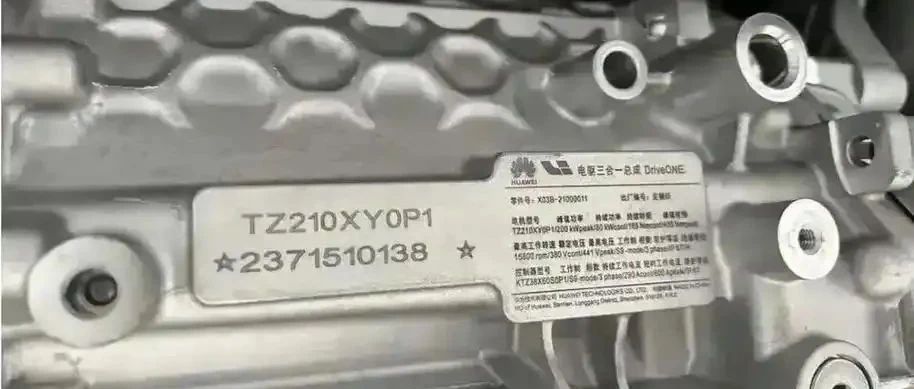
理想汽车为什么要使用华为的电机?
理想TOP2· 2025-07-14 15:44
Core Viewpoint - The company emphasizes the strategic decision to source rear motors from multiple suppliers, including HW Digital Energy, to ensure supply security and maintain competitive quality and cost [10][12][15]. Group 1: Supplier Strategy - The rear motor for the L series is a conventional 200kw drive motor, with ample market supply and competition among suppliers [10][11]. - The company collaborates with three suppliers—HW Digital Energy, BorgWarner, and United Electronics—allowing for interchangeable parts across different models [11][15]. - The decision to have multiple suppliers is to mitigate risks associated with supply chain disruptions and quality issues [12][13]. Group 2: Technical Capabilities - The most challenging component is the front five-in-one motor, which the company has developed in-house [16][21]. - The rear motor technology does not pose significant challenges, allowing the company to utilize external suppliers without compromising on quality [14][15]. Group 3: Competitive Landscape - The company does not fear supply chain issues from HW, as the two entities operate independently within their respective business segments [17][21]. - The relationship between HW Digital Energy and the company's vehicle production is likened to independent operations within a larger corporate structure, similar to how different divisions of SAIC operate [22][24]. Group 4: Industry Collaboration - The company advocates for collaboration within the Chinese new energy vehicle sector, emphasizing the importance of collective efforts to enhance the industry for the benefit of consumers and the nation [26].