供需重构

Search documents
纯苯:供需重构 震荡修复
Zhong Guo Hua Gong Bao· 2026-02-03 03:37
Core Insights - The chemical industry is expected to transition from price competition to value creation by 2025, leading to a systematic restructuring of the entire chemical supply chain [1] - The pure benzene market experienced a significant decline in 2025, with prices dropping from 7464 yuan per ton in January to 5318 yuan in December, a decrease of over 40% [1] - For 2026, industry experts anticipate a "supply-demand restructuring and oscillatory recovery" in the pure benzene market, with overall transaction levels expected to gradually improve [1] Supply Dynamics - The rapid expansion of pure benzene production capacity in China has led to a supply surplus, with 2025 production reaching approximately 23 million tons and imports at 5.6083 million tons, marking increases of 10% and 30.03% year-on-year, respectively [2] - In 2026, the supply of pure benzene is expected to show "limited growth and structural optimization," as capacity expansion slows down, with new capacity additions around 2.26 million tons [2] - The exit of outdated production capacity, driven by carbon reduction policies, is accelerating, with about 15% of existing old facilities facing elimination or upgrades [2] Demand Factors - Traditional demand for pure benzene remains stable, primarily driven by the styrene sector, which accounts for approximately 48% of demand [4] - Although traditional demand is steady, emerging market demand is weak, with high-end applications like electronic-grade solvents and pharmaceutical intermediates making up less than 5% of total demand [4] - The overall growth rate for pure benzene demand in Asia is projected to be only 1.6% in 2026 due to global economic uncertainties and trade barriers [4] Market Outlook - The pure benzene market is expected to experience a "bull-bear tug-of-war and oscillatory recovery" in 2026, with prices rising from 5300 yuan to 6200 yuan, a 17% increase driven by improved fundamentals and pre-holiday stockpiling [5] - The market may enter a phase of oscillatory consolidation due to high inventory levels and the acceptance of price increases by downstream enterprises [5] - Long-term, the chemical sector's new cycle narrative will dominate the market, with supply-side constraints and steady traditional demand providing support for price recovery [6]
【历史性高光!】2025年金属市场“全面开花”,超级周期实锤
Xin Lang Cai Jing· 2025-12-25 04:05
Core Viewpoint - The global metal market in 2025 is experiencing unprecedented price surges across various metals, driven by a combination of supply-demand imbalances, policy adjustments, and industrial upgrades, marking the beginning of a new valuation cycle for the metal industry [1] Precious Metals - Gold prices have surpassed $4,500 per ounce, with an annual increase of over 60%, supported by global uncertainties and central bank purchases, with over 1,000 tons of net gold bought by central banks in 2025 [1] - Silver has doubled in price, driven by a 50% year-on-year increase in silver demand for photovoltaic applications, with industrial demand significantly boosting silver prices [2] - Platinum and palladium are supported by hydrogen energy and automotive recovery, with ETF holdings rising, indicating a positive market trend for these metals [2] Industrial Metals - Copper prices have reached over $12,200 per ton, with a year-on-year increase of over 30%, driven by demand from electric vehicles, photovoltaics, and AI data centers, while supply disruptions have led to a projected global refined copper shortage of 150,000 tons in 2025 [3] - Nickel prices have seen significant fluctuations due to policy changes in Indonesia and domestic stockpiling, with a potential for price recovery in 2026 as demand remains stable [3][4] New Energy Metals - Lithium prices have increased by 28% since July, supported by new regulations that eliminate inefficient production and rising demand from energy storage and electric vehicles, with a projected penetration rate of over 40% for new energy vehicles in 2025 [4] - Cobalt prices have surged over 130% due to tightened export quotas from the Democratic Republic of Congo, which holds 70% of global cobalt resources, highlighting the vulnerability of the supply chain [4] Strategic Metals - Strategic metals like tungsten, gallium, and germanium are experiencing price surges due to their irreplaceable roles in key industries, with China controlling 98% of global gallium production and 70% of germanium production, leading to an 84% increase in gallium prices in 2025 [5] - The combination of policy support and technological advancements is transforming strategic metals from mere resources into strategic assets, with ongoing value reassessment in the industry [5] 2026 Outlook - The metal market is expected to shift from broad increases to structural differentiation, with copper projected to reach $13,000 per ton due to limited supply and structural demand from new energy and AI [6] - Precious metals are likely to experience high volatility but remain supported by safe-haven and industrial demand, while strategic metals are expected to maintain a long-term bullish trend due to solidifying global pricing power [7] Conclusion - The 2025 metal market reflects a broader energy revolution and industrial upgrade, with metals playing a crucial role in supporting new productive forces, indicating a significant opportunity for those who can navigate the evolving landscape of supply-demand dynamics, policy, and technology [8]


年内翻倍!3天涨12%!昔日"贵金属之王"高光回归
Ge Long Hui· 2025-12-16 07:37
Core Viewpoint - The precious metals market in 2025 is experiencing significant price increases, with gold, silver, and copper reaching historical highs, and platinum making a notable comeback due to a fundamental restructuring of supply and demand dynamics [1][2] Group 1: Price Trends - Gold, silver, and copper prices have collectively reached historical highs for the first time since 1980, with silver increasing over 120% year-to-date and platinum rising nearly 105% [1] - Platinum's price surge is attributed to a combination of factors, including a supply shortage and increased demand from both traditional and emerging sectors [1][2] Group 2: Supply Dynamics - Global platinum supply is expected to decline by 6% in 2025, reaching a five-year low of 120.3 tons, due to a lack of new mining projects and operational challenges in major producing countries like South Africa and Russia [1] - South Africa's mining sector is facing multiple crises, including extreme weather and power shortages, which have led to a 13% year-on-year decline in platinum group metal production in the first quarter of 2025 [1] Group 3: Demand Drivers - The automotive sector remains the largest source of platinum demand, accounting for 38% of total demand, with a projected 8% increase in 2025 due to accelerated platinum-palladium substitution and a recovery in fuel vehicle policies [1] - Emerging sectors such as hydrogen energy and AI are expected to drive long-term growth in platinum demand, with hydrogen fuel cell vehicles projected to require significant amounts of platinum as production ramps up [1] Group 4: Investment and Consumption Trends - China has become the largest platinum consumer market, with a 140% year-on-year increase in platinum bar demand in Q1 2025, surpassing North America [1] - The introduction of platinum and palladium futures on the Guangzhou Futures Exchange is expected to increase ETF holdings significantly, further stimulating demand and price increases [1][2] Group 5: Macroeconomic Influences - The combination of loose monetary policy and geopolitical risks is amplifying platinum's price elasticity, with expectations that the Federal Reserve will maintain a loose stance into 2026 [2] - Geopolitical tensions, particularly the Russia-Ukraine conflict, are increasing uncertainties around platinum exports, further impacting market dynamics [2]
毛利率上台阶!天齐锂业释放盈利增长“元动力”
Quan Jing Wang· 2025-10-30 04:42
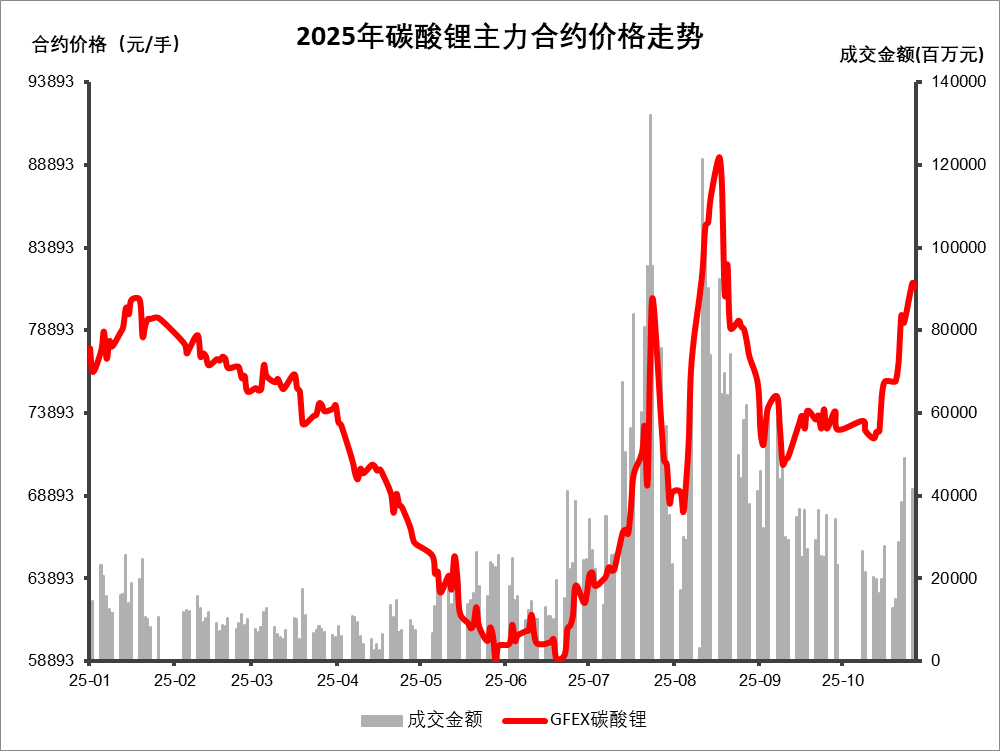
Core Insights - Tianqi Lithium's Q3 report shows a gross margin increase to 37.57%, with a net profit attributable to shareholders of 95.49 million yuan, representing a 120% year-on-year growth [1] - The company achieved a basic earnings per share of 0.06 yuan for the quarter, and 0.11 yuan for the first three quarters of 2025, marking a 103.16% year-on-year increase [1] - Despite fluctuations in lithium product prices, the company benefited from a shortened pricing cycle for its subsidiary Windfield Holdings and improved pricing mechanisms for its lithium products [1] Industry Overview - The lithium battery sector is experiencing a robust supply-demand dynamic, with domestic new energy electric vehicle sales increasing by 35% year-on-year in the first nine months of 2025, and an expected annual growth rate exceeding 30% [3] - The European market also shows a growth rate of 25%, with significant expansion in the energy storage sector [3] - Domestic battery production reached 186 GWh in October, a 22.4% month-on-month increase, with many leading manufacturers' orders extending into the next year [3] Company Developments - Tianqi Lithium's Jiangsu Zhangjiagang production base has confirmed that its 30,000-ton annual capacity project for battery-grade lithium hydroxide has met technical standards as of October 17, with sales expected to ramp up soon [3] - According to Dongwu Securities, the company possesses excellent resource endowments and significant cost advantages, suggesting further improvements in lithium salt profitability [3]

(经济观察)重塑发展逻辑 中国楼市或迎四大变化
Zhong Guo Xin Wen Wang· 2025-10-29 11:20
Core Viewpoint - The recently published "Suggestions on Formulating the 15th Five-Year Plan for National Economic and Social Development" emphasizes the importance of promoting high-quality development in the real estate sector, indicating a clear direction for the industry over the next five years [1] Group 1: Policy Shift - The "Suggestions" explicitly call for the promotion of high-quality development in real estate, reflecting a shift in the industry's development stage. The average urban housing area per person has exceeded 40 square meters, and the average household owns nearly 1.1 homes, signaling the end of the housing shortage era [2] - The new model for real estate development will focus on improving foundational systems in development, financing, and sales, moving away from short-term demand restrictions or stimuli [2] Group 2: Supply and Demand Restructuring - The "Suggestions" propose optimizing the supply of affordable housing to meet the basic housing needs of urban wage earners and various disadvantaged families, expanding the coverage of housing security [3] - The emphasis on increasing the supply of improved housing based on local demand variations will be a key characteristic of housing supply during the 15th Five-Year Plan period [3] Group 3: Quality Improvement - The "Suggestions" highlight the need to build safe, comfortable, green, and smart homes, along with implementing quality improvement projects for housing and property services [4] - Ongoing initiatives such as the renovation of old neighborhoods and urban renewal aim to enhance housing quality and living standards [4] Group 4: Revitalizing Stock - The revitalization of existing stock is becoming a significant source of housing supply, with policies aimed at utilizing low-efficiency land, idle properties, and existing infrastructure [5] - As of October 24, the total amount of proposed special bonds for acquiring idle land has exceeded 620 billion yuan, indicating strong support for revitalizing existing land and properties [5]
美豆滞销,中国转向巴西与南美
Sou Hu Cai Jing· 2025-08-17 08:47
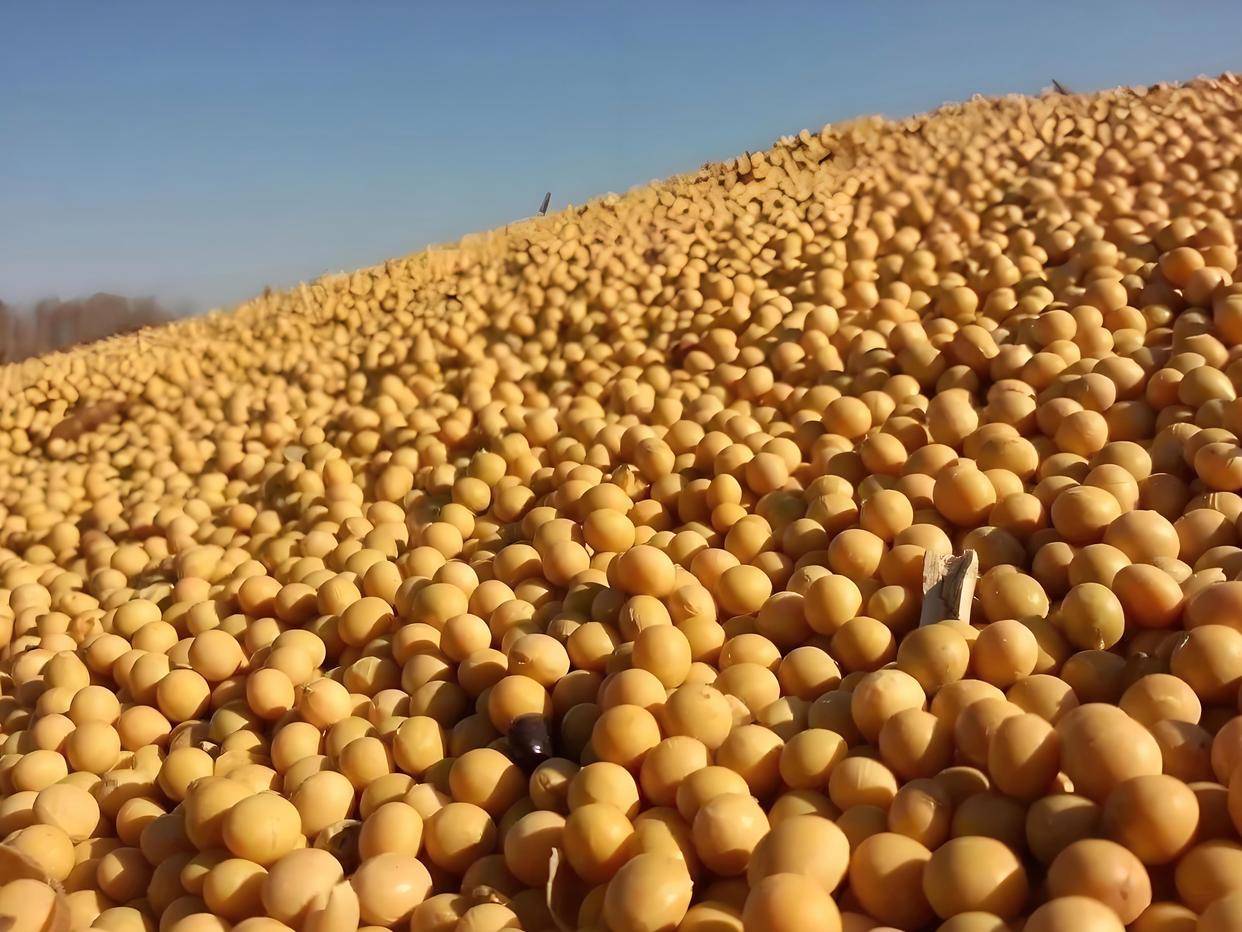
Group 1 - In September and October of this year, China has secured approximately 12 million tons of soybean supply from South America, accounting for about half of its demand during the same period, which has forced the U.S. to lose its traditional autumn export window [2] - Data indicates that China's total soybean imports for 2024 are projected to be around 105 million tons, with approximately 22.13 million tons sourced from the U.S., while over 70% will come from Brazil, and Argentina's supply is also rapidly increasing, providing China with diversified procurement options [4] - This strategy is not a "one-size-fits-all" approach but rather a rational choice for supply-demand restructuring and supply security, as diversifying imports helps mitigate risks from trade frictions and promotes the synergy between South American supply chains and the Chinese market [5]
7月15日茅台价格出现断崖式下跌!市场信心濒临崩溃!
Sou Hu Cai Jing· 2025-07-16 02:00
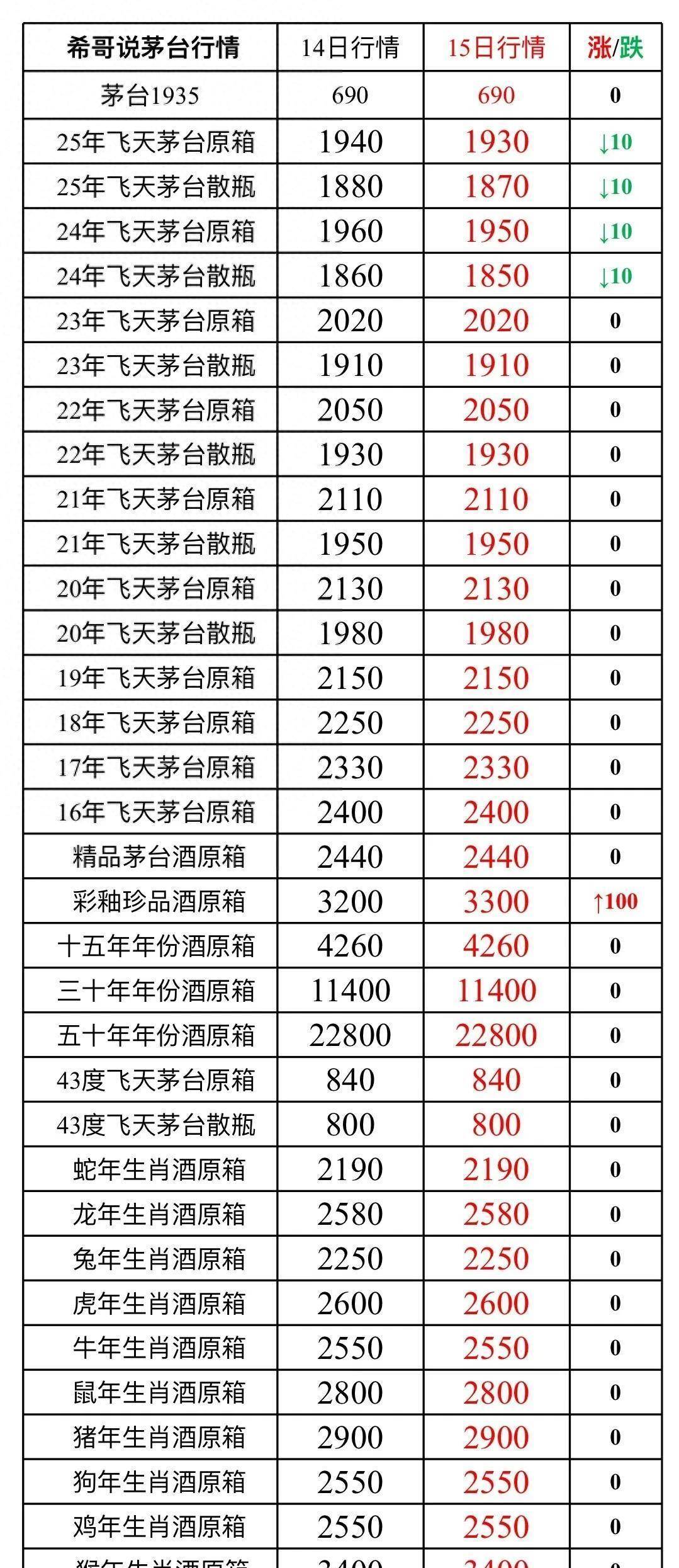
Core Viewpoint - The price of Moutai, once considered a "myth of only rising," has experienced a significant decline, leading to substantial losses for investors and a panic sell-off in the market [1][3]. Price Movement - On July 15, 2023, the price of 2025 Flying Moutai dropped from 1940 yuan to 1930 yuan, while the price of scattered bottles fell from 1880 yuan to 1870 yuan. The 2024 Flying Moutai also saw a decline, with original box prices dropping from 1960 yuan to 1950 yuan and scattered bottle prices falling below 1850 yuan [1][8]. - The price of Moutai 1935 plummeted to 590 yuan per bottle on e-commerce platforms, only 30% of the official guide price. Compared to the peak price of over 4000 yuan in 2021, Moutai prices have shrunk by more than 30% [1][3]. Market Dynamics - The decline in Moutai prices is attributed to three main factors: the implementation of the strictest "ban on alcohol," a downturn in the real estate sector affecting business banquets, and an oversupply in the market with social inventory reaching 120 million bottles [3][4]. - The demand for Moutai in business settings has significantly decreased, leading to a loss of a crucial consumer base [4]. Inventory Pressure - The total inventory, including Moutai's own stock, amounts to 560 million bottles, indicating an average of nearly 2 bottles per Chinese household. Approximately 60% of unopened Moutai is being liquidated by speculators, exacerbating the market's downward pressure [4][5]. Channel Transformation - The rise of e-commerce platforms like Pinduoduo has driven down the price of Flying Moutai to the range of 1700-1800 yuan, below many distributors' costs. Moutai is also increasing its direct sales through the iMoutai app, raising the direct sales ratio to 45% [5][6]. Industry Impact - Moutai's price collapse has affected the entire liquor industry, with the price range of 1000 yuan being breached. Other liquor companies, such as Wuliangye, are also under pressure to maintain their price points [6][7]. Consumer Trends - The consumption of liquor has been declining, with the industry experiencing an 8-year consecutive drop in production. The younger generation shows a decreasing interest in liquor, with only 9% of Gen Z consuming it, and 73% reducing their alcohol intake for health reasons [7][10]. - Moutai's attempts to attract younger consumers through new products have not yielded positive results, indicating a struggle to connect with this demographic [10].