
促进居民消费

Search documents
安居又安心!武城农商银行圆新市民婚房梦
Qi Lu Wan Bao· 2026-02-25 08:03
Group 1 - The core viewpoint of the articles emphasizes the role of Wucheng Rural Commercial Bank in facilitating housing loans for new citizens and first-time homebuyers, thereby stimulating consumer spending in related sectors such as home decoration and appliances [1][2] - Wucheng Rural Commercial Bank has simplified the housing loan application process and improved service efficiency, resulting in a total issuance of personal housing loans amounting to 1.425 billion yuan [1] - The bank has also issued consumer loans totaling 353 million yuan, addressing the financial needs of new citizens in various areas including daily living, home renovation, and electronic products [2] Group 2 - The bank's initiatives are aimed at enhancing the financial services available to new citizens, focusing on key areas such as entrepreneurship, employment, housing, education, healthcare, and retirement [2] - A specific case is highlighted where a young couple successfully obtained a housing loan approval within two days, showcasing the bank's efficient service and its positive impact on their financial planning for post-marriage life [1]
财政部:今年继续实施更加积极的财政政策
Sou Hu Cai Jing· 2026-01-21 12:59
Core Viewpoint - The Chinese government is implementing a series of fiscal and financial policies aimed at stimulating domestic demand, with a focus on increasing private investment and consumer spending [1][3]. Group 1: Fiscal Policy Overview - The Ministry of Finance plans to maintain a proactive fiscal policy in 2026, ensuring that total expenditure and fiscal deficit remain at necessary levels, with a commitment to increasing overall spending and strengthening support in key areas [1]. - The fiscal measures include a comprehensive package of policies designed to lower financing costs and thresholds for enterprises, thereby enhancing economic activity [2][3]. Group 2: Key Policy Components - The policy framework consists of "one goal" (expanding domestic demand), "two focuses" (stimulating private investment and promoting consumer spending), "three principles" (convenience and efficiency, precision and effectiveness, and regulation and efficiency), and "six policies" [3]. - Four of the six policies are aimed at supporting private investment, while the remaining two focus on promoting consumer spending [3]. Group 3: Consumer Financing Support - A new personal consumption loan interest subsidy policy has been introduced, allowing residents to receive a 1% interest subsidy on loans used for consumption, including credit card installment payments [3][4]. - The policy has been optimized to include over 500 financial institutions, enhancing accessibility for various consumer groups [4]. Group 4: Support for Small and Micro Enterprises - The introduction of a small and micro enterprise loan interest subsidy aims to reduce financing costs by providing a 1.5% interest subsidy on loans, thereby expanding the range of supported sectors and loan purposes [5][6]. - A new special guarantee plan for private investment has been established to help enterprises secure funding, increasing credit guarantee limits and risk-sharing ratios to encourage banks to lend more [6].
六项政策齐落地!财政金融协同扩内需有何看点?
Xin Hua Cai Jing· 2026-01-20 17:18
Core Viewpoint - The Chinese government is implementing a comprehensive fiscal and financial policy package to stimulate domestic demand, with a focus on supporting small and micro enterprises, promoting consumer spending, and enhancing private investment [1][2]. Group 1: Policy Overview - The fiscal and financial policy package includes six key measures aimed at expanding domestic demand, with four focused on stimulating private investment and two on promoting consumer spending [2]. - The policies are designed to simplify processes, allowing for direct benefits without application requirements, thereby enhancing efficiency and effectiveness [2]. Group 2: Specific Policies - **Small and Micro Enterprises Loan Interest Subsidy Policy**: This policy provides interest subsidies of 1.5 percentage points on loans for key industries such as new energy vehicles and medical equipment, with a maximum loan amount of 50 million yuan and a subsidy period of up to 2 years [3]. - **Private Investment Special Guarantee Plan**: This plan offers loan guarantees for small and micro private enterprises, allowing for loans up to 20 million yuan for activities like facility upgrades and expansions [3]. - **Support for Private Enterprise Bond Risk Sharing Mechanism**: Central government funds will be allocated to share risks associated with bond issuance by private enterprises, helping to lower financing thresholds [3]. Group 3: Additional Policies - **Equipment Upgrade Loan Interest Subsidy Policy**: This policy expands the scope of interest subsidies to include loans for equipment upgrades and technology innovation, with a subsidy of 1.5 percentage points for up to 2 years [4]. - **Service Industry Operating Entity Loan Interest Subsidy Policy**: The loan limit for this policy has been increased from 1 million yuan to 10 million yuan, with a 1 percentage point subsidy for one year, covering 11 consumer sectors [4]. - **Personal Consumption Loan Interest Subsidy Policy**: Residents can receive a 1 percentage point subsidy on personal consumption loans, including credit card installment payments, with over 500 financial institutions eligible to provide these loans [4]. Group 4: Financial Arrangements - Sufficient budgetary provisions have been made for the fiscal expenditures required by these policies in 2026, encouraging local entities to actively engage in business [5].

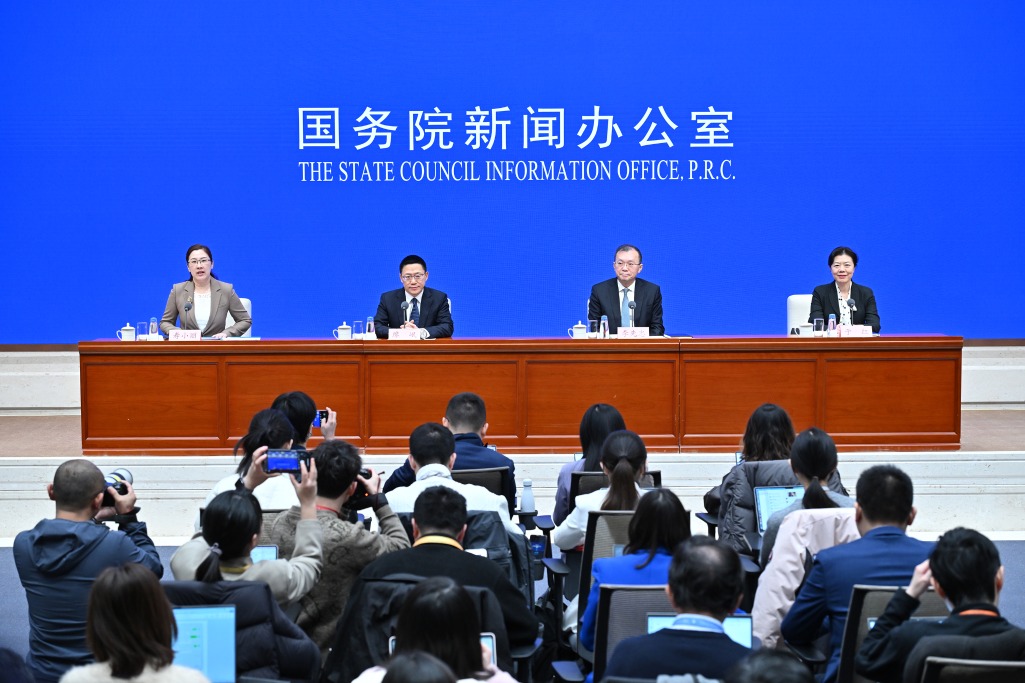
财政金融协同促内需一揽子政策陆续发布
Zheng Quan Ri Bao· 2026-01-20 16:25
Group 1 - The core objective of the newly introduced policies is to "expand domestic demand" [2] - The two main focuses are to "stimulate private investment" and to "promote consumer spending" [2] - The three principles guiding the execution of these policies include: ensuring convenience and efficiency, maintaining precision and effectiveness, and balancing efficiency with regulation [2] Group 2 - Six specific policies have been outlined, with four aimed at supporting private investment and two focused on promoting consumption [2] - The policies emphasize simplifying processes, allowing for direct benefits without application, and ensuring that financial subsidies are accessible [2] - The initiative aims to lower financing costs for businesses and enhance consumer purchasing power [2]
协同促内需!财政金融一揽子政策落地
Sou Hu Cai Jing· 2026-01-20 15:19
Core Viewpoint - The implementation of a series of financial policies aims to stimulate the real economy by enhancing microeconomic vitality and increasing domestic demand, particularly through support for small and micro enterprises and consumer loans [2][3]. Group 1: Policies to Support Private Investment - The new policy package focuses on "stimulating private investment" and "promoting consumer spending," with increased policy intensity to guide social resources towards key areas [3]. - A special guarantee plan established through the National Financing Guarantee Fund will have a scale of 500 billion yuan, implemented over two years, to support small and micro private enterprises [4]. - The policy includes fiscal interest subsidies for fixed asset loans to eligible small and micro enterprises starting from January 1, 2026, and expands the scope of support for equipment upgrade loan subsidies [4][10]. Group 2: Encouragement of Consumer Spending - The upgraded consumer loan policies will provide greater subsidies, covering a wider range of consumption areas, with longer implementation periods and broader institutional coverage [11]. - The subsidy cap for individual consumer loans has increased from 500 yuan to 3,000 yuan per transaction, enhancing purchasing power for large consumer goods [11]. - For service industry enterprises, the loan subsidy limit has been raised from 1 million yuan to 10 million yuan, with corresponding increases in subsidy amounts [11]. - The policies also include credit card installment payments and target key areas such as digital transformation, green services, and retail, allowing for a broader application of subsidies [11][12].
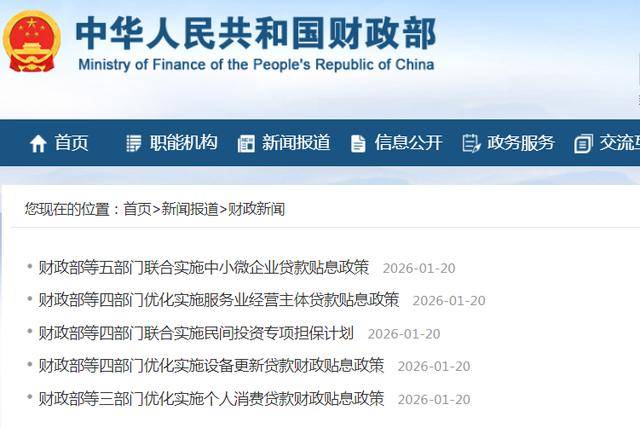
新华鲜报|协同促内需!财政金融一揽子政策落地
Sou Hu Cai Jing· 2026-01-20 14:15
Group 1 - The core viewpoint of the article emphasizes the implementation of a series of financial policies aimed at stimulating domestic demand and enhancing the vitality of micro and small enterprises, thereby boosting the economy's internal momentum [2][3] - The policies include interest subsidies for loans to small and micro enterprises, a special guarantee plan for private investment, and optimized financial support for service industry loans and personal consumption loans [2][3] - The central economic work conference in 2025 highlighted the importance of domestic demand and the establishment of a strong domestic market, with a comprehensive policy package announced to promote this goal [2] Group 2 - A special guarantee plan with a scale of 500 billion yuan will be established through the National Financing Guarantee Fund, implemented over two years, to support fixed asset loans for eligible small and micro private enterprises starting from January 1, 2026 [3] - The interest subsidy for small and micro enterprise loans is projected to significantly reduce interest expenses for businesses, exemplified by a manufacturer potentially saving 1.5 million yuan in interest over two years [8] - The upgraded personal consumption loan policies will increase the subsidy limits and broaden the scope of eligible consumers and businesses, enhancing purchasing power and supporting large-scale consumption [9][10]
财政部:居民使用个人消费贷款,只要用于消费的,都可享受1个百分点的贴息
Sou Hu Cai Jing· 2026-01-20 14:14
Core Viewpoint - The Chinese government is implementing a series of fiscal policies aimed at expanding domestic demand, stimulating private investment, and promoting consumer spending to drive high-quality economic development [1][3]. Group 1: Policy Framework - The policies are summarized as "one goal," "two focuses," "three principles," and "six policies" [1]. - "One goal" refers to the expansion of domestic demand, aligning with the central economic work conference's directives [1]. - "Two focuses" emphasize increasing efforts to stimulate private investment and promote consumer spending, both crucial components of domestic demand [1]. Group 2: Principles of Policy Design - The first principle is to ensure "convenience and efficiency," simplifying processes so that benefits can be accessed without application [3]. - The second principle is "precision and effectiveness," targeting key sectors and groups to lower financing costs and enhance consumer capacity [3]. - The third principle is "standardization and efficiency," balancing the effective use of policies while preventing fraudulent claims for fiscal funds [3]. Group 3: Six Key Policies - The first policy is a loan interest subsidy for small and micro enterprises, providing a 1.5% subsidy on loans for key industries such as new energy vehicles and medical equipment, with a maximum loan amount of 50 million yuan [4]. - The second policy is a special guarantee plan for private investment, offering guarantees for loans up to 20 million yuan for small and micro enterprises [4][5]. - The third policy involves a risk-sharing mechanism for private enterprise bonds, where the central government provides funds to support bond issuance and mitigate investor losses [5]. - The fourth policy is an updated equipment loan interest subsidy, expanding the scope to include loans related to fixed asset updates and technological innovation, with a 1.5% subsidy [5]. - The fifth policy is a loan interest subsidy for service industry entities, increasing the maximum loan amount from 1 million to 10 million yuan, with a 1% subsidy [6]. - The sixth policy is a personal consumption loan interest subsidy, providing a 1% subsidy for loans used for consumption, including credit card installment payments [6].
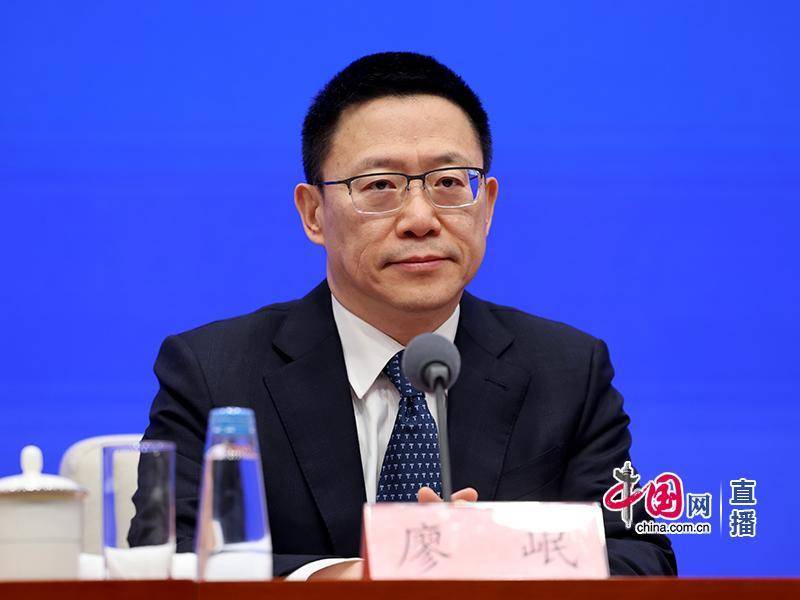
新华鲜报丨协同促内需!财政金融一揽子政策落地
Xin Hua Wang· 2026-01-20 14:08
Core Viewpoint - The article discusses a series of financial policies aimed at stimulating domestic demand and supporting small and micro enterprises, with a focus on enhancing consumer spending and private investment. Group 1: Policy Overview - A combination of policies, including interest subsidies for loans to small and micro enterprises, a special guarantee plan for private investment, and optimized loan subsidies for service industry operators and personal consumption, is designed to channel more financial resources into the real economy and boost microeconomic vitality [2][3]. - The central economic work conference in 2025 emphasized the importance of domestic demand and building a strong domestic market, leading to the implementation of a comprehensive set of fiscal and financial policies to promote domestic demand [2]. Group 2: Support for Private Investment - The special guarantee plan established through the National Financing Guarantee Fund has a scale of 500 billion yuan, to be implemented over two years, aimed at supporting fixed asset loans for small and micro private enterprises [4]. - The policy includes fiscal interest subsidies for eligible fixed asset loans issued by banks to small and micro enterprises starting from January 1, 2026, which will provide tangible financial benefits to businesses [4][9]. Group 3: Consumer Encouragement Measures - The upgraded personal consumption loan subsidy policy allows for a higher subsidy cap, increasing the maximum subsidy per transaction from 500 yuan to 3,000 yuan, thereby better meeting consumer demand for large purchases [10]. - For service industry enterprises, the loan subsidy limit has been significantly raised from 1 million yuan to 10 million yuan, with corresponding increases in subsidy amounts [10]. - The policy also includes credit card installment payments and expands coverage to key areas such as digital transformation, green services, and retail, allowing consumers and businesses to benefit from subsidies in these sectors [10][11].
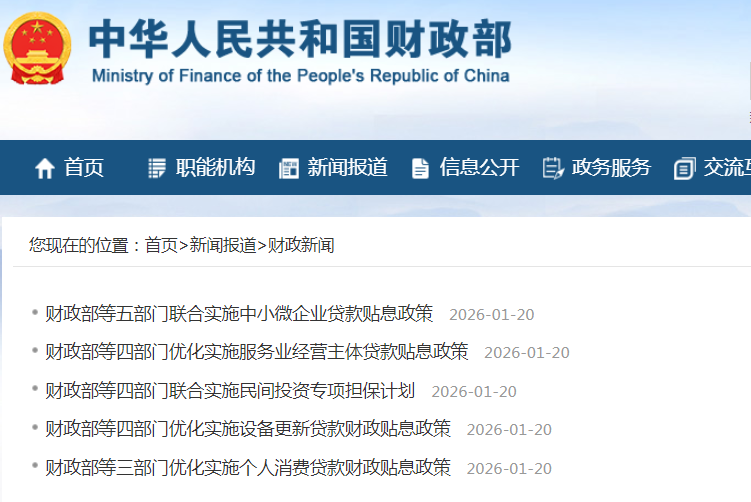
事关贷款贴息、信用卡账单分期贴息等,六项重大利好出炉→
Jin Rong Shi Bao· 2026-01-20 13:16
Core Viewpoint - The Chinese government is implementing a series of fiscal policies aimed at stimulating domestic demand and promoting high-quality economic development, focusing on enhancing private investment and consumer spending [1][5][18]. Group 1: Policy Overview - The policies can be summarized as "one goal," "two focuses," "three principles," and "six policies" [3]. - "One goal" refers to the aim of "expanding domestic demand" [4]. - "Two focuses" emphasize the need to "stimulate private investment" and "promote consumer spending," both of which are crucial components of domestic demand [6]. - "Three principles" guide the execution of these policies: 1. "Convenient and efficient" processes to simplify policy implementation [8]. 2. "Precise and effective" targeting of key sectors and groups to lower financing costs [8]. 3. "Standardized and efficient" practices to balance efficiency with regulatory compliance [8]. Group 2: Six Key Policies - The six policies include four aimed at supporting private investment and two focused on promoting consumption [9]. 1. **Small and Micro Enterprises Loan Interest Subsidy Policy**: Offers a 1.5% interest subsidy on loans for key industries, with a maximum loan amount of 50 million yuan and a subsidy period of up to 2 years [10]. 2. **Private Investment Special Guarantee Plan**: Provides guarantees for loans to small and micro private enterprises, with a maximum loan guarantee of 20 million yuan [11]. 3. **Risk Sharing Mechanism for Private Enterprise Bonds**: Allocates risk-sharing funds to support bond issuance by private enterprises, helping to lower financing thresholds [12]. 4. **Equipment Upgrade Loan Interest Subsidy Policy**: Expands the scope of existing policies to include loans for equipment upgrades and technology innovation, with similar interest subsidy terms [13]. 5. **Service Industry Loan Interest Subsidy Policy**: Increases the maximum loan amount eligible for interest subsidies from 1 million to 10 million yuan, covering 11 categories of consumer services [14]. 6. **Personal Consumption Loan Interest Subsidy Policy**: Offers a 1% interest subsidy on personal loans used for consumption, including credit card installment payments, with over 500 financial institutions involved [14]. Group 3: Expected Outcomes - The policies are expected to significantly lower financing costs for enterprises, addressing the issue of high financing expenses for private enterprises [18]. - For example, a manufacturer seeking a 50 million yuan loan for an automated production line could save 1.5 million yuan in interest over two years due to the subsidy [18]. - The policies also aim to lower financing barriers, making it easier for private enterprises to access funds through enhanced guarantees and risk-sharing mechanisms [19].
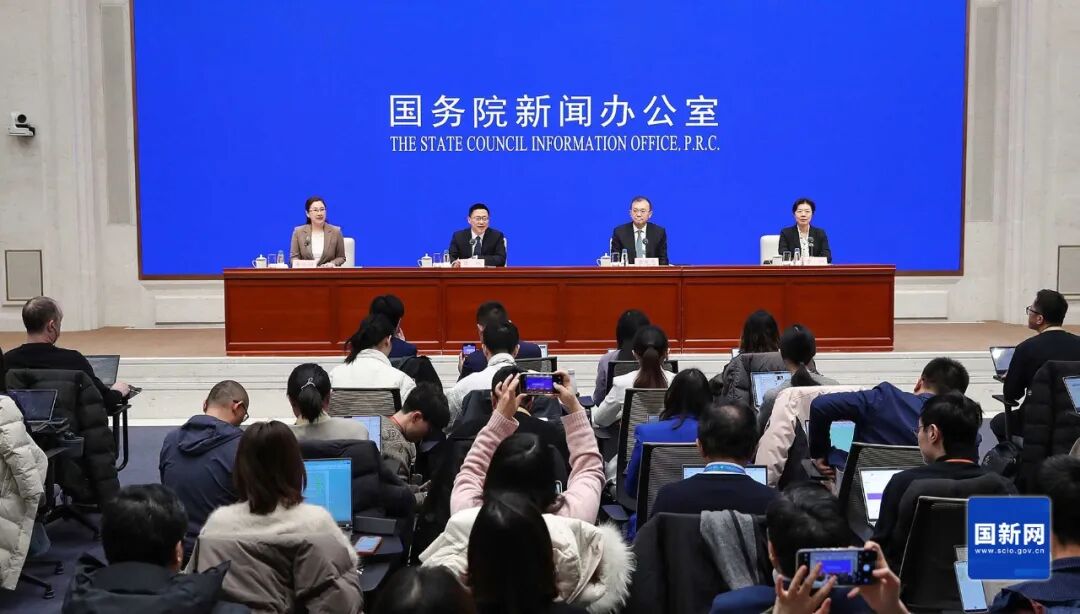
激发民间投资、促进消费,财政部公布一揽子扩内需政策
Sou Hu Cai Jing· 2026-01-20 12:54
Core Viewpoint - The Ministry of Finance, in collaboration with relevant departments, has launched a comprehensive policy package aimed at expanding domestic demand and stimulating private investment and consumer spending [1][2]. Group 1: Policy Overview - The policy package includes six key initiatives: 1. Loan interest subsidies for small and micro enterprises 2. Special guarantee plan for private investment 3. Risk-sharing mechanism for private enterprise bonds 4. Loan interest subsidies for equipment upgrades 5. Loan interest subsidies for service industry operators 6. Loan interest subsidies for personal consumption [1][2][3][4]. Group 2: Specific Policies - The first initiative provides a 1.5% interest subsidy on loans for small and micro enterprises, with a maximum loan amount of 50 million yuan and a subsidy period of up to 2 years, targeting 14 key industries including new energy vehicles and medical equipment [2][3]. - The second initiative offers a new guarantee plan for small and micro enterprises, allowing for a loan guarantee of up to 20 million yuan for eligible businesses [3]. - The third initiative introduces a risk-sharing mechanism for bonds issued by private enterprises, providing credit enhancement support to lower financing thresholds [3]. - The fourth initiative expands the scope of interest subsidies for equipment upgrades, including fixed asset loans related to equipment updates and technology innovation [4]. - The fifth initiative increases the loan limit for service industry operators from 1 million yuan to 10 million yuan, with a 1% interest subsidy for one year [4]. - The sixth initiative allows personal consumption loans to receive a 1% interest subsidy, including support for credit card installment payments, with over 500 financial institutions participating [4]. Group 3: Implementation and Financial Planning - The financial expenditures required for these policies have been adequately planned in the 2026 budget, encouraging local and financial institutions to actively engage in business [5].