
中小微企业贷款贴息政策

Search documents
【问答】中国建设银行关于中小微企业贷款贴息政策客户关注问题解答
中国建设银行· 2026-01-29 07:59
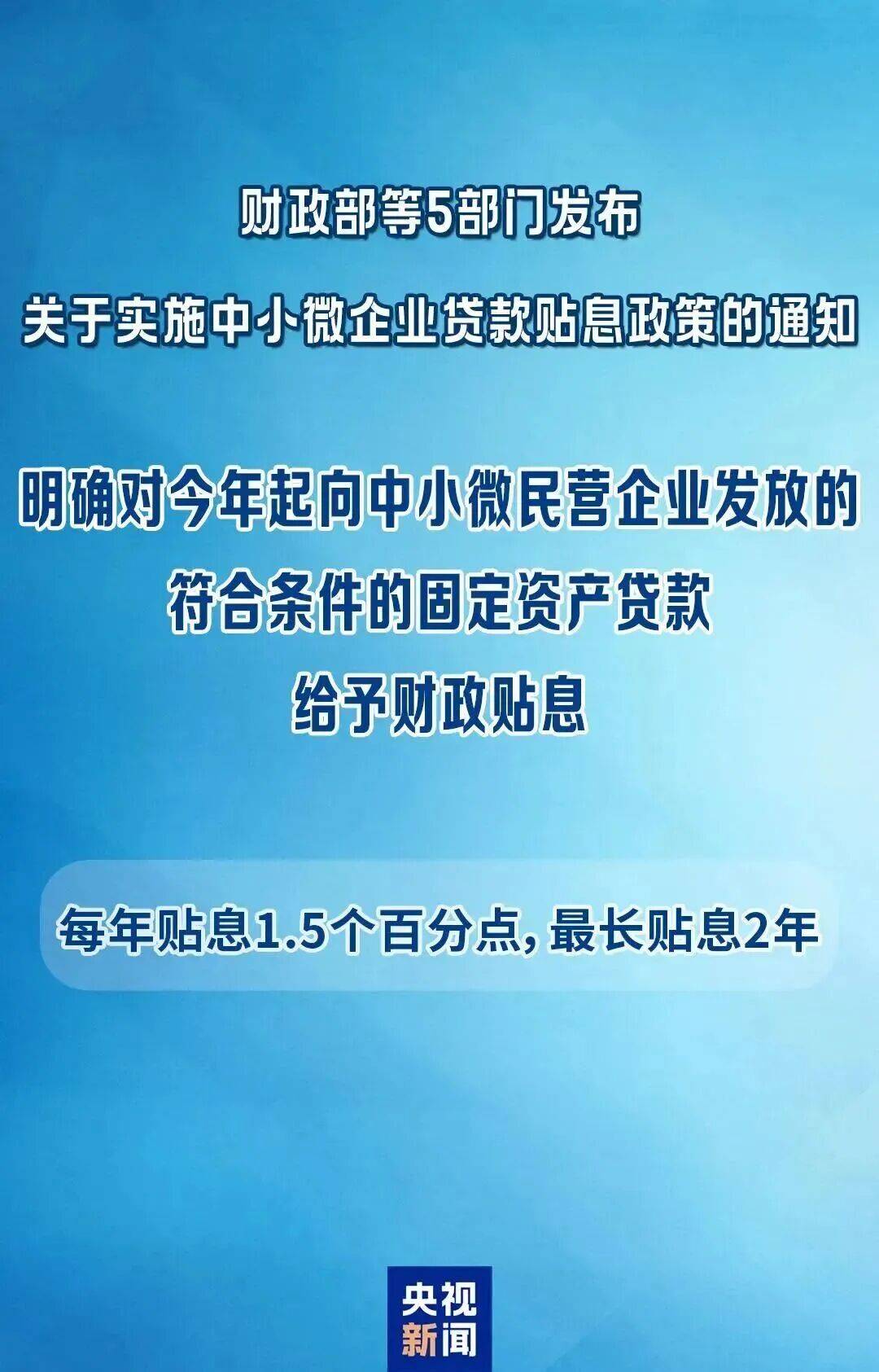
Core Viewpoint - The article discusses the implementation of a loan interest subsidy policy for small and micro private enterprises, aimed at reducing financing costs and stimulating private investment in key industries as per the directives of the central government [1]. Group 1: Policy Scope - The loan interest subsidy policy applies to fixed asset loans and new policy financial tool funds for small and micro private enterprises starting from January 1, 2026, targeting key industry chains and their upstream and downstream sectors [1]. Group 2: Supported Industries - The policy supports various key industries including but not limited to new energy vehicles, industrial mother machines, pharmaceuticals, medical equipment, basic software, industrial software, civil aircraft, servers, mobile communication devices, new displays, instruments, industrial robots, rail transit equipment, marine engineering equipment, agricultural machinery, and emerging fields like artificial intelligence [2]. Group 3: Subsidy Standards - The central government will provide a subsidy of 1.5 percentage points on the principal of eligible loans for a maximum term of 2 years, with a cap of 50 million yuan per borrower. For example, a manufacturer of agricultural machinery could save 1.5 million yuan in interest expenses on a 50 million yuan loan over 2 years [3]. Group 4: Policy Duration - The policy is initially set to last for one year, with the possibility of extension based on further evaluations by relevant authorities [4]. Group 5: Loan and Subsidy Process - Eligible enterprises can apply for loans directly, providing necessary documentation. The bank will approve loans based on market principles and will handle the subsidy payments without charging any service fees [6][7][9]. Group 6: Compliance and Penalties - The bank will monitor the use of loan and subsidy funds, and any serious violations by the enterprises may result in the recovery of subsidy funds [8].


烧碱日报:跟踪生产企业减产情况-20260127
Guan Tong Qi Huo· 2026-01-27 10:00
Group 1: Report Industry Investment Rating - No relevant information Group 2: Core View of the Report - The caustic soda market is currently in a pattern of high inventory and high supply. In the short - term, due to low - cost warehouse receipts and pre - holiday inventory reduction pressure, the price is weak, but there may be a rebound from over - selling, especially after April next year. Attention should be paid to the start - up situation of electrolytic aluminum and alumina enterprises and the production reduction situation of caustic soda production enterprises [1][3][4] Group 3: Summary by Related Catalogs Fundamental Analysis - Over the weekend, the price of the Shandong liquid caustic soda market continued to decline, with some orders negotiated on a one - by - one basis and actual orders down by 10 - 20. The procurement volume and price of downstream customers outside the province were low, providing little support to Shandong. The procurement price of alumina in the province dropped by 15 to 600 over the weekend [1] - The caustic soda operating rate was 87.70% (+1.00%), and the weekly output was 86.30 tons (+1.00%). For demand, the operating rate of main downstream alumina was 85.18% (-0.65%), the weekly output was 183.90 tons (-1.40), and the port inventory was 16.80 (+3.20). The operating rate of printing and dyeing in East China was 56.54% (-2.22%); that of viscose staple fiber was 88.43% (+0.00%); that of white cardboard was 74.37% (-6.30%); that of broad - leaf pulp was 89.70% (-1.30%) [1] - According to data released by the National Bureau of Statistics on January 22, China's caustic soda (converted to 100%) output in December was 4.217 million tons, a year - on - year increase of 5.2%. The cumulative output from January to December was 46.535 million tons, a year - on - year increase of 5% [1] Macroeconomic Analysis - The National Development and Reform Commission will study and formulate an implementation plan for the domestic demand expansion strategy from 2026 to 2030 [2] - Multiple departments such as the Ministry of Finance will implement a loan interest - subsidy policy for small and medium - sized enterprises, set up a 500 - billion - yuan special guarantee plan quota for private investment to be implemented over two years, and extend the implementation period of the individual consumer loan fiscal interest - subsidy policy to the end of 2026. In 2026, the fiscal department will strongly support the stability of employment, enterprises, the market, and expectations [2] Futures and Spot Market Analysis - Caustic soda is in a high - inventory and high - supply pattern. Currently, the warehouse receipt cost is lower than the spot price. The short - term price decline is due to low - cost warehouse receipts and pre - holiday inventory reduction pressure. Winter is the off - season for chlor - alkali enterprise maintenance, while spring (March - May) and autumn (September - October) are the traditional concentrated maintenance seasons. The futures price has continuously hit new lows. In the short - term weak supply - demand situation, the price is weak, but beware of over - selling rebounds, especially after April next year [3]
烧碱日报:供需弱势出新低,跟踪生产企业减产情况-20260126
Guan Tong Qi Huo· 2026-01-26 11:03
Report Summary 1) Industry Investment Rating - Not provided in the report. 2) Core Viewpoints - The caustic soda market is currently in a pattern of high inventory and high supply, with short - term prices remaining weak due to low - cost warehouse receipts and pre - holiday destocking pressure. However, beware of oversold rebounds, especially after April next year, and avoid excessive bearishness. Track the start - up of electrolytic aluminum and alumina enterprises and the production cuts of caustic soda producers [3][4]. 3) Summary by Directory Fundamental Analysis - Over the weekend, the price of liquid caustic soda in Shandong continued to decline, with some orders negotiated on a case - by - case basis and actual orders down 10 - 20. The procurement volume and price from outside the province are low, providing little support to Shandong. The procurement price of alumina in the province dropped by 15 to 600 over the weekend [1]. - The caustic soda operating rate is 87.70% (+1.00%), and the weekly output is 86.30 tons (+1.00). The operating rate of the main downstream alumina is 85.18% (-0.65%), with a weekly output of 183.90 tons (-1.40) and port inventory of 16.80 (+3.20). The operating rate of printing and dyeing in East China is 56.54% (-2.22%), viscose staple fiber is 88.43% (+0.00%), white cardboard is 74.37% (-6.30%), and broad - leaf pulp is 89.70% (-1.30) [1]. - China's caustic soda (converted to 100%) output in December 2025 was 4.217 million tons, a year - on - year increase of 5.2%. The cumulative output from January to December was 46.535 million tons, a year - on - year increase of 5% [1]. Macroeconomic Analysis - The National Development and Reform Commission will research, formulate and introduce an implementation plan for the strategy of expanding domestic demand from 2026 to 2030. - Multiple departments including the Ministry of Finance will implement a loan interest subsidy policy for small, medium and micro - enterprises, set up a 500 - billion - yuan special guarantee plan for private investment to be implemented over two years, and extend the implementation period of the fiscal interest subsidy policy for personal consumer loans to the end of 2026. In 2026, the financial department will strongly support employment, enterprises, the market and expectations [2]. Futures and Spot Market Analysis - Caustic soda is in a high - inventory and high - supply pattern. Currently, the warehouse receipt cost is lower than the spot price. The short - term decline is due to low - cost warehouse receipts and pre - holiday destocking pressure. The traditional maintenance seasons for chlor - alkali enterprises are from March to May in spring and from September to October in autumn [3].
【冠通期货研究报告】甲醇日报:静待库存拐点-20260123
Guan Tong Qi Huo· 2026-01-23 11:18
Report Industry Investment Rating - Not provided Core Viewpoints - The futures price of methanol continues to rebound and should be treated as strong, but beware of corrections. There is a high possibility of an inventory inflection point in the first quarter. It is recommended to continue to focus on the idea of buying after a decline, but the upside space will also be restricted by downstream demand. Currently, methanol is in a low - valuation state, prone to low - level rebound行情. Pay attention to the emotional changes due to recent macro news [3] Summary by Relevant Catalogs Fundamental Analysis - As of January 21, the inventory of Chinese methanol sample production enterprises was 43.83 tons, a decrease of 1.25 tons from the previous period, a month - on - month decrease of 2.78%. The order backlog of sample enterprises was 23.83 tons, a slight increase of 0.05 tons from the previous period, a month - on - month increase of 0.21%. The total port inventory was 145.75 tons, an increase of 2.22 tons from the previous data. The inventory in East China decreased by 1.36 tons, while that in South China increased by 3.58 tons. There was a slight accumulation of port inventory, with 19.80 tons of visible foreign vessel unloading during the period, and two vessels being unloaded were not included. As of January 15, the capacity utilization rate of domestic methanol - to - olefins plants was 86.93%, a month - on - month decrease of 2.38%. The Zhejiang Xingxing MTO plant stopped production, and some enterprises were still operating at a reduced load, causing the industry's operating rate to continue to decline passively [1] Macroeconomic Analysis - The National Development and Reform Commission will research, formulate and introduce an implementation plan for the strategy of expanding domestic demand from 2026 - 2030. Multiple departments including the Ministry of Finance will implement a loan interest subsidy policy for small, medium and micro enterprises, set up a special guarantee plan quota of 500 billion yuan for private investment to be implemented over two years, and extend the implementation period of the fiscal interest subsidy policy for personal consumer loans to the end of 2026. In 2026, the fiscal department will strongly support the stability of employment, enterprises, the market and expectations [2] Futures and Spot Market Analysis - The methanol futures continued to rebound, breaking through the 2300 mark during the day. Further, pay attention to the pressure of the 60 - day moving average on the weekly K - line level. Treat it as strong, but beware of corrections. There is a high possibility of an inventory inflection point in the first quarter, and continue to focus on the idea of buying after a decline. However, the upside space will be restricted by downstream demand. Currently, methanol is in a low - valuation state and is prone to low - level rebound行情. Pay attention to the emotional changes due to recent macro news [3]
芳烃日报:纯苯边际改善、突发消息下苯乙烯供需趋紧-20260123
Guan Tong Qi Huo· 2026-01-23 09:55
Report Industry Investment Rating - Overall maintain a cautious bullish view, and it is appropriate to wait for buying opportunities after a pullback [3] Core View - Pure benzene and styrene continue to strengthen. The supply and demand of pure benzene have improved marginally, and the port inventory has started to decline from a high level. Styrene is affected by sudden news, and the price has further strengthened under the expectation of supply reduction. Due to the relatively high increase in the prices of styrene and pure benzene in this round, and the subsequent resumption of production of some devices, the inventory of pure benzene is still at a high level. Be wary of the risk of a pullback. Pay attention to market sentiment changes due to recent macro news [3] Summary by Relevant Catalogs Fundamental Analysis - The 300,000-ton/year styrene plant of Tangshan Xuyang has malfunctioned and stopped production. The inventory is mainly for contract delivery, and there is no external quotation today [1] - From January 10th to 16th, the operating rate of petroleum benzene decreased by 0.12% month-on-month to 74.26%, and the operating rate of hydrogenated benzene decreased by 4.07% month-on-month to 57.59% [1] - According to calculations based on Steel Union data, from January 10th to 16th, the weighted operating rate of pure benzene downstream increased by 2.14% month-on-month to 74.50% [1] - As of January 19th, the inventory of pure benzene at East China ports was 297,000 tons, a month-on-month decrease of 8.33% [1] - From January 9th to 15th, the profit of petroleum benzene was 369 yuan/ton, a month-on-month decrease of 26 yuan/ton [1] Macroeconomic Analysis - The National Development and Reform Commission will research, formulate and introduce an implementation plan for the strategy of expanding domestic demand from 2026 to 2030 [2] - Multiple departments such as the Ministry of Finance will implement a loan interest subsidy policy for small, medium and micro enterprises, set up a special guarantee plan quota of 500 billion yuan for private investment to be implemented over two years, extend the implementation period of the fiscal interest subsidy policy for personal consumption loans to the end of 2026, and provide "hardcore" support for stabilizing employment, enterprises, the market and expectations in 2026 [2] Futures and Spot Market Analysis - Pure benzene and styrene continue to strengthen. The supply and demand of pure benzene have improved marginally, and the port inventory has started to decline from a high level. Styrene is affected by sudden news, and the price has further strengthened under the expectation of supply reduction. Due to the relatively high increase in the prices of styrene and pure benzene in this round, and the subsequent resumption of production of some devices, the inventory of pure benzene is still at a high level. Be wary of the risk of a pullback. Pay attention to market sentiment changes due to recent macro news [3]
【冠通期货研究报告】甲醇日报:静待库存拐点-20260122
Guan Tong Qi Huo· 2026-01-22 11:03
Group 1: Report Industry Investment Rating - No relevant content provided Group 2: Core Viewpoints of the Report - In the first quarter, there is a high possibility of an inventory inflection point. It is recommended to continue to focus on the idea of buying after a decline, but the upside space will also be restricted by downstream demand. Currently, methanol is in a low - valuation state, and it is prone to a low - level rebound in the overall rhythm. Pay attention to the sentiment change due to recent macro news [3] Group 3: Summary by Related Catalogs Fundamental Analysis - As of January 21, the inventory of Chinese methanol sample production enterprises was 43.83 million tons, a decrease of 1.25 million tons from the previous period, a month - on - month decrease of 2.78%. The order backlog of sample enterprises was 23.83 million tons, a slight increase of 0.05 million tons from the previous period, a month - on - month increase of 0.21%. The total inventory of Chinese methanol ports was 145.75 million tons, an increase of 2.22 million tons from the previous data. The inventory in East China decreased by 1.36 million tons, while that in South China increased by 3.58 million tons. The port inventory slightly accumulated this week, with 19.80 million tons of visible foreign vessels unloaded during the period, and two vessels still being unloaded not yet counted. As of January 15, the capacity utilization rate of domestic methanol - to - olefin plants was 86.93%, a month - on - month decrease of 2.38%. The MTO plant of Zhejiang Xingxing entered a shutdown state, and some enterprises were still operating at reduced loads, causing the industry's operating rate to continue to decline passively [1] Macroeconomic Analysis - The National Development and Reform Commission will study, formulate and introduce an implementation plan for the strategy of expanding domestic demand from 2026 to 2030. Multiple departments such as the Ministry of Finance will implement a loan interest subsidy policy for small, medium and micro enterprises, set up a special guarantee plan quota of 500 billion yuan for private investment to be implemented over two years, and extend the implementation period of the fiscal interest subsidy policy for personal consumption loans to the end of 2026. In 2026, the fiscal department will strongly support the stability of employment, enterprises, the market and expectations [2] Futures and Spot Market Analysis - The futures rebounded intraday, and the 60 - day moving average at the daily - line level provided effective support. There is a high possibility of an inventory inflection point in the first quarter. Continue to focus on the idea of buying after a decline, but the upside space will be restricted by downstream demand. Currently, methanol is in a low - valuation state and is prone to a low - level rebound. Pay attention to the sentiment change due to recent macro news [3]
芳烃日报:纯苯边际改善、突发消息下苯乙烯供需趋紧-20260122
Guan Tong Qi Huo· 2026-01-22 09:58
Report Industry Investment Rating - The report maintains a cautious bullish view on the benzene and styrene market, suggesting waiting for buying opportunities after a pullback [3] Core Viewpoints of the Report - The supply - demand situation of benzene has marginally improved, and port inventories have started to decline from high levels. Styrene prices have strengthened further due to supply contraction expectations caused by unexpected news. However, due to the high price increases of benzene and styrene and the subsequent resumption of some plants, along with the still - high benzene inventories, there is a risk of a pullback [3] Summary by Relevant Catalogs Fundamental Analysis - The 300,000 - ton/year styrene plant of Tangshan Xuyang has malfunctioned and stopped production. The inventory is mainly for contract delivery, and there is no external quotation today [1] - From January 10th to 16th, the operating rate of petroleum benzene decreased by 0.12% month - on - month to 74.26%, and the operating rate of hydrogenated benzene decreased by 4.07% month - on - month to 57.59% [1] - According to Steel Union data, from January 10th to 16th, the weighted operating rate of benzene downstream industries increased by 2.14% month - on - month to 74.50% [1] - As of January 19th, the benzene inventory at East China ports was 297,000 tons, a month - on - month decrease of 8.33% [1] - From January 9th to 15th, the profit of petroleum benzene was 369 yuan/ton, a month - on - month decrease of 26 yuan/ton [1] Macroeconomic Analysis - The National Development and Reform Commission will research, formulate and introduce an implementation plan for the strategy of expanding domestic demand from 2026 to 2030 [2] - Multiple departments such as the Ministry of Finance will implement a loan interest subsidy policy for small and medium - sized enterprises, set up a 500 - billion - yuan special guarantee plan quota for private investment to be implemented over two years, extend the implementation period of the fiscal interest subsidy policy for personal consumption loans to the end of 2026, and in 2026, the fiscal department will strongly support the stability of employment, enterprises, the market and expectations [2] Futures and Spot Market Analysis - The supply - demand situation of benzene has marginally improved, and port inventories are decreasing from high levels. Styrene prices have strengthened further due to supply contraction expectations. Due to the high price increases and subsequent plant resumptions, along with high benzene inventories, there is a risk of a pullback. It is advisable to wait for buying opportunities after a pullback and pay attention to market sentiment changes due to recent macro news [3]
烧碱日报:供需弱势出新低,跟踪生产企业减产情况-20260122
Guan Tong Qi Huo· 2026-01-22 09:58
Report Investment Rating - No investment rating information provided Core Viewpoints - The caustic soda market is in a pattern of high inventory and high supply. The short - term decline is due to low - price warehouse receipts and pre - holiday de - stocking pressure. In the short - term weak supply - demand pattern, the price is expected to remain weak, but beware of over - decline and rebound, especially not to be overly bearish after April next year. It is necessary to focus on the start - up of electrolytic aluminum and alumina enterprises and the production cuts of caustic soda producers [3] Summary by Relevant Catalogs Fundamental Analysis - From January 9th to 15th, the average capacity utilization rate of Chinese caustic soda sample enterprises with a capacity of 200,000 tons and above was 86.7%, a week - on - week increase of 0.1% [1] - From January 10th to 16th, the alumina start - up rate increased by 0.09% week - on - week to 85.83%. From January 9th to 15th, the viscose staple fiber start - up rate remained stable at 88.43% week - on - week, and the printing and dyeing start - up rate decreased by 1.33% week - on - week to 58.76% [1] - As of January 15th, the factory inventory of fixed liquid caustic soda sample enterprises with a capacity of 200,000 tons and above in China was 512,100 tons (wet tons), a week - on - week increase of 3.41% and a year - on - year increase of 99.64% [1] - Weiqiao's caustic soda purchase price has been continuously lowered, with a reduction of 15 yuan since January 18th, and the ex - factory price is 630 yuan/ton [1] Macroeconomic Analysis - The National Development and Reform Commission will study, formulate and introduce an implementation plan for the strategy of expanding domestic demand from 2026 to 2030 [2] - Multiple departments including the Ministry of Finance will implement an interest - subsidy policy for loans to small and medium - sized enterprises, set up a 500 - billion - yuan special guarantee plan quota for private investment to be implemented over two years, and extend the implementation period of the fiscal interest - subsidy policy for personal consumption loans to the end of 2026. In 2026, the fiscal department will strongly support the stability of employment, enterprises, the market and expectations [2] Futures and Spot Market Analysis - Caustic soda is in a high - inventory and high - supply situation. Currently, the warehouse receipt cost is lower than the spot price. The short - term decline is due to low - price warehouse receipts and pre - holiday de - stocking pressure. Winter is the off - season for chlor - alkali enterprise maintenance, while spring (March - May) and autumn (September - October) are the traditional centralized maintenance seasons. The futures price has continuously hit new lows. In the short - term weak supply - demand pattern, the price is weak, but beware of over - decline and rebound, especially not to be overly bearish after April next year. The main downstream alumina has rebounded recently, and the electrolytic aluminum industry is operating stably. Focus on the start - up of electrolytic aluminum and alumina enterprises and the production cuts of caustic soda producers [3]
事关贷款贴息、中小微企业贷款担保等,一揽子政策公布
Sou Hu Cai Jing· 2026-01-22 09:33
Group 1: Policy Extensions and Enhancements - The implementation period for the service industry loan interest subsidy policy has been extended to December 31, 2026, with loans issued between March 16, 2025, and December 31, 2025, subject to existing regulations [1] - The maximum loan amount eligible for interest subsidies has been increased to 10 million yuan, with a subsidy period not exceeding one year and an annual interest subsidy rate of 1% [2] - The support scope has been expanded to include three new consumption sectors: digital, green, and retail, in addition to the existing eight sectors [3] Group 2: Equipment Update Loan Support - The support scope for the equipment update loan interest subsidy policy has been expanded to include new technology innovation loans issued by banks starting in 2026 [4][5] - Additional support areas include construction and municipal projects, energy equipment, aviation materials, electronic information, safety production, and more, focusing on high-end, intelligent, green, and digital equipment updates [6] Group 3: Personal Consumption Loan Support - The personal consumption loan interest subsidy policy has been extended to the end of 2026, with the new implementation period from September 1, 2025, to December 31, 2026 [7] - Credit card installment payments have been included in the support scope, with an annual interest subsidy rate of 1% [8] - The previous limits on interest subsidies for individual transactions and cumulative amounts have been removed, while maintaining an annual cap of 3,000 yuan per borrower at a single institution [9] Group 4: Support for Small and Micro Enterprises - A new interest subsidy policy for loans to small and micro enterprises has been announced, effective from January 1, 2026, covering fixed asset loans and new policy financial tools for eligible enterprises [10][11] Group 5: Private Investment Guarantee Plan - A special guarantee plan for private investment has been established with a scale of 500 billion yuan, to be implemented over two years [14] - This plan will provide guarantees for loans to small and micro enterprises, supporting various operational activities including facility upgrades and business operations [18]
焦炭日报:短期偏震荡-20260122
Guan Tong Qi Huo· 2026-01-22 09:26
Group 1: Report Industry Investment Rating - The short - term investment rating for the coke industry is a wide - range, sideways movement, with a strategy of buying on dips [1][2] Group 2: Core View of the Report - The supply - demand pattern of coke is directly affected by upstream coking coal costs, downstream steel demand, and macro - policy guidance. Currently, the combined inventory of coking coal and coke continues to rise, in a seasonal inventory - building phase, with overall weak supply - demand. Downstream steel mills' hot metal production is relatively stable, restocking as needed. Real - estate investment growth rate decline continues to expand, and medium - to - long - term demand continues to decline. The macro environment is generally positive, with domestic reserve requirement ratio cuts implemented and fiscal policies continuing to be proactive, and there are still expectations for future policies. Overall, the market is expected to be in a wide - range sideways movement [2] Group 3: Summary by Related Catalogs 1. Coke Inventory - As of January 16, independent coke - making enterprises' inventory dropped 4.95% month - on - month to 81.81 tons. Steel mills' inventory increased to 650.33 tons, and port inventory rose 6.41% to 265.07 tons. The combined coke inventory increased by 16.31 tons to 997.21 tons, reaching a seven - month high, and was more than 2% lower year - on - year [1] 2. Coke Profit - The average profit per ton of coke for 30 independent coking plants nationwide is - 65 yuan/ton. The average profit of Shandong quasi - first - grade coke is - 53 yuan/ton, and also - 7 yuan/ton. The average profit of Inner Mongolia second - grade coke is - 105 yuan/ton, and that of Hebei quasi - first - grade coke is - 12 yuan/ton [1] 3. Downstream Demand - The blast - furnace operating rate of 247 steel mills decreased by 0.47 percentage points to 78.84%, 1.66 percentage points higher than the previous year. The blast - furnace iron - making capacity utilization rate decreased to 85.48%. The daily average hot - metal output decreased by 1.49 tons month - on - month to 228.01 tons, 3.53 tons higher than the previous year [1] 4. Upstream Coking Coal - The coking coal inventory of coal mines dropped 7.66%, while that of independent coke - making enterprises increased 5.71% to 1132.85 tons. Steel mills' coking coal inventory slightly increased to 802.2 tons, and the port's imported coking coal inventory continued to rise. The combined coking coal inventory increased by nearly 2% month - on - month to 2769.85 tons, lower than the same period in previous years [2] 5. News - In 2026, the fiscal deficit, total debt, and total expenditure will be maintained at necessary levels, ensuring that the overall expenditure level "only increases" and the guarantee for key areas "only strengthens". Five departments including the Ministry of Finance issued a notice to implement a loan interest - subsidy policy for small, medium, and micro enterprises. The Minister of Housing and Urban - Rural Development stated that efforts will be made to stabilize the real - estate market this year and support reasonable financing needs of real - estate enterprises [2]