
医疗装备等

Search documents
划重点!2026年将更多财政资金用在这些方面
Sou Hu Cai Jing· 2026-01-21 03:25
Group 1: Fiscal Policy and Economic Support - The Chinese government plans to issue 1.3 trillion yuan in ultra-long-term special bonds in 2025 to support "two new" and "two heavy" initiatives, indicating a more proactive fiscal policy aimed at stabilizing the economy [1][2] - The fiscal deficit rate is set at around 4%, with new government debt totaling 11.86 trillion yuan, significantly higher than previous years, to enhance counter-cyclical adjustments [1][2] - The government aims to boost consumption by allocating 300 billion yuan for a trade-in program, expected to generate over 2.6 trillion yuan in related sales [1] Group 2: Support for Employment and Social Welfare - The central government has allocated 66.74 billion yuan for employment subsidies and increased funding for social insurance and public health services, enhancing residents' consumption capacity [1][3] - The government is committed to maintaining necessary levels of fiscal deficit and total debt to ensure sustained support for key areas, focusing on boosting consumption and social welfare [3] Group 3: Policies to Encourage Private Investment - New policies include a loan interest subsidy for small and micro enterprises in key industries, with a subsidy rate of 1.5% for loans up to 50 million yuan [4] - A special guarantee plan for private enterprises will provide support for medium to long-term loans needed for business expansion and upgrades, with a maximum guarantee of 20 million yuan per enterprise [4] - A risk-sharing mechanism for private enterprise bonds will help reduce financing barriers, supported by central government funds [4][8] Group 4: Optimizing Consumption Support Policies - The consumer loan interest subsidy policy has been enhanced, allowing for higher subsidy amounts and broader coverage, including credit card installment payments and new consumption sectors [7] - The implementation period for these consumer loan subsidies has been extended to the end of 2026, increasing accessibility for a wider range of financial institutions [7] Group 5: Government Procurement and Market Regulation - The government aims to optimize procurement processes by establishing a comprehensive legal framework and ensuring fair treatment of all market participants [9] - Continuous efforts will be made to regulate fiscal subsidies and improve the management of government procurement to foster a more competitive market environment [9]
六项政策齐落地!财政金融协同扩内需有何看点?
Xin Hua Cai Jing· 2026-01-20 17:18
Core Viewpoint - The Chinese government is implementing a comprehensive fiscal and financial policy package to stimulate domestic demand, with a focus on supporting small and micro enterprises, promoting consumer spending, and enhancing private investment [1][2]. Group 1: Policy Overview - The fiscal and financial policy package includes six key measures aimed at expanding domestic demand, with four focused on stimulating private investment and two on promoting consumer spending [2]. - The policies are designed to simplify processes, allowing for direct benefits without application requirements, thereby enhancing efficiency and effectiveness [2]. Group 2: Specific Policies - **Small and Micro Enterprises Loan Interest Subsidy Policy**: This policy provides interest subsidies of 1.5 percentage points on loans for key industries such as new energy vehicles and medical equipment, with a maximum loan amount of 50 million yuan and a subsidy period of up to 2 years [3]. - **Private Investment Special Guarantee Plan**: This plan offers loan guarantees for small and micro private enterprises, allowing for loans up to 20 million yuan for activities like facility upgrades and expansions [3]. - **Support for Private Enterprise Bond Risk Sharing Mechanism**: Central government funds will be allocated to share risks associated with bond issuance by private enterprises, helping to lower financing thresholds [3]. Group 3: Additional Policies - **Equipment Upgrade Loan Interest Subsidy Policy**: This policy expands the scope of interest subsidies to include loans for equipment upgrades and technology innovation, with a subsidy of 1.5 percentage points for up to 2 years [4]. - **Service Industry Operating Entity Loan Interest Subsidy Policy**: The loan limit for this policy has been increased from 1 million yuan to 10 million yuan, with a 1 percentage point subsidy for one year, covering 11 consumer sectors [4]. - **Personal Consumption Loan Interest Subsidy Policy**: Residents can receive a 1 percentage point subsidy on personal consumption loans, including credit card installment payments, with over 500 financial institutions eligible to provide these loans [4]. Group 4: Financial Arrangements - Sufficient budgetary provisions have been made for the fiscal expenditures required by these policies in 2026, encouraging local entities to actively engage in business [5].

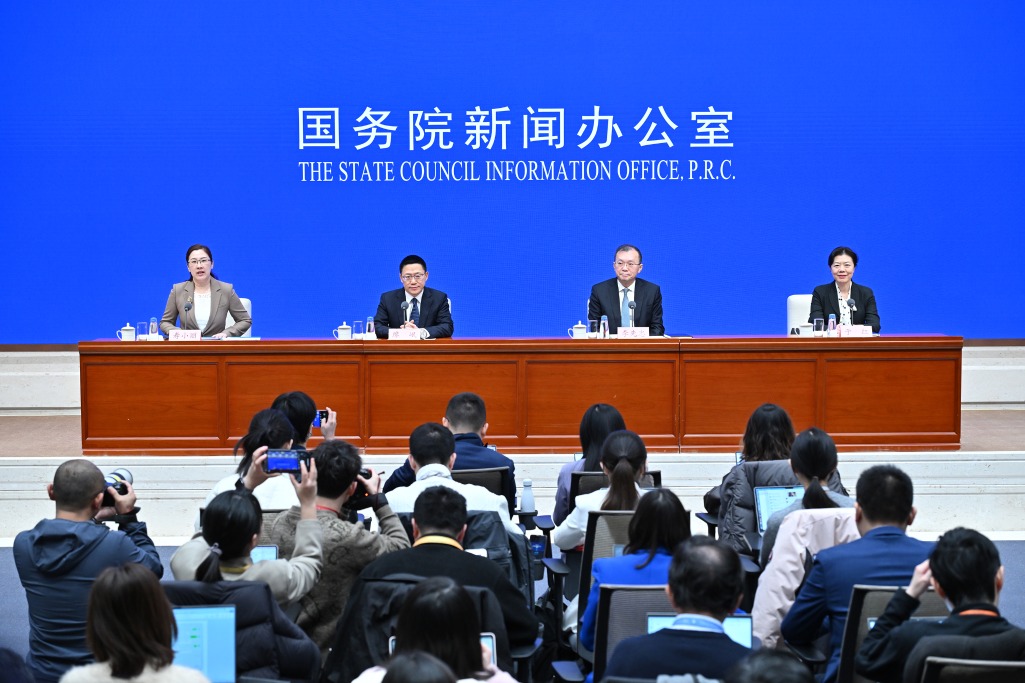
财政部:“硬核”支持稳就业、稳企业、稳市场、稳预期
Zheng Quan Ri Bao· 2026-01-20 16:25
Core Viewpoint - The Chinese government is committed to implementing a more proactive fiscal policy in 2026, focusing on increasing total expenditure, optimizing structure, improving efficiency, and enhancing economic momentum to ensure a strong start for the 14th Five-Year Plan [1] Fiscal Revenue and Expenditure - Fiscal revenue in 2025 is expected to show a "front low, middle high, and back stable" trend, with a 1.1% decline in Q1, followed by a 0.6% increase in Q2, and a 2.5% increase in Q3, with October showing a 3.2% growth [2] - The overall balance of revenue and expenditure is projected to be achievable, with stable growth in public budget revenue and strong expenditure supporting economic development [2] - Key expenditures in social security, employment, technology, education, and health have been well-supported, with over 10 trillion yuan allocated to these areas, accounting for over 40% of total public budget expenditure [3] Support for Technological Innovation - The fiscal policy is a crucial tool for supporting technological innovation, with measures including increased funding, tax incentives, and government procurement to promote high-level self-reliance in technology [4] - In 2025, 3.44 million enterprises received over 140 billion yuan in bank loans, with comprehensive financing costs reduced to below 5% [4] - Key areas of focus include enhancing government investment funds, supporting quality upgrades in key industries, and accelerating the application of major technological achievements [5] Policy Implementation - A comprehensive package of policies aimed at promoting domestic demand has been deployed, with a focus on early implementation to maximize impact [6] - Key policies include loan interest subsidies for small and micro enterprises, special guarantees for private investment, and support for consumer loans [7] - The budget for 2026 has made sufficient arrangements for the fiscal expenditures required for these policies, encouraging local institutions to actively engage in business [8]
激发民间投资、促进消费,财政部公布一揽子扩内需政策
Sou Hu Cai Jing· 2026-01-20 12:54
Core Viewpoint - The Ministry of Finance, in collaboration with relevant departments, has launched a comprehensive policy package aimed at expanding domestic demand and stimulating private investment and consumer spending [1][2]. Group 1: Policy Overview - The policy package includes six key initiatives: 1. Loan interest subsidies for small and micro enterprises 2. Special guarantee plan for private investment 3. Risk-sharing mechanism for private enterprise bonds 4. Loan interest subsidies for equipment upgrades 5. Loan interest subsidies for service industry operators 6. Loan interest subsidies for personal consumption [1][2][3][4]. Group 2: Specific Policies - The first initiative provides a 1.5% interest subsidy on loans for small and micro enterprises, with a maximum loan amount of 50 million yuan and a subsidy period of up to 2 years, targeting 14 key industries including new energy vehicles and medical equipment [2][3]. - The second initiative offers a new guarantee plan for small and micro enterprises, allowing for a loan guarantee of up to 20 million yuan for eligible businesses [3]. - The third initiative introduces a risk-sharing mechanism for bonds issued by private enterprises, providing credit enhancement support to lower financing thresholds [3]. - The fourth initiative expands the scope of interest subsidies for equipment upgrades, including fixed asset loans related to equipment updates and technology innovation [4]. - The fifth initiative increases the loan limit for service industry operators from 1 million yuan to 10 million yuan, with a 1% interest subsidy for one year [4]. - The sixth initiative allows personal consumption loans to receive a 1% interest subsidy, including support for credit card installment payments, with over 500 financial institutions participating [4]. Group 3: Implementation and Financial Planning - The financial expenditures required for these policies have been adequately planned in the 2026 budget, encouraging local and financial institutions to actively engage in business [5].
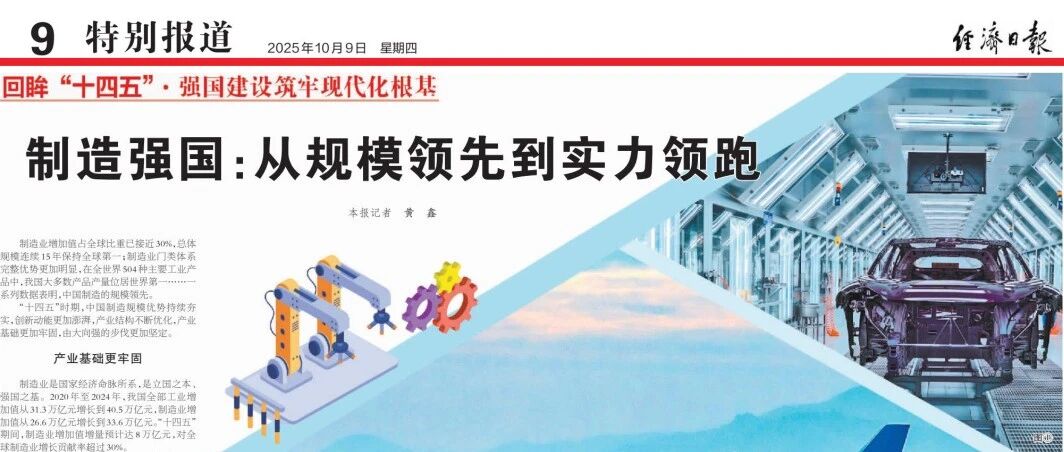
【回眸“十四五”】制造强国:从规模领先到实力领跑
中汽协会数据· 2025-10-09 07:04
Core Viewpoint - The article emphasizes the continuous strengthening of China's manufacturing sector during the "14th Five-Year Plan" period, highlighting its global leadership in manufacturing scale, innovation, and green transformation efforts [5][6][13]. Manufacturing Scale and Growth - China's manufacturing value added is projected to grow from 26.6 trillion yuan to 33.6 trillion yuan from 2020 to 2024, contributing over 30% to global manufacturing growth [6][5]. - The manufacturing sector's global share is nearing 30%, maintaining the world's largest scale for 15 consecutive years [3][5]. Innovation and Technological Advancement - R&D expenditure for large-scale manufacturing enterprises exceeds 1.6% of their revenue, with over 570 companies listed among the global top 2500 in R&D investment [6]. - Key technological advancements have been made in areas such as artificial intelligence and quantum communication, with notable achievements in space exploration and satellite navigation [6]. Industrial Upgrading and Digital Transformation - The average annual growth rates for equipment manufacturing and high-tech manufacturing value added are 7.9% and 8.7%, respectively, with their shares in the industrial sector rising to 34.6% and 16.3% [6]. - The digital transformation of manufacturing is being accelerated, with over 3.5 million enterprises benefiting from industrial internet platforms that connect more than 1 billion devices [11][12]. Green Transformation and Sustainability - The share of renewable energy in total power generation has increased by 20 percentage points, and energy consumption per unit of industrial value added is continuously decreasing [13][14]. - The number of national green factories has reached 6,430, and the green manufacturing system is being enhanced to support low-carbon industrial processes [14][15]. Resilience of Supply Chains - The resilience of industrial supply chains is being strengthened through the implementation of high-quality development actions and the engineering of key technologies [7][8]. - The quality compliance rate of manufacturing products is expected to reach 93.93% in 2024, reflecting improvements in product reliability and longevity [7].
工信部等六部门:在工程机械、轨道交通装备等领域培育若干世界一流企业
Xin Lang Cai Jing· 2025-09-29 07:23
Core Viewpoint - The document outlines a plan for the mechanical industry aimed at stabilizing growth from 2025 to 2026, emphasizing the support for enterprises to strengthen and expand through various policy channels and resources [1] Group 1: Support for Enterprises - The plan proposes utilizing national production and finance cooperation platforms and industrial development funds to support enterprises in becoming stronger, better, and larger [1] - It aims to cultivate several world-class enterprises in fields such as construction machinery and rail transit equipment [1] Group 2: Development of High-tech Enterprises - The initiative focuses on nurturing high-tech enterprises, single champion enterprises, and specialized "little giant" enterprises in sectors like industrial mother machines, agricultural machinery, instruments, robots, medical equipment, and basic components [1] - The plan also aims to develop a number of gazelle and unicorn enterprises within the industry [1] Group 3: Industry Organization and Globalization - The plan supports industry organizations in cultivating the top 100 mechanical and component enterprises [1] - It encourages equipment enterprises to engage in reasonable and orderly cross-border layouts, establishing overseas collaborative R&D and after-sales service bases to build a global production and service system [1]
国金证券:“十五五”科技主线将以推进新质生产力的整体跃升为核心
Di Yi Cai Jing· 2025-08-20 23:47
Group 1 - The report emphasizes the need to develop new productive forces tailored to local conditions, leveraging the advantages of a new type of national system to enhance basic research intensity and address key technology and component bottlenecks in areas such as integrated circuits, industrial mother machines, medical equipment, servers, instruments, basic software, industrial software, and advanced materials [1] - It advocates for the construction of a modern industrial system, promoting the upgrading of traditional industries towards high-end, intelligent, and green transformations, while nurturing and expanding emerging industries and proactively laying out future industries [1] - The report highlights the importance of maintaining a reasonable proportion of manufacturing, using technological innovation as a lever to drive manufacturing towards high value-added and high-tech directions, and establishing mechanisms to ensure a sustainable influx of quality resources into the manufacturing sector [1] Group 2 - It calls for the cultivation of new driving forces in manufacturing, enhancing the added value of manufacturing through innovation premiums, and accelerating brand cultivation and protection to improve the "gold content" of manufacturing [1]

A股“三连涨” 沪指周三续创新高
Zhong Guo Xin Wen Wang· 2025-08-07 01:08
Core Viewpoint - The Chinese A-shares experienced a significant increase on August 6, with all three major indices rising, marking a successful "three consecutive days of gains" [1] Market Performance - The Shanghai Composite Index closed at 3633 points, up by 0.45% - The Shenzhen Component Index closed at 11177 points, up by 0.64% - The ChiNext Index closed at 2358 points, up by 0.66% - The total trading volume in the Shanghai and Shenzhen markets was approximately 173.41 billion RMB, an increase of about 138 billion RMB compared to the previous trading day [1] Sector Performance - The PEEK materials concept, robotic actuators, and industrial mother machine sectors saw significant gains, rising by 5.79%, 4.03%, and 2.53% respectively, leading the market [1] Policy Influence - The recent strength in new industrialization-related stocks, such as PEEK materials and robotics, is likely linked to favorable policies announced by the Chinese government [1] - The People's Bank of China and the Ministry of Industry and Information Technology, among other departments, recently issued guidelines to support new industrialization, emphasizing the use of structural monetary policy tools to encourage banks to provide medium- and long-term financing for key manufacturing sectors [1]
事关创投,央行等七部门重磅发布18条意见
FOFWEEKLY· 2025-08-06 10:35
Core Viewpoint - The article discusses the "Guiding Opinions on Financial Support for New Industrialization" issued by multiple Chinese government departments, outlining 18 measures to enhance financial support for the manufacturing sector, aiming for a mature financial system by 2027 that supports high-end, intelligent, and green development of manufacturing [1][2]. Summary by Sections Financial Support for Technological Innovation and Supply Chain Resilience - The Opinions emphasize optimizing financial policy tools to support key technology and product breakthroughs in critical manufacturing sectors such as integrated circuits and advanced materials, encouraging banks to provide medium to long-term financing [1]. - It also highlights the need for long-term capital and patient capital to accelerate the transformation of scientific and technological achievements, promoting diverse financing service models [1]. Modern Industrial System Construction - The Opinions call for banks to optimize credit policies to support the high-end, intelligent, and green development of traditional manufacturing, particularly focusing on digital transformation for SMEs [2]. - It stresses the importance of providing medium to long-term loan support for digital infrastructure projects, including 5G and industrial internet [2]. Industry Layout and Development Space Expansion - The Opinions propose enhancing financial service flexibility for industrial transfer, encouraging financial institutions to optimize resource allocation to support industry relocation to central and western regions [2]. - It advocates for improved information sharing and service coordination between banks in industrial transfer areas [2]. Strengthening Financial Support Capabilities - The Opinions suggest that financial institutions should incorporate support for new industrialization into their long-term strategies, adjusting their operations to meet national development needs [3]. - It emphasizes the need for collaboration between financial and industrial policies to support key sectors and SMEs [3]. Current Financial Support Status - Recent data indicates that financial support for the manufacturing sector is accelerating, with over 3,100 financial and investment institutions launching more than 800 financial products, resulting in a cumulative financing scale exceeding 1.2 trillion yuan [4]. - In the first half of the year, the A-share market raised 148.8 billion yuan for industrial enterprises, marking a 51.6% year-on-year increase [4]. Future Directions - The Ministry of Industry and Information Technology plans to enhance financial policies supporting new industrialization, focusing on product service innovation and the integration of technology and industry finance [5]. - It aims to establish pilot cities for financial cooperation to support high-quality manufacturing development [5].

强化重点企业金融服务 支持产业链自主可控
Zheng Quan Ri Bao· 2025-08-05 23:17
Core Viewpoint - The People's Bank of China and six other departments issued guidelines to enhance financial support for new industrialization, focusing on improving financial services for key enterprises and ensuring the resilience of industrial supply chains [1][2]. Group 1: Financial Support for Manufacturing - By 2027, a mature financial system supporting the high-end, intelligent, and green development of manufacturing will be established, with a focus on diverse financial products and effective risk prevention [2]. - The guidelines emphasize optimizing financial policy tools to support key technologies and products, particularly in sectors like integrated circuits and advanced materials, through long-term financing [2][3]. Group 2: Modern Industrial System Construction - The guidelines outline five areas for building a modern industrial system, including enhancing financial services for traditional manufacturing, supporting emerging industries, promoting green finance, and integrating digital finance with the real economy [3]. - Support for listed companies in industry consolidation and upgrading through various financial mechanisms is encouraged, alongside the expansion of technology loan offerings [3][4]. Group 3: Regional and Specialized Financial Services - Financial services will be tailored to support the flexible relocation of industries and the development of regional industrial clusters, particularly in central and northeastern China [4]. - The guidelines advocate for local banks to develop loan products that align with regional industrial characteristics, enhancing service specialization [4]. Group 4: Capacity Building and Talent Development - The guidelines stress the importance of building a capable financial support system for new industrialization, including improving internal mechanisms within financial institutions to serve the manufacturing sector [5]. - There is a call for cultivating a workforce with expertise in advanced manufacturing and related technologies to create a composite financial management and service team [5]. Group 5: Policy Coordination - Strengthening the coordination between financial policies and industrial policies is highlighted, with an emphasis on establishing mechanisms for risk prevention and policy incentives [5][6]. - The People's Bank of China and the Ministry of Industry and Information Technology will work together to implement these guidelines effectively [5].