保障房政策

Search documents
学习政府工作报告精神:细微处见大势,关注5个信息
Soochow Securities· 2026-03-05 05:21
Economic Growth - The economic growth target has been adjusted from "around 5%" to "4.5%-5.0%", allowing for structural adjustments and reforms, with a focus on achieving a nominal GDP growth of 5%[1] - The implicit nominal GDP scale is projected at 147.25 trillion, compared to last year's 140.2 trillion, indicating an implicit nominal GDP growth rate of 5%[1] Fiscal Policy - The total amount of three major debt financing tools is 11.89 trillion, a slight increase of 300 billion from 2025, with a deficit rate of 4% and a deficit scale of 5.89 trillion, up by 230 billion from last year[1] - The government plans to establish 800 billion in policy financial tools, an increase of 300 billion from last year, to stimulate investment[1] Consumption and Demand - A special fund of 100 billion will be set up to promote domestic demand through fiscal-financial collaboration, aiming to enhance consumer spending and stabilize the service industry[3] - The focus of consumption policy is shifting from direct subsidies to broader demand activation and cost reduction, with "trade-in" subsidies reduced from 300 billion to 250 billion[3] Carbon Emission Targets - The target for carbon emissions per unit of GDP is set to decrease by 3.8%, with a focus on eliminating outdated production capacity and controlling energy consumption[3] - The shift from energy consumption targets to carbon emission targets reflects a transition from "energy-saving" to "green energy" policies[4] Real Estate Policy - The focus of real estate policy has shifted from "emergency management" to "stock governance and risk resolution," emphasizing the activation of existing assets to alleviate market supply-demand mismatches[4] - Policies will encourage the acquisition of existing housing for affordable housing purposes, ensuring a stable transition in the market[4] Capital Market Reforms - The report emphasizes the need for a balanced investment and financing dynamic, aiming to institutionalize "patient capital" to stabilize the market[4] - It also highlights the importance of addressing pain points in the primary market to facilitate a healthy cycle between technology, industry, and finance[4]
已查清全国房子数量,过剩到什么程度?数据太夸张,楼市或将大变局?
Sou Hu Cai Jing· 2025-12-13 10:24
Core Insights - The real estate market is facing a significant inventory issue, with a total of 447 million square meters of new residential property stock across 100 cities, leading to an estimated sales cycle of 21.3 months, which exceeds the acceptable range of 12 to 14 months [1][5] - The inventory distribution is uneven, with first-tier cities like Shenzhen experiencing a reduction in inventory cycle from 26 months to 9 months, while second-tier cities like Chengdu and Hangzhou are around 18 months, and some third and fourth-tier cities exceeding 30 months [2][4][8] - The current inventory problem is more severe for completed homes (现房) than for pre-sold homes (期房), with the completed inventory reaching a historical high of 74.5 million square meters [5] Inventory Dynamics - As of now, 63 cities have an inventory cycle exceeding 18 months, totaling 377 million square meters of unsold properties, indicating a significant excess that needs to be addressed [4][9] - The government has implemented measures to control new land sales in cities with inventory cycles over 36 months, aiming to alleviate the pressure on inventory [9] - Recent policies, including the "9.30 policy," have led to a positive shift in the market, with 87 cities reporting a year-on-year decrease in inventory as of December [5][6] Market Recovery Signals - The sales volume of new homes has shown signs of recovery, with a notable increase after a prolonged decline, indicating a potential turning point for the industry [6][10] - The overall housing prices in first-tier and strong second-tier cities have stabilized, with some cities beginning to see slight increases, which is crucial for restoring market confidence [6][10] - The government is focusing on increasing the supply of affordable housing and renovating urban villages, which could help absorb a significant portion of the existing inventory [9][10] Future Outlook - The real estate market is expected to undergo a restructuring, with a clear distinction between high-quality properties and those that are less desirable, leading to a more selective buying environment [10][11] - Predictions suggest that first-tier cities may resolve their inventory issues by the end of this year, while second-tier cities may take until next year, and third and fourth-tier cities could require two to three years for significant improvement [11][12] - The market is transitioning from an investment-driven model to one focused on residential needs, indicating a shift towards a more stable and balanced real estate environment [12]

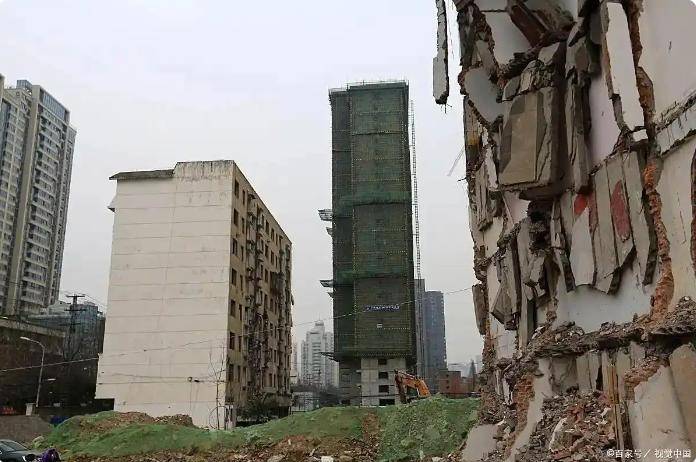
2025 保障房大放水!100 万套房源六折租,非户籍终于能申请了
Sou Hu Cai Jing· 2025-10-26 06:47
Core Insights - The new housing policy aims to add over one million affordable housing units, significantly reducing rent to 60% of market prices, and now allows non-residents to apply for these units [2][3] Group 1: Policy Implementation - Cities like Shenzhen and Kunming have already begun allocating these affordable housing units, with examples showing drastically lower rents compared to market rates [2] - In Kunming, a one-bedroom unit is available for over 400 yuan per month, while similar market units are priced much higher [2] - Shenzhen's rental prices for two-bedroom units near tech parks are around 3,000 yuan, compared to market rates of 7,000 to 8,000 yuan [2] Group 2: Eligibility Criteria - The application criteria include income limits, asset restrictions, and age requirements, ensuring that the benefits reach those in genuine need [3] - For instance, in Xundian County, family assets must be below 100,000 yuan, and vehicles valued over 100,000 yuan disqualify applicants [3] Group 3: Application Process - The application process has been streamlined, with options to select housing through WeChat, making it more accessible [3] - There are measures in place to ensure transparency in the selection process, such as public lotteries and real-time announcements of results [3] Group 4: Impact on Young Professionals - The policy is designed to alleviate rental pressure on young professionals, providing them with a buffer period through reduced rents [4] - Special allocations for recent graduates in fields like artificial intelligence further demonstrate the policy's focus on supporting young talent [4] Group 5: Future Prospects - The hope is that more cities will adopt similar policies to expand access to affordable housing, addressing the needs of many individuals struggling with high rental costs [4]