信用驱动

Search documents
美国主导的科技繁荣本质是债务幻觉
Huafu Securities· 2026-03-13 07:10
Core Insights - The essence of the U.S.-led technological boom is a debt illusion, with global debt expansion being a macroeconomic response to long-term structural deflationary pressures caused by technological advancements [3][57] - The global economy has shifted from being productivity-driven to credit-driven, where the contribution of debt to demand consistently outweighs that of technology [3][57] - Debt creates nominal demand through fiscal stimulus, household and corporate leverage, central bank quantitative easing (QE) wealth effects, and the spillover of U.S. dollar liquidity, while technological progress primarily influences nominal demand indirectly and over the long term [3][57] Group 1: Debt Expansion and Its Mechanisms - Debt expansion directly boosts nominal demand through multiple channels, including increased government spending and transfer payments, which stimulate domestic demand and imports [18][22] - In a low-interest-rate environment, households and businesses increase leverage, leading to consumption expansion and higher asset prices [22][25] - Central bank QE elevates asset prices, creating a wealth effect that releases trillions of dollars in purchasing power [25][28] Group 2: Technological Progress and Its Impact - Technological advancements enhance production efficiency and create new products, leading to long-term increases in actual income and welfare [34][35] - New technologies generate new industries and consumption scenarios, driving investment cycles in technology and related capital goods [38][40] - However, the impact of technology on nominal demand is more indirect and long-term compared to the immediate effects of debt expansion [47][48] Group 3: U.S. and China Economic Divergence - The global division of labor may collapse, leading to a fundamental reversal in global supply and demand structures, with significant economic path divergence between the U.S. and China [89][90] - The U.S. may face a long-term stagnation dilemma due to manufacturing hollowing out and rising commodity prices, while China could transition to a moderate inflation path supported by its complete manufacturing system [89][90] - China's actual demand is expected to rise over the long term, supporting the intrinsic value of its assets, while the U.S. reliance on nominal demand expansion may lead to a revaluation of the yuan and Chinese assets [3][57]
美联储也没想到!强劲GDP撞上高通胀,黄金不跌反涨?
Sou Hu Cai Jing· 2026-01-23 07:39
Group 1 - The core point of the article is that despite the significant upward revision of the US GDP to 4.4%, gold prices have shown resilience and are moving towards the $5000 mark, indicating a shift from a "data-driven" to a "credit-driven" market logic for gold [1][3] - The revision of the US GDP was primarily driven by strong exports and reduced inventory drag, rather than a broad-based surge in end demand, suggesting that while the economy shows resilience, it does not create the "overheating" pressure needed for aggressive Fed tightening [3] - The persistent core PCE inflation at 2.9% complicates monetary policy, leading markets to abandon fiat currency in favor of gold, which is perceived as a "hard asset" [3] Group 2 - The current gold market is trading on "future certainty" rather than "current data," with uncertainty itself becoming a strong support for gold prices [5] - Geopolitical risks and concerns over the independence of the Federal Reserve have led global capital to view gold as a "ultimate anchor," resulting in a rare "run on gold" as central banks and private investors increase their holdings [5] - The unusual market behavior indicates a trend of "superconductivity" for safe-haven assets, with gold evolving into a necessary asset for hedging systemic risks [7] Group 3 - While gold prices are targeting $5000, investors should avoid blindly following the trend, as significant technical pullbacks often accompany historical price milestones [8] - A focus on phased entry and position management is more crucial than predicting price points, with quantitative stop-loss measures recommended to handle sudden volatility [8] - The upward revision of US GDP does not alter the core contradictions in the macro environment, and as long as global debt credibility and geopolitical dynamics remain unchanged, the long-term value of gold as an investment will persist [8]


一份烟火气,从高德“飘”了出来
3 6 Ke· 2025-09-27 09:46
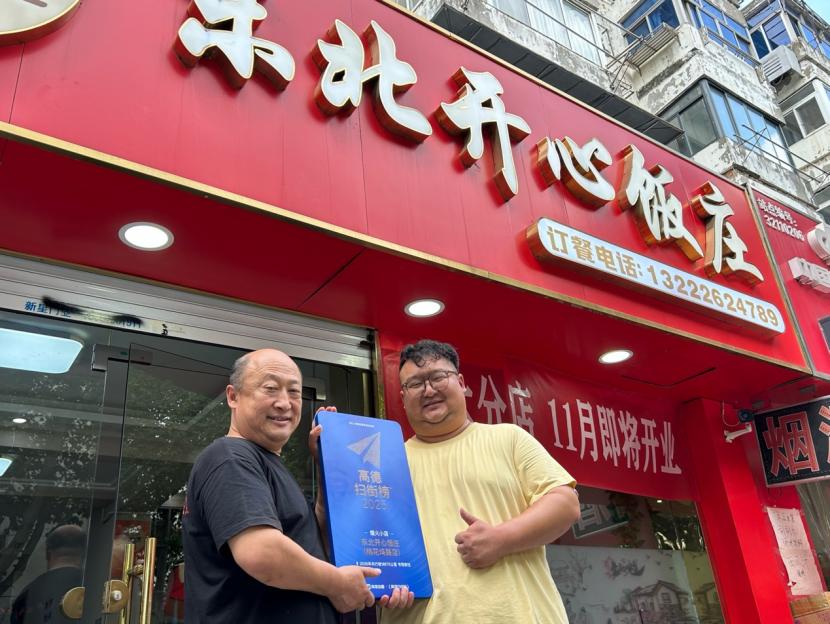
Core Insights - The emergence of the "Gaode Street Ranking" has created a new marketing channel for restaurants, emphasizing real user behavior and authentic reviews [2][6][11] - The ranking system has gained rapid popularity, with over 4 million users in just one day and more than 2,000 restaurants displaying the ranking sign within two weeks [3][4] Group 1: Impact on Restaurants - The "Gaode Street Ranking" has significantly increased customer traffic for restaurants, as evidenced by Zhang Yunfeng's restaurant, which saw a notable influx of new customers [2][8] - The ranking mechanism prioritizes genuine customer experiences over traditional marketing tactics, allowing smaller businesses to compete effectively [6][9] - Restaurants like "Northeast Happy Restaurant" and "He Shi BBQ" have reported increased visibility and customer engagement due to their presence on the ranking [9][10] Group 2: Marketing and Consumer Behavior - The ranking system encourages a return to authentic marketing, where the focus is on real customer experiences rather than manipulated ratings [5][6] - The diverse categories within the ranking, such as "Returning Customer List" and "Local Favorites," reflect true consumer preferences and foster discussion [6][10] - The integration of navigation and dining decisions enhances consumer conversion rates, as users often arrive with a clear intent to dine [10][15] Group 3: Industry Trends - The "Gaode Street Ranking" signifies a shift in the restaurant industry from a "traffic-driven" model to a "credit-driven" model, emphasizing long-term customer trust [15][17] - The initiative has led to a surge in new restaurant registrations, with a 631% increase in new sign-ups on a single day following the announcement of waived fees [15][16] - The ranking system is expected to reshape industry dynamics, allowing established brands to leverage their reputation while enabling smaller establishments to build their credibility [16][17]
一份烟火气,从高德“飘”了出来
36氪未来消费· 2025-09-27 09:12
Core Insights - The article discusses the emergence of the "Gaode Street Ranking," a new food ranking system based on user behavior and real reviews, which has quickly gained popularity in the restaurant industry [5][6][10]. Group 1: Impact of Gaode Street Ranking - The Gaode Street Ranking has become a significant marketing tool for restaurants, with over 2,000 establishments already displaying "Gaode Street Ranking Restaurant" signs within two weeks of its launch [7][10]. - The ranking system emphasizes "real reputation" over traditional marketing methods, allowing smaller businesses without large marketing budgets to gain visibility [11][29]. - The ranking mechanism combines user visits and evaluations, creating a more trustworthy environment for consumers and enhancing the credibility of the restaurant industry [10][29]. Group 2: User Engagement and Business Growth - The Gaode Street Ranking has led to a noticeable increase in customer traffic for restaurants, with some reporting that up to 30% of new customers are visiting due to the ranking [13][29]. - The ranking encourages organic sharing on social media, as younger users often post about their experiences at ranked restaurants, further enhancing visibility [13][29]. - Gaode's integration with Alibaba's ecosystem allows for a seamless flow of traffic and resources, benefiting restaurants through enhanced exposure and support services [16][29]. Group 3: Long-term Industry Changes - The introduction of the Gaode Street Ranking signifies a shift in the restaurant industry's competitive logic from "traffic-driven" to "credit-driven," focusing on long-term reputation rather than short-term advertising [29]. - This new framework encourages restaurants to maintain high-quality food and service, as their competitive edge will rely on sustained customer satisfaction and trust [29]. - The ranking system aims to establish an industry-wide credit framework, promoting transparency and encouraging businesses to prioritize product quality and service [29].