
债券抛售

Search documents
全球债券被抛售
21世纪经济报道· 2026-03-11 14:54
Core Viewpoint - The geopolitical situation in the Middle East has led to significant volatility in the global bond market, primarily driven by soaring oil prices and rising inflation expectations, which have altered market perceptions regarding interest rate cuts by central banks [1][2][8]. Group 1: Impact of Oil Prices on Bond Markets - On March 9, international oil prices surged dramatically, with Brent and WTI crude oil prices rising nearly 30%, approaching $120 per barrel, marking a three-year high [5]. - Following this spike, global bond markets experienced a severe sell-off, with U.S. Treasury yields reaching new highs, including a 68 basis point increase in the 10-year Treasury yield to 4.163% [1][5]. - The sell-off was attributed to concerns over inflation reignited by geopolitical tensions, particularly the disruption of oil supply routes in the Strait of Hormuz due to the escalating U.S.-Iran conflict [5][8]. Group 2: Market Reactions and Expectations - The bond market's reaction indicates a shift from traditional safe-haven buying to a focus on inflation and tighter monetary policy, as investors demand higher yields to compensate for potential losses in purchasing power due to inflation [8][11]. - Analysts suggest that the current geopolitical tensions have reset global asset pricing logic, shifting the focus from data dependency to concerns over energy supply and inflation control [11][12]. - The European bond market has shown even more significant volatility, with yields on German and UK bonds rising sharply, reflecting the region's high dependency on energy imports [6][12]. Group 3: Future Outlook and Economic Implications - The ongoing geopolitical tensions and high oil prices are expected to create a challenging environment for central banks, particularly in Europe and Japan, as they navigate inflationary pressures while considering monetary policy adjustments [11][12]. - There is a growing concern about the potential for stagflation, especially if high energy prices lead to economic slowdowns, which could ultimately drive investors back to long-term government bonds as a safe haven [13]. - The market is closely watching upcoming inflation data, particularly from the U.S., as it could influence the Federal Reserve's decisions on interest rates and further impact bond market dynamics [9][12].

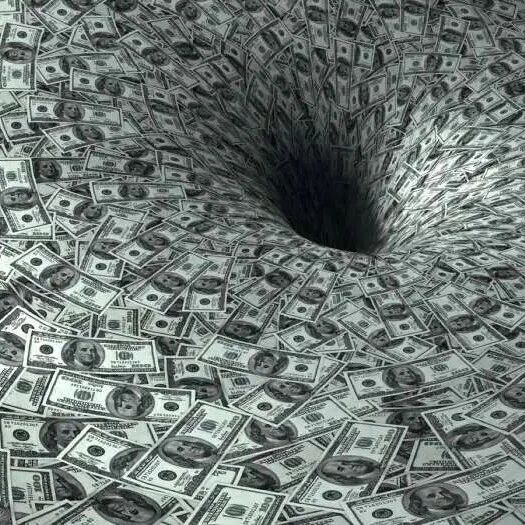
Bonds head for biggest selloff in nine months as Iran conflict sparks unusual Treasury moves
MarketWatch· 2026-03-02 18:41
Core Viewpoint - The surge in the 10-year Treasury yield is expected to impact mortgage rates and other financial instruments significantly [1] Group 1: Impact on Mortgage Rates - Mortgage rates are likely to rise due to the increase in the 10-year Treasury yield, making borrowing more expensive for consumers [1] - The correlation between Treasury yields and mortgage rates suggests that as yields increase, mortgage rates will follow suit, potentially cooling the housing market [1] Group 2: Broader Financial Implications - The rise in Treasury yields may lead to increased costs for various loans and credit products, affecting consumer spending and overall economic growth [1] - Investors may reassess their portfolios in response to changing interest rates, leading to volatility in the bond and equity markets [1]

金价冲破5200!1月已涨880美元,BMO:世界变了,2027或见8650美元
Jin Shi Shu Ju· 2026-01-28 02:52
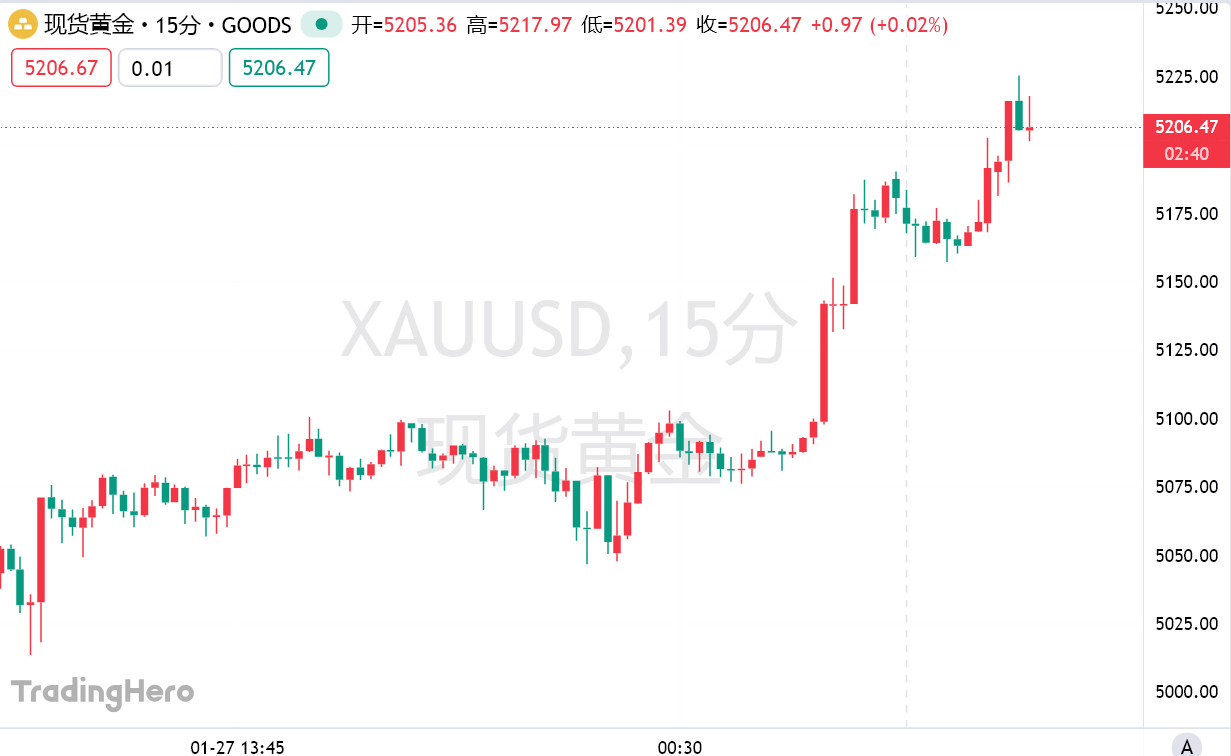
Core Viewpoint - The recent surge in gold prices, surpassing $5200 per ounce, reflects a significant shift in global market dynamics, driven by a weak dollar and concerns over government balance sheets and the resilience of fiat currencies [1][3][4]. Group 1: Gold Market Analysis - Gold prices have increased by over $880 (or 20%) in January, marking a historic high as investors seek safe-haven assets amid market volatility [1]. - Analysts from BMO Capital Markets conducted a bullish thought experiment, suggesting that the current drivers of gold prices indicate a potential for continued upward movement throughout the year [3][4]. - The recent sell-off in Japanese bonds and the resulting volatility in the yen have heightened concerns about traditional safe-haven assets, further supporting gold demand [4]. Group 2: Price Predictions and Market Dynamics - BMO analysts predict that if central banks continue to purchase approximately 8 million ounces of gold quarterly and ETFs see inflows of 4-5 million ounces, gold prices could reach around $6350 per ounce by Q4 2026 and $8650 by Q4 2027 [4]. - The analysts noted that their previous price models are outdated due to unprecedented changes in the global order and financial systems since World War II [5]. - The updated five-year regression model indicates a strong statistical significance between central bank holdings, ETF liquidity, and gold prices, with a noted negative correlation between gold and the dollar index [5]. Group 3: Silver Market Insights - BMO analysts have adjusted their outlook for silver, suggesting it may outperform gold due to its emerging status as a safe-haven asset amid new global risks [6]. - The gold/silver ratio has dropped to a multi-year low, and analysts anticipate that silver prices could reach approximately $160 per ounce by Q4 2026 and $220 by Q4 2027 if the ratio stabilizes between 40-50 [6].
Stock Futures Tumble as Greenland Tariff Fears Rattle Markets
Barrons· 2026-01-20 10:38
Group 1 - Stocks are expected to decline significantly due to concerns over President Trump's tariff plans on eight NATO countries, contingent on the acquisition of Greenland [1] - Futures for the Dow Jones Industrial Average fell by 757 points, representing a 1.5% drop, while S&P 500 futures decreased by 1.6% and Nasdaq 100 contracts dropped by 2.0% [1] Group 2 - The bond market is experiencing a sell-off, with the yield on the 10-year Treasury note increasing by 6 basis points to 4.29% and the 30-year yield rising by 9 basis points to 4.93% [2]
澳洲联储加息预期升温 澳大利亚国债抛售恐加剧
智通财经网· 2025-12-02 11:41
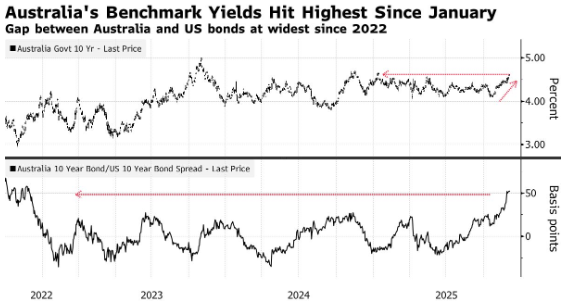
Core Viewpoint - The trend of selling Australian government bonds is expected to continue due to upcoming economic data that may reinforce the necessity for the Reserve Bank of Australia (RBA) to adopt a tightening policy next year [1][3] Group 1: Bond Market Dynamics - The yield on Australia's 10-year government bonds rose to 4.61%, the highest level since January, partly due to a global bond sell-off and market expectations of increased interest rates following the upcoming GDP data [1] - The Australian bond market experienced its largest monthly decline in a year in November, influenced by global sell-off pressures from the Federal Reserve's expectations and fiscal pressures in Japan and Europe [3] - The gap between U.S. and Australian 10-year government bond yields has widened to the highest level in nearly three years due to higher-than-expected consumer price increases in Australia [3] Group 2: Economic Indicators and Predictions - The RBA is expected to maintain interest rates next week, but its statement will be closely monitored for future policy guidance, especially following stronger-than-expected job growth in October [1] - Analysts predict that the 10-year bond yield could reach 4.75% by the end of the year, as market expectations for rate hikes have shifted significantly [1] - If inflationary pressures persist and the labor market tightens further, the RBA may raise interest rates next year, with a cautious stance on holding clear positions in the bond market [3]
无差别抛售下长期日债收益率创历史新高,美债投资者急了?
Di Yi Cai Jing· 2025-05-23 08:49
Group 1 - The Bank of Japan officials are not in a hurry to intervene in the bond market despite rising pressures on Japanese government bonds [1][5] - The passage of Trump's tax reform plan has intensified global fiscal concerns, leading to a broad sell-off of long-term bonds across major economies, including Japan and Germany [1][3] - The 40-year Japanese government bond yield reached a historic high of 3.689%, while the 30-year bond yield hovered around 3.187% [3] Group 2 - Global investors are currently unfavorable towards long-term bonds due to concerns over inflation and economic outlook, which are impacting their willingness to hold such assets [4] - The rapid rise in Japanese bond yields is raising concerns that it may exacerbate the situation for U.S. Treasuries, as Japanese investors may start to repatriate funds back to Japan [6][7] - The potential for a sudden shift in Japanese investor behavior could lead to further downward pressure on U.S. bonds and the dollar [7]

日本投资者抛售200亿美元外债
news flash· 2025-04-22 13:48
Core Insights - Japanese investors have sold over $20 billion in overseas bonds within two weeks due to the U.S. announcement of increased tariffs, marking the largest concentrated sell-off of foreign bonds by Japanese investors in 20 years [1] Group 1: Market Reaction - The sell-off includes $17.5 billion in long-term foreign bonds sold by private institutions (including banks and pension funds) in the week ending April 4, followed by an additional $3.6 billion in the subsequent week [1] - This event represents one of the largest capital withdrawals since comparable data became available in 2005 [1] Group 2: U.S. Treasury Holdings - Japan is the largest holder of U.S. Treasury securities globally, with public and private sectors combined holding approximately $1.1 trillion in U.S. debt [1]