假期制度

Search documents
突然发现2026年的假期有两个历史第一次
Sou Hu Cai Jing· 2026-01-21 00:39
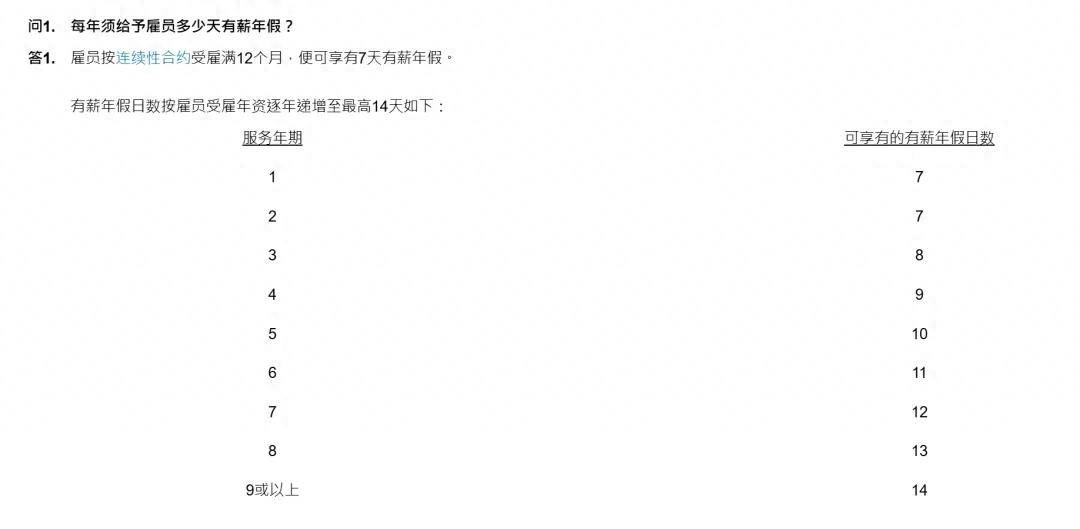
Group 1 - The increase in national rest time in China is an inevitable trend, both in comparison with other countries and in historical context [1] - In 2026, there will be two historical firsts regarding holidays: the Spring Festival will have a nine-day holiday, unprecedented in New China [2][3] - The longest holiday prior to this was eight days, which occurred in 2009 during the Mid-Autumn Festival and National Day [4][5] - The nine-day holiday in 2026 is made possible by the addition of two public holidays in 2025, extending the Spring Festival and May Day holidays [7] Group 2 - The Mid-Autumn Festival in 2026 will have a three-day holiday, and the National Day will have a seven-day holiday, allowing for a potential 13-day long holiday if three days of leave are taken [9][10] - Currently, the total number of statutory holidays in mainland China is 13 days after the increase in 2025 [11] - In comparison, Taiwan will have 16 statutory holidays in 2026, highlighting a disparity in holiday duration [12][14] - Japan and South Korea will also have 16 and 15 statutory holidays respectively in 2026, further emphasizing the shorter holiday duration in mainland China [15][16] Group 3 - The paid annual leave system in mainland China is significantly shorter than in Taiwan, Japan, and South Korea, with only five days for one year of service compared to 15 days in South Korea and 10 days in Japan [19][24] - The annual leave in Taiwan is notably more generous, with employees receiving up to 30 days after 20 years of service [20][21] - The execution of annual leave in mainland China presents challenges, as many employees do not fully utilize their entitled leave [27] - The comparison with other regions indicates that there is substantial room for growth in the annual leave policies in mainland China [30]

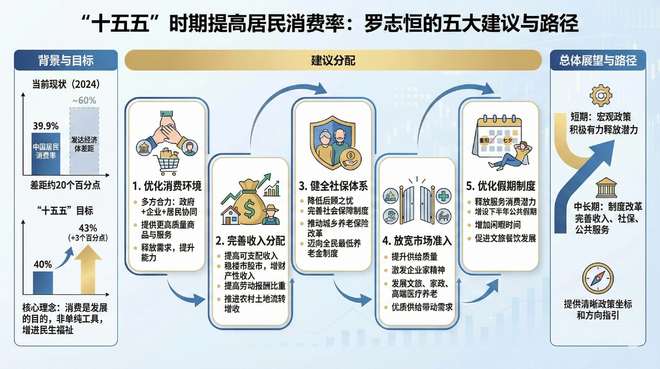
粤开证券罗志恒:“十五五”时期可从五大方面提高居民消费率
Zhong Guo Jing Ying Bao· 2025-12-17 09:01
Core Viewpoint - It is expected that by 2026, there will be a marginal recovery in household consumption, driven by the implementation of subsidy policies in areas such as childcare and elderly care, along with the wealth effect from rising stock markets [2] Group 1: Economic Context - The "14th Five-Year Plan" aims to significantly increase the household consumption rate, which is defined as the proportion of final household consumption expenditure to GDP [2] - In 2024, China's household consumption rate is projected to be 39.9%, an increase of 4.3 percentage points since 2012, but still about 20 percentage points lower than major developed economies [2] Group 2: Consumption Rate Improvement Strategy - To raise the household consumption rate from 40% to 43% during the "14th Five-Year Plan," an average annual growth rate of 6.5% in household consumption is required, assuming a nominal GDP growth rate of about 5% [4] - The increase in consumption is not merely a temporary measure but a strategic move related to the transformation of the economic development model, emphasizing that consumption should enhance the well-being of citizens rather than being treated as a mere policy tool [4] Group 3: Systematic Approaches to Boost Consumption - Five systematic approaches are proposed to enhance household consumption: 1. Optimize the consumption environment to create a collaborative effort among government, enterprises, and residents [5] 2. Improve the income distribution system to solidify the consumption foundation, focusing on increasing disposable income and enhancing property income [5] 3. Strengthen the social security system to alleviate residents' concerns about future expenditures [5] 4. Relax market access to improve supply quality, which can stimulate entrepreneurial spirit and accelerate the development of service industries [6] 5. Optimize holiday systems to release service consumption potential, thereby balancing supply and demand [6][7] Group 4: Policy Recommendations - Short-term measures require more proactive macroeconomic policies to unleash consumption potential, while long-term strategies depend on reforms in income distribution, social security, and public services to continuously enhance residents' consumption capacity and willingness [7]