健康大模型

Search documents
可孚医疗(301087) - 2026年3月9日投资者关系活动记录表
2026-03-10 00:40
Product Development and Market Expansion - In 2026, the company plans to focus on high-end and intelligent iterations of its ventilator products, launching 1-2 flagship models with significant upgrades in safety and comfort features [2][3] - The company is actively preparing for international expansion, having completed a strategic stake in Rongxin Medical, which has a leading position in global respiratory health digital medical field, covering over 200 countries and regions [2][3] Strategic Partnerships and Product Launches - The collaboration with Philips focuses on core home health monitoring categories, including blood pressure, blood glucose, temperature, and blood oxygen monitoring, with products entering the market preparation phase [4] - Philips products will be positioned as high-end home medical devices, leveraging the company's e-commerce and retail networks for rapid market penetration [4] Hearing Business and Operational Efficiency - The hearing business showed steady growth in 2025, with improved operational efficiency and significant reduction in losses, laying a solid foundation for future profitability [5] - A new generation of bone conduction hearing aids, developed in collaboration with Tencent Cloud, was launched in November 2025, receiving positive market feedback and rapid sales growth [5] International Business Growth - In 2025, overseas business revenue reached approximately 300 million yuan, a year-on-year increase of over 400%, with products entering over 60 countries and regions [6] - The company is enhancing its B2B overseas business through strong customer relationships and ongoing product registration and certification processes [6] Core Product Growth and Marketing Strategy - The respiratory support segment saw an 80.18% year-on-year revenue increase in the second half of 2025, driven by the successful launch of self-developed smart connected ventilators [7] - The company plans to continue its focus on core products in 2026, optimizing marketing resources for targeted promotions while maintaining cost control [8] IPO Plans and Financing Strategy - The company has received approval for overseas issuance and is progressing with its Hong Kong IPO, aiming to enhance international brand influence and expand financing channels [9] - The dual listing strategy (A+H) is intended to provide stable capital support for R&D, capacity building, and global business expansion, enhancing risk resilience and sustainable development [9]
AI健康应用爆发,大模型“看病”是否靠谱?我们进行了实测
Bei Ke Cai Jing· 2026-01-23 12:29
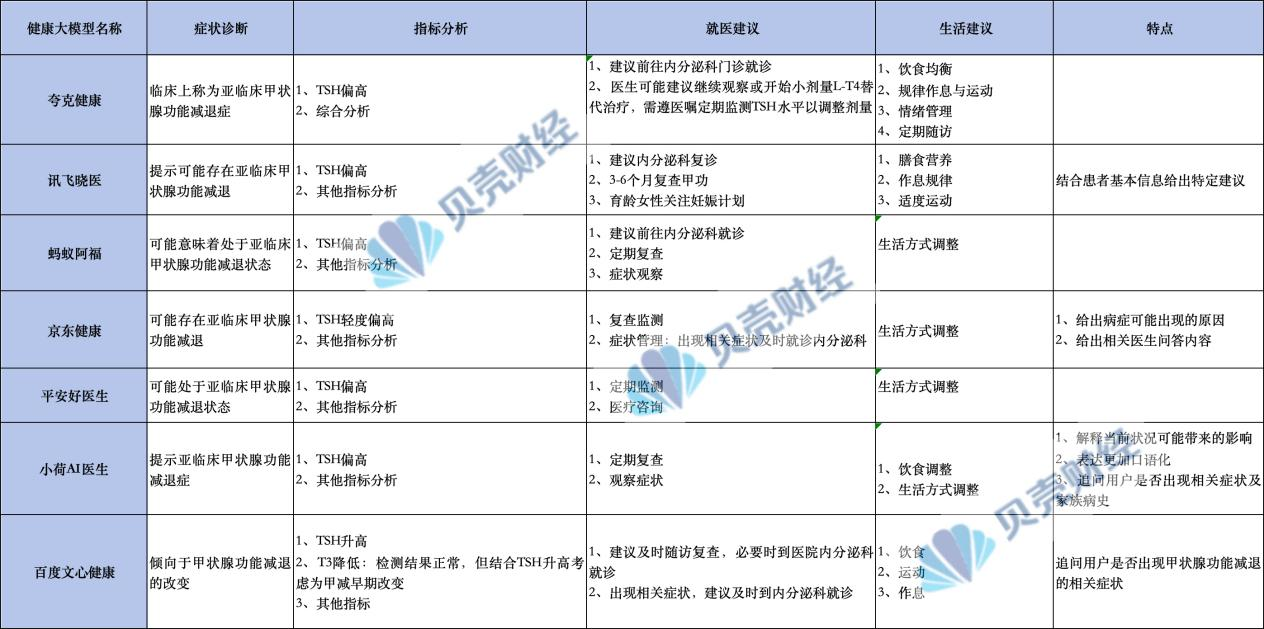
Core Insights - The article highlights the surge in AI health applications, with major companies like Ant Group, Baidu, OpenAI, and JD Health launching new products, indicating a growing trend in AI healthcare solutions [1][19][17] - Despite the advancements, the reliability of AI in interpreting medical reports is questioned, as some applications have made significant errors in diagnosis [8][6] - Regulatory bodies are beginning to establish guidelines for AI in healthcare, aiming to ensure safety and ethical standards [2][10] Group 1: AI Health Application Developments - Ant Group's AI health application "Ant Afu" gained significant traction, reaching the top two in the Apple App Store shortly after its launch [1] - Other notable AI health applications include Baidu's Wenxin Health, OpenAI's ChatGPT Health, and JD Health's evidence-based AI product "Zhi Yi" [1][19] - The competition among these applications is intensifying, with Ant Afu emerging as a strong contender despite being the newest [19][24] Group 2: Performance and Reliability of AI Applications - A test conducted by a news outlet on seven AI health applications revealed cautious interpretations of medical reports, with discrepancies in whether to recommend medical consultations [3][6] - The applications showed a tendency to use cautious language, indicating potential health issues without definitive conclusions [4][6] - Errors were noted, such as misinterpreting TSH (Thyroid-Stimulating Hormone) as HCG (Human Chorionic Gonadotropin), leading to inappropriate medical advice [8][9] Group 3: Regulatory Environment - The Beijing government's new policy on "AI + Healthcare" sets clear boundaries for the industry, while the National Internet Information Office has proposed interim measures for managing AI interactions in healthcare [2] - The regulatory framework aims to create a safe environment for AI healthcare development, emphasizing the need for collaboration between medical professionals and AI technologies [10][2] Group 4: User Interaction and Experience - Users have reported mixed experiences with AI health applications, with some finding the advice reasonable while others express caution [16][15] - Applications like Ant Afu and Baidu Health have integrated online consultation features, allowing users to connect with doctors after AI assessments [16][18] - The language style of some applications, such as Xiaohe AI Doctor, is more conversational, which may enhance user engagement [7][18] Group 5: Commercialization and Market Trends - AI health applications are evolving from simple tools to comprehensive platforms, aiming for a "Super App" model that integrates various functionalities [23][24] - Ant Afu has publicly stated that its health advice is free from commercial influences, focusing on user trust and engagement [23] - The trend indicates a shift towards creating interconnected ecosystems among different health applications, enhancing user retention and service offerings [24][22]

夸克通过“主任医师级”笔试
第一财经· 2025-07-23 13:32
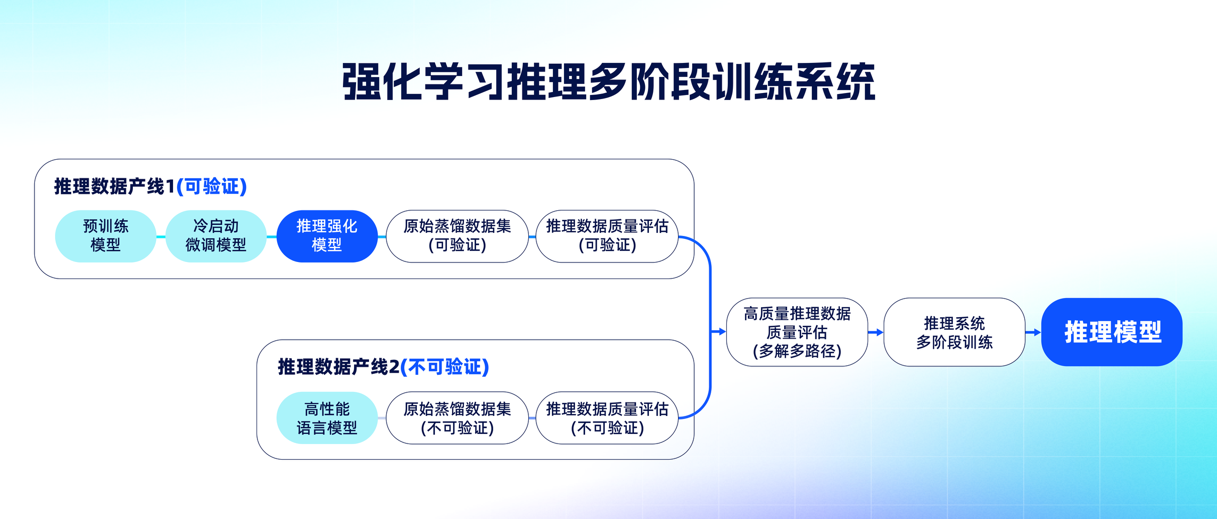
Core Viewpoint - Quark Health's large model has become the first in China to pass the written assessment for chief physician in 12 core medical disciplines, indicating significant advancements in AI healthcare capabilities [1] Group 1: Market Growth and Competition - The global AI healthcare market is projected to grow from $11 billion in 2021 to $194 billion by 2028, with a compound annual growth rate (CAGR) exceeding 41% [1] - Major companies like ByteDance, Baidu, and Alibaba are investing heavily in health large models, highlighting the competitive landscape [1] Group 2: Challenges in Accuracy - The accuracy of health large models remains a core pain point, with challenges including the precision of patient-selected prompts and the development of multimodal capabilities [2] - Accurate understanding of patient expressions and needs is crucial for AI to assist both patients and doctors effectively [2] Group 3: Development of "Slow Thinking" Capability - Quark Health's large model has achieved a breakthrough by developing "slow thinking capability," which integrates chain reasoning and multi-stage clinical deduction to address complex medical issues [2] - High-quality reasoning training data is essential for building this capability, with medical data categorized into "verifiable" and "non-verifiable" types [2] Group 4: Investment in Clinical Data - The development of health large models increasingly relies on clinical data, diagnostics, and data annotation from human doctors [3] - Quark Health has a professional annotation team of over a thousand, including more than 400 senior medical experts [3] Group 5: Commercialization Challenges - Currently, Quark Health is not focusing on commercialization, although future directions may include health record management, diagnostic service conversion, and smart device services [4] - The commercialization of health large models remains a complex issue that is still in the early discussion stages [4]

夸克通过“主任医师级”笔试,健康大模型如何解准确性难题?
Di Yi Cai Jing· 2025-07-23 11:24
Core Insights - The current pain point for health large models is insufficient accuracy, as stated by Quark Health's product head [1] - Quark Health's large model has become the first in China to pass the written assessment for chief physicians, following its earlier success with deputy chief physician exams [1] - The global AI in healthcare market is projected to grow from $11 billion in 2021 to $194 billion by 2028, with a compound annual growth rate (CAGR) exceeding 41% [1] Group 1: Challenges and Developments - Health large models face challenges related to the accuracy of consumer-selected prompts and the development of multimodal capabilities, which affect the output of model responses [2] - A significant breakthrough for Quark Health's large model is the development of "slow thinking ability," which integrates chain reasoning and multi-stage clinical reasoning to address complex medical issues [2] Group 2: Training and Commercialization - To build slow thinking ability, high-quality reasoning training data is essential, with Quark categorizing medical data into "verifiable" and "non-verifiable" types for different tasks [5] - Quark Health's large model has a professional annotation team of over 1,000, including more than 400 senior medical experts, highlighting the importance of clinical data and human input for model development [5] - Currently, Quark Health is not considering commercialization, but potential future directions may include health record management and diagnostic service transformations [5]