文心健康管家

Search documents
AI问诊,靠谱吗?
Huan Qiu Wang· 2026-02-10 02:00
Core Viewpoint - The rise of AI medical consultation in China is transforming healthcare access and efficiency, but concerns about reliability and data protection persist [4][11][14]. Group 1: AI Medical Consultation Overview - By the end of 2025, AI medical consultation advertisements are expected to be ubiquitous in Beijing, indicating a significant market presence [1]. - Users like Liu Yu are turning to AI for quick medical advice, completing processes that traditionally take hours in just minutes [3][4]. - Major companies such as JD Health, Ant Group, and Baidu are launching AI medical products, reflecting a competitive landscape in the sector [4]. Group 2: Functionality and Training of AI - AI medical products are categorized into two main types: those for general patients and those for healthcare professionals [7][10]. - The training of AI involves extensive input of medical knowledge and real patient interaction data to enhance diagnostic accuracy [7][12]. - Current AI models have shown a top-5 diagnostic accuracy rate of 97%, with the first suggestion accuracy at approximately 80% [12]. Group 3: Advantages and Limitations - AI consultation offers convenience, operating 24/7 without the need for appointments, which alleviates pressure on overburdened hospitals [10][11]. - AI is best suited for managing minor symptoms and chronic conditions, while complex cases still require in-person consultations [11][14]. - The technology's limitations include potential inaccuracies and the inability to replace physical examinations, which are crucial for accurate diagnosis [11][12]. Group 4: Legal and Ethical Considerations - The question of liability in cases of AI misdiagnosis remains unresolved, with current regulations not clearly defining responsibility [13][14]. - Experts suggest that AI should be viewed as a supportive tool rather than a replacement for human doctors, emphasizing the need for transparency in AI recommendations [12][14]. - The development of a regulatory framework is necessary to ensure the safe and effective use of AI in healthcare, with suggestions for a tiered system similar to that used in autonomous driving [16].


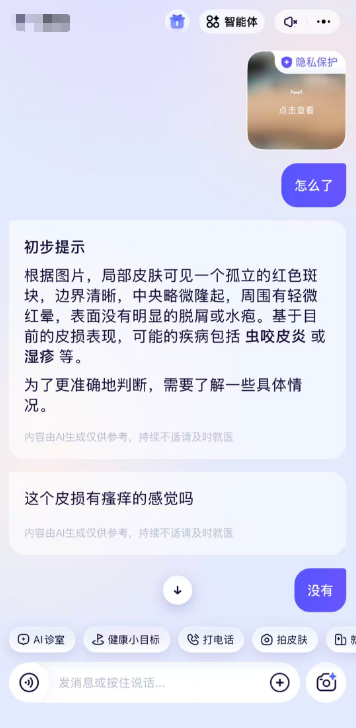
AI健康应用爆发 大模型“看病”是否靠谱?我们进行了实测
Xin Jing Bao· 2026-01-23 13:08
Core Insights - The AI health sector is experiencing a surge, marked by significant product launches from major companies like Ant Group, Baidu, OpenAI, and JD Health, indicating a growing interest and competition in AI healthcare applications [1][10] - Despite the advancements, AI applications exhibit cautious behavior in interpreting health data, with some instances of misinterpretation, highlighting the need for careful usage and potential limitations of AI in medical contexts [2][5] Group 1: AI Health Application Developments - Major AI health applications such as "Antifuku," "Wenxin Health Manager," and "ChatGPT Health" have been launched or upgraded, reflecting a trend towards integrating AI into healthcare [1][10] - The applications tested include features like photo recognition for health reports, AI consultations, and personalized health advice, showcasing their capabilities [2][3] Group 2: Performance and Limitations of AI Models - The evaluation of seven AI health applications revealed a cautious approach in symptom diagnosis, often using tentative language like "may" or "suggests," indicating a conservative stance on health assessments [2][4] - Instances of misinterpretation were noted, such as confusing TSH (Thyroid-Stimulating Hormone) with HCG (Human Chorionic Gonadotropin), which raises concerns about the reliability of AI health applications [5][6] Group 3: Regulatory Environment and Industry Response - Regulatory bodies are beginning to establish guidelines for AI in healthcare, emphasizing the importance of collaboration between medical professionals and AI technologies to ensure patient safety [6][10] - The emergence of AI health applications has prompted hospitals to advise patients against over-reliance on AI for medical advice, stressing the importance of professional medical consultation [6][7] Group 4: User Interaction and Market Trends - Users perceive AI health applications as supplementary tools rather than replacements for medical professionals, often using them for reassurance on minor health concerns [7][8] - The competitive landscape is evolving, with companies aiming to create "Super Apps" that integrate multiple functionalities, enhancing user engagement and retention [11][12]
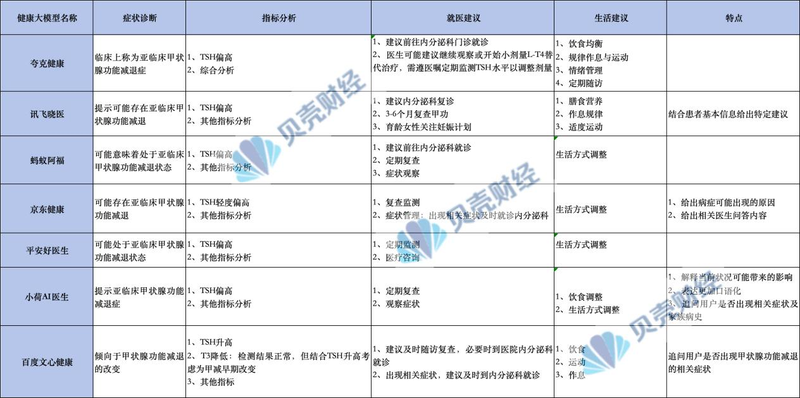
AI健康应用爆发,大模型“看病”是否靠谱?我们进行了实测
Bei Ke Cai Jing· 2026-01-23 12:29
Core Insights - The article highlights the surge in AI health applications, with major companies like Ant Group, Baidu, OpenAI, and JD Health launching new products, indicating a growing trend in AI healthcare solutions [1][19][17] - Despite the advancements, the reliability of AI in interpreting medical reports is questioned, as some applications have made significant errors in diagnosis [8][6] - Regulatory bodies are beginning to establish guidelines for AI in healthcare, aiming to ensure safety and ethical standards [2][10] Group 1: AI Health Application Developments - Ant Group's AI health application "Ant Afu" gained significant traction, reaching the top two in the Apple App Store shortly after its launch [1] - Other notable AI health applications include Baidu's Wenxin Health, OpenAI's ChatGPT Health, and JD Health's evidence-based AI product "Zhi Yi" [1][19] - The competition among these applications is intensifying, with Ant Afu emerging as a strong contender despite being the newest [19][24] Group 2: Performance and Reliability of AI Applications - A test conducted by a news outlet on seven AI health applications revealed cautious interpretations of medical reports, with discrepancies in whether to recommend medical consultations [3][6] - The applications showed a tendency to use cautious language, indicating potential health issues without definitive conclusions [4][6] - Errors were noted, such as misinterpreting TSH (Thyroid-Stimulating Hormone) as HCG (Human Chorionic Gonadotropin), leading to inappropriate medical advice [8][9] Group 3: Regulatory Environment - The Beijing government's new policy on "AI + Healthcare" sets clear boundaries for the industry, while the National Internet Information Office has proposed interim measures for managing AI interactions in healthcare [2] - The regulatory framework aims to create a safe environment for AI healthcare development, emphasizing the need for collaboration between medical professionals and AI technologies [10][2] Group 4: User Interaction and Experience - Users have reported mixed experiences with AI health applications, with some finding the advice reasonable while others express caution [16][15] - Applications like Ant Afu and Baidu Health have integrated online consultation features, allowing users to connect with doctors after AI assessments [16][18] - The language style of some applications, such as Xiaohe AI Doctor, is more conversational, which may enhance user engagement [7][18] Group 5: Commercialization and Market Trends - AI health applications are evolving from simple tools to comprehensive platforms, aiming for a "Super App" model that integrates various functionalities [23][24] - Ant Afu has publicly stated that its health advice is free from commercial influences, focusing on user trust and engagement [23] - The trend indicates a shift towards creating interconnected ecosystems among different health applications, enhancing user retention and service offerings [24][22]
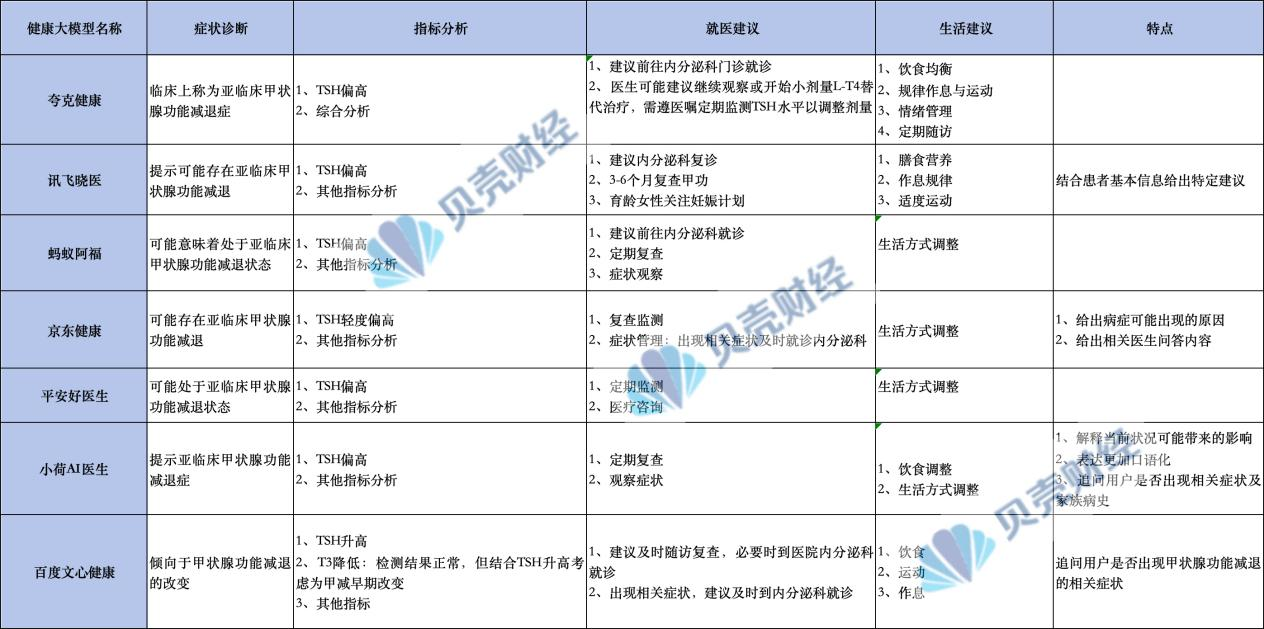
大厂AI,激战医疗
创业邦· 2026-01-21 03:45
Core Viewpoint - The article discusses the resurgence of interest in AI applications in healthcare, particularly through major tech companies like Ant Group, Baidu, and JD Health, which are leveraging AI to enhance healthcare services and address the growing demand for health management solutions [6][7][16]. Group 1: Market Dynamics and Company Strategies - Ant Group's AI health application "Afu" achieved 30 million monthly active users within a month of its new version release, indicating a strong market interest in AI health management [6]. - Major tech companies are shifting their strategies from merely providing online consultations to integrating AI into a comprehensive healthcare ecosystem, focusing on "assisting" rather than replacing healthcare professionals [7][10]. - The two main strategic approaches in the healthcare AI sector are "horizontal platformization" (e.g., Ant Group, Baidu, JD Health) and "vertical specialization" (e.g., ByteDance, iFlytek, Baichuan Intelligent), each with distinct goals and operational focuses [10][15]. Group 2: Challenges in Healthcare AI - Despite the technological advancements, challenges such as commercial viability, data quality, and responsibility delineation remain unresolved, indicating that the path to successful healthcare AI implementation is complex and long-term [8][30]. - The healthcare sector's unique nature requires deep industry knowledge and resource investment, making it difficult to achieve simple online connectivity [10][24]. - The reliability of AI technology in healthcare is critical, as errors can have life-threatening consequences, necessitating rigorous validation processes that may counteract efficiency gains [25]. Group 3: Market Opportunities - The demand for healthcare services is increasing, driven by a mismatch between quality medical resources and patient needs, with AI positioned as a key tool for improving efficiency in medical workflows [17]. - AI applications are expanding from disease treatment to proactive health management, reflecting a shift in user needs towards more frequent and active health maintenance [17][20]. - The healthcare AI market is attractive due to its potential to connect government, business, and consumer sectors, creating a comprehensive ecosystem that enhances service delivery and data utilization [21][22].
大厂AI,激战医疗
Sou Hu Cai Jing· 2026-01-16 10:51
Core Insights - Ant Group's AI health application "Afu" gained significant market attention with a monthly active user (MAU) count of 30 million within a month of its December 2025 release, indicating a strong interest in AI applications in health management [2] - Major tech companies like Baidu, JD Health, ByteDance, and others are increasingly active in the medical AI sector, reflecting a resurgence of interest in this field [3] - The strategic focus of these companies has shifted from merely replacing healthcare professionals to enhancing and empowering them, aiming for an integrated service model that connects medical, pharmaceutical, insurance, and testing services [3][4] Company Strategies - Ant Group's "Afu" offers three core functions: health companionship, health Q&A, and health services, leveraging its ecosystem to provide end-to-end service from consultation to payment [5] - Baidu's "Wenxin Health Manager" utilizes its search engine traffic and AI technology but faces challenges in converting users from information seekers to service users [6] - JD Health's "Kangkang" has achieved stable profitability, primarily through pharmaceutical retail, while its AI services enhance efficiency [6] Market Dynamics - The medical AI sector is characterized by a divide between horizontal platform players (like Ant Group and Baidu) and vertical specialists (like ByteDance and iFlytek), each pursuing different strategic paths [4][7] - The demand for AI in healthcare is driven by the need for efficiency in a system facing resource distribution challenges, with 71% of Chinese clinicians relying on AI tools to alleviate work pressure [8][9] - AI applications are expanding from disease treatment to proactive health management, creating broader opportunities for user engagement [8] Challenges and Opportunities - Despite the potential, the commercialization path for medical AI remains unclear, with issues such as low willingness to pay in primary care and regulatory hurdles [15][16] - The integration of AI in healthcare requires high-quality, standardized data, which is often difficult to obtain due to privacy and sharing constraints [13][16] - The sector's complexity necessitates a deep understanding of medical industry regulations and ethical considerations, making it a challenging landscape for tech companies [16]



OpenAI上线健康助理,AI持续渗透个人健康管理领域
Jing Ji Guan Cha Wang· 2026-01-09 12:57
Group 1 - OpenAI has launched ChatGPT Health, a dedicated health assistant that allows users to connect personal medical records and health applications for tailored responses [1][2] - Over 230 million people globally consult ChatGPT for health-related inquiries each week, indicating strong demand for AI health tools [1][2] - ChatGPT Health features a separate storage mechanism to ensure health conversations and data are isolated from other chat records, emphasizing its role as an auxiliary tool rather than a diagnostic or treatment solution [1][2] Group 2 - Users can securely connect various data sources, including electronic health records and mainstream health apps, enabling personalized health insights based on individual health data [2] - The introduction of ChatGPT Health reflects the deepening penetration of AI into personal health management, potentially alleviating some pressure on healthcare systems [2] - The global AI healthcare market is projected to approach $40 billion by 2025 and exceed $500 billion by 2032, with a compound annual growth rate of over 40% [3] Group 3 - The launch of ChatGPT Health aligns with the trend of integrating fragmented health data into a single conversational interface, lowering the barrier to information access [3] - Major Chinese tech companies are rapidly entering the AI health sector, with various products competing for user attention [3] - The capital market reacted positively to the AI health sector, with significant stock price increases for companies involved in AI healthcare applications [4]
【数智周报】MiniMax和智谱通过港交所聆讯;OpenAI据悉计划以8300亿美元估值筹资至多1000亿美元;寒武纪:拟使用27.78亿元资本公积金弥补亏损
Tai Mei Ti A P P· 2025-12-21 04:23
Group 1 - Elon Musk publicly criticized nuclear fusion power, stating that building small fusion reactors on Earth is economically foolish, as the sun itself is a massive, free fusion reactor capable of meeting all energy needs in the solar system [2] - Musk plans to deploy 100GW of solar-powered AI satellites annually, which is equivalent to about a quarter of the total electricity consumption of the United States [2] Group 2 - Zhongke Shuguang unveiled the scaleX Wanka supercluster at the HAIC2025 conference, marking the first appearance of a domestic 10,000-card AI cluster system in physical form [3] - Unisoc announced the establishment of a Central Research Institute to focus on new architectures and models for edge AI chips, particularly for applications in autonomous driving and robotics [3] Group 3 - Cambricon announced plans to use 2.778 billion yuan of its capital reserve to cover cumulative losses, with the aim of bringing its negative retained earnings to zero by the end of 2024 [4] Group 4 - MiniMax has passed the Hong Kong Stock Exchange hearing and plans to go public in January 2026, potentially becoming the fastest AI company to IPO globally within four years of its establishment [6] - Zhiyuan Technology has officially passed the Hong Kong Stock Exchange IPO hearing, with CICC as the sole sponsor [6] Group 5 - Tencent has established an AI Infra department to enhance its large model research framework, with Vincesyao appointed as the chief AI scientist [6][7] - The AI Infra department will focus on building technical capabilities for large model training and inference platforms [7] Group 6 - ByteDance is advancing a collaboration with Lenovo to develop AI smartphones, aiming to pre-install AIGC plugins to gain user access [8] - Doubao released version 1.8 of its large model, enhancing its capabilities for multi-modal agent scenarios [9] Group 7 - Qianwen APP has integrated with Alibaba's ecosystem, enabling it to access underlying services like Gaode Map for enhanced geographical understanding [10] - Alibaba launched the new generation of the Wanxiang 2.6 model, which supports role-playing functions for video production [11] Group 8 - Baidu launched the Wenxin Health Manager, positioning it as a 24/7 "all-in-one family doctor" service [14] - The application offers a comprehensive AI health service system covering light symptom consultations and complex disease planning [14] Group 9 - Aishi Technology signed a comprehensive cooperation agreement with Alibaba Cloud to enhance global deployment and compliance capabilities for its video generation model [15] - Xiaomi open-sourced its MiMo-V2-Flash model, which boasts competitive capabilities at a significantly lower inference cost compared to closed-source models [16] Group 10 - Muxi Technology officially listed on the Shanghai Stock Exchange's Sci-Tech Innovation Board, aiming to raise 4.197 billion yuan to accelerate the development of "Chinese chips" [17] - The company focuses on high-performance general-purpose GPU products for AI training and inference [17] Group 11 - Meituan released and open-sourced the LongCat-Video-Avatar model, which supports multiple video generation tasks [18] - The model has achieved significant breakthroughs in action realism and video stability [18] Group 12 - Chinese scientists achieved a breakthrough in optical computing chips, enabling large-scale semantic media generation [19][20] - The LightGen chip demonstrates significant improvements in performance and energy efficiency compared to traditional digital chips [20] Group 13 - Baidu's Kunlun chip business is reportedly nearing completion of its restructuring, aiming for a potential listing in Hong Kong [20] - SenseTime's Seko series models have successfully adapted to the domestic AI chip Cambricon [20] Group 14 - Nvidia's CEO revealed that the company has not yet made any payments to OpenAI as part of a planned $100 billion investment [22] - Nvidia launched the Nemotron 3 open-source model series, significantly improving throughput compared to its predecessor [23] Group 15 - OpenAI plans to raise up to $100 billion, potentially valuing the company at $830 billion [24] - The new image model GPT-image-1.5 was launched, enhancing image generation capabilities significantly [25] Group 16 - Intel is in talks to acquire AI chip startup SambaNova for approximately $1.6 billion [30] - Multiple AI companies have recently completed significant funding rounds to support their growth and technology development [31][32][33][34][35][36][37]



银河通用完成超3亿美元新融资,创人形机器人行业融资最高纪录;MiniMax通过港交所聆讯,计划2026年1月挂牌上市丨AI周报
创业邦· 2025-12-21 01:15
Core Insights - The article highlights significant developments in the AI industry, including major funding rounds, product launches, and strategic partnerships, reflecting the rapid growth and innovation within the sector [5]. Funding and Valuation - Galaxy General has completed a new funding round exceeding $300 million, setting a record for humanoid robotics with a total funding of approximately $800 million and a valuation of $3 billion [7][8]. - OpenAI plans to raise up to $100 billion at a valuation of $830 billion, with the funding round expected to close by the end of Q1 2024 [13]. - Databricks has completed a funding round of over $4 billion, achieving a valuation of $134 billion [40][58]. Product Launches and Innovations - MiniMax, a domestic large model company, has passed the Hong Kong Stock Exchange hearing and plans to go public in January 2026, potentially becoming the fastest AI company to IPO [10]. - OpenAI released the GPT-5.2-Codex, claiming it to be the most advanced programming model to date, designed for complex software engineering tasks [22]. - Tencent launched the mixed Yuan World Model 1.5, which is the most comprehensive real-time world model framework in the industry [29]. Strategic Partnerships and Collaborations - Disney has entered a three-year strategic partnership with OpenAI, involving content licensing and a $1 billion equity investment [34]. - Amazon is restructuring its AI team, integrating chip and model development under a new unit led by a veteran from its cloud computing division [26]. Market Trends and User Engagement - The AI health application "Ant Financial Health" has seen a surge in downloads, reaching the third position on the Apple App Store with over 15 million monthly active users [11]. - ChatGPT mobile app user spending has surpassed $3 billion, marking a significant milestone since its launch [40]. Regional Developments - The majority of AI funding events in China are concentrated in Beijing and Jiangsu, with notable investments in early-stage companies [46].
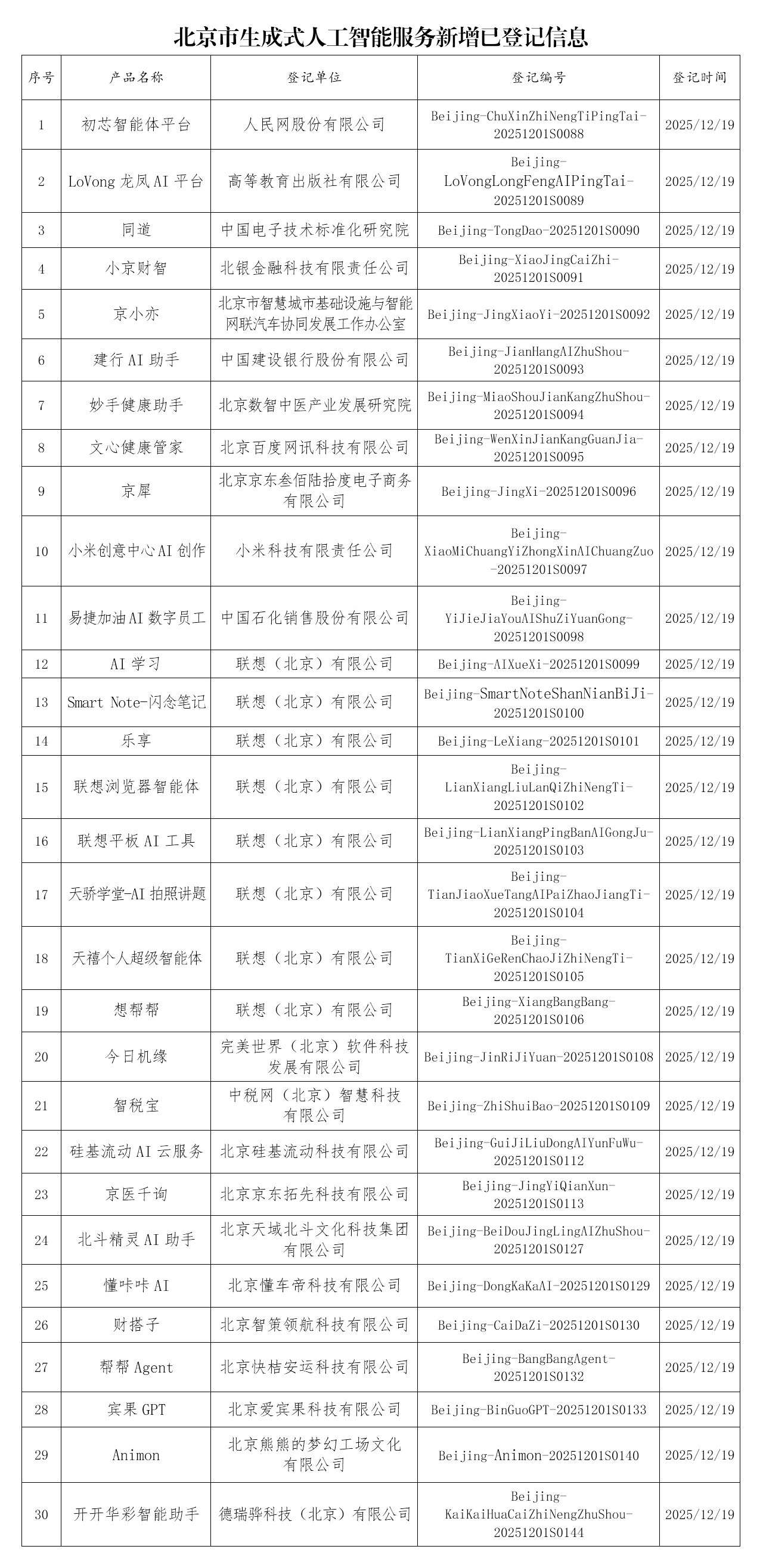
北京新增30款已完成登记的生成式人工智能服务
Di Yi Cai Jing· 2025-12-19 11:46
Core Insights - The article discusses the implementation of a registration management system for generative artificial intelligence applications in Beijing, allowing services to go live after registration [1] - As of December 19, 30 new generative AI services have been registered in Beijing, which must display their registration number prominently [1] Group 1: Regulatory Framework - The "Interim Measures for the Management of Generative Artificial Intelligence Services" outlines the registration process for AI applications that utilize large models via API or other means [1] - The registration system aims to ensure compliance and transparency for generative AI services operating in the region [1] Group 2: Registered AI Services - A total of 30 generative AI services have been registered, including platforms from various companies such as: - ChuXin Intelligent Platform by People's Daily [3] - LoVong Dragon Phoenix AI Platform by Higher Education Press [3] - TongDao by China Electronic Technology Standardization Institute [3] - XiaoJing Financial Intelligence by Beijing Yin Financial Technology [3] - AI Assistant by China Construction Bank [3] - Each registered service is assigned a unique registration number that must be displayed in a prominent location [1][3]





A股主要股指走势分化 创业板指大幅回落
Mei Ri Shang Bao· 2025-12-18 23:05
Market Overview - A-shares showed significant divergence with the Shanghai Composite Index rising by 0.16% to 3876.37 points, while the Shenzhen Component Index fell by 1.29% and the ChiNext Index dropped by 2.17% [1] - Total trading volume in the Shanghai and Shenzhen markets reached 16,770 billion, a decrease of 1,575 billion from the previous day [1] Banking Sector - The banking sector experienced a collective rebound, with major banks like Shanghai Bank and Chongqing Rural Commercial Bank rising over 3%, and others like Agricultural Bank and Industrial and Commercial Bank increasing by more than 2% [2] - The Central Economic Work Conference has set a favorable environment for banks to expand their balance sheets and provide long-term loans, while emphasizing the need to manage local and real estate risks [2] - According to CICC, listed banks are expected to see improved revenue and profit growth rates in 2026 and 2027 due to reduced net interest margin pressure and stable growth in fee income [2] - The average dividend yield for the banking sector is currently at 5.2%, significantly higher than the 10-year government bond yield, indicating a shift towards a "high dividend + high quality" investment cycle [2] AI Healthcare Sector - The AI healthcare sector saw strong gains, with stocks like Jiahe Meikang and Huaren Health hitting the daily limit of 20% increase, and others like Weining Health rising over 11% [3] - The Ant Group's AI health application "Antifufu" has seen a surge in downloads, reaching over 15 million monthly active users, indicating strong market interest [3] - The AI healthcare market in China has grown from 2 billion in 2019 to 6.4 billion in 2023, with projections to reach 224.4 billion by 2033, reflecting a compound annual growth rate of 43.1% [4] Commercial Aerospace Sector - The commercial aerospace sector experienced a surge, with companies like Xingchen Technology and Xice Testing hitting their daily limit, and others like Shunhao Co. and Tianjian Technology also seeing significant gains [5] - Xingchen Technology has reported successful delivery of products for commercial space applications, with plans for mass production starting in 2026 to meet increasing demand from private aerospace companies [6] - Recent policies and technological advancements are expected to accelerate the development of the commercial aerospace industry, with the National Space Administration promoting high-quality and safe development [7]