
储能市场化

Search documents
每周股票复盘:南网储能(600995)抽水蓄能电价新政影响公司收入
Sou Hu Cai Jing· 2026-02-07 18:20
Core Viewpoint - The recent adjustments in pricing policies for pumped storage and new energy storage by the National Development and Reform Commission and the National Energy Administration are expected to impact the company's revenue and market participation, introducing both opportunities and uncertainties in the energy storage sector [2][3]. Group 1: Company Performance - As of February 6, 2026, the stock price of Southern Power Grid Energy (600995) closed at 13.37 yuan, down 1.33% from the previous week [1]. - The stock reached a weekly high of 14.5 yuan on February 4 and a low of 13.12 yuan on February 6 [1]. - The company's current total market capitalization is 42.731 billion yuan, ranking 17th out of 102 in the power sector and 471st out of 5186 in the A-share market [1]. Group 2: Policy Adjustments - The new pricing policy categorizes pumped storage power stations into three types, with the first type continuing to follow government pricing, the second type using average cost for capacity pricing, and the third type benefiting from a reliable capacity compensation mechanism [2][3]. - New energy storage stations will be eligible for capacity pricing and will participate in market transactions, although the revenue uncertainty has increased due to the need for provincial-level clarification on policy implementation [2][3]. - The policy aims to promote marketization in the energy storage sector, but the specific implementation details require further definition by provincial authorities [2][3].

CNESA年度重磅 | 2025储能产业盘点——深水笃行,于波动中韧性生长
中关村储能产业技术联盟· 2026-02-01 23:08
Core Viewpoint - The year 2025 marks a critical transition for China's energy storage industry, shifting from large-scale development to market-oriented growth, with significant advancements in technology and policy frameworks [2][3][44]. Group 1: Scale Leap - By the end of 2025, China's cumulative installed power storage capacity reached 213.3 GW, a year-on-year increase of 54%, with new energy storage accounting for 144.7 GW, over two-thirds of the total [5][6]. - The new energy storage projects added in 2025 amounted to 66.43 GW / 189.48 GWh, representing a year-on-year growth of 52% / 73% [5]. - The trend towards larger projects is evident, with the number of planned or under-construction hundred-megawatt stations doubling compared to the same period in 2024 [5]. Group 2: Mechanism Restructuring - The industry transitioned from policy-driven growth to market-driven dynamics, with the establishment of a comprehensive electricity market system [7][10]. - The average peak-to-valley price difference for time-of-use electricity across 32 regions decreased to 0.616 yuan/kWh, a 9.4% year-on-year reduction [8]. - Capacity pricing policies were accelerated, with regions like Inner Mongolia and Gansu leading the way in implementing capacity compensation mechanisms [9][10]. Group 3: Scenario Resonance - The cumulative installed capacity of grid-side storage reached 87.0 GW by the end of 2025, accounting for 60.1% of the total, with an average project duration of nearly 3 hours [11][12]. - The generation-side storage capacity reached 46.2 GW, focusing on wind and solar integration, and playing a crucial role in local power balance [13]. - User-side storage projects are increasingly large-scale, with five projects exceeding 100 MW, primarily in high-energy-consuming industries [14]. Group 4: Cycle Refinement - The prices of core materials in the energy storage industry saw a significant increase, with lithium carbonate prices rebounding from 60,000 yuan/ton to 120,000 yuan/ton, a nearly 100% increase [16]. - The production capacity of large-capacity cells is on the rise, while smaller cell production is gradually shrinking, indicating a structural optimization in the industry [19]. Group 5: Global Competition - The domestic market is characterized by a concentration of leading enterprises, with major players like CRRC Zhuzhou and BYD leading the bidding landscape [20][21]. - The global energy storage market is witnessing growth in emerging markets, particularly in the Middle East and Latin America, driven by local supply and demand dynamics [24][25]. Group 6: Innovation Advancement - The year 2025 marked the mass production of 500Ah+ large cells, with several companies achieving GWh-level production capacity [26]. - Solid-state battery technology is advancing, with half-solid batteries seeing increased application, while full-solid batteries are expected to reach market acceptance by 2035 [27]. - AI technology is becoming a core driver for asset value enhancement, optimizing market strategies and improving operational efficiency [31]. Group 7: Standard Foundation - New safety standards have been established, including GB 44240-2024 for mandatory safety testing, enhancing the credibility of energy storage systems [33]. Group 8: Capital Empowerment - The CNESA energy storage index rose by 41.7% in 2025, outperforming major stock indices, reflecting the high prosperity of the energy storage industry [34]. - The primary market for energy storage saw 102 financing events totaling 13.4 billion yuan, with a focus on hard technology innovation and application scenarios [35][36].


政策组合拳不断!新形势下,储能应该怎么干?
Sou Hu Cai Jing· 2026-01-14 10:41
Core Insights - 2025 marks a pivotal year for China's energy storage industry, characterized by significant policy changes that shift the focus from administrative mandates to market-driven dynamics [1][5] Policy Changes - The release of document 136 signals the end of mandatory energy storage requirements for new energy projects, allowing for a transition to market-driven operations [1][3] - The "New Energy Storage Scale Construction Special Action Plan (2025-2027)" aims for a national installed capacity of over 180 million kilowatts by 2027, with direct investments of approximately 250 billion yuan [3] - New guidelines introduced in November 2025 establish a pricing mechanism for energy storage, integrating it into the capacity pricing framework for the first time [3][4] Market Dynamics - The shift from fixed pricing to dynamic pricing models has created uncertainty in the industry, leading to concerns about investment viability [4] - Traditional profit models based on peak and valley price differences are no longer applicable, necessitating a more sophisticated approach to energy storage operations [4] - Companies that can leverage advanced market prediction, trading capabilities, and refined operational techniques are expected to thrive in the evolving competitive landscape [4][5] Industry Events - The "2026 China Energy Storage Technology Innovation Application Seminar" will take place on January 28-29, 2026, in Zhengzhou, focusing on the opportunities and challenges in the energy storage sector [5][7]
中国储能双周报:储能参与主体市场化程度提升-China Energy Storage Industry_ China BESS biweekly_ Improved marketization for China BESS participants
2025-12-02 06:57
Summary of China Energy Storage Industry Conference Call Industry Overview - **Industry**: China Battery Energy Storage System (BESS) - **Current Market Conditions**: The BESS price in China has remained stable, with prices at Rmb0.50/0.46/Wh for 2-hour and 4-hour systems respectively. Grid-Forming BESS systems maintain a price premium of Rmb0.10-0.15/Wh over Grid-Following systems. The demand is supported by strong interest from the US, Europe, Australia, and the Middle East [2][4][3]. Key Insights 1. **Installation Growth**: In the first ten months of 2025, China’s BESS installations reached 35.3GW/89.3GWh, marking a year-on-year increase of 56% in capacity and 60% in energy storage. However, October saw a decline in installations to 1.7GW/3.5GWh, down 35% year-on-year and 51% quarter-on-quarter [3][4]. 2. **Bidding Data**: The bidding volume for BESS systems decreased by 15% month-on-month to 10.0GW/29.4GWh in October, attributed to the installation cadence and tender schedules. The fourth quarter is expected to see a rebound in domestic demand due to the peak season for grid interconnection of renewable projects [3][4]. 3. **Regulatory Changes**: The National Development and Reform Committee (NDRC) of China has excluded BESS costs from transmission and distribution tariffs, aiming to promote market participation and fair competition. This policy also includes a capacity compensation mechanism to support BESS returns [4][3]. Additional Considerations - **Market Risks**: Potential risks to the energy storage industry include slower-than-expected growth in domestic renewable energy capacity, a narrower peak-trough electricity price spread, limited market accessibility for energy storage systems, and higher tariffs on Chinese-made products or import restrictions [14][3]. - **Future Outlook**: The expectation for strong domestic demand in the fourth quarter of 2025 is based on historical trends of increased installations during this period, driven by the interconnection of renewable energy projects [3][4]. This summary encapsulates the critical points discussed in the conference call regarding the current state and future outlook of the China BESS market, highlighting both opportunities and risks.
中信证券:国内储能迎来市场化加速拐点 建议关注布局海外储能产业链头部厂商
智通财经网· 2025-11-13 01:01
Core Viewpoint - The global energy storage market is projected to experience significant growth, with new installations expected to reach approximately 290 GWh by 2025 and potentially 1.17 TWh by 2030, indicating substantial growth potential for the industry [1] Domestic Demand - Policy support is accelerating the marketization of domestic energy storage, with the "Document 136" promoting reforms that enhance the economic viability of energy storage in various markets. The domestic energy storage installation is expected to reach 32.0 GW/81.6 GWh in Q1-Q3 2025, reflecting a year-on-year increase of 37%/42%. Projections suggest that new installations could reach 150 GWh in 2025 and 203 GWh in 2026, with a long-term forecast of 591 GWh by 2030 [2] U.S. Market - The U.S. energy storage market is driven by high returns and a demand for electricity, with installations expected to reach 19.0 GW/52.5 GWh by 2025, marking a year-on-year increase of 53%/45%. Although growth may slow slightly due to increased tariffs and regulatory impacts, the AIDC's rapid growth is expected to further drive demand, with projections of 185.6 GWh of new demand by 2030 [3] European Market - The European market is experiencing a surge in energy storage due to negative electricity prices and a power crisis, with government support increasing. By 2025, it is anticipated to be a turning point for large-scale energy storage, with new installations projected to reach 165 GWh by 2030, corresponding to a compound annual growth rate of 40% from 2024 to 2030, translating to a market space of 170 billion yuan [4] Emerging Markets - Emerging markets, particularly Australia and the Middle East, are actively developing photovoltaic resources, which is accelerating energy storage development. Government policies are increasingly supportive of energy storage, facilitating its growth [5]

创50ETF(159681)涨近1%,存储芯片和新能源双双走高
Xin Lang Cai Jing· 2025-11-11 02:20
Group 1 - The storage chip market is experiencing a significant price increase, with SanDisk's recent price hike stimulating storage companies. Morgan Stanley has raised the target price for Jiangbolong from RMB 122 to RMB 325 under the base case scenario, and to RMB 435 under an optimistic scenario [1] - The new policy from the National Development and Reform Commission and the National Energy Administration on November 10 aims to promote renewable energy consumption and regulation, indicating a shift towards a more stable pricing mechanism for energy resources [1] - The evolution of policy from "capacity compensation" to "capacity pricing" suggests a clear direction towards establishing a long-term stable mechanism, ensuring effective transmission of market price signals to end users [1] Group 2 - A series of significant policies this year, particularly the "Document No. 136," has shifted energy storage development from mandatory storage to a more sustainable market-driven model, improving the profitability of storage projects through clear economic compensation mechanisms [2] - The continuous support from policies and institutional innovations indicates a spiral upward trend for renewable energy and storage, with confidence in the commitment from central and local governments to invest in energy storage [2] - As of November 11, 2025, the performance of key stocks in the sector shows positive growth, with Jiangbolong up 7.83%, and other major players like CATL and EVE Energy also experiencing gains [2]




(第八届进博会)从进博看中国绿色转型 全球智慧汇入中国储能革命洪流
Zhong Guo Xin Wen Wang· 2025-11-06 13:06
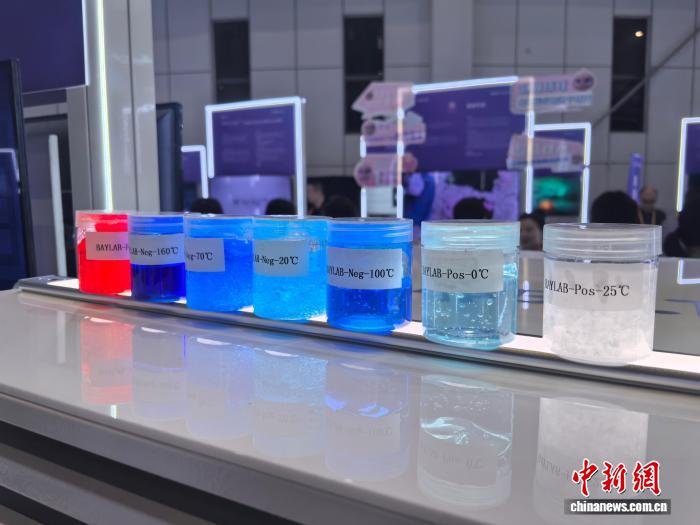
Group 1 - The core viewpoint emphasizes that China's energy storage technology and supply chain can effectively support global diversification of energy storage technologies, transitioning from demonstration to large-scale industrialization [1] - The Chinese energy storage industry has entered a rapid development phase, with over 200 billion yuan in project investments since the 14th Five-Year Plan, leading to over 1 trillion yuan in investments across the supply chain [1] - The market-driven development of energy storage is inevitable, with future innovations in business models driven by regional market demands [1] Group 2 - Byton Technology's cold energy storage technology, based on phase change materials, is designed for communication, cold chain logistics, building energy efficiency, and industrial storage, filling a gap in non-centralized thermal energy applications [2] - Byton Technology has established cooperation intentions with several large domestic communication companies and is currently in the product pilot phase [2] Group 3 - The eighth China International Import Expo serves as a global platform for sharing opportunities, facilitating practical cooperation projects in energy transition [4] - Johnson Controls has recognized the vast application space for its green low-carbon technologies in China, leveraging its innovation in various application markets [4] - The rapid growth of the domestic new energy vehicle industry has significantly increased the demand for lithium batteries, with Johnson Controls providing comprehensive energy solutions for lithium battery factories [4] Group 4 - Toyota launched its first large-capacity Sweep energy storage system at the expo, developed in collaboration with China Minmetals Group, featuring the ability to mix various battery types and capacities without system downtime [5] - Toyota has initiated collaborations with Chinese energy companies to develop solar and hydropower projects, aiming to explore further opportunities in the energy sector [5]
政策驱动还是市场驱动?论储能需求超预期的持续性如何
2025-09-08 04:11
Summary of Key Points from the Conference Call Industry Overview - The conference call discusses the energy storage industry in China, focusing on the impact of policy changes and market dynamics on energy storage demand and profitability. Core Insights and Arguments 1. **Policy and Market Drivers**: The energy storage market is driven by both policy (Document 136) and market forces, with local incentives enhancing investment enthusiasm. For instance, Inner Mongolia and Hebei provide capacity compensation to stimulate investment [1][2][3]. 2. **Diverse Revenue Models**: Different provinces have adopted varied revenue models for energy storage, such as market price differentials in Shandong and auxiliary services in Gansu. This regional differentiation highlights the need for tailored strategies based on local conditions [1][4]. 3. **Shandong's Leading Role**: Shandong is positioned as a leader in independent energy storage development, with a complete system established over five years. The province's market-based revenue from a 100,000 kW storage station is projected to reach approximately 22.6 million yuan in 2025 [1][6]. 4. **Current Market Developments**: The national spot market is rapidly developing, with a goal for full coverage by the end of 2025. This shift will allow energy storage operations to reflect real demand based on spot price signals [1][7][8]. 5. **Capacity Pricing Policy**: The capacity pricing policy is expected to evolve into a unified national framework by the end of the year, incorporating various energy types and calculated based on support duration [1][9][11]. 6. **Investment Opportunities**: Regions with high demand and significant price differentials, such as Shandong and Henan, are attracting investor interest, while areas with lower price differentials, like Jiangsu and Sichuan, may not be suitable for investment [1][10][19]. 7. **Future of Energy Storage**: The energy storage sector is anticipated to grow significantly, driven by cost reductions and supportive policies. However, potential risks include market saturation and competitive pressures that could affect profitability [1][34]. Additional Important Insights 1. **Regional Characteristics**: The economic viability of energy storage projects varies significantly across provinces, influenced by local resource endowments and demand characteristics [1][10][20]. 2. **Wind Power Pricing**: Wind power prices fluctuate significantly, impacting investment decisions. Regions with higher price differentials are more favorable for investment [1][5]. 3. **Challenges in Integration**: Shandong faces challenges in integrating energy sources, networks, and storage due to its strong grid structure and population density [1][26]. 4. **Sustainability of Incentives**: Non-market-based incentives, such as Inner Mongolia's electricity compensation, may not be sustainable long-term, necessitating a shift towards market-driven mechanisms [1][18]. 5. **Future Market Dynamics**: The overall price differentials in the spot market are expected to remain stable or slightly increase by 2030, despite the growth in energy storage capacity [1][32]. This summary encapsulates the key points discussed in the conference call, providing insights into the current state and future prospects of the energy storage industry in China.