
先行赔付

Search documents
武汉一商圈宣布:外地游客可无理由退换货
Chang Jiang Ri Bao· 2026-02-15 00:30
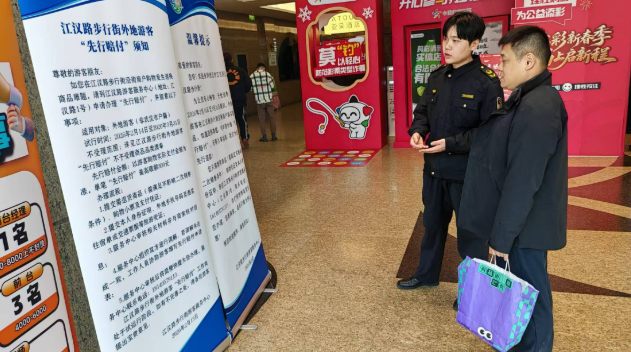
Core Viewpoint - Jianghan District has implemented a "pre-compensation mechanism for tourists" during the Spring Festival, aimed at enhancing consumer confidence and addressing concerns regarding returns and exchanges for out-of-town visitors [1][3]. Group 1: Implementation of the Mechanism - The "pre-compensation" mechanism is prominently displayed at major commercial entrances in Jianghan Road, featuring clear information on "no reason for return/exchange," "24-hour pre-compensation," and "one-click online application" [2]. - The mechanism allows tourists to receive compensation within 24 hours if they meet the compensation criteria, significantly reducing the cost of rights protection for visitors [3][4]. Group 2: Operational Details - Tourists can directly approach service stations in commercial areas for returns, and if disputes arise, they can seek assistance from the main service station on Jianghan Road, which facilitates a quick compensation process [4]. - The district has established a "Integrity Business Alliance" to support the pre-compensation service, ensuring a dual-channel offline dispute resolution mechanism [4]. Group 3: Benefits for Businesses - Local businesses view the insurance backing as beneficial, as it reduces their operational pressure and encourages them to adhere to better business practices, thereby minimizing consumer disputes [7]. Group 4: Technological Integration - Jianghan Road has also launched an online pre-compensation mini-program, allowing tourists to submit compensation requests via mobile devices, enhancing the efficiency of the process [8].

逾2亿赔偿拖垮业绩!五矿证券净利腰斩
Xin Lang Cai Jing· 2026-01-16 11:06
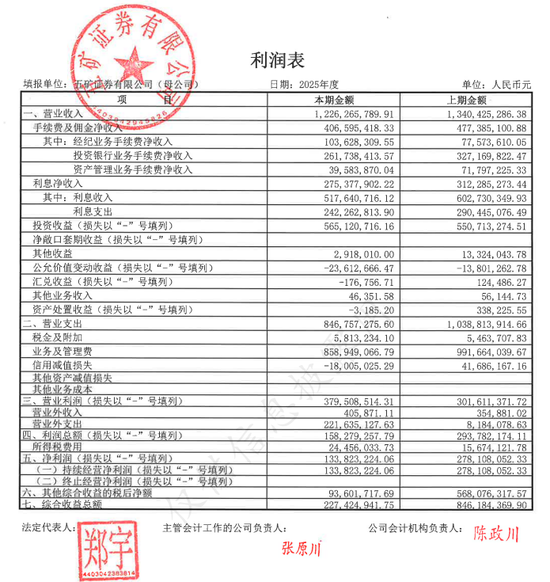
Core Viewpoint - Wenkang Securities, a subsidiary of Wenkang Capital, reported a significant decline in both revenue and net profit for the year 2025, primarily due to a massive increase in "non-operating expenses" related to investor compensation in the Guangdao Digital case [1][4][11]. Financial Performance - Wenkang Securities' operating revenue for 2025 was 1.226 billion yuan, a year-on-year decrease of 8.52% [4][17]. - The net profit plummeted to 133.82 million yuan, reflecting a staggering decline of 51.88% compared to the previous year [4][18]. - Non-operating expenses surged by 2608.13%, amounting to 221.64 million yuan, which significantly impacted the overall financial performance [7][18]. Business Segment Analysis - The company's main business segments showed a mixed performance, with two segments increasing and three declining: - Brokerage business revenue reached 104 million yuan, up 33.59% year-on-year [5][17]. - Proprietary trading revenue was 542 million yuan, a slight increase of 0.86% [5][17]. - Asset management revenue fell sharply to 40 million yuan, down 44.87% [6][17]. - Investment banking revenue decreased to 262 million yuan, a decline of 20% [6][17]. - Interest income from credit business was 275 million yuan, down 11.82% [6][17]. Impact of Guangdao Digital Case - The Guangdao Digital case, where the company was implicated in fraudulent activities leading to inflated revenues, resulted in Wenkang Securities taking on compensation responsibilities [9][21]. - A compensation fund of 210 million yuan was established to address investor losses, which aligns closely with the increase in non-operating expenses reported [10][22]. - The case highlighted significant risks associated with compliance and operational integrity, necessitating improvements in risk management and professional capabilities moving forward [11][23].

证券纠纷多元化解机制稳步推进
Jing Ji Ri Bao· 2026-01-12 22:09
Group 1 - The Nanjing Intermediate Court made a first-instance judgment on the Jin Tong Ling Securities false statement representative lawsuit, involving over 43,000 investors with a total compensation amount exceeding 770 million yuan, primarily benefiting individual investors [1] - The Jin Tong Ling case is the third instance of a substantive judgment under the special representative lawsuit procedure, following the Kangmei Pharmaceutical and Zeda Yisheng cases, highlighting the effectiveness of this legal mechanism in protecting investor rights [1] - The China Securities Regulatory Commission (CSRC) emphasized that the special representative lawsuit serves as a significant legal method for coordinating regulatory and judicial governance, deterring potential violations in the securities market [1] Group 2 - The CSRC has taken administrative actions against the Jinzhou Port Securities false statement case, which severely disrupted market order and harmed investor rights, with over 50 investors authorizing the Investor Protection Agency to apply for a special representative lawsuit [2] - The implementation of the special representative lawsuit system aligns with the new "National Nine Articles" aimed at enhancing the application of this legal framework to protect investor rights effectively [2] - The CSRC will continue to support the Investor Protection Agency in fulfilling its legal public service role in civil litigation, promoting judicial cooperation to better safeguard the rights of investors, especially small and medium-sized investors [2] Group 3 - On December 30, 2025, Wenkang Securities announced the establishment of a special fund for advance compensation regarding the Guangdao Digital false statement, with an initial fund size of 210 million yuan, managed by the China Securities Investor Protection Fund [3] - The advance compensation mechanism is part of the diversified resolution mechanism for securities disputes as stipulated in the Securities Law, allowing for voluntary commitments from controlling shareholders and related securities companies to establish a special fund [3] - The CSRC supports market institutions in proactively conducting advance compensation work to effectively resolve market disputes and efficiently protect investor rights [3]
为主动赔偿投资者点赞
Jing Ji Ri Bao· 2026-01-08 00:06
Core Viewpoint - The introduction of a "pre-compensation" mechanism allows investors to receive compensation for losses due to false statements or fraud before the completion of lengthy legal processes, enhancing investor protection and market confidence [1][2]. Group 1: Pre-Compensation Mechanism - Minmetals Securities has established a pre-compensation fund of 210 million yuan to compensate eligible investors for losses incurred due to the illegal disclosure practices of the listed company Guandao Digital [1]. - The essence of pre-compensation lies in the "pre" aspect, where responsible parties proactively provide compensation to investors before judicial rulings, allowing for quicker and more direct restitution [1][2]. Group 2: Market Impact and Efficiency - The pre-compensation approach demonstrates a proactive attitude from companies and intermediaries, helping to soothe market sentiment and mitigate reputational damage by addressing issues promptly [2]. - This mechanism can improve the efficiency of investor compensation, reduce reputational risks for responsible parties, and lower regulatory costs, presenting multiple benefits [2]. Group 3: Challenges and Considerations - Current regulations on pre-compensation are voluntary rather than mandatory, leading to a lack of sufficient motivation for companies and intermediaries to participate [3]. - A more precise and differentiated calculation model is needed to determine the extent of losses attributable to market risks versus those caused by illegal activities, ensuring fairness for both investors and responsible parties [3]. - The sustainability of the pre-compensation system relies on the ability of intermediaries to recover costs from other responsible parties after compensation is paid [3]. Group 4: Long-term Development - The improvement of any system is a gradual process, and as investor confidence in timely compensation grows, it will lead to a more active and resilient market, ultimately supporting high-quality economic development [4].
新年退市第一股:广道数字“一条龙”造假 监管“零容忍”顶格处罚
Xin Jing Bao· 2026-01-07 14:13
Core Viewpoint - The first delisted company of 2026, Guangdao Digital, faced termination of its listing on January 5 after a 15-day delisting adjustment period, following a systematic financial fraud case that inflated revenues by over 1.4 billion yuan [1] Group 1: Financial Fraud Details - Guangdao Digital's fraudulent activities included fabricating sales and procurement through fake contracts, invoices, and bank receipts, leading to a cumulative inflated revenue of approximately 1.466 billion yuan from 2018 to mid-2024, with a staggering 99.39% inflation rate in 2022 [3] - The fraud was exposed in December 2024, prompting regulatory inquiries and investigations, which revealed that the company's management, including the actual controller Jin Wenming, was complicit in the fraudulent activities [2][3] Group 2: Regulatory Actions and Penalties - The regulatory authorities imposed maximum penalties on Guangdao Digital, including a fine of 10 million yuan for the company and a total of 30.5 million yuan for 12 responsible individuals, with lifetime market bans for key figures [4] - Minmetals Securities, the underwriting institution, established a 210 million yuan compensation fund to address investor losses, reflecting the regulatory requirement for accountability among intermediaries [4] Group 3: Market Oversight and Future Implications - Since 2024, the China Securities Regulatory Commission (CSRC) has maintained a "zero tolerance" policy towards financial fraud, handling 159 cases and imposing fines totaling 8.1 billion yuan [5] - The CSRC emphasized the need for enhanced measures to improve the quality of listed companies and protect investor rights, indicating a commitment to high-quality market development [6]
金通灵求生:连续6年财务造假还是要重整复活!
Xin Lang Cai Jing· 2026-01-03 01:28
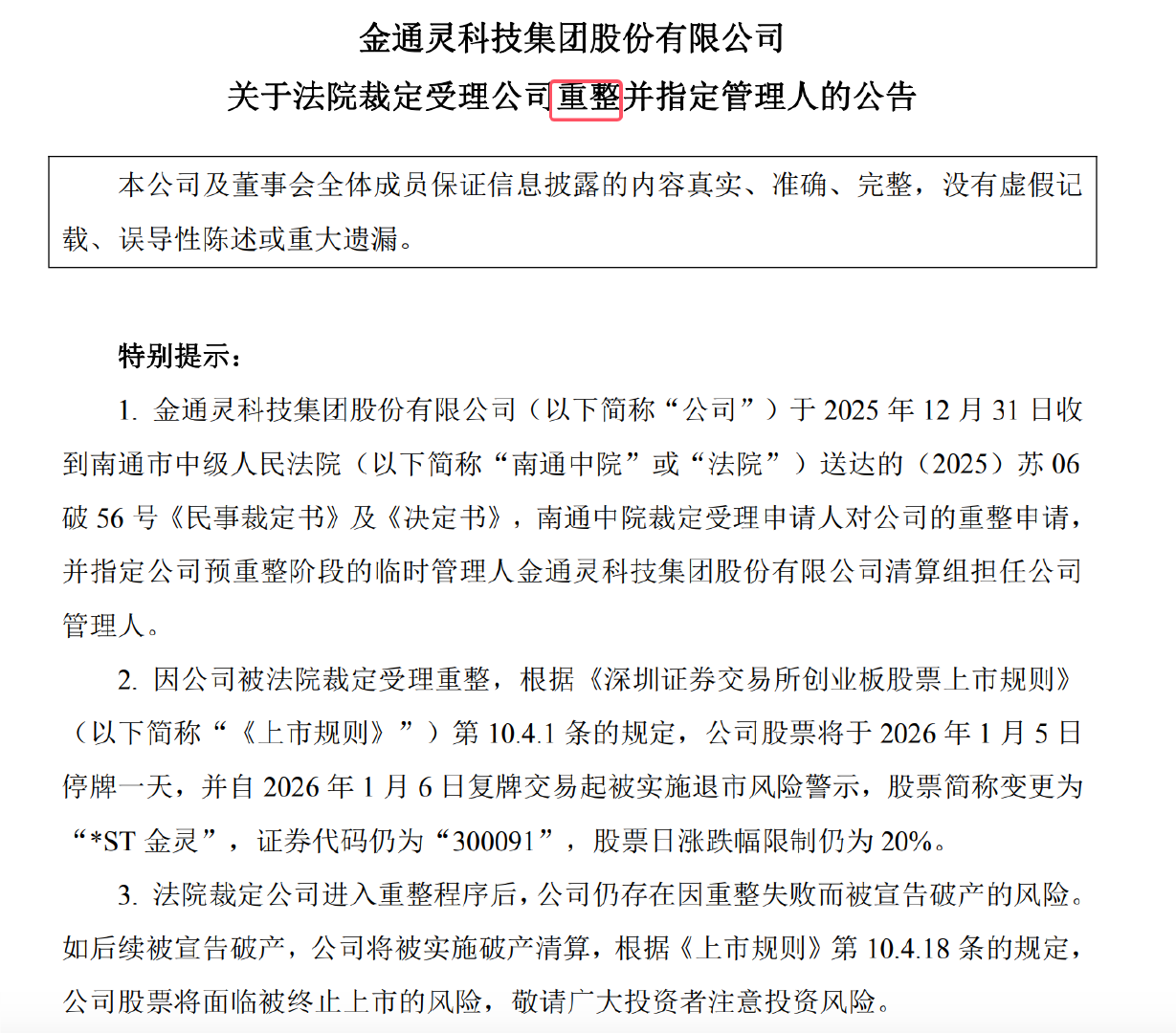
Core Viewpoint - Jintongling has been involved in financial fraud for six consecutive years, inflating revenue by over 1.3 billion and profits by 500 million, and is currently undergoing bankruptcy reorganization [1][7][9] Group 1: Financial Fraud and Legal Proceedings - Jintongling utilized various methods for financial fraud over six years, leading to inflated revenue and profits [1][7] - On September 30, 2025, the Shanghai Third Intermediate People's Court issued a criminal judgment against Jintongling and related parties [2][8] - The Nanjing Intermediate Court ruled that Jintongling must compensate over 43,000 investors a total of 770 million yuan, with Everbright Securities being the most affected party [3][9][12] Group 2: Regulatory Actions and Investor Protection - The China Securities Regulatory Commission (CSRC) has strengthened penalties for securities crimes, indicating a shift towards more severe consequences for corporate misconduct [1][9] - The Jintongling case is part of a broader trend in which the CSRC is applying special representative litigation procedures to protect investor rights, following similar cases like Kangmei Pharmaceutical [5][13] - The CSRC will continue to support investor protection initiatives and facilitate the use of representative litigation to maintain market integrity and promote high-quality market development [6][14]

判了!4.33万投资者,获赔近7.75亿
Feng Huang Wang· 2026-01-01 04:21
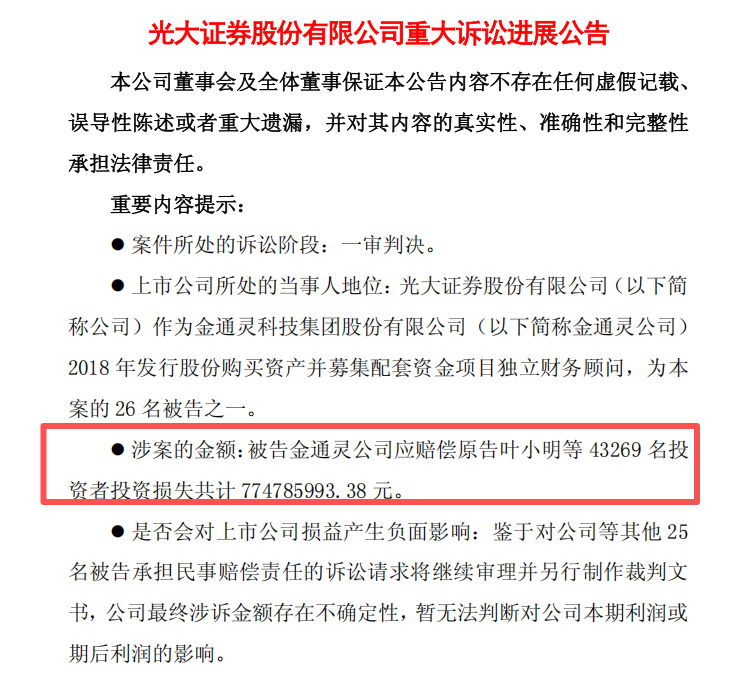
Core Viewpoint - The first-instance judgment of the Jin Tong Ling Securities false statement liability dispute has been announced, with the Nanjing Intermediate Court ordering Jin Tong Ling to compensate over 43,000 investors nearly 775 million yuan and bear related legal fees [1][3] Group 1: Legal Proceedings and Outcomes - The court will continue to hear civil compensation claims against 25 other defendants, including Everbright Securities, with a separate judgment document to be issued [3] - The China Securities Regulatory Commission (CSRC) highlighted that the Jin Tong Ling case is a significant application of the special representative litigation procedure, following previous cases like Kangmei Pharmaceutical and Zeda Yisheng [4] - The special representative litigation system is seen as an effective legal mechanism to deter potential violations in the securities market and to facilitate collective investor rights protection [7] Group 2: Regulatory Actions and Penalties - Four securities firms and one accounting firm have faced penalties due to the long-term financial fraud by Jin Tong Ling, which spanned six years [8] - Specific penalties include warning letters for Everbright Securities and its personnel, as well as regulatory measures for Guohai Securities and Huaxi Securities, with the latter also facing a six-month suspension of its sponsorship business [9] - The accounting firm, Dahuasheng, was fined a total of 44.02 million yuan and suspended from providing securities services for six months due to its involvement in the fraudulent activities [10] Group 3: Financial Impact of Fraud - Jin Tong Ling's financial manipulation resulted in a total of over 1.1 billion yuan in inflated revenue and over 400 million yuan in inflated profits across several years, with significant discrepancies in reported profits [10] - The manipulation rates for the years involved were alarmingly high, with profit inflation reaching over 5774% in 2020, indicating severe violations of investor rights and financial integrity [10]
判了!4.33万投资者,获赔近7.75亿
财联社· 2026-01-01 03:51
Core Viewpoint - The article discusses the first-instance judgment of the Jin Tong Ling Securities false statement liability dispute, where the Nanjing Intermediate Court ordered Jin Tong Ling to compensate over 43,300 investors nearly 775 million yuan in losses, along with related legal fees and case acceptance fees [1][4]. Group 1: Legal Proceedings and Outcomes - The court will continue to hear civil compensation claims against Everbright Securities and 25 other defendants, with a separate ruling document to be produced [4]. - The China Securities Regulatory Commission (CSRC) highlighted that the Jin Tong Ling case is the latest to apply the special representative litigation procedure, following similar cases like Kangmei Pharmaceutical and Zeda Yisheng [5]. - The CSRC emphasized the effectiveness of the special representative litigation system in collectively protecting investors' rights and deterring potential violations in the securities market [8]. Group 2: Financial Implications and Penalties - Jin Tong Ling's financial fraud spanned six years, leading to penalties for four securities firms and one accounting firm involved [12]. - The Jiangsu Securities Regulatory Bureau issued seven fines against the involved firms and personnel, with specific penalties including warning letters and suspensions of business qualifications [13]. - The audit intermediary, Dahua, faced a total fine of 44.02 million yuan and a six-month suspension from providing securities services due to severe financial manipulation by Jin Tong Ling [14]. Group 3: Financial Manipulation Details - Jin Tong Ling's fraudulent activities resulted in a total of over 1.1 billion yuan in inflated revenue and over 400 million yuan in inflated profits across several years, with significant discrepancies in reported profits [14]. - The manipulation of profits was particularly severe in 2019, where the profit reduction exceeded 57 times, indicating a high level of concealment and severity of the fraudulent behavior [14].


证监会有关部门负责人就有关问题答记者问
Xin Hua Wang· 2025-12-31 15:52
Core Viewpoint - The China Securities Regulatory Commission (CSRC) emphasizes the importance of representative litigation in protecting investors' rights and maintaining market order, following recent court rulings on securities fraud cases [1][2]. Group 1: Recent Legal Developments - The Nanjing Intermediate Court has made a first-instance ruling in the Jin Tong Ling Securities false statement representative litigation case, marking it as a significant outcome in the series of securities fraud cases [1]. - The Jin Tong Ling case follows previous cases like Kangmei Pharmaceutical and Zeda Yisheng, showcasing the effectiveness of representative litigation in protecting investors' rights and resolving disputes [1]. - The Shenyang Intermediate Court has announced the application of representative litigation procedures in the Jinzhou Port securities fraud case, which has severely disrupted market order and harmed investors' rights [1]. Group 2: Regulatory Support and Initiatives - The CSRC will continue to support the China Securities Investor Service Center in fulfilling its legal public service role in representing investors in civil litigation [2]. - The CSRC encourages judicial authorities to apply representative litigation procedures to enhance investor protection, particularly for small and medium-sized investors, thereby promoting a healthy market ecosystem [2]. - A special fund for advance compensation has been established by Wukuang Securities regarding the Guangdao Digital false statement case, with the China Securities Investor Protection Fund acting as the fund manager [2].
判了!4.3万余名投资者,获赔超7.7亿元
Zhong Guo Zheng Quan Bao· 2025-12-31 14:43
Core Viewpoint - The Nanjing Intermediate People's Court ruled in favor of over 43,000 investors in the Jin Tong Ling (300091) securities fraud case, awarding them over 770 million yuan in compensation, marking a significant step in the enforcement of collective litigation in China's capital markets [1][2] Group 1: Legal Proceedings and Outcomes - The court's ruling is a preliminary judgment that establishes the company's liability for compensation, while the responsibilities of the company's former executives and related intermediaries will be determined in a separate ruling [1] - Jin Tong Ling has been found to have engaged in financial fraud for six consecutive years, inflating revenue by over 1.3 billion yuan and profits by 500 million yuan, and is currently undergoing bankruptcy reorganization [2] - The ruling highlights the effectiveness of the special representative litigation system in increasing the costs of illegal activities in the capital market and protecting the rights of small and medium investors [2] Group 2: Investor Protection and Institutional Role - Investor protection agencies have actively fulfilled their responsibilities in the representative litigation, including assessing eligible plaintiffs and preparing legal arguments [3][4] - The China Securities Investor Services Center has increased its support for ordinary representative litigation, with five cases being accepted by various courts, enhancing the collaborative effect of different types of representative litigation [5] Group 3: Company Financial Impact and Future Actions - Jin Tong Ling announced that it will recognize estimated liabilities based on the court's ruling, which will significantly impact the company's current and future profits [6] - The company plans to implement a debt repayment scheme through cash and debt-equity swaps as part of its reorganization process, aiming to improve compensation capabilities for small investors [7][8] Group 4: Regulatory and Market Context - The case is part of a broader trend of increasing regulatory scrutiny and enforcement against fraudulent activities in the capital markets, following similar cases like Kangmei Pharmaceutical and Zeda Yisheng [9] - The China Securities Regulatory Commission supports the implementation of the special representative litigation system as a means to effectively protect investor rights and maintain market integrity [9][12]