
全国统一电力大市场

Search documents
大摩闭门会:金融、电力、交运、原材料行业更新
2026-03-26 13:20
Summary of Key Points from the Conference Call Industry and Company Overview - **Industries Discussed**: Financial, Power, Transportation, and Materials - **Companies Mentioned**: Jitu (极兔), Innovation Industry (创新实业), Tianshan Aluminum (天山铝业), Ningbo Bank (宁波银行) Core Insights and Arguments Jitu (极兔) Insights - Jitu is recognized for its strong growth in the express delivery sector, particularly in Southeast Asia, driven by China's e-commerce expansion [3][5] - A recent survey indicated that 87% of investors are bullish on Jitu, with expectations of over 30% growth in delivery volumes in Southeast Asia [5][6] - Concerns from bearish investors include potential pressure on profits in China and risks from geopolitical changes affecting logistics and costs [7][9] - Jitu's expansion into new markets is expected to yield faster growth than in Southeast Asia due to lower market saturation [11] - The company is anticipated to release its 2025 profit report on March 30, which is seen as a significant catalyst for stock performance [15] Power and Grid Equipment Insights - China is advancing a new type of power system, which is expected to drive investment in grid infrastructure [19][20] - Investment in the power grid is projected to grow at a rate of 8-9% annually, with a significant increase expected in 2026 [20] - The shift towards renewable energy sources is leading to a decline in coal and gas power generation, with renewables becoming increasingly dominant [21][29] - Companies like Pinggao and NARI are expected to benefit from the acceleration of grid investments, with strong order growth anticipated [25][28] Aluminum Industry Insights - The ongoing geopolitical conflict in the Middle East is causing supply disruptions in the aluminum market, with a potential reduction of up to 4 million tons in global supply [33][40] - Domestic aluminum production in China is expected to increase slightly, but the overall growth is limited by a production cap set by the government [35][37] - Companies like Innovation Industry and Tianshan Aluminum are positioned well due to their low production costs and integrated operations [41][47] - The aluminum market is expected to remain tight, supporting prices despite geopolitical uncertainties [39][50] Financial Sector Insights - The Chinese financial sector is viewed positively due to stable policies and a resilient banking system, with expectations for continued growth in exports and financial performance [53][55] - Recent surveys in Zhejiang indicate strong export growth, with some areas reporting nearly 40% increases in early 2023 [53] - Ningbo Bank is highlighted for its strong performance metrics, with expectations for profit growth as loan rates stabilize [64][66] Other Important Points - The geopolitical landscape is a significant concern, particularly regarding its impact on logistics and costs in Southeast Asia [9][14] - The transition to a unified national power market in China is expected to enhance inter-provincial grid cooperation and investment [23] - The aluminum industry is facing potential supply shortages due to geopolitical tensions, which could lead to increased prices and demand for aluminum in renewable energy applications [39][50] This summary encapsulates the key discussions and insights from the conference call, providing a comprehensive overview of the current state and future outlook of the relevant industries and companies.

光伏50ETF(159864)涨超0.8%,新能源超预期发展
Mei Ri Jing Ji Xin Wen· 2025-11-26 06:55
Core Insights - The critical point for system cost increase is when wind and solar power generation reaches 15%, and the demand for flexible resources increases significantly at 20% [1] - The rapid development of renewable energy necessitates a "soft landing" for the power system, which can be achieved through pricing signals for energy and safety products [1] - There is a natural mismatch between wind and solar resources and demand, with abundant resources in the western regions but concentrated load in the eastern regions, highlighting the need for a unified national electricity market [1] Industry Analysis - The pressure on grid security is increasing, and traditional relay protection theories are inadequate for the new "dual high" power system requirements, with State Grid planning to invest over 650 billion yuan by 2025 [1] - The growth potential of the photovoltaic industry is primarily driven by global climate cooperation and Nationally Determined Contributions (NDC) targets, with marketization of electricity helping to alleviate power restriction issues and enhance green electricity consumption capacity [1] - Once the penetration rate of renewable energy exceeds 15%, system costs will enter a rapid increase phase, necessitating optimization of resource allocation through mechanisms like spot markets and carbon markets [1] Company Insights - The photovoltaic 50 ETF (159864) tracks the photovoltaic industry index (931151), which selects listed companies involved in silicon materials, wafers, battery cells, modules, and related equipment manufacturing to reflect the overall performance of the photovoltaic industry chain [1]
中邮证券:建立全国统一电力大市场 NDC驱动新能源高质量发展
Zhi Tong Cai Jing· 2025-11-24 10:01
Core Insights - The electricity spot market is a key focus for high-quality development, with nuclear power and coal power transformation competing within the same ecological niche [1][2] - The primary driver for the growth of renewable energy is the Nationally Determined Contributions (NDC), while technological advancements play a secondary role [3] Group 1: Electricity Reform - There is no perfect template for electricity reform; a new type of production relationship is needed, with green electricity consumption as the main line and safety as the bottom line [1] - The issue of "energy trilemma" must be addressed, as water, wind, and solar all derive from the sun and require extensive mutual consumption [1] - A national unified electricity market needs to be established to facilitate this [1] Group 2: Electricity Spot Market - The electricity spot market is crucial for the high-quality development of renewable energy and ultra-high voltage systems [2] - The pricing system is shifting from a multi-track to a single-track system, with a transition from scalar to vector [2] - Key thresholds include: 15% renewable energy generation as a critical point for system cost increases, 15% as a point for grid prosperity, and 20% as a point for increased demand for flexible resources [2] Group 3: Growth of Renewable Energy - The growth of renewable energy primarily stems from NDC, followed by technological progress [3] - Investment recommendations include: 1. Secondary equipment from a grid safety perspective 2. Flexible resources such as nuclear power, coal power transformation, gas turbines, solar thermal, hydroelectric transformation, pumped storage, new energy storage, and user-side adjustments (virtual power plants, V2G, demand response) competing within the same ecological niche [3] 3. The construction of the electricity spot market requires improved metering infrastructure, including both electricity and carbon measurement [3]
电网“破墙”!两大电网首次跨区现货交易,全国统一电力大市场启幕
Sou Hu Cai Jing· 2025-10-20 14:20
Core Insights - The article highlights a significant milestone in China's electricity market reform, marked by the first cross-regional electricity trading between the State Grid and Southern Grid, enabling efficient power flow across regions [2][10]. Group 1: Market Dynamics - The transition from a segmented regional electricity system to a unified market allows for more efficient allocation of resources, addressing the long-standing issue of regional power imbalances [3][5]. - The recent electricity demand surge in Zhejiang, driven by high temperatures, necessitated urgent support from Southern Grid, showcasing the need for flexible and responsive electricity supply mechanisms [3][9]. Group 2: Trading Mechanism - The innovative use of spot trading instead of traditional planned dispatch allows for real-time demand aggregation and precise electricity delivery, enhancing market efficiency [4][8]. - The spot price for electricity in Zhejiang reached 0.8 yuan/kWh, reflecting a 20% increase over the benchmark price, while the price in Guangdong was only 0.5 yuan/kWh, demonstrating the effectiveness of price signals in resource allocation [8]. Group 3: Policy and Infrastructure - The successful implementation of this trading mechanism is attributed to supportive policies and technological advancements, including the operationalization of the Yunxiao DC transmission line, which facilitates real-time data exchange [6][7]. - The establishment of a unified electricity market is part of a broader strategy to achieve energy transition goals, with a target to build a comprehensive market system by 2030 [6][10]. Group 4: Long-term Implications - The unified market not only addresses immediate supply challenges but also promotes long-term energy transition by enabling greater participation of renewable energy sources and reducing reliance on coal [9][10]. - The increase in cross-regional spot trading of clean energy, which accounted for 41% of total transactions in the first nine months of 2023, indicates a growing trend towards sustainable energy consumption [9].

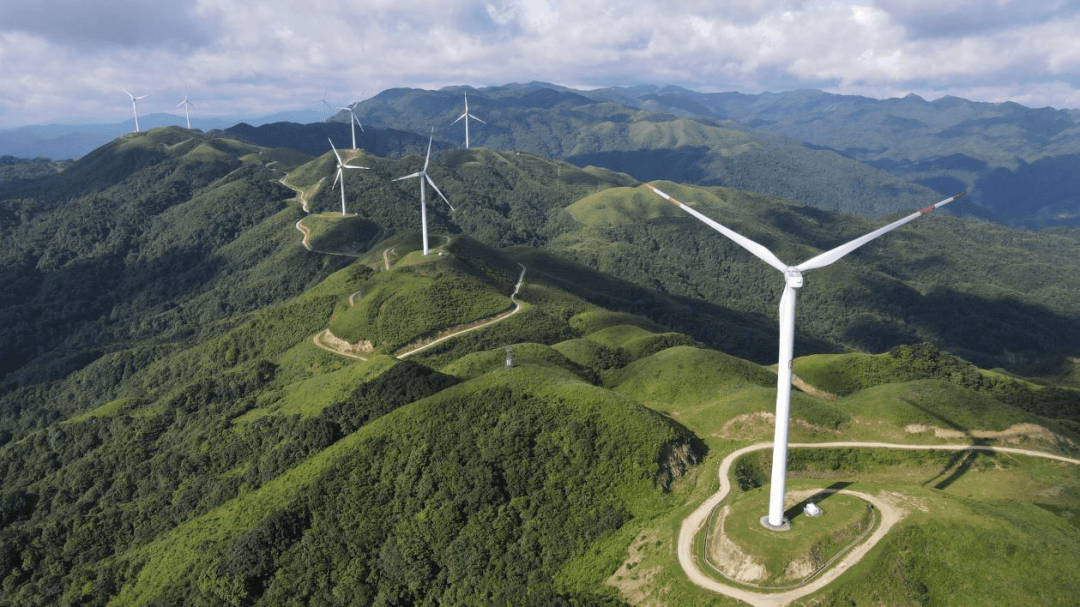
电网“破墙”,两大电网首次跨区现货交易,全国统一电力大市场启幕
3 6 Ke· 2025-10-16 00:18
Core Insights - The article highlights a significant milestone in China's electricity market reform, marked by the first cross-regional electricity allocation through spot trading between the State Grid and the Southern Grid, facilitating the transfer of 1.8 million kilowatts of clean electricity to the Yangtze River Delta [1][2][10] Group 1: Breakthrough in Cross-Regional Electricity Trading - The recent transaction addresses the long-standing issue of "regional segmentation" in China's electricity system, which has been managed by provincial boundaries, leading to inefficiencies in electricity distribution amid rising demand and renewable energy integration [2][4] - Zhejiang province faced a critical electricity shortage due to high temperatures and increased demand, with peak loads reaching 11,582 megawatts, a year-on-year increase of 24.7% [2][8] - The innovative use of spot trading instead of traditional planned allocation allowed for real-time matching of supply and demand, enhancing efficiency and reducing administrative intervention [3][7] Group 2: Policy, Hardware, and Mechanism Innovations - The successful execution of this cross-regional spot trading is attributed to a combination of policy support, hardware connectivity, and innovative mechanisms [4][5] - The implementation of the national unified electricity market system is guided by policies established in 2022, aiming for a more integrated and efficient electricity market by 2025 [5][6] - The Yunxiao DC transmission line, operational since 2022, serves as a critical infrastructure enabling real-time data exchange and market transactions, facilitating the transfer of electricity from surplus regions to high-demand areas [6][8] Group 3: Long-Term Implications for the Electricity Market - In the long run, this transaction is expected to reshape the electricity system, promoting energy transition and enhancing flexibility in response to the growing share of renewable energy sources [8][9] - The market mechanism allows for better utilization of clean energy, with 90% of the electricity sent to Zhejiang being hydropower and wind power, significantly reducing coal consumption and carbon emissions [8][9] - The unified market structure is anticipated to optimize electricity costs for users, encouraging diverse market participants to engage in trading, thus shifting the market dynamics from supply-driven to demand-driven [9][10]