
人才强国

Search documents
技能照亮前程,第一届全国计量和检验检测职业技能大赛启动
Xin Jing Bao· 2026-02-25 03:03
Core Viewpoint - The launch of the first national vocational skills competition in the field of measurement and inspection in China is a significant step towards building a quality and talent-driven nation, emphasizing the importance of skilled personnel in this sector [1] Group 1: Competition Overview - The competition is themed "Skills Illuminate the Future" and is a collaborative initiative by five government departments, including the Market Supervision Administration and the Ministry of Human Resources and Social Security [1] - It aims to promote the spirit of model workers, labor, and craftsmanship while enhancing the construction of a high-skilled talent team in the measurement and inspection field [1] Group 2: Competition Structure - The competition includes two main categories: measurement and inspection, with a total of six competition projects [1] - The measurement projects consist of three public utility measurement verification items: electric meters, electronic weighing scales, and gas meters [1] - The inspection projects include testing for heavy metals in food, cotton hand-pulling length detection, and feather down content detection [1] Group 3: Event Schedule and Objectives - The finals of the competition are scheduled to take place in June and October in Nanjing and Wuhan, respectively [1] - The competition embodies the "Regulation for the People" concept, focusing on key issues that concern the public, and aims to enhance the enthusiasm of practitioners for technical research and skill improvement [1] - It seeks to foster a work ethic of dedication and excellence in the industry, thereby strengthening the credibility of public measurement and inspection work [1]
应急管理大学成立大会举行
Xin Lang Cai Jing· 2026-01-19 09:56
Core Viewpoint - The establishment of the Emergency Management University is a significant decision made by the central government to enhance talent cultivation and discipline construction in emergency management, aligning with the strategies of building a strong education, technology, and talent nation [1] Group 1: Objectives and Goals - The university aims to build a distinctive, world-class high-level application research university, focusing on the modernization of the emergency management system and capabilities [1] - It emphasizes the importance of integrating political leadership throughout the educational process to ensure the safety of people's lives and property [1] Group 2: Educational Focus and Research - The university will conduct comprehensive research across all disaster types and emergency practices, creating clusters of disciplines and specialties that serve safety production, natural disaster prevention, and emergency rescue [1] - There is a focus on developing more "Emergency+" training models that emphasize practical training, aiming to cultivate versatile talents who are knowledgeable in the industry, specialized in their fields, and skilled in emergency response [1] Group 3: Integration of Education and Technology - The university will strengthen the integration of education and technology, concentrating on major disaster risk prevention and emergency response challenges, while advancing foundational theoretical research and tackling key core technologies [1]


应急管理大学成立大会举行,张国清出席并讲话
Xin Lang Cai Jing· 2026-01-19 08:56
Core Viewpoint - The establishment of the Emergency Management University is a significant decision made by the Central Committee of the Communist Party of China, aimed at strengthening talent cultivation and discipline construction in emergency management, and modernizing the emergency management system and capabilities [1][5]. Group 1: University Establishment and Goals - The Emergency Management University aims to become a high-level application-oriented research university with distinctive features and world-class standards [5]. - The university will emphasize the "political school" concept, integrating the Party's leadership throughout the educational process to ensure the safety of people's lives and property [5]. - It will focus on a comprehensive approach to research, addressing all types of disasters and emergency situations, and will develop clusters of disciplines and specialties related to safety production, natural disaster prevention, and emergency rescue [5]. Group 2: Talent Development and Research Focus - The university plans to create more "Emergency+" training models, emphasizing practical training to cultivate versatile talents who are knowledgeable in the industry, specialized in their fields, safety-conscious, and capable of emergency response [5]. - There is a significant shortage of practical, composite emergency management professionals, with a reported gap of approximately 400,000 personnel in the emergency management system [3][8]. - The university will strengthen the integration of education and science, focusing on major disaster risk prevention and emergency response challenges, enhancing foundational theoretical research, and accelerating breakthroughs in key technologies [5]. Group 3: Historical Context and Development - The establishment of the Emergency Management University follows the formation of the Ministry of Emergency Management in 2018, marking a new phase in the modernization of China's emergency management efforts [3][8]. - The Ministry initiated the merger of North China University of Science and Technology and Disaster Prevention Technology College to establish the Emergency Management University [8]. - The Ministry's leadership has emphasized the university's role as a "nurturing ground" for emergency management talent and a "national team" for technological innovation [8].
海乐行启动国际助学基金扶持计划
Sou Hu Wang· 2026-01-13 05:17
Core Insights - The core focus of the news is the launch of the upgraded "Team Leader Welfare Policy" by the Hailuoxing China Federation in 2026, which aims to enhance the support system for team leaders through a more structured talent development path and international resource integration [1][2] Group 1: Policy Overview - The "Team Leader Welfare System" has been elevated to a strategic level within the federation, becoming a key component in promoting global organizational development [1] - The new policy emphasizes support for personal growth and extends benefits to the families of team leaders, reflecting the federation's commitment to long-term investment in its core members [1][2] Group 2: Educational Support Initiatives - The introduction of the "International Education Support System" aims to provide financial assistance for team leaders' children studying abroad, covering up to 70% of total study costs, including tuition, accommodation, and living expenses [2][4] - The establishment of the "Global Scholarship Fund" is a highlight, designed to internationalize the talent system and create intergenerational incentives through educational support [3][4] Group 3: Fund Management and Evaluation - The fund operates on principles of fairness, transparency, and excellence, focusing on the contributions of team leaders and the potential of their children [3][7] - A comprehensive evaluation system will assess both the team leaders' contributions and the students' academic abilities, ensuring that the fund is not merely financial support but also a recognition mechanism [3][5] Group 4: Collaboration with International Institutions - The federation has established partnerships with several prestigious international universities, including University College London and the University of California, Berkeley, to ensure high-quality educational opportunities for beneficiaries [4][5] - The collaboration is not limited to well-known institutions but is also aligned with students' professional directions and growth plans [4] Group 5: Long-term Vision and Social Responsibility - The policy reflects the federation's response to contemporary ideals of "common prosperity," "talent empowerment," and "educational equity," aiming to alleviate the pressure on talented families in accessing educational resources [8] - The federation plans to expand the scholarship program and explore initiatives like a "Return Plan" to encourage funded students to participate in federation projects after their studies, creating a closed-loop system of international learning and organizational development [9]
千余师生雪地共绘“福建舰” 哈工大上演硬核浪漫
Xin Lang Cai Jing· 2025-12-28 12:14
Core Viewpoint - The event at Harbin Engineering University showcased a large snow drawing of the "Fujian" aircraft carrier, created by over 1,200 students and faculty, symbolizing the integration of advanced technology and cultural heritage in education and national pride [1][6]. Group 1: Event Overview - The snow drawing measures 230 meters long and 112 meters wide, completed in harsh winter conditions [1]. - The design process began in September, involving over 60 iterations and the use of advanced visual techniques to enhance the impact of the artwork [1]. - The event is part of a tradition at Harbin Engineering University, now in its seventh year, expanding from 100 participants in 2018 to over 1,000 this year [6]. Group 2: Technical Aspects - A design team utilized Beidou real-time differential positioning technology to accurately mark over 1,300 feature points on the ground [2]. - The positioning was achieved with centimeter-level precision, integrating global reference stations with the university's mobile observation system [2]. Group 3: Execution Process - Students worked in designated "battle positions," using shovels and brooms to meticulously clear snow and recreate the design [4]. - The final image of the "Fujian" aircraft carrier, along with three carrier-based aircraft, was completed in about one and a half hours, emphasizing teamwork and precision [4].

丁薛祥在卓越工程师培养改革座谈会上强调 加大卓越工程师培养力度 为建设教育强国、科技强国、人才强国提供有力支撑
Zheng Quan Shi Bao Wang· 2025-12-04 11:55
Core Points - The meeting on the reform of the training of outstanding engineers was held, emphasizing the importance of engineers as key drivers of engineering technology development and national strategic talent [1][2] - The Chinese government aims to enhance the training of engineering talent to support the construction of a strong education, technology, and talent nation [1] Group 1 - The training reform for outstanding engineers has made positive progress, promoting collaborative education between industry, academia, and research, and improving the quality of engineering education [1][2] - The meeting highlighted the need to deepen engineering education reform and increase the training of outstanding engineers to meet national strategic needs [1][2] Group 2 - There is a call to improve the training system for outstanding engineers, ensuring a mechanism for regular and systematic training involving top universities and enterprises [2] - The focus is on optimizing training layouts to align with modern industrial systems and engineering construction needs, expanding into urgently needed fields [2] - The meeting emphasized the importance of internationalizing engineering education and mutual recognition of engineering qualifications and standards to better support enterprises going global [2]
第三十届全国广播电视技术能手竞赛决赛颁奖仪式在京举办
Ren Min Ri Bao· 2025-11-21 23:31
Core Points - The National Broadcasting and Television Skills Competition has been held for 30 years, marking its significance in the broadcasting industry [1] - The competition is organized by the National Radio and Television Administration and is the only skills competition in the broadcasting technology field [1] - The event is part of broader national strategies including the strategy for science and education, talent development, innovation-driven growth, and cultural strength [1] Group 1 - The competition has evolved since its inception in 1996, becoming the most influential skills event in the broadcasting industry with the widest coverage and highest participation [1] - This year's competition was co-hosted by the National Radio and Television Administration and the All-China Federation of Trade Unions, featuring four specialties: network and data security, IPTV, medium and shortwave broadcasting, and frequency and television broadcasting [1] - The competition included two phases: preliminary rounds held from June to September and finals held from November 17 to 20, with a total of 132 award-winning participants [1]
权威访谈丨在发展中保障和改善民生
Yang Guang Wang· 2025-11-18 05:11
Group 1: Economic and Social Development - The core principle of the "14th Five-Year Plan" is to prioritize people's well-being, emphasizing the need to enhance and improve living standards and promote common prosperity for all [1] - The plan includes policies aimed at promoting high-quality and sufficient employment, as well as establishing a robust social security system [1][2] - The government aims to create more high-quality job opportunities in sectors such as digital economy, high-end manufacturing, and modern services, while also implementing universal insurance and gradually increasing basic pensions for urban and rural residents [1] Group 2: Education and Talent Development - The plan highlights the importance of education as a foundation, technology as a key driver, and talent as a fundamental resource for building a modern socialist country [2] - It emphasizes the need to integrate the education system into the broader national economic and social development framework, focusing on reforming higher education and optimizing discipline settings based on national strategies and regional needs [2] Group 3: Healthcare Improvements - The plan addresses healthcare as a major concern for the public, proposing to strengthen the operational support for grassroots medical institutions and optimize the layout of medical facilities [2][3] - Efforts will be made to enhance the capacity and quality of emergency, general, and infectious disease services, while promoting telemedicine and mobile healthcare solutions [3]
焦点访谈|未来五年如何实现人民生活品质要不断提高?权威解答
Yang Shi Wang· 2025-11-15 13:27
Core Viewpoint - The article emphasizes that the modernization of China is centered around improving the quality of life for its citizens, with a focus on ensuring common prosperity and enhancing social welfare during the 14th and 15th Five-Year Plans [1][20]. Employment - The employment situation in China remains stable, with 60.32 million new urban jobs created by the end of September, exceeding the target of 55 million [3][4]. - The government aims to promote high-quality and sufficient employment, focusing on job creation in digital economy, high-end manufacturing, and modern services [4]. - There is a need for targeted skills training to enhance job readiness and match labor market demands [4]. Social Security - The 14th Five-Year Plan marks a significant period for social security reforms, with over 1.074 billion people covered by basic pension insurance, achieving a coverage rate of over 95% [6]. - The total scale of pension, unemployment, and work injury insurance funds reached 7.08 trillion yuan, with a cumulative surplus of 980 billion yuan [6]. - The government plans to address social security gaps for flexible workers and migrant workers, aiming to improve coverage and benefits [6]. Income Distribution - The article highlights the importance of improving the income distribution system, emphasizing labor remuneration and increasing the share of residents' income in national income distribution [8]. - The government intends to enhance the income of low-income groups and expand the middle-income population while ensuring a fair wage distribution [8]. Education - Education equity is identified as a crucial foundation for social fairness, with a focus on optimizing educational resources in response to demographic changes [10][11]. - The government plans to expand free education and explore extending compulsory education duration [10]. - There is an emphasis on integrating education with national economic and social development, enhancing innovation capabilities [13][15]. Health - The article states that significant progress has been made in health and population development, with an aim to increase the average life expectancy to around 80 years by 2030 [17][20]. - The government plans to enhance public health services, ensuring equitable access to quality healthcare, especially in rural and underserved areas [18][20]. - A comprehensive population service system will be established to support high-quality population development [20].
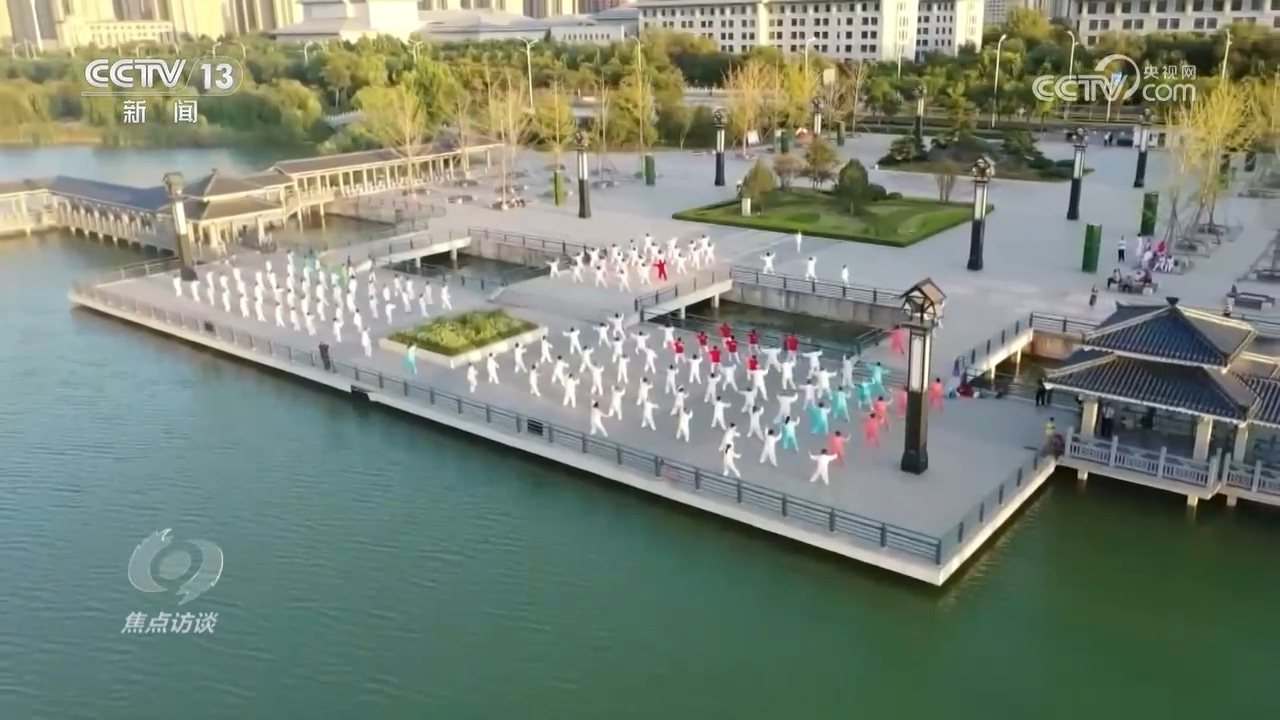
【宝鸡】首家科技工作者之家启用
Shan Xi Ri Bao· 2025-11-12 00:16
Core Insights - The establishment of the first "Home for Scientific Workers" in Baoji City aims to enhance the innovation ecosystem and stimulate the creative potential of scientific talents [1] Group 1: Facility Overview - The facility integrates academic exchange, health management, psychological counseling, and technology experience into a comprehensive service platform [1] - It features a modern multifunctional room that can accommodate over 50 people for academic discussions and activities [1] - Equipped with smart technology, the facility includes a fitness area, a psychological relaxation zone, a technology experience area, and a reading area [1] Group 2: Strategic Importance - The launch of the "Home for Scientific Workers" is a significant step in implementing the "Talent Strong Nation" strategy [1] - The local government plans to continuously improve service functions and regularly host academic exchanges and science popularization activities [1] - The initiative aims to create a vibrant and cohesive community for scientific workers, contributing to regional high-quality development [1]