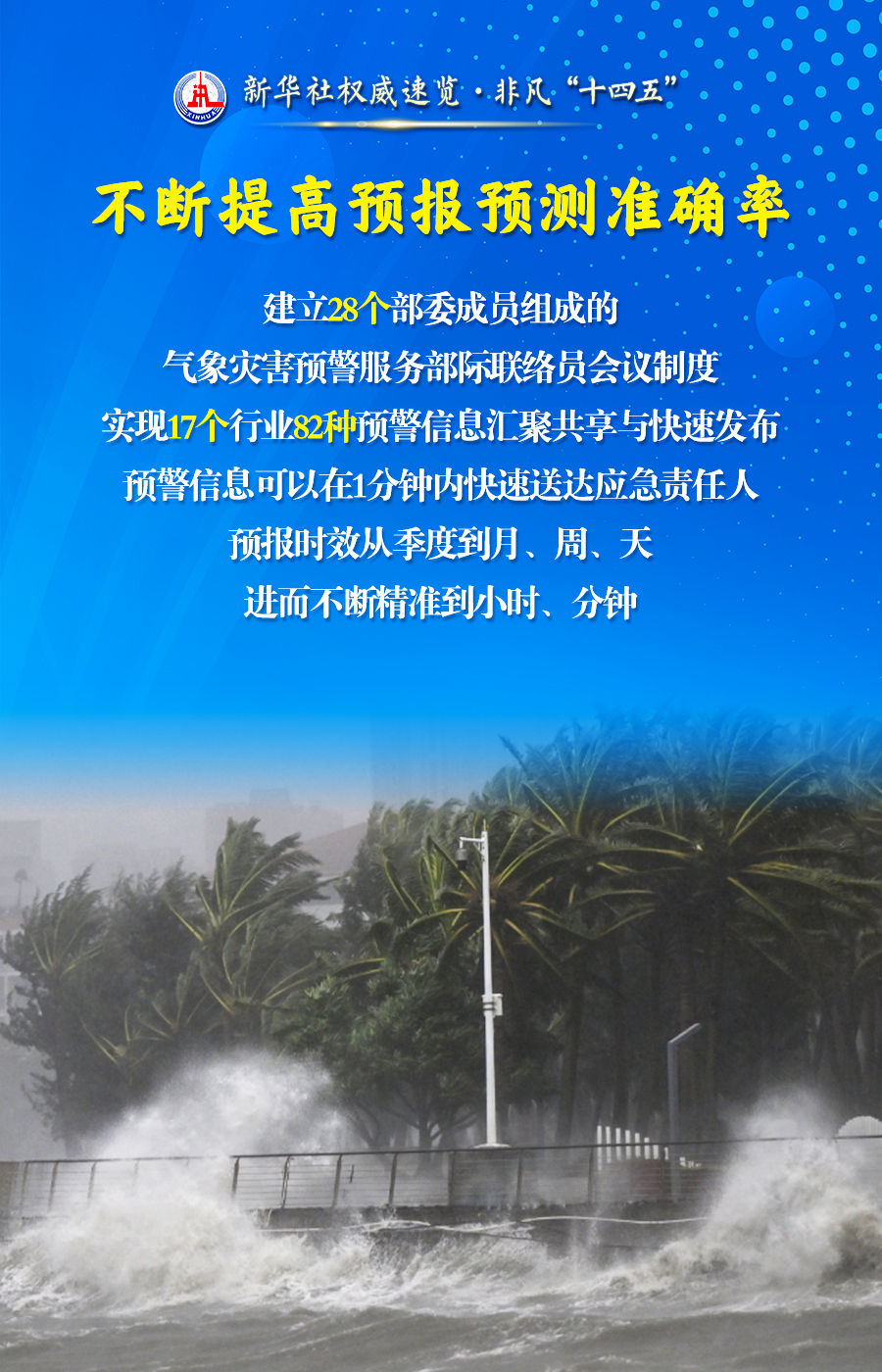
全民早期预警

Search documents
《全球气象发展报告2025》发布 我国气象国际影响力明显增强
Xin Lang Cai Jing· 2026-01-02 18:29
Core Insights - The report titled "Global Meteorological Development Report 2025" was released by the China Meteorological Administration, highlighting China's contributions to global meteorological advancements and its increasing international influence in this field [1] Group 1: Technological Advancements - Key trends in global meteorology include digital twin Earth, AI meteorological forecasting models, early warning systems for the public, financial meteorology, commercial small satellite applications, and drone detection [1] - Innovations in observation technology are accelerating, with international cooperation on meteorological satellites deepening and more commercial small satellites entering meteorological services [1] - The use of drones and unmanned vessels in meteorological observation is progressing towards commercialization [1] Group 2: Expansion of Meteorological Services - Meteorological services are evolving from traditional weather forecasting to encompass climate prediction, environmental monitoring, disaster warning, and climate adaptation [1] - There is a growing emphasis on utilizing AI and digital twin technologies to enhance the precision, timeliness, and intelligence of meteorological services [1] Group 3: Research Scope and Focus - The report broadens its research perspective from primarily focusing on international organizations and developed countries to include developing countries [1] - It captures emerging global meteorological hotspots, adding topics such as global ocean meteorological observation, financial meteorological services, meteorological empowerment of the low-altitude economy, and commercial satellites [1] Group 4: Report Consistency - Since its first release in 2023, the "Global Meteorological Development Report" has consistently showcased the annual trajectory and overall trends in meteorological development from a global perspective and industry development dimension [1]
我国气象国际影响力明显增强
Xin Lang Cai Jing· 2026-01-02 18:29
Core Insights - The report titled "Global Meteorological Development Report 2025" was released by the China Meteorological Administration, highlighting China's increasing international influence in meteorology and its contributions to global development [1] Group 1: Global Meteorological Trends - Key annual terms in global meteorology include digital twin Earth, AI meteorological forecasting models, early warning systems for the public, financial meteorology, commercial small satellite applications, and drone detection [1] - Innovations in observation technology are accelerating, with deepening international cooperation in meteorological satellites and an increasing number of commercial small satellites entering meteorological services [1] - Meteorological services are expanding beyond traditional weather forecasting to include climate prediction, environmental monitoring, disaster warning, and climate adaptation, with a focus on utilizing AI and digital twin technologies for more precise, real-time, and intelligent services [1] Group 2: Research Scope and Focus - The report broadens the research perspective from primarily international organizations and developed countries to include developing countries [1] - It captures emerging global meteorological hotspots, adding topics such as global ocean meteorological observation, financial meteorological services, meteorological empowerment of the low-altitude economy, and commercial satellites [1] - Since its first release in 2023, the "Global Meteorological Development Report" has consistently showcased annual meteorological development trajectories and overall trends from a global perspective and industry development dimension [1]
中国气象局答21:为气候适应型社会建设提供气象支撑
2 1 Shi Ji Jing Ji Bao Dao· 2025-12-30 09:49
Core Insights - The China Meteorological Administration (CMA) is enhancing its global monitoring, forecasting, service, and governance capabilities in response to climate change and extreme weather events [2][4] - The "Global Meteorological Development Report 2025" highlights advancements in meteorological technology, including AI applications, digital twin technology, and international cooperation [2][3] Group 1: Technological Advancements - Meteorological observation technologies are rapidly innovating, with increased international collaboration on satellite technology and the integration of commercial small satellites into meteorological operations [3] - The forecasting domain is shifting towards a "physical-data" dual-driven approach, with new paradigms emerging for disaster weather forecasting and risk assessment [3] Group 2: Service Expansion - Meteorological services are evolving from traditional weather forecasts to encompass climate predictions, environmental monitoring, disaster warnings, and climate adaptation, with a focus on decision-making support [3] - The CMA has launched the world's first national action plan for early warning to promote climate change adaptation, which has been implemented in multiple countries [4] Group 3: Strategic Initiatives - The CMA is committed to enhancing its monitoring and forecasting capabilities in line with national directives from recent political meetings, aiming to establish a new generation of early warning systems [4][5] - The administration is also focusing on expanding meteorological applications in emerging industries such as finance and energy, thereby supporting the development of a modern economic system [5]
中国气象局发布《全球气象发展报告2025》
Yang Shi Wang· 2025-12-30 05:57
Core Insights - The "Global Meteorological Development Report 2025" highlights the global trend towards enhanced meteorological services through technology upgrades, international cooperation, and innovative partnerships between sectors and enterprises [1][2] - Key themes include the application of digital twin technology, AI meteorological forecasting models, early warning systems, and the use of commercial small satellites and drones in meteorological services [1] Group 1 - The report indicates that meteorological departments worldwide are focusing on business and computational upgrades, with significant advancements in satellite and radar technologies [1] - The global multi-hazard early warning practices have shown significant damage reduction effects, driven by the United Nations' early warning initiatives [1] - The development of digital twin Earth technology is injecting new momentum into enhancing meteorological service capabilities [1] Group 2 - China has improved its national meteorological high-quality development index by 18.35% from 2020 to 2024, contributing significantly to global meteorological advancements [2] - The China Meteorological Administration (CMA) is fulfilling its responsibilities as an international and regional professional center, promoting the concept of "people first, life first" in meteorological services [2] - The report expands its research scope to include developing countries, particularly in Africa, providing insights for building meteorological services along the Belt and Road Initiative [2] Group 3 - The CMA's Meteorological Development and Planning Institute has engaged domestic and international experts to ensure comprehensive oversight and insights into global meteorological developments [3] - The report aims to reflect a dual perspective of "China observing the world and the world observing China" in meteorological intelligence [3]
风云气象卫星:“天穹之眼”如何照亮美好生活
Ren Min Wang· 2025-11-22 01:41
Core Insights - The news highlights the significant advancements of China's Fengyun meteorological satellites, which now serve 133 countries and regions, showcasing China's transformation from a follower to a leader in meteorological technology [1] Group 1: Technological Advancements in Agriculture - The Fengyun satellite system enables real-time monitoring of crop conditions, allowing farmers to make informed decisions regarding irrigation and fertilization, thus transitioning traditional agriculture to smart agriculture [2] - The use of satellite-guided precision fertilization has reduced chemical fertilizer usage in Northeast China, while remote sensing has improved irrigation efficiency in arid regions [2] Group 2: Disaster Prevention and Response - The Fengyun-4 satellite has improved the monitoring and identification of severe weather events, reducing the time for disaster warnings to as little as 5 minutes and enhancing severe weather alerts by 40 minutes [3] - The satellite's rapid imaging capabilities allow for real-time emergency responses, playing a crucial role in disaster management and reporting [3] Group 3: Ecological Monitoring and Protection - Fengyun satellites serve as "space sentinels" for ecological protection, providing data for environmental assessments and monitoring changes in ecological conditions [4] - The satellite data supports initiatives like ecological red lines and tracking carbon neutrality goals, contributing to sustainable development [4] Group 4: Enhancing Public Services - The Fengyun-3 G satellite's precipitation measurement radar fills a gap in precipitation detection, providing accessible agricultural weather information to rural farmers and aiding livestock herders and fishermen [5] - These services exemplify the satellite's role in bridging the gap between advanced technology and everyday life, enhancing public welfare [5] Group 5: Space Weather Monitoring - Fengyun satellites also monitor space weather, providing critical data for major space missions and enhancing the safety of satellite navigation and aerospace operations [6] - The upcoming launch of the world's first space weather AI model, "Fengyu," is expected to significantly improve forecasting accuracy [6] Group 6: Global Contribution and Future Outlook - China is transitioning from a "follower" to a "contributor" in global meteorological governance, sharing Fengyun satellite data through the World Meteorological Organization [7] - The Fengyun-2 H satellite and Fengyun-4 A satellite are pivotal in providing meteorological support for regional and international initiatives, with a high satisfaction rate among international users [7] - Future developments in the next generation of Fengyun satellites are anticipated to further enhance China's capabilities in meteorological services and global cooperation [7]
新华社权威速览·非凡“十四五”|为美好生活保驾护航,气象工作五年成绩单来了!
Xin Hua She· 2025-10-11 13:22
Core Insights - The article highlights significant advancements in meteorological services during the "14th Five-Year Plan" period, emphasizing improved forecasting accuracy and the establishment of a comprehensive meteorological observation network [1][3][19]. Group 1: Meteorological Infrastructure Development - China has launched five Fengyun meteorological satellites, achieving the world's first regional continuous imaging observation with a resolution of 250 meters per minute [3]. - A radar monitoring network consisting of 842 weather radars has been established, covering over 90% of population-dense areas [3]. - More than 90,000 ground meteorological observation stations have been built nationwide [3]. Group 2: Data Sharing and Utilization - The meteorological sector has shared over 100 types of meteorological data products, including refined intelligent grid forecasting products, with 153 countries and regions [6]. - A global ground climate dataset spanning 176 years has been released for the first time, with a spatial resolution of 10 kilometers for global atmospheric reanalysis products [6]. - Meteorological data identifiers have been issued over 980,000 times, supporting 140,000 application scenarios across various industries [6]. Group 3: Public Services and Technology Integration - The number of meteorological service indices has increased to over 70, integrating meteorological information into major media and mainstream services [9]. - New technologies such as IoT, 5G, and AI have enabled the public to access real-time meteorological information through mobile devices and wearables [9]. - The development of a seamless, all-encompassing intelligent digital meteorological forecasting system has been achieved [19]. Group 4: Agricultural Support and Risk Management - Meteorological departments are collaborating with agricultural sectors to provide disaster risk warnings and enhance agricultural resilience through insurance services [13]. - The implementation of the "Meteorological Services for Agriculture Quality Improvement and Efficiency Enhancement Action Plan" is ongoing [13]. Group 5: International Cooperation and Training - An independently developed early warning system is being utilized by over 40 countries, contributing to global early warning initiatives [15]. - The "Mazu" plan aims to provide training for 2,000 personnel and offers 100 scholarship opportunities and 50 visiting scholar positions over the next three years [16][15]. Group 6: Technological Advancements in Forecasting - Numerical forecasting capabilities have improved, with the usable forecast days for the Northern Hemisphere increasing from 7.9 to 8 days, nearing international advanced levels [19]. - The accuracy of heavy rain forecasts has improved by 10% compared to the "13th Five-Year Plan" period, with monthly and seasonal climate prediction levels increasing by 2.3% and 5.1%, respectively [20].

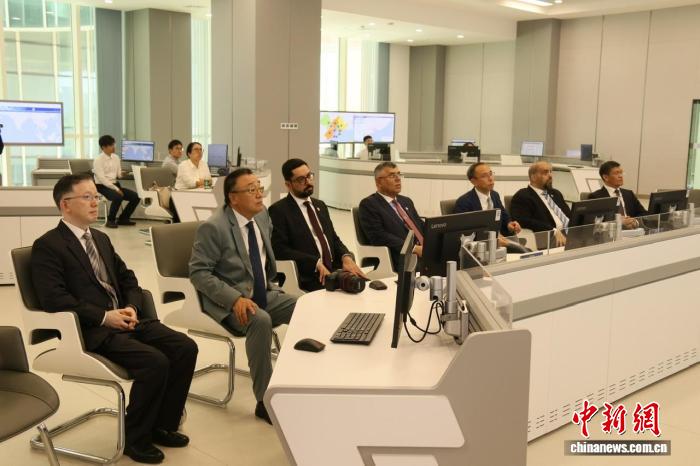
世界气象组织主席阿卜杜拉·阿尔·曼杜斯访粤
Zhong Guo Xin Wen Wang· 2025-09-01 09:08
Core Viewpoint - The visit of WMO President Abdullah Al Mandous to Guangdong highlights the province's advancements in meteorological services and its commitment to international cooperation in weather-related initiatives [3][4]. Group 1: WMO President's Visit - Abdullah Al Mandous and his delegation visited Guangdong from August 29 to August 31, 2023, to engage in discussions and tours related to meteorological advancements [1]. - The delegation toured various facilities, including the World Meteorological Center (Beijing) Guangdong-Hong Kong-Macao Greater Bay Area Branch, where they learned about the center's functions and international collaboration [3]. Group 2: Achievements in Meteorology - Al Mandous praised Guangdong's achievements in early warning systems, particularly in typhoon early warning mechanisms and disaster response frameworks [3]. - He noted that Guangdong's meteorological work not only enhances public service but also provides scientific support for government decision-making, serving as a model for other cities worldwide [3][4]. Group 3: Future Cooperation - The Guangdong provincial government expressed its commitment to supporting meteorological development and participating in WMO initiatives, emphasizing the importance of early warning systems and disaster risk reduction [4]. - Al Mandous met with Shenzhen city officials to discuss sharing experiences in meteorological services for large cities and enhancing data collaboration [4].