全球市场流动性

Search documents
2月13日上期所沪金期货仓单较上一日持平
Jin Tou Wang· 2026-02-13 08:29
Core Viewpoint - The Shanghai Futures Exchange reported stable gold futures inventory, with significant fluctuations in gold prices influenced by U.S. economic data and market conditions [1] Group 1: Gold Futures Market - Total gold futures inventory at the Shanghai Futures Exchange is 105,072 kilograms, unchanged from the previous day [1] - The main gold futures contract opened at 1,123.94 CNY per gram, reaching a high of 1,130.38 CNY and a low of 1,087.32 CNY, currently trading at 1,110.10 CNY, down 1.61% [1] - Trading volume for the day was 3,035.68 lots, with open interest decreasing by 1,412 lots to 153,140 lots [1] Group 2: Market Influences - Last night, gold prices dropped sharply, with New York gold falling nearly $200 per ounce, breaking below $5,000 per ounce, which corresponded to a decline in Shanghai gold prices to around 1,100 CNY per gram [1] - The U.S. dollar index showed slight strengthening, and January's non-farm payrolls added 130,000 jobs, exceeding market expectations, which led to a decrease in market rate cut expectations [1] - The Nasdaq index experienced a notable decline, indicating poor global market liquidity in the short term [1]
如何看待日本央行加息?
2 1 Shi Ji Jing Ji Bao Dao· 2025-12-20 02:08
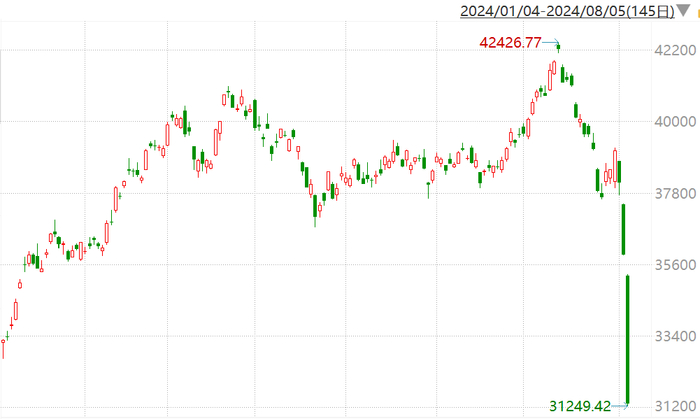
Core Viewpoint - The Bank of Japan is expected to raise its policy interest rate from 0.5% to 0.75% on December 19, which may significantly impact global markets, particularly in Asia, due to its effects on liquidity [1]. Group 1: Market Impact - The anticipated interest rate hike could lead to a reversal of "carry trades," where investors borrow in low-yielding yen to invest in higher-yielding assets abroad, potentially tightening global liquidity [1]. - The last rate hike in July 2024 caused a significant market reaction, with the Nikkei 225 index dropping 12.4% on August 5, marking its largest single-day decline in history [3][4]. Group 2: Comparison with Previous Rate Hikes - The current market conditions differ from those in July 2024, where fears of a U.S. economic recession were prevalent, and the market was not as prepared for the rate hike [7]. - In July 2024, speculative short positions on the yen were at a historical high, which exacerbated the market's reaction to the rate hike. In contrast, current positions are more balanced, with a significant number of long positions on the yen [8]. - The market has already priced in the likelihood of the December rate hike, with a probability of 91.5% as of December 4, compared to only 37.6% in July 2024 [8]. Group 3: Future Outlook - Historical analysis shows that only the unexpected rate hike in July 2024 led to severe market volatility, while other rate hikes in March 2024 and January 2025 did not significantly impact the markets [14]. - Generally, major asset price fluctuations tend to occur before the rate hike announcement, with markets stabilizing afterward [15]. - For the A-share market, the Bank of Japan's rate hike may primarily cause short-term emotional disturbances, but overall valuations remain reasonable, suggesting potential for a positive spring market [16].