
全球格局重构

Search documents
付鹏谈AI应用落地:预计在未来12-18个月内将引发行业级的范式转移
凤凰网财经· 2026-03-05 13:56
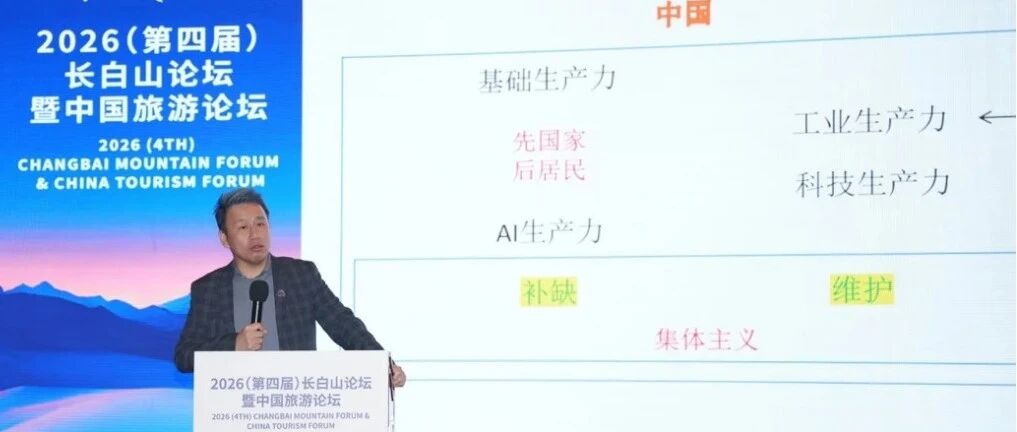
Group 1 - The core theme of the forum is "Investment Empowerment and Cultural Tourism Coexistence," highlighting the importance of investment in the cultural tourism sector [1] - Economist Fu Peng emphasized the deep adjustment of the global landscape, indicating that changes in trade relations, world order, and global division of labor are underway, leading to significant geopolitical shifts [3][6] - Fu noted that the current geopolitical conflicts, such as those involving Iran, are a result of the transformation in production logic, questioning the relevance of traditional geopolitical strategies [6] Group 2 - Fu predicted that the AI-driven productivity revolution will lead to a disruptive restructuring of production relationships across all industries within the next 5-10 years, with significant changes expected in the next 12-18 months [7][11] - He compared the current investment surge in AI to China's infrastructure boom in the early 2000s, suggesting that the market is effectively signaling the necessity of such investments [10] - Fu raised concerns about the implications of AI on traditional business models, urging industries to rethink their strategies in light of new productivity paradigms [11][12] Group 3 - The rise of AI also brings challenges related to deepfake technology, which poses risks of misuse and ethical concerns, necessitating a rapid response from legal and regulatory frameworks [14][15] - Fu highlighted the need for legal adjustments to address issues such as intellectual property rights and the ethical use of AI-generated content, emphasizing that existing laws are lagging behind technological advancements [15]

证券研究报告、晨会聚焦:策略徐驰:2026年资本市场年度策略展望:全球格局重构与“十五五”战略新机遇-20251204
ZHONGTAI SECURITIES· 2025-12-04 12:25
Group 1 - The core driver of the current A-share market is a systematic increase in risk appetite, stemming from a profound "reconstruction" of the global landscape, influenced by the U.S.-China rivalry and the shift towards a "China model" focusing on supply chain security, technology, manufacturing, and military industries [3] - The "Fifteen Five" strategy emphasizes proactive policy measures and strategic opportunities, contrasting with the previous "Fourteen Five" period, indicating a stronger focus on national strength and institutional expectations in capital market pricing [3][4] - The capital market is expected to play a crucial role in managing expectations and addressing local government debt risks, with a projected "slow bull" market characterized by steady index growth and accelerated market rotation [4] Group 2 - Key time points for the U.S. Federal Reserve and U.S.-China relations include potential policy shifts following the mid-2026 Federal Reserve chair transition and significant diplomatic engagements, which could influence market risk appetite [4] - The 2026 market is anticipated to experience structural rotation, driven by the global reconstruction and the initiation of the "Fifteen Five" plan, with a shift in capital market pricing logic from short-term profits to long-term national strength and institutional expectations [6][7] - The report identifies four main investment themes for 2026: technology innovation focusing on AI, upstream resource strategic positioning, new consumption opportunities, and safe asset allocations amid geopolitical uncertainties [8][9]
2026年资本市场年度策略展望:全球格局重构与“十五五”战略新机遇
ZHONGTAI SECURITIES· 2025-12-03 13:24
Group 1 - The core driver of the current A-share market is the systematic increase in risk appetite, stemming from a profound "reconstruction" of the global landscape [6][29][37] - The ongoing geopolitical competition and the shift in national power dynamics have elevated the strategic position of capital markets, reflecting long-term expectations of national strength and institutional stability rather than short-term profit fluctuations [7][41][43] Group 2 - The report identifies two key time points in 2026 regarding the Federal Reserve and US-China relations, which will significantly influence market dynamics [8][10][62] - The potential change in the Federal Reserve's leadership could lead to a more dovish monetary policy, impacting global liquidity and risk appetite in emerging markets, including A-shares [10][60][61] Group 3 - The capital market is expected to play a crucial role in "debt management" and "expectation management," with a focus on stabilizing local government debt risks through asset securitization [12][46] - The market is anticipated to exhibit a "slow bull" characteristic, with accelerated rotation and the importance of retail investor sentiment as a contrarian indicator [12][46] Group 4 - The report emphasizes the significance of the AI industry, particularly in storage chips and humanoid robots, as key areas for investment due to their strategic importance in the AI era [20][22] - The focus on "反内卷" (anti-involution) will benefit upstream resources critical to national competitiveness, such as lithium and graphite materials, which are expected to see increased demand [22][23] Group 5 - The new consumption trends among younger generations are highlighted as structural opportunities, with sectors like gaming and pet products poised for growth [23] - The report suggests that safety asset allocations, such as high-dividend stocks and gold, will become increasingly attractive amid ongoing geopolitical tensions [24][25]