
全球流动性重构

Search documents
美联储“鹰派赘婿”凯文·沃什上位:全球金融变局下的中国投资新逻辑
Sou Hu Cai Jing· 2026-02-05 01:55
Core Viewpoint - The nomination of Kevin Warsh as the next Federal Reserve Chairman by President Trump signals a potential major shift in global monetary policy, with immediate impacts on financial markets, including a significant drop in gold and silver prices [1][3]. Group 1: Kevin Warsh's Profile and Policy Stance - Kevin Warsh, at 55, has a background that includes being the youngest Federal Reserve Governor and has experience during the financial crisis, which shapes his policy approach [4]. - Warsh is characterized as a "hawkish inflationist" and "balance sheet hawk," criticizing the Fed's prolonged stimulus measures and advocating for a reduction in the balance sheet to control inflation [5]. Group 2: Global Market Implications - Warsh's potential policies may lead to a dual approach of "preemptive rate cuts and active balance sheet reduction," creating a complex liquidity environment globally [9][10]. - The dollar's status as a global reserve currency will be influenced by Warsh's policies, with short-term rate cuts possibly weakening the dollar, while long-term balance sheet reductions may support its value [11]. Group 3: Impact on China - China may face short-term pressures from capital flows and currency fluctuations due to reduced dollar liquidity, but long-term opportunities may arise from a weaker dollar strategy that enhances export competitiveness [14]. - The emphasis on AI and anti-inflation measures by Warsh aligns with China's strategic focus on new productive forces, potentially attracting global capital in sectors like AI and high-end manufacturing [14]. Group 4: Investment Strategies - In the primary market, investment strategies should focus on hard technology sectors, consumer upgrades, and cross-border opportunities, emphasizing risk management and long-term value [16][18]. - In the secondary market, a balanced approach of risk aversion and strategic positioning is recommended, with a focus on sectors benefiting from domestic policy support and potential interest rate changes [19][20].


日元融资成本上升:比特币的短期调整压力与中长期增长潜力
Xin Lang Cai Jing· 2025-12-08 12:25
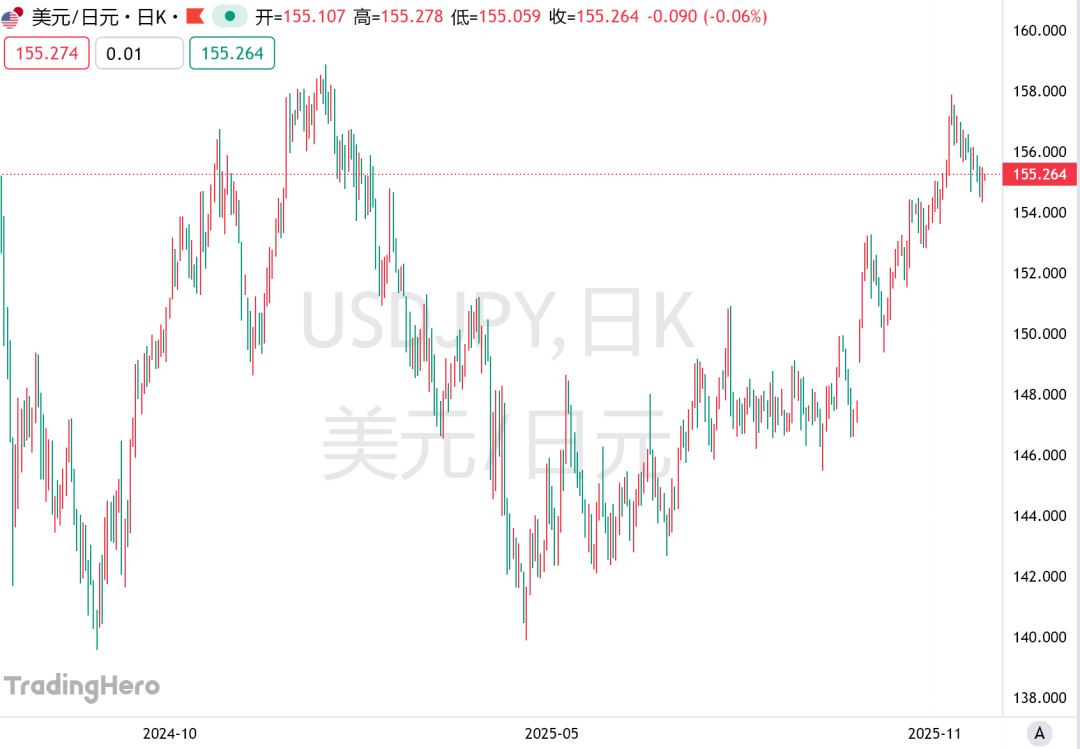
Core Viewpoint - The article discusses the paradox between the expectation of interest rate hikes by the Bank of Japan and the prevailing bearish sentiment towards the Japanese yen, highlighting a significant divergence in market behavior despite high probabilities of a rate increase [1][12]. Group 1: Market Sentiment and Positioning - Despite a 91% probability of a rate hike in December, investors are heavily betting on a weaker yen against the dollar, as indicated by positioning data from major institutions like Bank of America and Nomura [1][12]. - The "pain index" for the yen remains in negative territory, reflecting persistent pessimism in the market regarding the yen's short-term outlook [1][12]. - The divergence in sentiment is attributed to liquidity tightening effects and a structural shift in market sentiment, with significant outflows from Bitcoin ETFs and a notable reduction in holdings by long-term Bitcoin holders [12][16]. Group 2: Implications of Yen Depreciation - Further depreciation of the yen could increase Japan's import costs, exacerbating domestic inflation and potentially disrupting economic stimulus plans led by Prime Minister Kishida [3][15]. - The Japanese Finance Minister's attempts to intervene in the currency market have had limited effectiveness, indicating widespread skepticism about the efficacy of such policies [3][15]. Group 3: Bitcoin Market Dynamics - The relationship between yen policies and the Bitcoin market is indirect, primarily through global liquidity adjustments and shifts in market risk appetite [4][15]. - A potential increase in yen financing costs due to rate hikes could lead to a sell-off in Bitcoin as investors close out arbitrage positions, resulting in short-term downward pressure on Bitcoin prices [4][15]. - Historical data shows that after the Bank of Japan exited its negative interest rate policy in 2024, Bitcoin experienced a 12% drop in the same month, followed by a rebound over the next six months, illustrating a "short-term pullback, long-term recovery" pattern [4][15]. Group 4: Long-term Outlook for Bitcoin - If the yen strengthens amid global macro uncertainties, Bitcoin's status as a "super-sovereign asset" may be further reinforced, as evidenced by a decrease in correlation with U.S. stocks post-October 2025 [6][16]. - The potential for Japanese institutional funds to flow into the Bitcoin market is supported by ongoing regulatory improvements in Japan's Web3 sector, including stablecoin legislation and tax reforms [8][16]. Group 5: Future Scenarios - If the Bank of Japan raises rates in December, Bitcoin prices may temporarily drop below $85,000 due to concentrated profit-taking, but could recover to the $100,000 mark if global liquidity conditions improve [9][17]. - Conversely, if the Bank of Japan maintains its current policy, the ongoing yen arbitrage trades may provide short-term liquidity support for Bitcoin, but uncertainty could lead to increased price volatility [10][18]. Group 6: Conclusion - The paradox of rising interest rate expectations and bearish sentiment towards the yen reflects the complexities of global liquidity restructuring [19]. - While Bitcoin may face short-term challenges from yen-related arbitrage, its long-term appeal as a super-sovereign asset and potential inflows from compliant Japanese funds could provide substantial support [19].
中信证券李翀:9月美联储降息预期强烈 新兴市场或迎流动性机遇
Xin Lang Cai Jing· 2025-09-10 23:29
Core Viewpoint - The global capital markets are focusing on the potential shift in the Federal Reserve's monetary policy, with increasing expectations for interest rate cuts as the Fed's September rate decision approaches [1] Group 1: Federal Reserve's Monetary Policy - Multiple institutions are betting on the Federal Reserve lowering interest rates, leading to a rise in rate cut expectations [1] - The Fed is more likely to initiate preemptive rate cuts in the context of an economic soft landing [1] Group 2: Impact on Global Capital Flows - A potential rate cut by the Fed could reshape global capital flow patterns, presenting a capital revaluation opportunity for emerging markets [1] - Risk assets are entering a favorable window for investment, particularly in interest rate-sensitive sectors [1] Group 3: Investment Opportunities - Investors are encouraged to capture liquidity dividends and align with industrial trends during the reconstruction of global liquidity [1]
