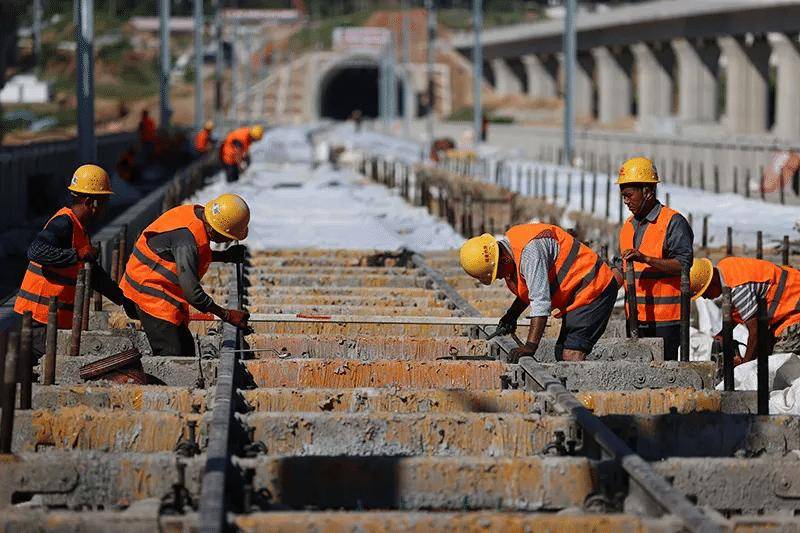
全球门户计划

Search documents
社评:欧盟应认真考虑构建中欧命运共同体
Xin Lang Cai Jing· 2026-01-22 15:06
Core Viewpoint - The article emphasizes the importance of multilateralism and global governance in addressing common challenges faced by humanity, advocating for the construction of a community with a shared future for mankind, particularly between China and the European Union [1][2]. Group 1: Concept of Community with a Shared Future - The concept of building a community with a shared future is a significant original thought proposed by President Xi Jinping, representing China's response to the question of what kind of world to build and how to build it [1]. - This idea has been incorporated into various international documents, including UN resolutions and declarations from significant summits, and has gained recognition from numerous countries [1]. Group 2: Current State of China-EU Relations - Despite the close ties in trade, culture, technology, and education, EU countries are not yet part of the community with a shared future, which is seen as a regrettable situation [2]. - The article suggests that a key reason for this disconnect is the EU's misperception of China, which needs to be addressed for better cooperation [2]. Group 3: Economic and Material Foundations - Bilateral trade between China and the EU has grown from $2.4 billion at the time of diplomatic relations to $828.1 billion by 2025, with mutual investment stock increasing to $280 billion [3]. - The China-Europe Railway Express has operated 120,000 trains, reaching over 200 cities in 26 European countries, highlighting the deepening economic interdependence [3]. Group 4: Areas for Cooperation - China and the EU can collaborate on various fronts, including climate change, technological innovation, health, and supply chain management, under the framework of building a community with a shared future [3]. - Specific areas for cooperation include enhancing dialogue on international peace and security, aligning the Belt and Road Initiative with the Global Gateway strategy, and promoting cultural exchanges [3]. Group 5: Vision for the Future - The article calls for Europe to become an integral part of the community with a shared future, emphasizing that differences in ideology, culture, and development stages should not hinder cooperation [4]. - It advocates for both sides to prioritize their fundamental interests and the future of the world, promoting dialogue, open development, and multilateralism [4].
王毅同芬兰外长瓦尔托宁通电话
Xin Hua She· 2026-01-06 17:04
Group 1 - The core viewpoint of the article emphasizes the stable development and mutual benefits in China-Finland relations, highlighting the importance of respect and equality in bilateral cooperation [1][2] - Wang Yi expressed China's commitment to high-level opening up and willingness to strengthen cooperation with Finland in areas such as energy transition, circular economy, artificial intelligence, green environmental protection, and the silver economy [1] - The article discusses the importance of cooperation in the context of China-EU relations, urging Finland to play a positive role in promoting a rational understanding of China within the EU and to consider strategic alignment between the Belt and Road Initiative and the EU's Global Gateway plan [1] Group 2 - Finland's Foreign Minister Valtonen conveyed President Stubb's greetings to President Xi Jinping, reaffirming Finland's adherence to the one-China policy and the desire for closer high-level exchanges and cooperation in various fields [2] - The article highlights the shared interests and broad cooperation potential between China and Finland in green energy and technological innovation, emphasizing the importance of maintaining constructive relations in climate and energy sectors [2] - Both parties exchanged views on the current situation and prospects of the Ukraine crisis, indicating ongoing geopolitical discussions [3]
第七届非洲联盟(AU)-欧洲联盟(EU)峰会召开
Shang Wu Bu Wang Zhan· 2025-11-29 04:47
Core Viewpoint - The seventh African Union (AU) and European Union (EU) summit emphasized the importance of promoting peace and prosperity, with a commitment to multilateralism and strengthening trade relations between the two alliances [1] Group 1: Summit Outcomes - The summit took place in Luanda, Angola, from November 24 to 25, focusing on enhancing cooperation and establishing a balanced, results-oriented partnership [1] - Both alliances expressed a desire to develop strategic mineral cooperation and increase investment in the "Global Gateway" initiative, particularly in digital transformation and sustainable infrastructure [1] Group 2: Representation and Calls to Action - Jean-Claude Gakosso, Minister of Foreign Affairs for the Republic of the Congo, represented President Denis Sassou Nguesso at the summit [1] - Gakosso urged African nations to rely on their own resources and potential to strengthen the continent's economic power [1]
国际观察|欧盟对非承诺能兑现多少
Xin Hua She· 2025-11-26 13:52
Core Viewpoint - The EU-AU summit highlighted the ongoing partnership between Europe and Africa, but doubts remain about the EU's ability to fulfill its commitments due to structural issues and a lack of prioritization in cooperation [1][4]. Group 1: Cooperation Focus - The EU's primary interest lies in strategic and critical mineral cooperation, emphasizing Africa's rich natural resources essential for energy and digital transitions [2]. - The EU plans to support projects like the "Lobito Corridor," which connects mineral-rich regions in Africa to European markets, enhancing supply chain security [2]. - African leaders express a desire for increased investment from Europe in infrastructure, logistics, energy transition, and agricultural processing, rather than solely focusing on mineral extraction [2]. Group 2: Debt Concerns - African leaders prioritize restructuring relationships with international credit institutions to create investment-friendly mechanisms without increasing debt risks [3]. - The UN Secretary-General criticized the inefficiency of the international financial system, calling for reforms to enhance the participation of developing countries [3]. - The EU did not make clear commitments to alleviate Africa's debt issues, only agreeing on the need for innovative financial tools to reduce high financing costs [3]. Group 3: Commitment Challenges - Despite claims of unwavering commitment to Africa, key European leaders were absent from significant parts of the summit, indicating a lack of prioritization [4]. - Experts criticized the summit as superficial, noting that the EU's focus on the Ukraine situation detracted from its commitments to Africa [4]. - Structural inequalities in EU-Africa cooperation were highlighted, with African businesses facing barriers in accessing value chains and European markets, while European firms operate freely in Africa [4][5]. Group 4: Historical Discontent - African stakeholders have expressed dissatisfaction with the slow progress of EU commitments from previous meetings, with many projects stagnating [5]. - Experts warn that without structural improvements in key areas like value chain development and investment trust, the goals set at the summit may not be realized [5].
欧盟要谈稀土,王毅外长顺势抛出一个大议题,就看欧方敢不敢接招
Sou Hu Cai Jing· 2025-11-06 13:01
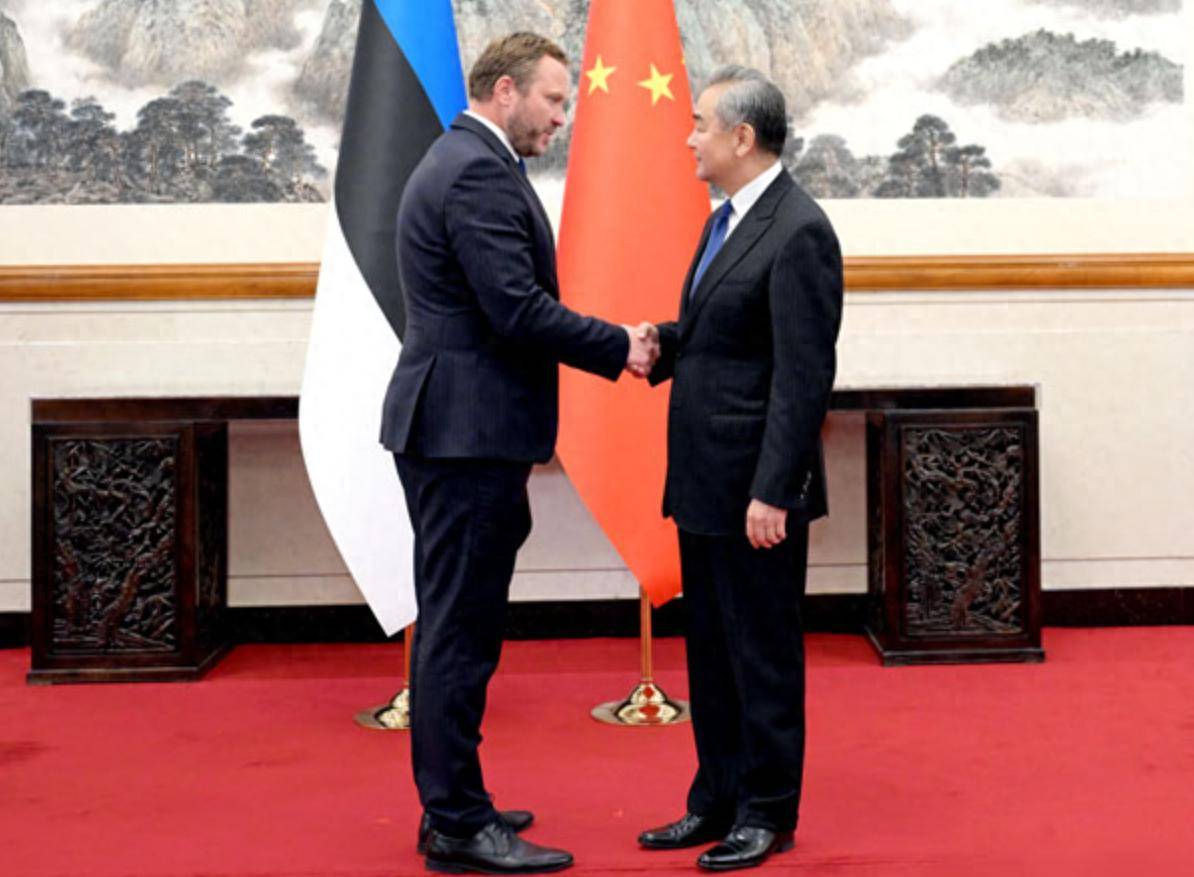
Core Points - The recent meeting in Busan between China and the US resulted in a strategic "truce," with China agreeing to postpone the implementation of rare earth export restrictions for one year [1] - The EU is feeling pressure and fears being excluded from the global rare earth supply chain, prompting it to seek negotiations with China [1] - Chinese Foreign Minister Wang Yi proposed a free trade agreement and the alignment of the Belt and Road Initiative with the EU's Global Gateway plan during a meeting with Estonia's Foreign Minister [1][3] - Wang Yi emphasized that the EU's concerns about potential barriers to rare earth exports could be alleviated through a free trade agreement, which would create a more stable and predictable trading environment [5] - The EU faces a choice: to continue focusing on rare earth issues or to engage in broader discussions about a free trade agreement, which could lead to addressing sensitive areas previously avoided [5][7] Group 1 - The EU has significant internal divisions regarding its policy towards China, with differing opinions among major economies and regions [7] - The proposal for a free trade agreement is seen as a test of the EU's commitment to strategic autonomy and independence from the US [7][8] - If the EU engages in negotiations with China, it could lead to intense internal debates and potentially impact EU-US relations [8] Group 2 - China's stance is clear: it seeks cooperation based on equality and mutual respect, and it is open to collaboration with a united and prosperous Europe [8] - The rare earth issue is just a small part of the broader strategic competition, and the EU's response will determine the future of EU-China relations [8]

欧盟新殖民实锤?逼非洲当能源奴隶,谁敢跟中国好就制裁断援助
Sou Hu Cai Jing· 2025-10-23 05:45
Group 1: European Union's Energy Strategy - The EU is shifting its energy dependence from Russia to Africa, seeking to secure oil and gas resources amid the Ukraine crisis [1][3] - By early 2025, several European countries have signed gas supply agreements with African nations like Mozambique and Senegal, with Mozambique's gas project showing a significant export increase of 24.6% year-on-year [1][3] - The EU's energy strategy reveals contradictions, as it previously urged African nations to reduce oil and gas production for green transition but now demands increased output to fill its energy gap [3] Group 2: China's Growing Influence in Africa - China is expanding its influence in Africa, pledging $50.7 billion in financial aid from 2025 to 2027, which includes $29.6 billion in loans and $11.3 billion in assistance [5] - Chinese investments in African resources, such as uranium and cobalt in Namibia, are significant, with a focus on development without political conditions [5] - Projects like Mozambique's Coral South LNG project highlight China's commitment to infrastructure development, contributing to Mozambique's status as a gas exporter [5] Group 3: African Nations' Response and Development Goals - African leaders are increasingly aware of the need for development autonomy and are advocating for industrialization and economic diversification, as emphasized in the African Union's Agenda 2063 [9] - The focus on technology transfer and industrial upgrades is seen as more beneficial for Africa's long-term interests compared to mere resource extraction [9] - Renewable energy development is accelerating in Africa, with projections indicating that renewable sources will account for 30% of total electricity generation by 2025 [10] Group 4: EU's Strategic Concerns and Actions - The EU is concerned about its declining influence in Africa, as surveys show that African citizens view China and the US more favorably than the EU [7] - To counter this, the EU is adopting a more aggressive competitive strategy in Africa, including plans to achieve a domestic processing rate of at least 40% for critical raw materials by 2030 [7] - The EU's approach to Africa is criticized for treating the continent as a resource supplier rather than a partner, revealing a hegemonic mindset [12]
冯德莱恩宣布全球门户计划规模将超4000亿欧元
Shang Wu Bu Wang Zhan· 2025-10-16 15:13
Core Insights - The European Union has successfully raised €300 billion ahead of schedule and expects to exceed €400 billion by 2027 [1] - The global political landscape is characterized by heightened competition and transactional dynamics, with tariffs and trade barriers being used as geopolitical tools [1] - The EU aims to build resilient value chains in various sectors including energy, clean technology, digital technology, critical minerals, transportation, food, and health [1] Investment and Funding - The "Global Gateway Investment Center" will serve as a single entry point for businesses to propose investment ideas [1] - Public funding alone is insufficient to meet global investment needs; grants, concessional loans, and guarantees will be utilized to mitigate risks and enhance project viability [1] Participation and Representation - The forum was attended by heads of state and government from 12 countries, including Angola, South Africa, and Ethiopia, along with over 70 ministers from countries such as Egypt and Nigeria [1] - Representatives from 150 top European companies, public sectors, and financial institutions were also present at the forum [1]
菲佐说了实话,欧洲活在梦里,梅洛尼才清醒,属于中国的时代将至
Sou Hu Cai Jing· 2025-09-07 07:35
Core Viewpoint - Europe is at a historical crossroads, losing its voice in global affairs due to bureaucratic inefficiencies and internal conflicts among member states, as highlighted by Italian Prime Minister Meloni's warnings at the Rimini conference [1][8]. Group 1: European Challenges - The EU's lengthy decision-making processes and ongoing disputes among member states are causing it to miss strategic opportunities in the face of global competition, particularly from the US and China [1][8]. - Meloni emphasized that if Europe continues to dwell on past glories and procedural justice, it risks losing its participation in significant global matters [1]. - The EU's "Global Gateway" initiative is losing momentum due to internal disagreements over environmental standards and budget allocations, while China is rapidly advancing its projects in regions like Africa and Central Asia [8]. Group 2: China's Rising Influence - China is actively engaging in diplomatic actions, as seen in the Shanghai Cooperation Organization summit, where over twenty countries reached agreements on economic cooperation and security dialogues [3]. - The signing of a strategic partnership agreement between Armenia and China indicates a shift in alliances, with Armenia moving away from its traditional ties with Russia [5]. - China's investments in infrastructure, such as high-speed railways and solar power stations, are outpacing European efforts, showcasing a more efficient and pragmatic approach to international cooperation [6][8]. Group 3: Global Dynamics - The evolving international landscape is characterized by countries in the Global South forming new cooperation networks, while Europe remains preoccupied with its own security anxieties [8]. - The comments from Slovak Prime Minister Fico reflect a broader sentiment among European leaders, who feel trapped in bureaucratic processes and unable to respond effectively to global changes [8]. - The urgency for Europe to adapt is underscored by the diminishing time window for making necessary adjustments in response to shifting global dynamics [11].