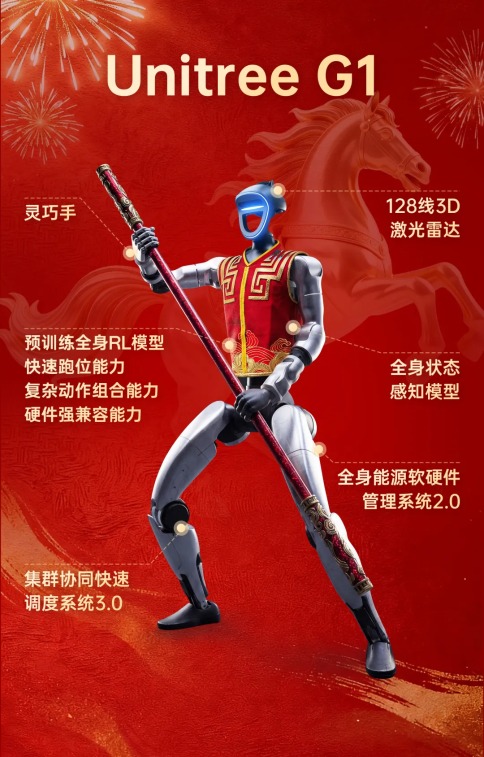
全自主集群控制技术

Search documents
宇树科技《武BOT》技术难点解析
DT新材料· 2026-02-18 16:04
Core Viewpoint - Yushu Technology achieved multiple global firsts in robotics during the 2026 Spring Festival Gala, showcasing advanced capabilities in complex martial arts performances [1] Group 1: Technological Breakthroughs - The robots demonstrated unprecedented skills such as continuous table-flipping parkour, aerial flips exceeding 3 meters, and complex maneuvers like single-leg flips and Airflare rotations [1] - Yushu Technology upgraded its algorithms, hardware, and systems to enable these high-difficulty performances, focusing on reinforcement learning and sensor fusion for precise navigation [2][3] Group 2: Challenges in Performance - The most challenging actions in the performance were categorized into three types: object interaction, environmental interaction, and extreme ground actions, each presenting unique technical barriers [4] - For object interaction, real-time perception and adaptive control of the equipment were critical, requiring extensive reinforcement learning training in simulated environments [5] - Environmental interaction demanded precise estimation of relative positions during high-speed movements, with engineers training robots to dynamically adjust their foot placements [6] Group 3: Core Technologies - The key technology enabling these performances is the fully autonomous cluster control system, allowing multiple robots to perform without external positioning assistance [10] - Yushu Technology employs an AI fusion positioning algorithm that processes environmental data rapidly, ensuring accurate localization even during intense movements [10][11] - The robots are equipped with 3D LiDAR for real-time scene scanning, enhancing their situational awareness on stage [10]


以武会春!宇树机器人马年春晚秀出“赛博真功夫”
Xin Hua She· 2026-02-17 10:15
Core Viewpoint - The performance of humanoid robots by Yushu Technology during the 2026 Spring Festival Gala showcased advanced autonomous control technology and highlighted the integration of Chinese martial arts with cutting-edge robotics [1][5]. Group 1: Performance and Technology - The G1 and H2 humanoid robots performed a martial arts show titled "Wu BOT," demonstrating high-speed group formation changes and executing complex movements with a maximum running speed of 4 meters per second [1]. - The performance involved over 20 humanoid robots that utilized onboard sensors for real-time environmental awareness, autonomous path planning, and dynamic formation adjustments without external positioning aids [1][3]. - The G1 model executed most of the high-difficulty group dance movements, while the larger H2 model, which is approximately 40% taller and nearly double the weight of G1, showcased advanced capabilities in a climactic role [3][4]. Group 2: Development Process - The program preparation began in November 2025, breaking down the creative concept into technical modules such as group control platforms, positioning algorithm upgrades, and motion control algorithm testing [3]. - Extensive rehearsals and iterations with martial arts performers were conducted in real-world settings to refine the performance [3]. Group 3: Broader Implications - The show not only highlighted the physical capabilities of the robots but also symbolized the fusion of Chinese martial arts and technology, enhancing the global dissemination of Chinese culture [5]. - The technical challenges addressed during the performance are relevant to real-world applications of robots, establishing a foundation for future use in more complex environments [5].


宇树科技春晚节目技术难点解析
天天基金网· 2026-02-17 07:30
Core Viewpoint - The article highlights the technological advancements and performance of Yushu Technology's humanoid robots, particularly during their martial arts performance at the 2026 Spring Festival Gala, showcasing multiple global firsts in robotic capabilities [5][14]. Group 1: Technological Innovations - Yushu Technology's robots achieved several global firsts, including continuous parkour flips and advanced martial arts maneuvers, demonstrating significant improvements in motion performance compared to previous performances [5][6]. - The company upgraded its algorithms, hardware, and systems to enhance the robots' capabilities, including a reinforced learning framework for complex martial arts actions and improved hardware for dynamic movements [8][14]. - The core technology enabling these performances is the fully autonomous cluster control system, allowing multiple robots to perform without external positioning assistance, relying solely on onboard sensors [14][16]. Group 2: Performance Challenges - The most challenging actions in the performance included weapon interaction, environmental interaction, and extreme ground maneuvers, each presenting unique technical barriers that required advanced sensing and adaptive control [9][10]. - The robots demonstrated skills such as using weapons and executing complex movements, which required real-time perception and adjustment to external forces [10][15]. - The performance's success relied on the robots' ability to maintain precise positioning and dynamic adjustments during high-speed actions, showcasing their advanced control systems [10][16]. Group 3: Real-World Applications - The technologies developed for the performance have clear applications in real-world scenarios, such as multi-robot collaboration in industrial settings, enhancing operational efficiency and adaptability [15][16]. - Techniques for handling external forces and dynamic positioning can be applied to tasks like precision assembly, heavy lifting, and service robotics, improving robustness in various operational environments [15][16]. - The advancements in robotic capabilities during the performance are expected to facilitate the deployment of robots in complex real-world tasks, enhancing their operational efficiency and environmental adaptability [16].
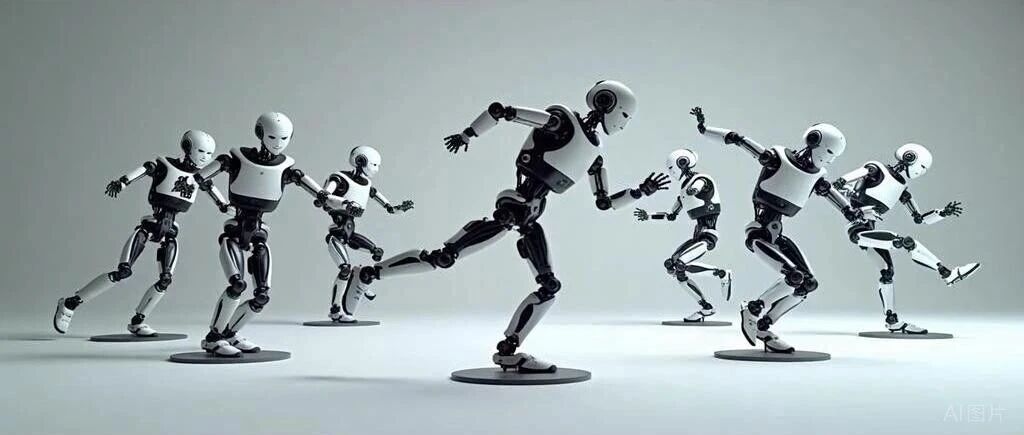
宇树科技王兴兴:今年目标出货量在1-2万台
Feng Huang Wang· 2026-02-17 03:46
Core Insights - The core highlight of the G1 and H2 humanoid robots is the debut of fully autonomous cluster control technology, achieving the world's first rapid positioning with a maximum speed of 4m/s [1] Company Overview - Yushu Technology aims to achieve a shipment target of approximately 10,000 to 20,000 humanoid robots this year, while the global shipment volume is expected to reach at least tens of thousands [1] Industry Context - The humanoid robot sector is still in its early application stage, constrained by technological bottlenecks such as embodied intelligent brains [1]
宇树科技《武BOT》节目揭秘,8个问题带你了解春晚表演为何如此惊艳
Xin Lang Cai Jing· 2026-02-17 03:36
Core Insights - The performance of Yushu Technology's robots at the Spring Festival Gala showcased advanced capabilities, including high-difficulty martial arts routines and dynamic coordination, marking a significant technological leap compared to previous performances [1][14][15]. Group 1: Performance Highlights - The robots G1 and H2 executed complex martial arts routines, including staff techniques, swordplay, and acrobatics, demonstrating fluid movements and precise execution [1][14]. - The performance included several global firsts, such as continuous parkour flips and aerial maneuvers exceeding 3 meters in height, showcasing unprecedented athletic performance [1][15]. Group 2: Technical Innovations - Yushu Technology's founder highlighted the debut of high-dynamic, high-coordination cluster control technology, which is practical for future applications in various robotic scenarios [1][14]. - The preparation for the performance began in November, involving extensive software development, algorithm validation, and collaboration with martial arts actors for real-world testing [3][16]. Group 3: Challenges and Solutions - The team faced significant technical challenges, including control algorithm design and model training, which were addressed through extensive data training and iterative testing [4][17]. - Navigation and trajectory tracking were optimized through laser positioning algorithms, ensuring high precision even under dynamic conditions [5][18]. Group 4: Applications and Future Prospects - The technologies developed for the performance have clear applications in industrial settings, such as multi-robot coordination for inspection, sorting, and assembly tasks [9][22]. - The performance's inspiration stemmed from a tribute to traditional Chinese martial arts, merging cultural heritage with modern technology, and reflecting Yushu's core competencies in autonomous control and motion technology [12][24].
宇树科技春晚节目技术难点解析
Shang Hai Zheng Quan Bao· 2026-02-17 01:54
Core Viewpoint - Yushu Technology showcased its advanced capabilities in robotics during the 2026 Spring Festival Gala with the world's first fully autonomous humanoid robot martial arts performance, "Wu BOT," achieving multiple global technical breakthroughs [3][16]. Group 1: Technical Innovations - The performance featured several unprecedented robotic maneuvers, including continuous trick flips, aerial flips exceeding 3 meters in height, and complex movements like single-leg flips and wall jumps [3][6]. - Yushu Technology upgraded its algorithms, hardware, and systems to enhance performance, including a reinforced learning framework for complex martial arts movements and improved positioning technology to address drift during high-speed movements [6][7]. - The hardware improvements included increased power density for core joint motors and optimized body structure to support dynamic actions, while a new cluster control system was developed for real-time coordination of multiple robots [7][14]. Group 2: Performance Challenges - The most challenging actions in the performance involved real-time interaction with objects, precise environmental navigation during high-speed movements, and extreme ground maneuvers, all requiring advanced sensing and adaptive control capabilities [8][9]. - The robots were equipped with a new dexterous hand for quick tool changes and stable gripping, enhancing their ability to perform complex tasks [9][10]. Group 3: Product Development - The H2 model, which is 40% taller and twice as heavy as the G1 model, demonstrated impressive capabilities, showcasing the challenges in algorithm and hardware performance required for executing similar actions [12][13]. - The performance highlighted the core technology of fully autonomous cluster control, allowing multiple robots to operate without external positioning assistance, relying solely on onboard sensors [13][14]. Group 4: Real-World Applications - The technologies developed for the performance have clear applications in real-world scenarios, such as multi-robot collaboration in industrial settings, precision assembly, and dynamic environment navigation [15][16]. - The cluster control system and adaptive control technologies can be applied to tasks like warehouse sorting and assembly lines, enhancing operational efficiency and adaptability in various environments [15][16].