公募基金行业费率改革

Search documents
行业费率改革持续深化 基金公司密集宣布降费
Sou Hu Cai Jing· 2026-01-24 12:36
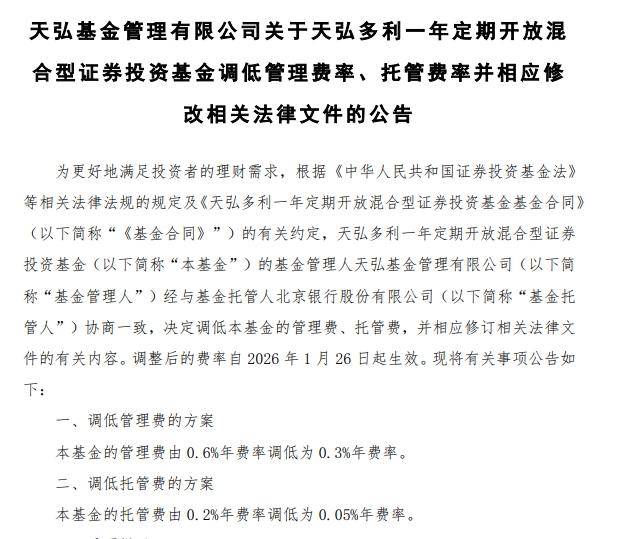
Core Viewpoint - The recent trend in the fund industry shows a significant reduction in management and custody fees by various fund companies, driven by regulatory reforms aimed at lowering overall industry costs and enhancing investor benefits [1][4][7]. Group 1: Fee Reductions by Fund Companies - Tianhong Fund announced a reduction in management fees from 0.6% to 0.3% and custody fees from 0.2% to 0.05%, effective January 26, 2026 [1]. - Prior to this, Tianhong Fund also reduced fees for another fund, lowering management fees from 0.7% to 0.3% and custody fees from 0.15% to 0.05% [3]. - Huaxia Fund reduced management fees for its financial technology ETF from 0.50% to 0.15% and custody fees from 0.10% to 0.05%, effective January 22, 2026 [4]. - Haifutong Fund lowered management fees for its bond fund from 0.5% to 0.4%, effective January 21, 2026 [6]. Group 2: Industry Context and Regulatory Changes - The China Securities Regulatory Commission (CSRC) initiated a fee reform plan for the public fund industry in July 2023, aiming to lower comprehensive fee levels through a structured approach [7]. - As of January 1, 2023, the new regulations on sales fees for publicly offered securities investment funds were implemented, marking a smooth transition in the fee reform [7]. - The CSRC's action plan for promoting high-quality development in public funds, released in May 2025, emphasizes optimizing fund operation models and establishing a floating management fee mechanism linked to fund performance [7]. Group 3: Market Impact and Future Outlook - As of January 24, 2023, nearly 1,200 funds have management fees at or below 0.15%, and over 2,400 funds have custody fees at or below 0.05% [8]. - Research indicates that the fund industry previously relied on a "high scale, high fee, high profit" model, which deviated from the principle of prioritizing investor interests [8]. - Future developments in the public fund industry will increasingly depend on quality improvements, focusing on value creation for investors through product innovation, research, and customer service [8].

公募基金还需早日推出第二轮行业费率改革
Sou Hu Cai Jing· 2026-01-07 23:15
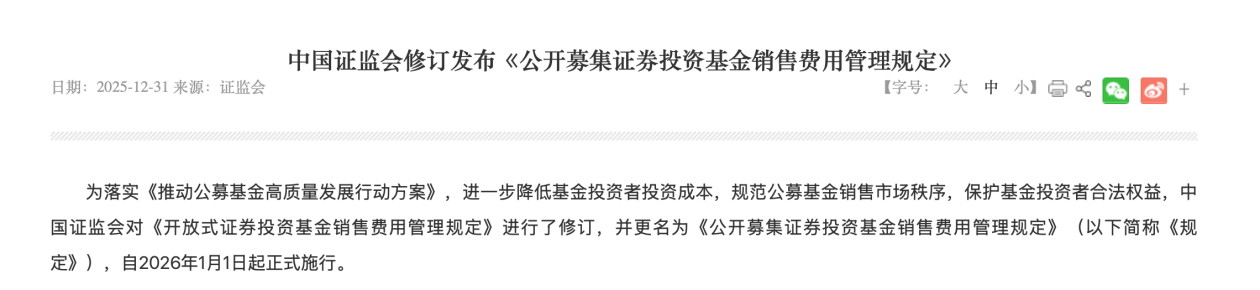
Core Viewpoint - The China Securities Regulatory Commission (CSRC) has officially released the "Regulations on the Management of Sales Expenses for Publicly Raised Securities Investment Funds," which will take effect on January 1, 2026, marking the completion of the fee reform in the public fund industry initiated in July 2023 [1] Group 1: Fee Reform Phases - The first round of fee reform in the fund industry is divided into three phases: the first phase reduces management and custody fees for actively managed equity funds, resulting in an annual benefit of approximately 14 billion yuan; the second phase lowers stock trading commission rates, yielding an annual benefit of about 7 billion yuan; the third phase focuses on reducing sales expenses, providing an annual benefit of around 30 billion yuan [1] - The cumulative annual benefit to investors from all three phases of the reform reaches 51 billion yuan, leading to an overall reduction of approximately 20% in the comprehensive fee rate of public funds [1] Group 2: Importance of Fund Performance - While reducing sales expenses is crucial, enhancing the investment performance of funds is even more important for attracting investors [3] - Funds with strong performance in 2025 achieved returns exceeding 200%, while poorly performing funds faced losses of over 20% [3] - Fund companies must prioritize improving investment performance to maintain their reputation and attract investors [3] Group 3: Management Fee Reform - Current fund management fees are calculated based on fund size rather than performance, necessitating a second round of reform to address this issue [4] - The second round of management fee reform should apply to both new and existing funds, with a significant reduction in the proportion of fees based on fund size, ideally lowering the standard by more than half [4] - Introducing performance-based fee structures, where management fees are tied to fund profitability, could enhance the focus on improving fund performance and increase the attractiveness of investment funds to the public [4]
【银行理财】公募销售新规正式落地,理财子深化推进新直联系统上线——银行理财周度跟踪(2025.12.29-2026.1.4)
华宝财富魔方· 2026-01-07 09:41
Regulatory and Industry Dynamics - On December 31, the China Securities Regulatory Commission officially released the "Regulations on the Management of Sales Fees for Publicly Raised Securities Investment Funds," effective from January 1, 2026, marking the full implementation of the third phase of fee reform in the public fund industry aimed at standardizing sales order, reducing investor costs, and promoting long-term investment concepts [3][7] - The new regulations significantly relax the redemption fee arrangements for bond funds, allowing individual investors to redeem index and bond funds after holding them for 7 days, and institutional investors after 30 days, alleviating liquidity concerns in the bond market [7][8] - The launch of the new direct connection system by CCB Wealth Management on December 29 enhances the standardization of the industry, with a focus on automating and standardizing data reporting, thereby improving accuracy and timeliness [10][11] Yield Performance - For the week of December 29, 2025, to January 4, 2026, cash management products recorded an annualized yield of 1.35%, up 5 basis points, while money market funds saw a decline to 1.19%, down 2 basis points, resulting in a yield spread of 0.16% [4][13] - The bond market exhibited a volatile trend, with the yield on 10-year government bonds remaining stable at 1.84% and the yield on 30-year bonds rising by 3 basis points to 2.25% [4][15] - The overall sentiment in the bond market is expected to remain subdued, influenced by factors such as mixed expectations on monetary policy, significant supply pressure from long-term government bonds, and the ongoing "stock-bond seesaw" effect impacting fund flows [5][15] Net Value Tracking - The net value ratio of bank wealth management products was 0.86%, a decrease of 0.15 percentage points, while credit spreads widened by 4.12 basis points [5][17] - The relationship between net value ratios and credit spreads is generally positive, with significant movements in either potentially indicating redemption pressures on wealth management products [17]

公募销售新规正式落地,理财子深化推进新直联系统上线
HWABAO SECURITIES· 2026-01-07 08:39
Investment Rating - The report does not explicitly provide an investment rating for the industry [3] Core Insights - The implementation of the new public offering sales regulations by the China Securities Regulatory Commission (CSRC) aims to standardize sales practices, reduce investor costs, and promote long-term investment strategies [4][11] - The launch of the new direct connection system by China Everbright Bank Wealth Management marks a significant step in the industry’s standardization efforts, enhancing data reporting accuracy and efficiency [13][16] - The cash management products recorded a 7-day annualized yield of 1.35%, reflecting a 5 basis points increase week-on-week, while money market funds saw a slight decline [17][21] - The overall bond market exhibited a volatile trend, with the 10-year government bond yield remaining stable at 1.84% and the 30-year yield increasing by 3 basis points to 2.25% [19][28] - The report highlights a decrease in the net asset value (NAV) ratio of bank wealth management products to 0.86%, down by 0.15 percentage points, indicating a potential increase in redemption pressure if credit spreads continue to widen [28][32] Summary by Sections Regulatory and Industry Dynamics - The CSRC's new sales fee management regulations are set to take effect on January 1, 2026, marking the completion of the third phase of fee reform in the public fund industry [4][11] - The new direct connection system by China Everbright Bank enhances the efficiency of product and investor information registration, contributing to the overall transparency of the wealth management sector [13][16] Yield Performance - Cash management products showed a week-on-week increase in annualized yield, while money market funds experienced a slight decline, indicating a shift in investor preferences [17][21] - The bond market remains under pressure due to various factors, including monetary policy expectations and government bond supply dynamics [19][22] NAV Tracking - The bank wealth management products' NAV ratio decreased, suggesting potential challenges ahead if credit spreads continue to widen, which could lead to increased redemption pressures [28][32]
年均为投资者省300亿元 证监会发布基金销售费用新规
Huan Qiu Wang· 2026-01-01 01:00
Core Viewpoint - The China Securities Regulatory Commission (CSRC) has officially released the "Regulations on the Management of Sales Expenses for Publicly Raised Securities Investment Funds," which will take effect on January 1, 2026, as a key measure to promote the high-quality development of the public fund industry, reflecting the regulatory commitment to prioritize investors and reduce costs for the public [1][3]. Summary by Sections Sales Fee Reduction - The overall reduction in sales expenses across the industry is expected to reach 34%, saving investors approximately 30 billion yuan annually [3]. - The maximum subscription fee for actively managed equity funds is reduced to 0.8%, while other mixed funds are capped at 0.5%, and index and bond funds at 0.3% [3]. - The annual sales service fee for actively managed equity and mixed funds is limited to 0.4%, while index and bond funds are capped at 0.2%, and money market funds at 0.15% [3]. - For example, with a sales service fee of 0.25% per year for money market funds, an investor holding 10,000 yuan can reduce their annual investment cost by 10 yuan; for an actively managed equity fund with a subscription fee of 1.5%, subscribing with 10,000 yuan can lower costs by 70 yuan [3]. Long-term Investment Incentives - The regulations stipulate that the full amount of the redemption fee will be allocated to the fund's assets and linked to long-term holding benefits: non-money market funds will not incur sales service fees after being held for one year, reducing long-term investment costs [3]. - For bond funds, a differentiated exemption period for redemption fees is established: individual investors are exempt after holding for 7 days, while institutional investors must hold for 30 days, ensuring convenience for individual investors and encouraging long-term holding by institutions [3]. - Index funds allow managers to flexibly arrange redemption fees for individual investors after holding for 7 days [3]. Sales Behavior Regulation - The regulations also address the upper limit of trailing commission payment ratios, maintaining that customer maintenance fees should not exceed 50% of management fees, and resolve issues related to fund sales settlement interest and dual charging for fund advisory services [4]. - The establishment of the Fund Industry Service Platform (FISP) aims to reduce costs and improve efficiency for fund managers in direct sales, enhancing customer experience and professional service capabilities [4]. Phased Fee Reform - The reduction in sales expenses marks the third phase of the fee reform in the public fund industry, following the first phase, which lowered management and custody fees for actively managed equity funds, yielding approximately 14 billion yuan in annual savings, and the second phase, which reduced stock trading commission rates, saving around 7 billion yuan annually [4]. - Cumulatively, the three phases of reform are expected to save investors over 50 billion yuan annually [4]. Industry Response - Multiple fund distribution agencies have indicated that the regulations have adequately considered industry feedback, with the rule-making process being transparent and prudent, which is conducive to smooth implementation and long-term execution [5].
刷屏!37万亿市场,大消息!
Zhong Guo Ji Jin Bao· 2025-12-31 13:13
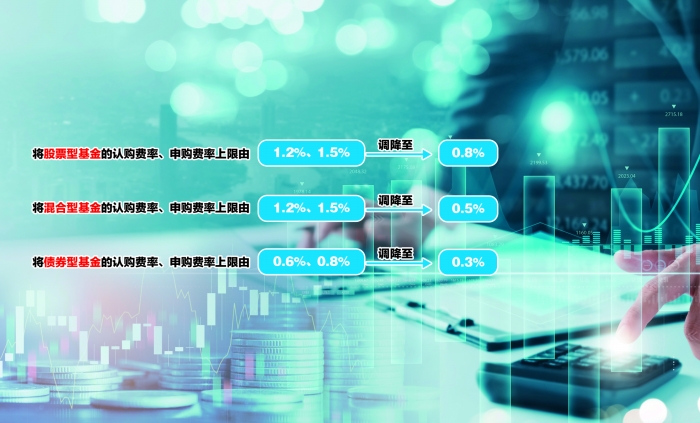
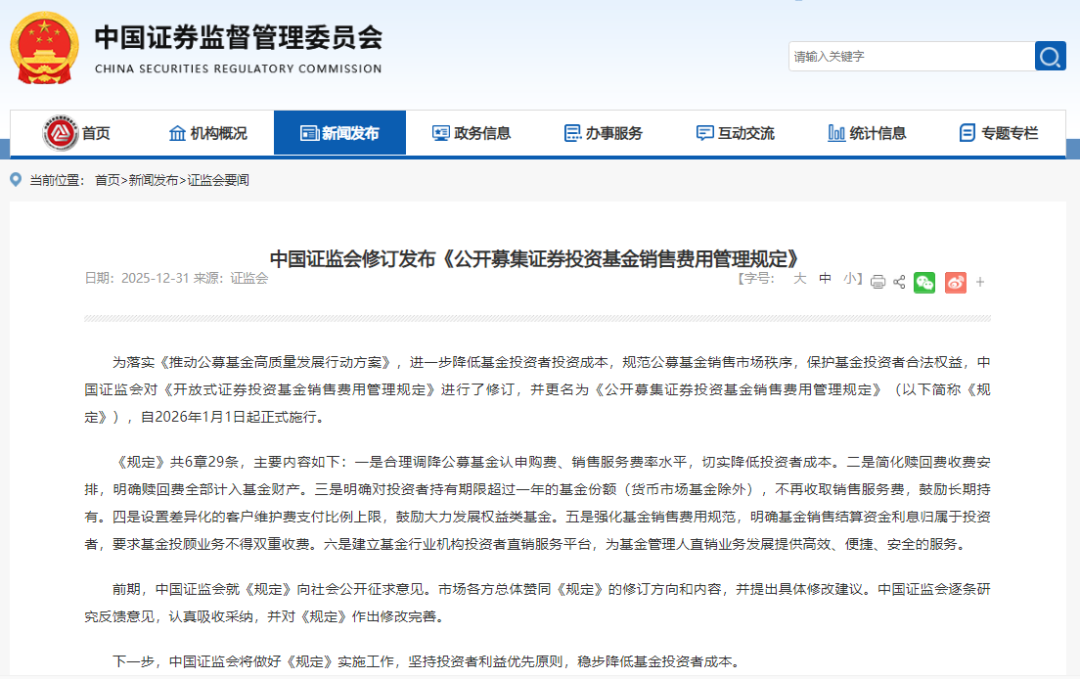
Core Viewpoint - The China Securities Regulatory Commission (CSRC) has officially released the "Regulations on the Management of Sales Expenses for Publicly Raised Securities Investment Funds," marking a significant milestone in the reform of fund sales fees, effective from January 1, 2026. This reform is seen as a crucial step towards promoting high-quality development in the public fund industry and upgrading regulations established over a decade ago [1][2]. Summary by Sections Sales Fee Rate Adjustments - The new regulations aim to address high subscription fee rates, complex redemption fee structures, and lack of effective regulation on sales service fees. The maximum subscription fee rates for various fund types have been reduced: equity funds to 0.8%, mixed funds to 0.5%, index funds to 0.3%, and bond funds to 0.3% [4]. Simplification of Redemption Fees - The redemption fee structure has been simplified from four tiers to three, with all fees now included in the fund's assets. The fee for redemptions held for more than 7 days but less than 30 days has increased from 0.75% to 1%, aimed at discouraging short-term trading [5]. Long-term Holding Incentives - For fund shares held for over one year (excluding money market funds), no sales service fees will be charged, encouraging long-term investment. The maximum sales service fee for equity and mixed funds has been reduced to 0.4% per year, and for index and bond funds to 0.2% per year. Money market funds can still charge a reduced fee of 0.15% per year for holdings over one year [6]. Changes in Commission Structures - The regulations lower the trailing commission for institutional clients on non-equity funds from 30% to 15%, while maintaining the 30% rate for equity and mixed funds. This aims to promote the development of equity funds [6]. Support for Direct Sales Platforms - The regulations support the establishment of a Fund Industry Service Platform (FISP), providing a legal basis and functional positioning for direct sales services to institutional investors, encouraging them to use this platform for fund transactions [6]. Additional Provisions - Other revisions include stipulations on interest from idle funds being paid to investors or returned to the fund, enhanced integrity requirements, and prohibitions on dual charging for fund advisory services. Specific redemption fee exemptions are provided for individual investors in index and bond funds after 7 days and for institutional investors after 30 days [7]. Cost Savings for Investors - The overall reduction in sales fees is expected to save investors approximately 30 billion yuan annually, with a total estimated annual savings of 51 billion yuan once all reforms are fully implemented. The comprehensive fee level in the public fund industry is projected to decrease by nearly 20% [8][12]. Phased Implementation of Fee Reforms - The fee reform is structured in three phases: the first phase focused on reducing management and custody fees, saving investors about 14 billion yuan annually; the second phase targeted reductions in trading commissions, saving around 7 billion yuan; and the final phase, which includes the current sales fee adjustments, is expected to save an additional 30 billion yuan [11].
刷屏!37万亿市场,大消息!
中国基金报· 2025-12-31 13:10
Core Viewpoint - The release of the "Regulations on the Management of Sales Expenses for Publicly Raised Securities Investment Funds" marks a significant milestone in the reform of sales fee rates in China's public fund industry, set to take effect on January 1, 2026, and aims to promote high-quality development in the sector [2][4][8]. Summary by Sections Sales Fee Rate Adjustments - The new regulations will lower the maximum subscription fees for various fund types: active equity funds to 0.8%, mixed funds to 0.5%, index funds to 0.3%, and bond funds to 0.3% [4]. - The redemption fee structure will be simplified from four tiers to three, with all fees included in the fund's assets. The fee for redemptions held for more than 7 days but less than 30 days will increase from 0.75% to 1% to discourage short-term trading [5]. Long-term Holding Incentives - No sales service fees will be charged for fund shares held for over one year (excluding money market funds), encouraging long-term investment. The sales service fee cap for equity and mixed funds will be reduced to 0.4% per year, and for index and bond funds to 0.2% per year [5][10]. Institutional Client Adjustments - The trailing commission for non-equity funds sold to institutional clients will be reduced from 30% to 15%, while maintaining the 30% rate for equity and mixed funds [5]. Support for Direct Sales Platforms - The regulations support the establishment of the Fund Industry Service Platform (FISP), encouraging institutional investors to use this platform for fund subscriptions and redemptions [6]. Cost Savings for Investors - The overall sales fee reduction is expected to save investors approximately 300 billion yuan annually, with the comprehensive fee level in the public fund industry decreasing by nearly 20% [7][10]. - The reforms are projected to save investors a total of 510 billion yuan in investment costs each year once fully implemented [11]. Focus on Investor Experience - The regulations emphasize improving service for individual investors and enhancing the competitiveness of equity investments, with a cap on client maintenance fees not exceeding 50% of management fees [11]. Phased Implementation - The fee reform is structured in three phases: the first phase focused on reducing management and custody fees, the second on lowering trading commissions, and the third on reducing sales fees, with significant savings expected at each stage [11].

利好!每年让利投资者510亿元,证监会新规出炉
Xin Lang Cai Jing· 2025-12-31 13:02
Core Viewpoint - The China Securities Regulatory Commission (CSRC) has finalized the "Regulations on the Management of Sales Fees for Publicly Raised Securities Investment Funds," marking the completion of a three-phase fee reform in the public fund industry, which is expected to save investors approximately 51 billion yuan annually in investment costs, with an overall reduction of about 20% in comprehensive fund fee levels [1][12][21]. Summary by Sections Phase of Fee Reform - The third phase of the fee reform is projected to save investors around 30 billion yuan each year, completing a total savings of 51 billion yuan across all three phases [1][12][21]. - The first phase focused on reducing management and custody fees, saving about 14 billion yuan annually, while the second phase adjusted trading commission rates, saving approximately 6.8 billion yuan each year [21]. Key Measures in the Regulations - The regulations include six major measures aimed at reducing investor costs, such as lowering subscription, application, and sales service fee rates [3][14]. - Specific fee caps have been established: active equity funds' subscription fees are capped at 0.8%, mixed funds at 0.5%, and index and bond funds at 0.3% [14][15]. - Sales service fees are limited to 0.4% per year for active equity and mixed funds, 0.2% for index and bond funds, and 0.15% for money market funds, resulting in an overall reduction of 34% in sales fees across the industry [15][16]. Encouragement of Long-term Investment - The reform encourages long-term holding by exempting sales service fees for non-money market funds held for over one year, aiming to shift investor behavior from short-term trading to long-term investment [6][17]. - The regulations also stipulate that redemption fees will be fully allocated to fund assets, detaching sales institutions' income from short-term trading behaviors [17][20]. Industry Transformation - The reforms are designed to transition the public fund industry from a focus on scale to a focus on returns, emphasizing quality improvement in fund management and customer service [21]. - A new direct sales service platform (FISP) has been established to enhance the efficiency and safety of direct sales operations for fund managers, improving overall service capabilities [18][19]. Optimization of Fee Structures - The finalized regulations have been optimized based on industry feedback, refining product classification standards and fee limits to better align with practical needs while maintaining the goal of significant investor savings [19]. - Specific adjustments have been made to redemption fee arrangements for bond and index funds to protect individual investors and encourage long-term holding [19].
中金:7天免赎新规若实施 公募债基投资面临破局挑战
Huan Qiu Wang· 2025-09-17 02:34
Core Viewpoint - The report from CICC focuses on the impact of the third phase of the public fund industry fee reform, particularly regarding the potential elimination of the 7-day redemption exemption and its implications for public bond fund investments [1][3]. Group 1: Fee Reform Background - The fee reform plan, released in July 2023, outlines a three-phase approach involving management fees, transaction fees, and sales fees [3]. - The third phase, initiated with the release of the draft regulations on September 5, 2025, aims to enhance the sales fee structure, with particular attention to redemption fee adjustments [3]. Group 2: Market Impact Analysis - The new regulations are expected to lead to a clearer distinction between long-term holding of off-exchange products and short-term trading of on-exchange ETFs [4]. - Increased trading costs for bond funds will limit their ability to engage in short-term trading, while bond ETFs may see growth as they cater to short-term trading needs [4]. - The investment positioning of short bond funds will shift, with money market funds and wealth management products potentially taking over liquidity management roles [4]. Group 3: Recommendations for Bond Fund Investors - CICC suggests that bond fund investors should focus on long-term holding strategies, utilizing active pure bond funds as a core holding and bond ETFs for market timing [5]. - The report advocates for a dual-layer investment strategy in "fixed income +" funds, combining absolute return products for foundational returns with high-volatility products for tactical market positioning [5]. - There is an anticipated opportunity for bond ETFs to develop in response to policy changes, with a focus on innovative thematic products and the expansion of multi-asset and fixed income ETFs [5].

证监会拟调降认申购、销售服务费率,优化赎回安排 公募费率改革进入“关键一步” 年降费约300亿元
Shang Hai Zheng Quan Bao· 2025-09-05 20:34
Core Viewpoint - The reform of public fund sales fees is expected to reduce costs by approximately 30 billion yuan per year, marking a 34% decrease in fees, and aims to promote high-quality development in the public fund industry [2][9] Group 1: Key Aspects of the Reform - The new regulations will lower the subscription and sales service fee rates for various fund types, significantly reducing investor costs [3][4] - The redemption fee structure has been optimized, with all redemption fees now allocated to fund assets, encouraging long-term holding by investors [5][7] - The reform emphasizes the development of equity funds and sets differentiated limits on trailing commission payments [3][6] Group 2: Specific Fee Adjustments - Subscription fee rates for stock funds will decrease from a maximum of 1.2% to 0.8%, and for mixed funds from 1.2% to 0.5% [4] - Sales service fee rates for stock and mixed funds will be reduced from 0.6% per year to 0.4%, and for index and bond funds from 0.4% to 0.2% [5] - The maximum sales service fee for money market funds will drop from 0.25% to 0.15% per year [5] Group 3: Long-term Investment Encouragement - The reform aims to discourage short-term trading behaviors by optimizing the redemption fee system and encouraging sustained service from fund sales institutions [6][7] - The regulations will maintain a cap on customer maintenance fees for personal investors, promoting better service and support for long-term investment [6][7] Group 4: Industry Platform Development - The establishment of the Fund Industry Service Platform (FISP) will facilitate direct sales channels for institutional investors, improving efficiency and reducing operational costs [6][8] - The FISP platform aims to provide standardized, automated services for data exchange, enhancing the overall service level in the fund industry [6][8] Group 5: Overall Impact of the Reform - The phased approach to fee reduction is projected to save investors over 50 billion yuan annually, significantly lowering investment costs and enhancing industry competitiveness [9]