关税退还

Search documents
美国法院裁定退关税,能退回吗?什么时候才能退?
第一财经· 2026-03-05 10:02
Core Viewpoint - The article discusses a recent ruling by the U.S. International Trade Court that prohibits the U.S. Customs and Border Protection from collecting tariffs based on the International Emergency Economic Powers Act (IEEPA), potentially leading to refunds of up to $175 billion for U.S. importers [3][8]. Group 1: Legal Ruling and Implications - The U.S. International Trade Court ruled that U.S. importers are entitled to refunds for tariffs collected under the IEEPA, following a Supreme Court decision that limited the Trump administration's authority to impose such tariffs [3][7]. - The ruling specifically affects cases like that of Atmus Filtration, which claims entitlement to tariff refunds [3][7]. - Major companies, including FedEx and L'Oréal, have filed lawsuits against the federal government for refunds of tariffs collected under the IEEPA [3][8]. Group 2: Financial Impact and Refund Process - The U.S. government may need to refund up to $175 billion in tariffs, with $134 billion already collected under the IEEPA by the end of 2025 [8]. - The Customs and Border Protection typically determines the tariff amounts within 314 days after import, allowing importers 180 days to protest the amounts [7]. - The refund process is expected to be complex, as the Customs and Border Protection's systems are not designed for large-scale refunds, potentially leading to delays [8][11]. Group 3: Ongoing Legal and Administrative Challenges - Over 1,000 companies have joined lawsuits seeking refunds, indicating widespread concern over the legality of the tariffs [10]. - Legal experts suggest that the battle over refunds could be prolonged, with expectations that the government may delay the process [11]. - The U.S. Treasury Secretary announced new global import tariffs of 15%, which are set to take effect soon, adding further complexity to the trade landscape [12].

Could Americans get $1,700 tariff checks soon? Trump foes push for ‘immediate’ return. Do this if you get one
Yahoo Finance· 2026-03-04 22:17
Group 1 - A federal appeals court has rejected the Trump administration's attempt to delay the refunding of billions in tariffs, which have cost small businesses and families up to $175 billion [1][6] - Senate Democrats have introduced The Tariff Refund Act of 2026, mandating the federal government to return collected tariff revenue with interest within 180 days [2][5] - New York Governor Kathy Hochul has called for a refund of approximately $1,751 for every New York household, totaling around $13.5 billion for the state [2][3] Group 2 - The Supreme Court's ruling that Trump's tariffs were illegal has raised questions about the refund process and who will receive the money [4] - Political leaders are urging the immediate return of funds to American families following the Supreme Court decision [4] Group 3 - The article discusses potential uses for the expected tariff refunds, suggesting options for strengthening finances or investing [5] - Warren Buffett advocates for investing in the S&P 500 index fund as a way to benefit from long-term stock market growth [6][8] - Real estate is highlighted as a cornerstone of wealth-building, with options for fractional ownership through crowdfunding platforms [11][14] Group 4 - Gold is presented as a safe haven investment during economic uncertainty, with prices having surged over 70% in the past year [21][22] - Gold IRAs are mentioned as a way to combine tax advantages with the protective benefits of investing in gold [23] Group 5 - High-yield accounts, such as the Wealthfront Cash Account, are recommended for growing emergency funds, offering competitive interest rates [24][25] - Wealthfront Cash Account currently offers a base variable APY of 3.30%, with new clients receiving a boost to 4.05% for the first three months [25][26]
逾千家企业起诉美国联邦政府追索关税资金
Xin Lang Cai Jing· 2026-02-27 10:13
Group 1 - Over 1000 companies in the U.S. have filed lawsuits against the Trump administration seeking refunds of tariffs paid, with the number of companies increasing daily following the Supreme Court's ruling on tariffs [1] - The Trump administration's tariff measures generated at least $130 billion in revenue within the first 10 months of implementation [1] - At least 1800 companies, including major retailers like Costco, Goodyear Tire & Rubber Company, and Barnes & Noble, have initiated lawsuits to reclaim tariff funds, with most filing before the Supreme Court's decision [1] Group 2 - The process for refunding tariffs is unclear and may take a long time, with optimistic estimates suggesting one to two years, while pessimistic forecasts indicate it could take even longer [1] - The U.S. Court of International Trade, responsible for handling tariff lawsuits, has experience but has never faced such a high volume or scale of financial claims [1] - Trump criticized the Supreme Court's ruling for not providing clear guidance on tariff refunds, suggesting that the federal government may be involved in litigation for the next five years [1]
Wall Street Traders Are Pouncing on the Tariff Refund Chaos
WSJ· 2026-02-26 01:00
Core Viewpoint - The Supreme Court's decision to overturn President Trump's tariffs has prompted businesses to explore ways to recover the levies they have been paying or to sell the rights at a discount now [1] Group 1 - Businesses are now calculating strategies to reclaim the tariffs they have incurred [1] - There is a potential market for selling tariff rights at a discount, indicating a shift in how companies may approach these costs [1]

“美国已有超千家企业起诉美政府”
Xin Lang Cai Jing· 2026-02-24 05:38
Core Viewpoint - FedEx has filed a lawsuit against the U.S. government seeking a full refund of tariffs imposed under the International Emergency Economic Powers Act, following a Supreme Court ruling that deemed the act did not authorize the president to impose large-scale tariffs [1][2]. Group 1: Legal Action - FedEx has initiated legal proceedings in the U.S. International Trade Court to recover all tariffs collected under the International Emergency Economic Powers Act [1]. - The lawsuit is part of a broader movement, with over 1,000 companies joining legal actions to demand refunds of tariffs already paid [2]. Group 2: Supreme Court Ruling - The U.S. Supreme Court recently ruled that the International Emergency Economic Powers Act does not grant the president the authority to levy large-scale tariffs [2]. - On the same day the ruling was announced, the White House released an executive order signed by Trump, confirming the termination of previously implemented tariff measures under the act [2]. Group 3: Industry Participation - Major companies, including Costco and Reebok, are among those participating in the legal actions against the government for tariff refunds [2].

黄金白银,双双大涨;我国慈善信托累计备案规模突破百亿元|金融早参
Mei Ri Jing Ji Xin Wen· 2026-02-24 00:33
Group 1: Gold and Silver Market - Gold and silver prices have seen significant increases, with gold reaching $5,156.59 per ounce, up 1.13%, and silver at $87.447 per ounce, up 3.40% as of February 23 [1] - ANZ Bank forecasts gold prices to reach $5,800 per ounce in Q2 2025, while UBS predicts a more aggressive target of $6,200 per ounce, driven by central bank demand, investment needs, rising fiscal deficits, declining U.S. real interest rates, and geopolitical risks [1] Group 2: Agricultural Insurance in China - In 2025, China's agricultural insurance premium income is projected to be ¥155.55 billion, providing risk coverage exceeding ¥5.3 trillion, marking China as the world's largest agricultural insurance market for the second consecutive year [2] - The agricultural insurance sector is evolving from covering material costs to ensuring full cost and income protection, enhancing stability and risk resilience in agricultural production [2] Group 3: Charitable Trusts in China - By the end of 2025, China's cumulative charitable trust registration scale has surpassed ¥10.231 billion, with 2,757 registered charitable trusts [3] - In 2025, 16.94 billion yuan in new charitable trust registrations were added, indicating a growing public recognition of the trust system and a positive trend in charitable activities [3] Group 4: Ant Group's AI Business - Ant Group's AI business has experienced significant growth during the Spring Festival, with "AI Pay" surpassing 100 million users, becoming the first AI-native payment product to achieve this milestone [4] - The "Ant Health" app also reached over 100 million users, with 52% of new users coming from third-tier cities, highlighting the company's market penetration and technological advancements [4] Group 5: Legal Actions Against Tariffs - Following a Supreme Court ruling declaring the U.S. government's large-scale tariff policy illegal, hundreds of companies have filed lawsuits seeking refunds for tariffs paid under the Trump administration [5] - The process for companies to claim refunds remains unclear, and the legal battles could extend for years, as acknowledged by former President Trump [5]
“关税大王”输了官司,特朗普会退款吗?中国可拿回1000亿美元
Sou Hu Cai Jing· 2026-02-23 05:38
Core Viewpoint - The U.S. Supreme Court ruled that the tariffs imposed by Trump under the International Emergency Economic Powers Act over the past year were illegal, with a 6-3 vote indicating that the President overstepped his authority [1] Group 1: Legal Implications - The ruling indicates that Trump does not have the power to unilaterally impose tariffs, rendering the policy ineffective [1] - The court did not specify whether the tariffs should be refunded, leaving the issue of potential refunds unresolved [1][6] - The process for companies to claim refunds involves lengthy litigation, requiring them to file lawsuits and await lower court rulings before any refunds can be executed [1][6] Group 2: Financial Impact - The total tariffs collected under Trump's administration exceeded $175 billion, accounting for half of the U.S. tariff revenue [1] - A full refund of these tariffs would place significant pressure on the U.S. Treasury, potentially impacting the debt market [1] - The Congressional Budget Office projects that the U.S. will collect approximately $300 billion annually from tariffs over the next decade, meaning a refund of $175 billion would represent a substantial loss [1] Group 3: Political Dynamics - Trump announced new tariffs of 10% on global imports for 150 days following the court's decision, indicating his intent to continue using tariffs as a political tool [4] - The ruling has polarized public opinion, with critics viewing it as a victory for justice and supporters arguing it represents excessive judicial interference in executive power [6][7] - The ongoing political maneuvering suggests that the likelihood of refunds is minimal, as Trump is unlikely to acknowledge any wrongdoing [4][6] Group 4: Industry Considerations - Chinese companies could theoretically reclaim between $100 billion to $180 billion from the tariffs, but the actual amount refunded is expected to be much lower due to procedural complexities [4][6] - The refund process will likely take years, requiring companies to engage in protracted legal battles to recover any funds [6][7] - The ruling highlights a deeper conflict within the U.S. system regarding the boundaries of presidential authority and the legislative power of Congress [7]
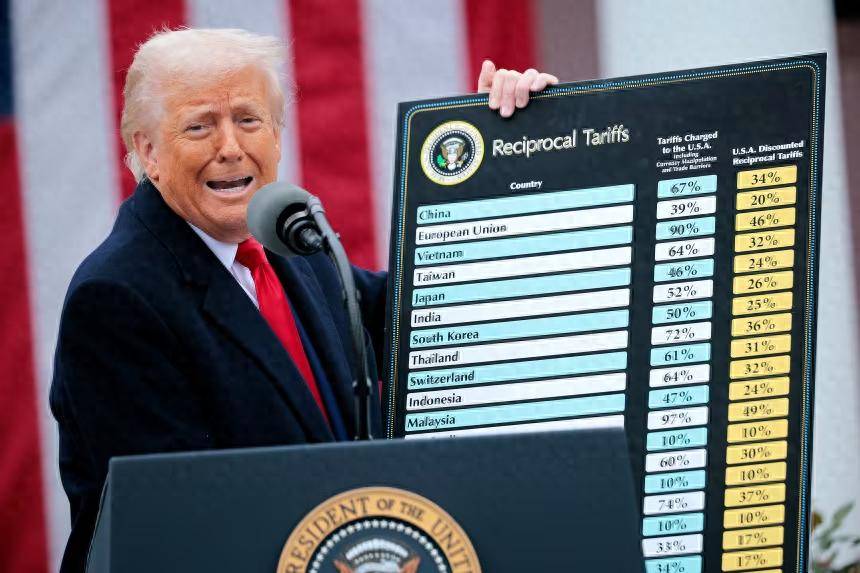
数百家公司提起诉讼让退还已缴关税
Jin Rong Jie· 2026-02-22 02:28
Core Viewpoint - The U.S. Supreme Court's ruling that the government's large-scale tariff policy is illegal has led hundreds of companies to file lawsuits for refunds of tariffs paid under the Trump administration [1] Group 1 - Hundreds of companies are seeking refunds for tariffs paid, following the Supreme Court's decision [1] - Economists indicate that the process for companies to apply for tariff refunds is currently unclear [1] - President Trump acknowledged that the Supreme Court ruling will lead to prolonged legal battles, potentially lasting "five years" regarding whether the federal government must refund tariff payments to U.S. businesses [1]
Odds Trump Is Forced To Refund Tariffs Drop Sharply As Supreme Court Justice Warns Of Legal Complexity - Apple (NASDAQ:AAPL), Best Buy Co (NYSE:BBY)
Benzinga· 2026-02-11 18:45
Company Impact - Best Buy (NYSE:BBY) has reduced its 2026 guidance, specifically citing tariff costs as a significant factor. The potential for a refund has been eliminated for the first half of the year, impacting the company's bottom line [3]. - General Motors (NYSE:GM) imports a substantial amount of components from Mexico. The ongoing tariffs, referred to as "Liberation Day" tariffs, will keep input costs elevated through Q2, affecting the company's financial performance [3]. Market Reaction - The odds on Polymarket that President Trump will be forced to refund tariffs have decreased to 28%, down from a high of 39% last week. This indicates a shift in market sentiment regarding the likelihood of a refund [2]. - The Supreme Court's timeline for any ruling on the tariffs is uncertain, with Justice Ketanji Brown Jackson indicating that legal challenges will face complex issues, suggesting that the court is not in a hurry to address the matter [1][2].


Costco Joins Companies Suing Trump Administration Over Tariffs
WSJ· 2025-12-02 03:20
Core Point - The retailer is among the largest companies seeking a refund if the Supreme Court overturns emergency tariffs [1] Group 1 - The retailer is one of the biggest companies affected by the potential Supreme Court decision regarding emergency tariffs [1]