具身智能(Embodied AI)

Search documents
对话梅卡曼德创始人兼CEO邵天兰:当 AI 进入物理世界,部署能力成为真正的护城河
Xin Lang Cai Jing· 2026-02-06 16:50
Group 1 - The discussion at the World Economic Forum is shifting towards how AI can be integrated into the physical world and create scalable industrial capabilities, with a focus on concepts like "Physical AI" and "Embodied AI" [3][32] - The CEO of Mech-Mind Robotics emphasizes that the value of robots lies not in their human-like appearance but in their ability to adapt to complex physical environments, complete real tasks, and achieve rapid deployment at low costs [3][4][32] - Mech-Mind Robotics aims to enhance robots' perception, understanding, and decision-making capabilities to reduce reliance on extensive engineering adjustments, thereby improving deployment speed and cost-effectiveness [4][34] Group 2 - The company has chosen a restrained approach by defining its boundaries clearly, focusing on providing the "eyes, brain, and hands" of robots rather than complete systems or production lines [5][35] - Mech-Mind's clients span various industries, including automotive, battery, photovoltaic, 3C, and logistics, indicating a broad applicability of their technology [6][36] - The company believes that the common needs across different industries, such as perception, recognition, and safety execution, are often underestimated [6][36] Group 3 - The CEO outlines a three-phase development path for Mech-Mind: short-term growth in manufacturing and logistics, mid-term expansion into service industries, and long-term potential for home-use robots [7][28] - The company has achieved significant sales growth, moving from selling approximately 1,000 units in the first four years to over 10,000 units annually in recent times [20][49] - Mech-Mind focuses on standardized products rather than customized solutions, leveraging extensive real-world data to enhance AI capabilities [49][50] Group 4 - The company does not believe in a "full-stack" approach, arguing that no single company can excel in all aspects of robotics, which could dilute resources and core competencies [25][54] - The CEO expresses skepticism about the feasibility of creating highly complex robotic hands that mimic human dexterity, advocating instead for robots designed to complete specific tasks efficiently [26][55] - Mech-Mind's strategy emphasizes the importance of having a unique skill set or competitive edge in key areas, rather than merely assembling components [27][56]

贾跃亭“造人”上热搜,机器人1.7万开卖,已拿下1211台订单
3 6 Ke· 2026-02-05 10:23
Core Viewpoint - Faraday Future's founder, Jia Yueting, has launched four embodied AI robots at the NADA conference, marking a shift from automotive to robotics, with significant pre-orders already received [1][3]. Group 1: Product Launch - Four series of robots were introduced: Futurist, Master, Aegis, and a robotic arm series, with prices ranging from $2,499 to $34,990 [3][10]. - The Futurist series is a full-sized humanoid robot priced from $34,990, designed for complex professional environments like industrial inspection and medical assistance [5][6]. - The Master series focuses on athletic performance, starting at $19,990, and is designed for high-interaction scenarios [10]. - The Aegis series, resembling a mechanical dog, is the most affordable at $2,499, aimed at security and companionship [10]. Group 2: Technical Specifications - The Futurist robot features 200 TOPS computing power, multiple cameras, and sensors, enabling it to adapt to complex environments [6][8]. - It has 28 high-performance motors with a peak torque of 500 Nm and supports communication in 50 languages [8]. - The Master series has 30 degrees of freedom and can perform precise movements, with a starting price of $19,990 [10]. Group 3: Market Strategy - Jia Yueting aims to lower the price barrier for EAI robots, shifting the focus to functionality and practical value [10][11]. - The "633 industry application and practical value" strategy includes six leading technologies and various service scenarios [11][13]. - The EAI 5x4 technology architecture consists of four systems and five platforms, aiming for cross-scenario capabilities [13]. Group 4: Business Model - Faraday Future is transitioning from a traditional sales model to a subscription-based revenue model, enhancing dealer profitability and user engagement [15][19]. - The company has secured a $10 million investment to support its new robotics venture, indicating potential for future growth [17][19]. - Jia Yueting's narrative continues to attract attention, despite past challenges in delivering on promises [19].



贾跃亭“造人”上热搜,机器人1.7万开卖,已拿下1211台订单
创业邦· 2026-02-05 10:18
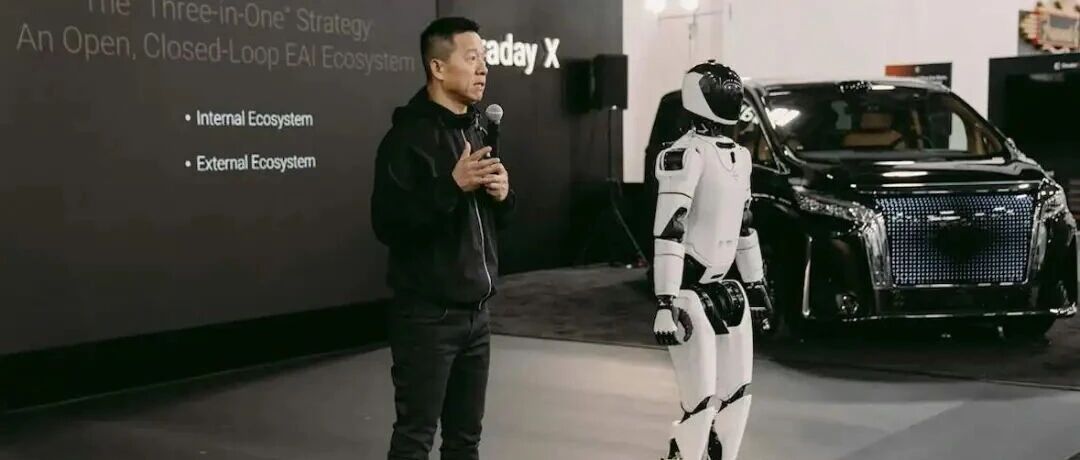
Core Viewpoint - Faraday Future, led by Jia Yueting, has launched four series of embodied AI robots, marking a significant shift from automotive to robotics, with a focus on practical applications and affordability [4][6][24]. Product Launch - The robots include the Futurist, Master, Aegis, and a robotic arm series, with a total of 1,211 paid pre-orders received immediately after the launch [6][8]. - The pricing ranges from $2,499 to $34,990, targeting various market segments [8][10]. Product Specifications - The Futurist series is designed for complex professional environments, priced from $34,990, featuring advanced capabilities such as 200 TOPS computing power and multiple sensors for environmental interaction [10][12]. - The Master series focuses on athletic performance, starting at $19,990, with 30 degrees of freedom and high precision for interactive tasks [12][14]. - The Aegis series, starting at $2,499, is aimed at security and companionship, offering a more accessible entry point into the robotics market [14][18]. Strategic Vision - Jia Yueting emphasized a "three-in-one" ecological strategy, integrating terminal products, an open-source platform, and data factories to create a closed-loop ecosystem that enhances product capabilities and drives sales [20][22]. - The EAI 5x4 technology architecture aims to establish a universal autonomous capability across various scenarios, promoting the widespread adoption of embodied AI robots [18][20]. Financial Backing - Prior to the robot launch, Faraday Future secured a $10 million investment, providing crucial financial support for its new direction in robotics [22][24]. - The company is transitioning from a traditional sales model to a subscription-based revenue model, enhancing profitability and user engagement [20][22].
ICLR 2026 Workshop二轮征稿开启:聚焦终身智能体的学习、对齐、演化
机器之心· 2026-02-05 07:52
Core Insights - Artificial Intelligence is at a new turning point, with AI Agents based on Large Language Models (LLM), Reinforcement Learning (RL), and Embodied AI rapidly emerging, showcasing multi-dimensional capabilities such as planning, reasoning, tool usage, and autonomous decision-making [2] - The current mainstream paradigm faces critical bottlenecks, necessitating a shift towards Lifelong Agents that can continuously learn, align over the long term, evolve autonomously, perceive resources, and be sustainably deployed [2] Workshop Overview - The Lifelong Agent Workshop, initiated by institutions like UIUC, Edinburgh, Oxford, and Princeton during the ICLR 2026 conference, aims to create a cross-disciplinary forum to systematically advance the Lifelong Agent research paradigm [3] - The workshop will address key issues related to Lifelong Agents, including language intelligence, reinforcement learning, embodied systems, multi-agent collaboration, and AI for science, defining the next technological milestone for Agent development [3] Challenges in Lifelong Learning - The phenomenon of catastrophic forgetting remains a significant challenge when models face dynamic and out-of-distribution (OOD) tasks, leading to decreased alignment consistency as user goals, environmental feedback, and contextual constraints evolve over time [4] - Real-world operational constraints such as computational power, token, energy, and interaction costs hinder the sustainability of these systems [4] Workshop Details - The workshop is scheduled for April 26-27, 2026, in Rio de Janeiro, featuring a hybrid format for participation [8] - The expected attendance is between 200-400 in-person participants and 500-600 online attendees [8] Submission Topics - The workshop encourages cross-disciplinary research focused on long-term operational Agents, particularly in areas such as Lifelong Learning, Lifelong Alignment, Self-Evolving Agents, and Embodied & Real-World Lifelong Agents [7] - Specific topics include memory-augmented RL, continual exploration, user goal change modeling, and multi-agent lifelong collaboration ecosystems [9][10] Future Directions - Lifelong Agents represent an upgrade in intelligent paradigms, aiming to create stable, autonomous, and sustainably growing systems that can contribute to scientific discovery and cross-modal interaction [11] - The workshop seeks to push Lifelong Agents towards becoming the next significant advancement in the field, addressing challenges related to resource-constrained learning and reasoning [12]

贾跃亭“画饼”人形机器人
机器人大讲堂· 2026-02-05 04:02
Core Viewpoint - Faraday Future's recent launch of three embodied AI robots marks a critical moment for the company, as it attempts to pivot from its troubled electric vehicle business to the burgeoning AI robotics sector, amidst significant debt and past failures [1][10]. Group 1: Product Launch and Delivery Commitment - Faraday Future introduced three robot models aimed at various markets, including hospitality, education, and security, with aggressive delivery promises starting in late February [3][6]. - The robots include: - FF Futurist: A 1.68-meter humanoid robot priced at $34,990, designed for service roles in hotels and hospitals [7]. - FF Master: A 1.30-meter interactive robot priced at approximately $20,000, targeting family and entertainment markets [7]. - FF Aegis: A quadruped robot with two models priced at $2,499 and $3,500, focused on security and inspection tasks [7]. - Over 1,200 paid pre-orders for the EAI robots were received by the end of the launch event, although the reliability of this data is questioned due to past performance in vehicle deliveries [8][9]. Group 2: Technological Framework and Strategic Vision - The company presented its "three-in-one" ecological strategy and the EAI 5x4 Technology Architecture, which consists of four technical systems and five platforms aimed at enhancing market confidence [10][12]. - The four systems include skeletal structure, power and energy, intelligent interaction, and motion control, while the five platforms encompass skill open platform, brain platform, hardware platform, mechanical platform, and cloud training platform [12]. - Faraday Future aims to capitalize on the high demand for robots in the U.S. market, driven by high labor costs, and has set a goal to become the first company to deliver humanoid robots with positive gross margins [17]. Group 3: Financial Background and Challenges - The company has a tumultuous financing history, having raised over $2.5 billion since 2017, yet struggles with low vehicle delivery numbers and high production costs [20][23]. - The founder's repeated promises to return to China to address debts have become a point of public skepticism, with significant conditions tied to his return [23][24]. - The current funding of $10 million from AIxC is seen as crucial for the robot production, although it is relatively small compared to the company's overall financial needs [19]. Group 4: Market Perception and Future Outlook - The founder remains a polarizing figure, with some viewing him as a visionary and others as a "storyteller" who relies on grand narratives to secure funding [24][26]. - The robotics industry is competitive and still in its early stages, raising questions about Faraday Future's ability to establish a foothold against established players [26]. - The success of the robot launch is critical for the company's future, as it seeks to rebuild trust and achieve financial stability [27].
贾跃亭发布人形机器人
财联社· 2026-02-05 03:29
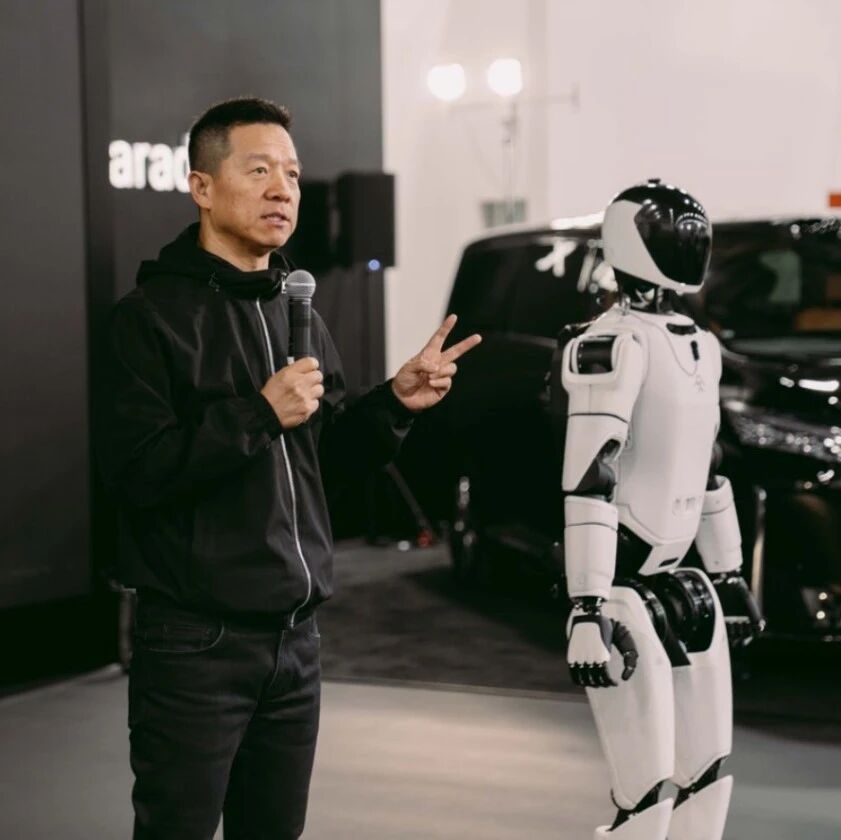
Core Viewpoint - The company FF launched its first embodied AI robot products at the National Automobile Dealers Association event in Las Vegas on February 5, 2023, indicating a significant step in integrating advanced technology into the automotive industry [1] Group 1 - The event took place at 7:30 AM Beijing time, showcasing FF's commitment to innovation in the automotive sector [1]
贾跃亭发布人形机器人
券商中国· 2026-02-05 01:13
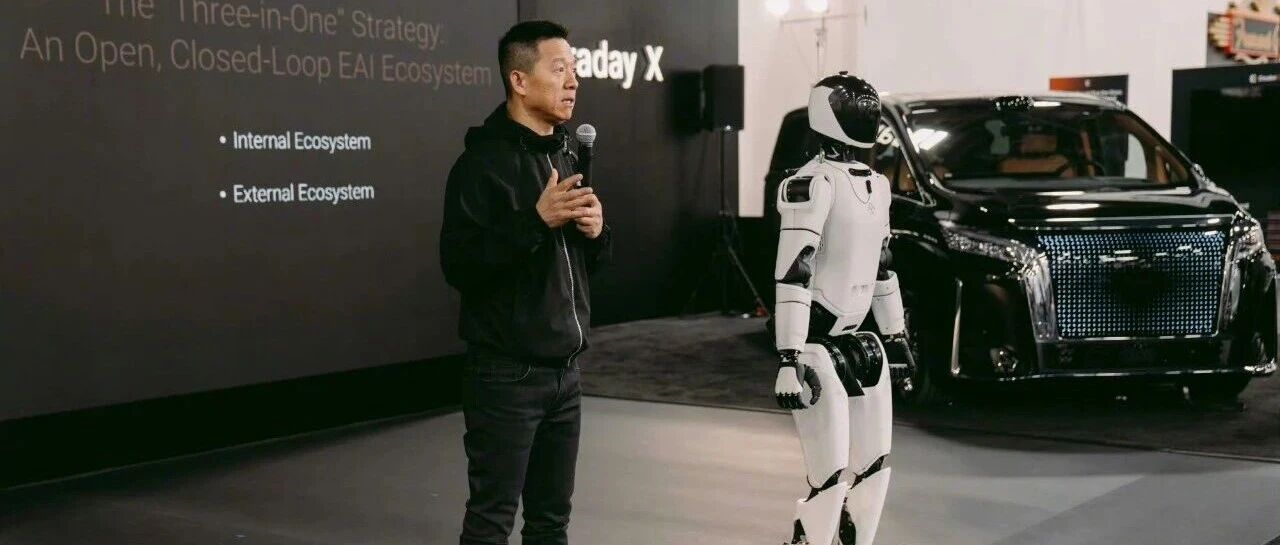
Group 1 - The core viewpoint of the article highlights the launch of FF's first embodied AI robot products at the National Automobile Dealers Association event in Las Vegas, indicating a significant step in the company's technological advancement [1] - FF has undergone a tumultuous journey from its initial public offering to near bankruptcy, with a notable leadership change in April last year when Jia Yueting returned as Co-CEO to attempt a company turnaround [1] - Jia Yueting has been carrying substantial debt since moving to the U.S. in July 2017 and has not returned to China for eight years, which reflects the challenges faced by the company [1]

贾跃亭发布人形机器人
Di Yi Cai Jing· 2026-02-05 00:20
Core Viewpoint - FF held a product launch event for its first Embodied AI robot at the National Automobile Dealers Association conference in Las Vegas, marking a significant step in its recovery strategy after facing near bankruptcy [2] Group 1: Company Background - FF has experienced a tumultuous journey since its inception, nearly facing bankruptcy before the recent leadership change [2] - In April of the previous year, Jia Yueting returned as Co-CEO of FF, aiming to revitalize the company [2] - Jia Yueting has been in the U.S. for eight years since July 2017, during which he has accumulated substantial debt [2]
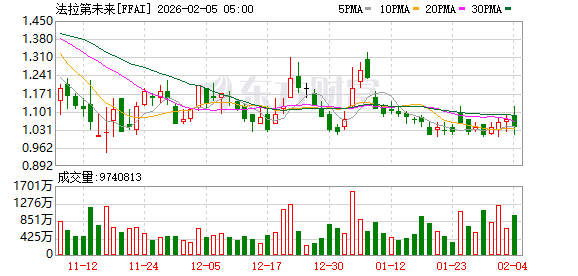
贾跃亭发布人形机器人
第一财经· 2026-02-05 00:16
Core Viewpoint - FF is attempting to revitalize its brand and operations after facing significant financial challenges, including near bankruptcy, by launching its first embodied AI robot products at a major automotive event [1] Group 1 - FF held a product launch for its first embodied AI robots at the National Automobile Dealers Association event in Las Vegas on February 5 [1] - The company has undergone a leadership change, with Jia Yueting returning as Co-CEO in April of the previous year to steer the company towards recovery [1] - Jia Yueting has been in the U.S. since July 2017, focusing on his entrepreneurial efforts, and has not returned to China for eight years [1]

国产AI大模型企业密集上市:资本狂欢下的技术博弈与产业未来
Sou Hu Cai Jing· 2026-01-22 09:54
Group 1 - The year 2024 is recognized as the "Year of Commercialization for China's AI Large Models," with a significant wave of domestic AI companies expected to go public in 2025 [2] - Over ten Chinese tech companies focused on large language models (LLMs) have submitted IPO applications since Q1 2024, raising over 30 billion RMB in the first half of 2025 [2] - Major cities like Beijing, Shanghai, and Shenzhen are becoming hubs for AI large model companies, supported by local government policies [5] Group 2 - DeepSeek, known for its open-source large model, has a valuation exceeding 12 billion USD and plans to invest 4.2 billion RMB in R&D for 2024 [3] - Zhipu AI, backed by Tsinghua University, is pursuing a listing on the Sci-Tech Innovation Board, with its GLM-4 Turbo model outperforming international counterparts in various tasks [3] - Moonshot AI has gained attention for its "Long Context Window" technology, securing 800 million USD in funding and achieving a post-investment valuation of 6.5 billion USD [4] Group 3 - In 2024, total investment in China's AI sector reached 215 billion RMB, with over 60% allocated to large models and related applications, marking a 75% increase from 2023 [6] - The average investment amount in Pre-IPO rounds rose from 520 million RMB in 2023 to 870 million RMB in 2024, indicating a shift towards more mature AI companies [6] - The adoption rate of AI technology among enterprises surged from 22% in 2022 to 47% in 2024, with significant growth expected in sectors like finance, manufacturing, education, and healthcare [7] Group 4 - Domestic large model companies have made significant advancements, with eight out of the top ten positions in the CLUE benchmark held by Chinese models [7] - The Chinese government has introduced supportive policies for AI companies, including measures to facilitate domestic and international financing [7] - The geopolitical landscape, particularly U.S. restrictions on high-end GPU exports, has accelerated the demand for domestic AI solutions [8] Group 5 - Companies are exploring various monetization strategies, including API service fees, enterprise solutions, and open-source models with commercial licenses [14] - The training and inference costs for large models remain a significant challenge, with estimates indicating that training a trillion-parameter model could exceed 120 million RMB [16] - Only 15% of AI large model companies that have submitted IPO applications reported profitability in the last fiscal year, with average losses reaching 1.8 times their revenue [17] Group 6 - Traditional valuation methods are being challenged, leading to the development of new frameworks that emphasize technical barriers and ecosystem value [18] - The stock performance of AI-related companies has shown a polarized trend, with major players like Baidu and Alibaba seeing significant stock price increases [19] - The AI large model sector is expected to undergo a commercial validation phase from 2025 to 2026, with a focus on actual revenue growth and sustainable business models [26]