
再生金属

Search documents
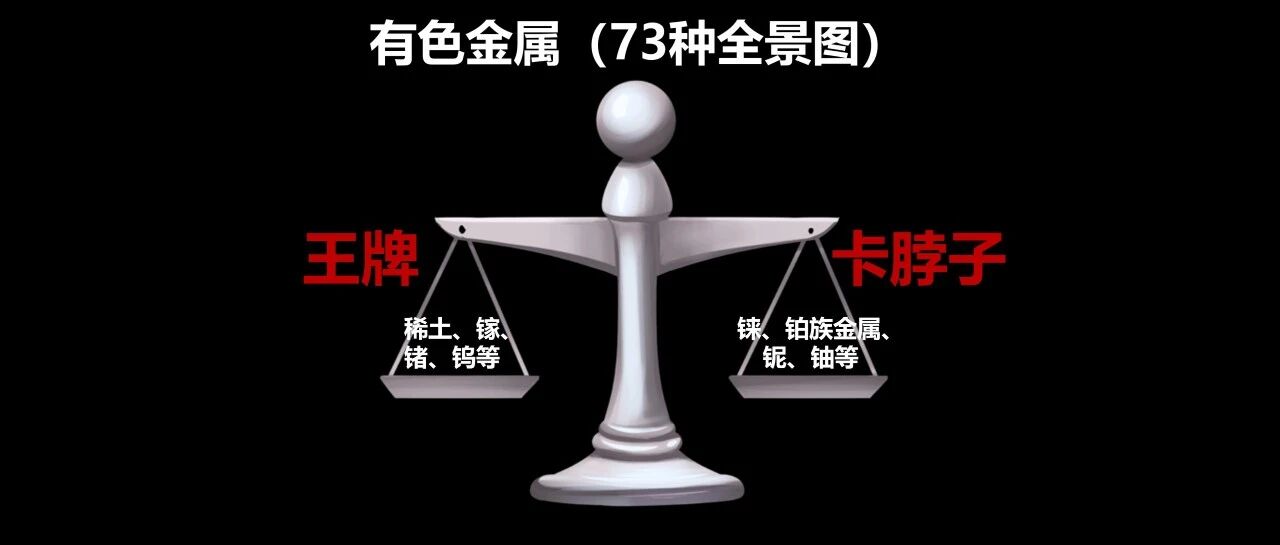
冰与火!中国有色金属的王牌VS卡脖子(部分高度依赖进口):73种有色金属全景图、战略价值与未来机遇梳理
材料汇· 2026-03-01 15:46
Core Viewpoint - The article emphasizes the strategic importance of non-ferrous metals in modern industry, highlighting their role in various sectors such as new energy vehicles, aerospace, and semiconductor manufacturing, and outlines the complete value chain of these metals in supporting China's manufacturing upgrades and technological advancements [3][15]. Summary by Sections 1. Definition and Value of Non-Ferrous Metals - Non-ferrous metals are defined as all metals excluding iron, manganese, and chromium, categorized into five main types based on their industrial applications and properties [5]. - The article proposes a redefinition of these metals using industry labels to better reflect their core value and relevance in modern manufacturing [4]. 2. Types of Non-Ferrous Metals - **Light Metals**: Includes aluminum and magnesium, crucial for lightweight applications in manufacturing, with aluminum projected to reach over 40 million tons in China by 2025, accounting for over 60% of global production [7]. - **Heavy Metals**: Comprises copper, nickel, and cobalt, essential for electrical applications and the backbone of the economy, with copper demand in the new energy sector expected to exceed 25% by 2025 [8]. - **Precious Metals**: Includes gold and silver, recognized as hard currencies and vital for high-end manufacturing, with central banks expected to increase gold reserves by over 1,200 tons in 2025 [9]. - **Rare Metals**: This category includes lithium and rare earth elements, which are critical for high-end manufacturing and military applications, with China holding nearly 50% of global rare earth reserves [10][12]. - **Metalloids**: Such as silicon, which is foundational for the semiconductor and photovoltaic industries, with over 95% of semiconductor chips based on silicon [13]. 3. Role in New Energy and Semiconductor Industries - Non-ferrous metals are identified as essential for the new energy revolution, with lithium, cobalt, and nickel being key materials for batteries, and demand for lithium expected to grow by 25% by 2025 due to the surge in electric vehicle sales [17][19]. - In the semiconductor sector, metals like gallium and germanium are crucial for chip manufacturing, with China controlling over 90% of global gallium and germanium production [27]. 4. Strategic Importance in Aerospace and Military - Non-ferrous metals define the performance limits of aerospace and military equipment, with titanium alloys being essential for aircraft and high-temperature alloys being critical for jet engines [29][30]. - Rare earth elements are vital for military applications, with China dominating the supply of these materials [30]. 5. Economic and Financial Security - Non-ferrous metals are fundamental to national economic stability, with copper being a key material in the electrical system, and gold serving as a hedge against geopolitical risks [34][32]. - The article highlights the importance of uranium and thorium for nuclear energy, which is crucial for achieving carbon neutrality goals [34]. 6. Global Competitive Landscape - China holds significant advantages in the non-ferrous metals sector, including leading positions in rare earths and critical materials for semiconductors, but faces challenges in high-end processing technologies and resource dependencies [36][44]. - The article identifies both strengths, such as the complete supply chain for rare earths, and weaknesses, including high import dependencies for certain critical metals like platinum and cobalt [37][44].

高能环境:进军矿业开采、赴港上市,资源化龙头扬帆起航-20260204
Xinda Securities· 2026-02-04 13:20
Investment Rating - The investment rating for the company is "Buy" [2]. Core Insights - The company is transitioning into the mining sector and plans to list in Hong Kong, aiming to enhance its position as a leader in resource utilization [4][18]. - The company has a clear and robust strategic layout focusing on resource recycling, with significant growth expected in its metal resource recycling business [4][16]. - The company has achieved a deep integration of its upstream and downstream operations, which is expected to drive profitability as production capacity is released [16][27]. Summary by Sections Company Overview - The company originated from the Institute of High Energy Physics of the Chinese Academy of Sciences and is one of the earliest enterprises in China to engage in solid waste pollution prevention [18]. - It has expanded its business into hazardous waste management and resource recycling through acquisitions, including plans to acquire stakes in three mining companies to enhance its resource recycling capabilities [4][18]. Financial Performance - The company reported a total revenue of 145 billion yuan in 2024, a year-on-year increase of 37% [23]. - The net profit attributable to the parent company for 2025 is projected to be 823 million yuan, representing a 70.8% increase compared to the previous year [11]. - The gross profit margin for the resource recycling segment has improved from 8.3% in 2023 to 13.4% in the first half of 2025 [16]. Market Dynamics - The metal prices have shown significant increases, with gold rising by 43.1%, silver by 34.8%, and bismuth by 62.5% in 2025, which is expected to enhance the company's profit margins [17]. - The company is well-positioned to benefit from the government's push for circular economy initiatives, which aim to increase resource utilization rates significantly by 2025 [34][35]. Strategic Initiatives - The company is planning to list on the Hong Kong Stock Exchange to support its international expansion and enhance its capital structure [7][18]. - The acquisition of mining rights is expected to create synergies with its existing resource recycling operations, potentially unlocking new revenue streams [17][18].

高能环境(603588):进军矿业开采、赴港上市,资源化龙头扬帆起航
Xinda Securities· 2026-02-04 12:55
Investment Rating - The investment rating for the company is "Buy" [2]. Core Insights - The company is transitioning into the mining sector and plans to list in Hong Kong, aiming to enhance its position as a leader in resource utilization [4][18]. - The company has a clear and robust strategic layout focusing on resource recycling, having expanded its operations into hazardous waste and metal processing through acquisitions [4][18]. - The company is expected to benefit from rising metal prices, which will enhance profit margins and revenue from its resource recycling business [6][17]. Summary by Sections Company Overview - The company originated from the Institute of High Energy Physics of the Chinese Academy of Sciences and is one of the earliest firms in China to engage in solid waste pollution prevention [18]. - It has expanded its business scope significantly since its establishment in 1992, focusing on environmental remediation and resource recycling [18]. Business Transformation - The company has made substantial progress in its strategic layout, including plans to acquire stakes in three mining companies to extend its resource recycling chain [4][18]. - The company’s resource recycling business has seen significant growth, with revenue from this segment increasing by 72.17% year-on-year in 2024 [27]. Financial Performance - The company is projected to achieve revenues of 163.55 billion, 203.36 billion, and 215.22 billion yuan for the years 2025 to 2027, reflecting growth rates of 12.8%, 24.3%, and 5.8% respectively [10]. - The net profit attributable to the parent company is expected to reach 8.23 billion, 11.09 billion, and 12.03 billion yuan for the same years, with growth rates of 70.8%, 34.8%, and 8.5% respectively [10]. Market Dynamics - The company is positioned to benefit from favorable policies promoting circular economy and resource recycling, with significant growth potential in the recycling industry [34]. - The rising prices of metals such as gold, silver, and copper are expected to enhance the profitability of the company's resource recycling operations [6][17]. Future Outlook - The company is actively pursuing an H-share listing to support its international expansion and enhance its competitive edge [7][18]. - The integration of mining operations with resource recycling is anticipated to create synergies and open new avenues for growth [17].